
Apple Inc. stands as an undisputed titan in the global economy, a name synonymous with innovation, design, and a distinctive approach to technology. To merely label Apple as a “tech company” would be an understatement, yet it remains the foundational truth of its identity. At its core, Apple is a multifaceted technology enterprise, deeply embedded in the design, development, manufacturing, and sale of consumer electronics, computer software, and online services. Its unique blend of hardware prowess, software elegance, and a tightly integrated ecosystem defines its “type” within the technology landscape, consistently pushing boundaries and setting new industry standards. This article will delve into the technological essence of Apple, exploring the pillars that define its operational DNA and its profound impact on the tech world.
A Pioneer and Leader in Consumer Electronics
Apple’s journey began with a vision to make complex technology accessible and personal, a mission that has guided its evolution from a niche computer manufacturer to a global consumer electronics powerhouse. Its technological legacy is built on a relentless pursuit of product excellence and user-centric design.
The Genesis: Personal Computing Revolution
The origin story of Apple is intrinsically linked to the dawn of the personal computer era. From the humble beginnings of the Apple I in 1976, Apple co-founders Steve Jobs and Steve Wozniak envisioned computing as a tool for the masses, not just corporations or hobbyists. The Apple II, released in 1977, cemented this vision, becoming one of the first highly successful mass-produced microcomputers and setting a template for the personal computing industry. This was followed by the groundbreaking Macintosh in 1984, which introduced the graphical user interface (GUI) and mouse to a broad audience, fundamentally changing how people interacted with computers. Apple’s early contributions were not just about creating machines; they were about democratizing technology, making it intuitive and powerful enough for everyday users, thus shaping the very definition of a personal computer.
Redefining Mobility: iPod, iPhone, and iPad
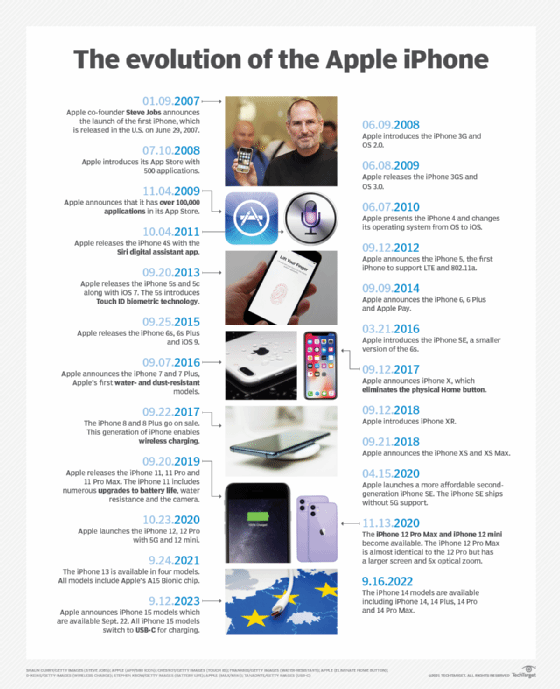
The 21st century saw Apple redefine its trajectory, pivoting from a primarily computer-focused company to a dominant force in mobile technology. The introduction of the iPod in 2001 revolutionized the music industry, packaging thousands of songs into a sleek, portable device and popularizing digital music consumption. However, it was the iPhone in 2007 that truly cemented Apple’s status as a mobile technology pioneer. The iPhone wasn’t just a phone; it was a paradigm shift – a device that seamlessly integrated a mobile phone, an iPod, and an internet communications device with a multi-touch interface, setting the blueprint for all modern smartphones. This invention didn’t just create a new product category; it ignited a mobile revolution that continues to shape global communication, commerce, and culture. The iPad, launched in 2010, further extended Apple’s mobile dominance, carving out a new tablet computer market and showcasing the versatility of its iOS ecosystem on a larger screen. These devices were not merely iterative improvements; they were technological leaps that redefined user expectations for mobile computing.
Expanding the Hardware Ecosystem
Apple’s hardware innovation didn’t stop at its core products. Over the years, the company has meticulously built out an expansive ecosystem of integrated devices designed to work together seamlessly. The Apple Watch, introduced in 2015, established itself as a leader in wearables, integrating health and fitness tracking with smart notifications and communication. AirPods, launched in 2016, rapidly became the most popular wireless earbuds globally, demonstrating Apple’s ability to create culturally resonant accessories that leverage its core device ecosystem. Products like HomePod (smart speaker) and Apple TV (streaming media player) further extend Apple’s technological reach into the home, creating a cohesive network of devices that enhance user convenience and experience. This strategy isn’t just about selling more gadgets; it’s about weaving a pervasive technological fabric that anticipates user needs and provides an integrated, intuitive environment.
The Power of Software and Services
While Apple’s hardware grabs headlines, its sophisticated software and burgeoning services division are equally crucial to its identity as a technology company, providing the intelligence and functionality that bring its devices to life.
Intuitive Operating Systems
At the heart of every Apple device lies a meticulously crafted operating system, designed for simplicity, security, and performance. iOS (for iPhone and iPad), macOS (for Macs), watchOS (for Apple Watch), and tvOS (for Apple TV) are not just interfaces; they are fundamental technological differentiators. Apple’s control over both hardware and software allows for unparalleled optimization, resulting in smooth performance, superior battery life, and robust security features that are difficult for competitors to replicate. The consistent design language and user experience across these platforms foster a sense of familiarity and ease of use, making the Apple ecosystem highly accessible, even for technologically novice users. This vertical integration is a core technical advantage, enabling Apple to deliver a cohesive and high-quality experience that is central to its technological proposition.
A Thriving App Ecosystem
The App Store, launched in 2008, revolutionized software distribution and played a pivotal role in the smartphone’s rise. It transformed how users discovered and installed applications, creating a massive marketplace for third-party developers. This ecosystem has fostered countless technological innovations, from communication tools to productivity apps and immersive games. Apple’s stringent review process for apps, while sometimes criticized, ensures a higher standard of quality, security, and privacy, offering users a curated and generally safer digital environment. The App Store is not just a storefront; it’s a vibrant technological platform that continuously expands the capabilities and utility of Apple devices, fostering an entire economy built around software development and distribution.
Growth of Subscription Services
Recognizing the immense potential in recurring revenue and deepening user engagement, Apple has significantly expanded its portfolio of subscription services. Beyond the core App Store, services like Apple Music (music streaming), Apple TV+ (original video content), iCloud (cloud storage and synchronization), Apple Arcade (game subscription), and Apple Fitness+ (fitness and wellness content) represent a strategic technological diversification. These services leverage Apple’s vast installed base and ecosystem to provide added value, lock in users, and create new revenue streams that complement hardware sales. Technologically, these services require massive infrastructure, advanced content delivery networks, sophisticated recommendation algorithms, and robust security protocols, demonstrating Apple’s capabilities beyond just consumer devices. This shift underscores Apple’s evolution into a comprehensive technology provider, offering an integrated suite of hardware, software, and content services.

Innovation Engine and Technological Frontier
Apple’s identity is inextricably linked with its reputation as an innovation engine, constantly investing in research and development to push the boundaries of technology. This commitment is evident in its strategic approach to core technologies and its exploration of future frontiers.
Chip Design and Vertical Integration
Perhaps one of Apple’s most significant technological achievements in recent years has been its foray into designing custom silicon. Starting with the A-series chips for its mobile devices and culminating in the revolutionary M-series chips for its Mac computers, Apple has taken unprecedented control over the brains of its products. This vertical integration—designing its own processors to work harmoniously with its software and hardware—provides substantial technical advantages. It allows for unparalleled performance per watt, superior graphics capabilities, advanced neural engines for AI tasks, and a level of optimization that traditional off-the-shelf components cannot match. This move has not only significantly boosted the performance and efficiency of its devices but has also given Apple a distinct competitive edge, allowing it to innovate at a pace and in directions that others cannot easily follow. This strategic technical independence is a hallmark of Apple’s current engineering philosophy.
Artificial Intelligence and Machine Learning
Apple’s approach to Artificial Intelligence (AI) and Machine Learning (ML) is deeply embedded and often privacy-centric, rather than being overtly presented as a standalone feature. Technologies like Siri (voice assistant), Face ID (facial recognition), and computational photography (enhancing camera performance) are powered by sophisticated AI and ML algorithms. Apple leverages on-device machine learning to personalize experiences, improve device performance, and enhance security without necessarily sending vast amounts of user data to the cloud. This emphasis on privacy-preserving AI is a core technological principle, differentiating Apple from many competitors. Furthermore, its neural engines in custom silicon chips are specifically designed to accelerate ML tasks, enabling faster and more efficient on-device processing for everything from voice recognition to predictive text and health monitoring.
Exploring Future Technologies
Apple maintains a forward-looking perspective, heavily investing in technologies that promise to shape the next generation of computing. Augmented Reality (AR) stands out as a key area of focus, with ARKit empowering developers to create immersive AR experiences on iOS devices. The company is widely rumored to be developing advanced AR/VR headsets, signaling a potential entry into the spatial computing market. Health technology is another significant frontier, with the Apple Watch continuously adding more sophisticated health sensors and features, aiming to transform personal well-being management. Apple’s consistent, long-term investment in cutting-edge research and development, often kept under tight wraps, positions it as a significant player in defining future technological landscapes, from advanced display technologies to battery innovations and new forms of human-computer interaction.
The Apple Ecosystem: A Walled Garden of Integration
A defining characteristic of Apple as a technology company is its tightly integrated ecosystem, often referred to as a “walled garden.” This approach focuses on creating a seamless and harmonious experience across all its devices and services.
Seamless Device Interoperability
The technological magic of the Apple ecosystem lies in the effortless interoperability between its various products. Features like Handoff allow users to start an activity on one Apple device and seamlessly continue it on another. AirDrop facilitates quick and secure file sharing between nearby Apple devices. Universal Clipboard lets users copy content on an iPhone and paste it directly onto a Mac. Continuity features bridge the gap between devices, making the overall experience fluid and intuitive. This level of integration is a direct result of Apple’s control over the entire vertical stack—hardware, software, and services—enabling engineers to design systems that work together with unparalleled efficiency and reliability. This creates a powerful lock-in effect, not through coercion, but through superior user experience.
User Experience as a Core Differentiator
From a technological standpoint, Apple prioritizes the user experience above all else. Its design philosophy emphasizes simplicity, aesthetics, and intuitiveness. Every product and software feature is meticulously crafted to be easy to use, visually appealing, and reliable. This dedication to user experience (UX) is a core technological differentiator; it’s not just about what the technology can do, but how gracefully and effortlessly it allows users to do it. This focus extends to accessibility features, ensuring that Apple’s technology is usable by a broad spectrum of individuals, showcasing a commitment to inclusive design.
Security and Privacy as Pillars
In an era of increasing digital threats and data concerns, Apple has made security and user privacy fundamental tenets of its technological design. Its operating systems are engineered with robust security features, including strong encryption, secure boot processes, and stringent app sandboxing. More importantly, Apple has positioned itself as a champion of user privacy, often designing features to process data on-device rather than in the cloud and giving users granular control over their data and tracking preferences. This commitment to privacy is not just a marketing slogan; it’s a deeply embedded architectural principle in its software and services, aiming to provide a trustworthy technological environment for its users.
Conclusion
In conclusion, “what type of company is Apple” finds its most comprehensive answer in its identity as a profoundly innovative and integrated technology company. It is a company that designs, manufactures, and sells consumer electronics at the vanguard of the industry, powered by sophisticated, proprietary software and supported by a growing suite of online services. Apple’s technological prowess is defined by its vertical integration, allowing it to craft bespoke silicon that harmonizes perfectly with its intuitive operating systems. It is an innovation engine, constantly pushing boundaries in areas from AI and machine learning to augmented reality. Ultimately, Apple is a company whose very existence revolves around the creation of advanced, user-centric technology that aims to simplify and enrich people’s lives, defining the technological landscape of the present and aspiring to shape that of the future.
aViewFromTheCave is a participant in the Amazon Services LLC Associates Program, an affiliate advertising program designed to provide a means for sites to earn advertising fees by advertising and linking to Amazon.com. Amazon, the Amazon logo, AmazonSupply, and the AmazonSupply logo are trademarks of Amazon.com, Inc. or its affiliates. As an Amazon Associate we earn affiliate commissions from qualifying purchases.