
The XRP Ledger (XRPL) stands as a foundational piece of blockchain technology, distinguished by its unique approach to transaction processing, speed, and cost-efficiency. At its core, XRPL is an open-source, decentralized, public blockchain designed primarily for fast, low-cost global payments and asset issuance. Unlike proof-of-work (PoW) blockchains that rely on energy-intensive mining, XRPL utilizes a distinct consensus mechanism that enables high transaction throughput and near-instant finality, positioning it as a critical infrastructure for various digital asset applications.
The Core of the XRP Ledger: A Decentralized Payment Network
Born from a vision for a more efficient global financial system, the XRP Ledger was engineered from the ground up to address the inefficiencies inherent in traditional cross-border payments. Its architecture prioritizes speed, cost-effectiveness, and scalability, making it a robust platform for financial institutions, developers, and users alike.

Origins and Purpose
The XRP Ledger was created in 2012 by Jed McCaleb, Arthur Britto, and David Schwartz, predating many well-known blockchain projects. Their primary objective was to build a decentralized digital asset ledger that could facilitate the secure and rapid transfer of any currency or asset across borders, thereby democratizing access to global finance. Ripple (originally OpenCoin), a company co-founded by some of the XRPL’s architects, later adopted XRP Ledger technology for its enterprise solutions, further propelling its development and adoption in the financial sector. The ledger itself is maintained by a global network of independent participants, ensuring its decentralized nature and resilience.
Key Characteristics: Speed, Cost, Scalability
XRPL’s design principles directly translate into a set of compelling technical characteristics:
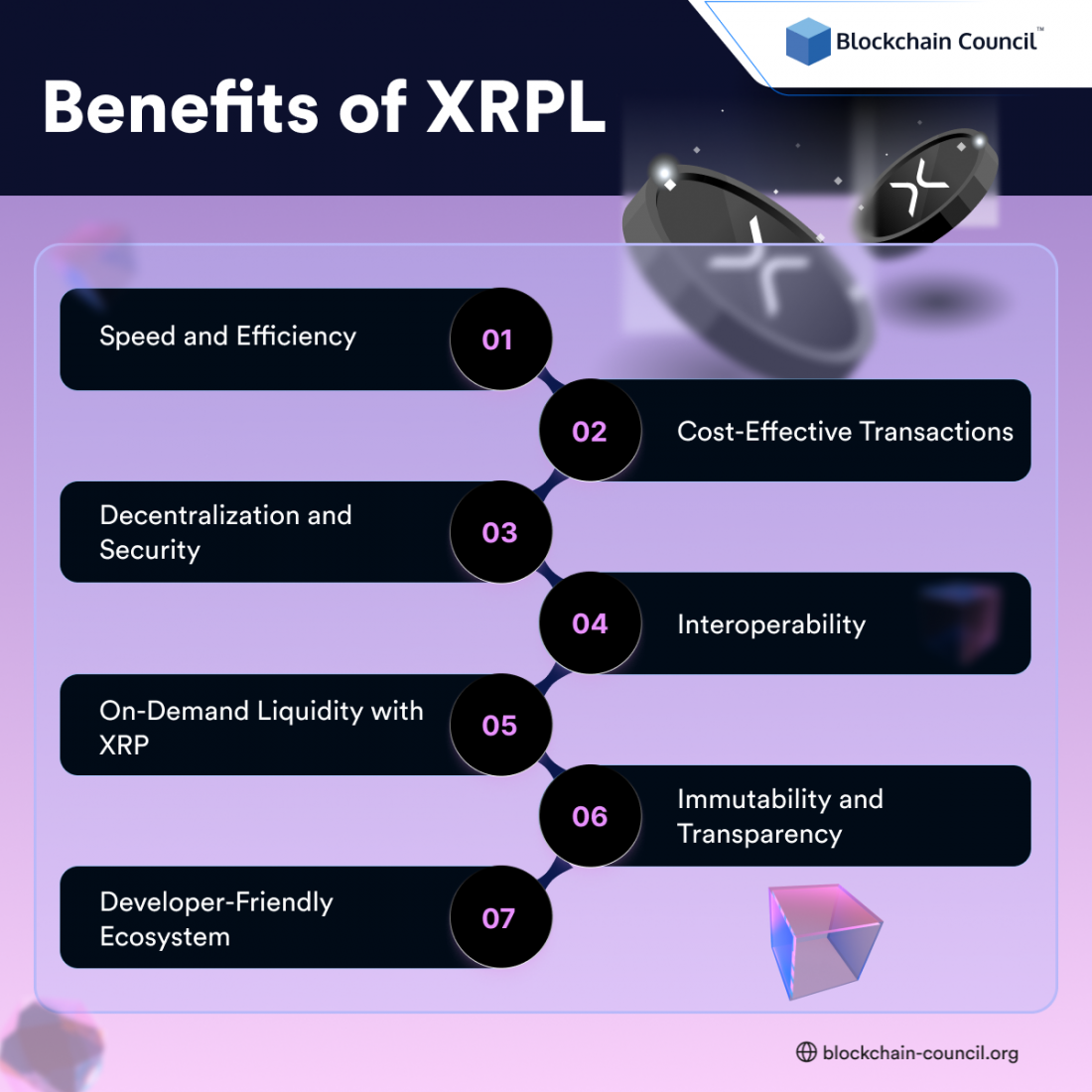
- Speed: Transactions on the XRPL achieve finality in 3 to 5 seconds. This rapid settlement time is significantly faster than traditional banking systems, which can take days, or even other blockchains that may require minutes or hours. This near-instantaneity is crucial for time-sensitive financial operations and real-time payments.
- Cost-Efficiency: Transaction fees on the XRPL are exceptionally low, typically fractions of a cent. This minimal cost makes it economically viable for a wide range of use cases, including micropayments, high-volume transactions, and cross-border remittances that would be prohibitive on other networks due to higher fees. The fee mechanism also serves as a spam prevention measure, burning a small amount of XRP with each transaction, thus slightly deflating the total supply over time.
- Scalability: The XRPL is capable of processing thousands of transactions per second (TPS). This high throughput is essential for a network aspiring to handle global payment volumes. Its architecture is optimized to maintain performance under significant load without compromising decentralization or security, a common challenge for many blockchain platforms. This scalability is largely attributable to its unique consensus protocol.
Understanding XRPL’s Unique Consensus Mechanism
A cornerstone of the XRP Ledger’s efficiency and security is its innovative consensus algorithm, which distinguishes it from conventional proof-of-work (PoW) or proof-of-stake (PoS) systems. This mechanism ensures that all validating servers agree on the order and outcome of transactions without relying on resource-intensive mining or staking.
The XRP Ledger Consensus Protocol (XRP LCP)
The XRPL operates on a federated Byzantine agreement (FBA) consensus algorithm, known as the XRP Ledger Consensus Protocol (XRP LCP). In this model, independent validating servers continuously exchange proposed transaction sets. Each server maintains a Unique Node List (UNL) – a list of other trusted validators whose agreement it considers sufficient to close a ledger.
The consensus process unfolds in iterative rounds:
- Proposal: Each validator proposes a candidate set of transactions to close the current ledger.
- Voting: Validators exchange proposals and vote on which transactions to include.
- Agreement: If a supermajority (typically 80%) of the validators on a server’s UNL agree on the transaction set, that server considers the ledger “closed” and valid.
- Propagation: Once a ledger is closed, it becomes immutable and is propagated across the network.
This process allows for rapid agreement on transaction order and validity, leading to fast transaction finality without significant energy consumption or the risk of transaction forks common in other blockchain designs.
UNL: Unique Node List and Trust
The concept of the Unique Node List (UNL) is central to the XRP LCP. Each participant running a validating server on the XRPL chooses its own UNL based on its assessment of trust and reliability. While Ripple, as a major contributor to the XRPL, publishes a recommended UNL, individual operators are free to customize their lists. This federated approach means that no single entity dictates which transactions are confirmed. Instead, consensus emerges from overlapping UNLs, where a sufficient number of trusted validators agree on the state of the ledger. This design enhances decentralization by distributing trust decisions across the network’s participants rather than concentrating power in a single entity or a small group of miners/stakers. The security and integrity of the ledger are maintained as long as the majority of validators on overlapping UNLs are honest and functional.
Technical Architecture and Core Components
Beyond its consensus mechanism, the XRPL’s robust architecture supports a diverse set of functionalities, making it more than just a payment rail. Its design allows for the issuance and trading of various digital assets, fostering a rich ecosystem.
Accounts and Balances
Every participant on the XRP Ledger interacts through an account, identified by a unique address. Accounts hold balances of XRP, the native digital asset of the ledger, which is used for transaction fees and as a bridge currency for cross-asset payments. Accounts can also hold balances of other issued assets, often referred to as “IOUs” or tokens. To activate an account, a small minimum reserve of XRP must be held, preventing spam and ensuring network integrity. This reserve cannot be spent and is designed to ensure that every active account has some skin in the game.
Payment Channels and Decentralized Exchange (DEX)
The XRPL features several advanced capabilities:
- Payment Channels: These allow for off-ledger, high-frequency, bilateral payments between two parties without requiring every single transaction to be recorded directly on the main ledger. This significantly enhances scalability for micro-payments or scenarios requiring rapid, repeated transfers, while still leveraging the security of the XRPL for opening and closing channel states.
- Decentralized Exchange (DEX): Integrated directly into the ledger protocol, the XRPL DEX enables users to trade any issued asset for another without relying on a centralized intermediary. This peer-to-peer trading environment supports offers (limit orders) for various currency pairs, allowing for transparent and efficient price discovery. Users can create, fund, and execute orders directly on the ledger, providing greater control over their assets and reducing counterparty risk. The DEX uses XRP as a common bridge currency, facilitating trades between otherwise illiquid asset pairs.
Issuing Assets and Gateways
The XRPL allows any entity to issue their own fungible tokens, representing anything from fiat currencies (e.g., USD, EUR) to commodities, loyalty points, or other digital assets. These issued assets are distinct from XRP and require an “issuer” (a specific XRPL account) that guarantees their value.
- Gateways: Entities that act as intermediaries, bridging traditional financial systems with the XRP Ledger, are known as gateways. Gateways accept deposits of fiat currency or other assets from users and issue corresponding tokens (IOUs) on the XRPL to the user’s account. Conversely, they redeem these tokens for the underlying asset. Gateways play a crucial role in enabling the transfer of value onto and off the ledger, facilitating broader adoption and liquidity for issued assets. Trust lines are an important mechanism here, where an XRPL account explicitly trusts an issuer to hold and redeem a particular asset.
Use Cases and Ecosystem Beyond Payments
While initially conceived for payments, the XRPL’s technical robustness and flexibility have allowed its ecosystem to expand into various innovative domains, continuously evolving beyond its foundational payment utility.
Micropayments and IoT
The XRPL’s low transaction fees and high speed make it an ideal backbone for micropayment systems. This is particularly relevant in the burgeoning Internet of Things (IoT) landscape, where connected devices might need to make frequent, tiny payments for services, data, or energy. For instance, a smart device could pay for access to a network, data streaming, or even charge an electric vehicle in real-time without incurring prohibitive transaction costs, thereby enabling new business models and machine-to-machine economies.
Stablecoins and CBDCs
The ability to issue fungible tokens on the XRPL positions it as a strong candidate for supporting stablecoins and central bank digital currencies (CBDCs). Stablecoins, pegged to fiat currencies or other stable assets, can leverage the XRPL’s speed and cost-efficiency for remittances, trading, and general digital payments. For CBDCs, a government or central bank could issue its digital currency on the XRPL, benefiting from its transparency, security, and proven scalability while maintaining control over monetary policy. The ledger provides the necessary infrastructure for secure issuance, transfer, and redemption of these digital assets, paving the way for modern financial rails.
Decentralized Identity and NFTs
Recent advancements and community proposals have significantly broadened the XRPL’s capabilities:
- Decentralized Identity: The ledger can serve as a decentralized anchor for identity solutions. Users can control their digital identities and associated verifiable credentials, leveraging the XRPL’s immutability and security to prove ownership or attributes without relying on centralized databases.
- NFTs (Non-Fungible Tokens): A native NFT standard (XLS-20) has been implemented on the XRPL, allowing for the creation, trading, and management of unique digital assets directly on the ledger. This opens up new possibilities for digital art, collectibles, gaming assets, and tokenized real-world assets, benefiting from the XRPL’s speed and low fees, which are often significant pain points on other NFT-enabled blockchains. This native integration reduces complexity and cost for creators and collectors alike.
Security, Evolution, and Future Outlook
The XRP Ledger has undergone continuous development and scrutiny since its inception, ensuring its resilience, security, and adaptability in a rapidly changing technological landscape. Its open-source nature fosters a community-driven approach to its evolution.
Audited Security and Open-Source Development
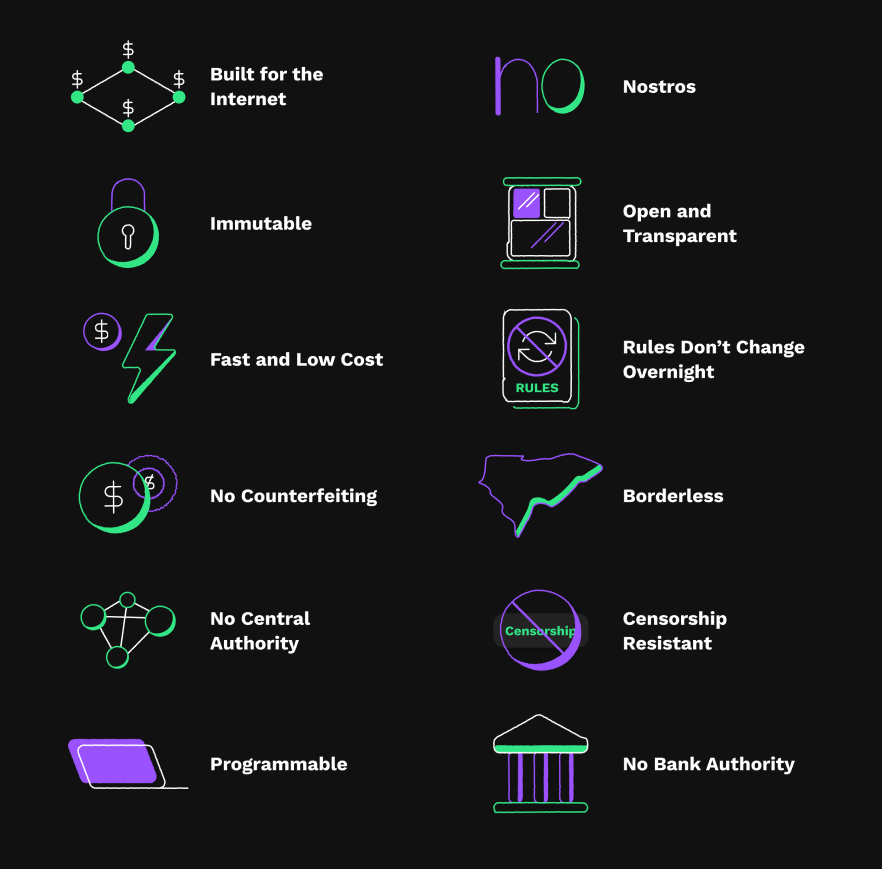
The XRPL protocol is open-source, with its code publicly available for review, audit, and contribution. This transparency is a cornerstone of its security model, allowing a global community of developers and security experts to scrutinize its codebase for vulnerabilities. Over the years, the ledger has demonstrated remarkable stability and security, having been rigorously tested in various environments. The ongoing contributions from independent developers, alongside the core engineering team, ensure that the protocol is constantly being hardened, optimized, and extended with new features.
Ongoing Innovation and Community Governance
The XRPL is not static; it is a dynamic platform that continues to evolve through a well-defined amendment process. New features and protocol changes are proposed, discussed, and voted upon by the network’s validators. This community-driven governance model ensures that enhancements reflect the needs of the ecosystem and maintain the ledger’s decentralized ethos.
Key areas of ongoing innovation include:
- Smart Contract Capabilities: While initially focused on payments, the XRPL is expanding its smart contract capabilities through features like “Hooks” (XLS-30). Hooks are small, efficient WebAssembly modules that can be attached to XRPL accounts, allowing for programmable logic to be executed when transactions interact with those accounts. This introduces a new layer of functionality, enabling more complex applications and decentralized finance (DeFi) primitives directly on the ledger without sacrificing its core performance advantages.
- Interoperability: Efforts are underway to enhance the XRPL’s interoperability with other blockchain networks, for example, through federated sidechains like the EVM sidechain. This allows developers to leverage the familiarity of the Ethereum Virtual Machine (EVM) while benefiting from the XRPL’s underlying efficiencies, potentially bridging liquidity and functionality between different blockchain ecosystems.
The XRP Ledger’s journey reflects a commitment to building a high-performance, secure, and adaptable blockchain infrastructure. Its continued evolution, driven by its unique technical architecture and a vibrant open-source community, solidifies its position as a significant player in the future of digital finance and beyond.
aViewFromTheCave is a participant in the Amazon Services LLC Associates Program, an affiliate advertising program designed to provide a means for sites to earn advertising fees by advertising and linking to Amazon.com. Amazon, the Amazon logo, AmazonSupply, and the AmazonSupply logo are trademarks of Amazon.com, Inc. or its affiliates. As an Amazon Associate we earn affiliate commissions from qualifying purchases.