
XRP, the native digital asset of the XRP Ledger, has captivated a segment of the financial world with its unique proposition for cross-border payments. Its journey has been marked by significant volatility, groundbreaking technological advancements, and considerable regulatory challenges. Investors and market observers frequently ponder its future trajectory, seeking to understand the confluence of factors that could dictate its price. Projecting the future value of any asset, particularly in the nascent and dynamic cryptocurrency market, is inherently complex, relying on a multifaceted analysis of fundamental utility, market sentiment, regulatory clarity, and macroeconomic forces.
Understanding XRP’s Foundation and Market Position
To delve into price projections, it’s essential to first grasp XRP’s core purpose and its standing within the broader financial ecosystem. Unlike many cryptocurrencies designed for decentralized applications or as stores of value, XRP was engineered with a specific utility in mind: facilitating fast, low-cost international transactions.
The Role of Ripple and XRP
XRP is closely associated with Ripple Labs, a fintech company that champions the use of blockchain technology for global payments. Ripple aims to revolutionize the archaic and often expensive traditional SWIFT system by offering financial institutions a more efficient alternative. XRP acts as a “bridge currency” within Ripple’s suite of products, such as On-Demand Liquidity (ODL), allowing for instant liquidity between different fiat currencies without requiring pre-funded Nostro/Vostro accounts. This utility is particularly attractive to banks and payment providers operating across diverse international corridors. The value proposition is clear: reduce transaction times from days to seconds and cut associated costs significantly.
Distinctive Features in the Crypto Landscape
XRP distinguishes itself from many other digital assets through several key characteristics. Firstly, it is largely pre-mined, meaning all 100 billion XRP were created at inception, with Ripple holding a significant portion in escrow, releasing it systematically to manage supply and fund development. This controlled supply mechanism aims to bring predictability, though it also sparks debate regarding centralization. Secondly, the XRP Ledger (XRPL) boasts transaction finality in 3-5 seconds, significantly faster than Bitcoin or Ethereum, and can handle a high volume of transactions per second. Thirdly, its primary focus remains on enterprise solutions, targeting financial institutions and large payment operators rather than individual users for decentralized applications, setting it apart from broader smart contract platforms. Its energy efficiency is another frequently highlighted advantage, consuming a minuscule amount of energy per transaction compared to proof-of-work blockchains.
Market Capitalization and Historical Performance
XRP consistently ranks among the top cryptocurrencies by market capitalization, a testament to its widespread recognition and the enduring belief in its utility. Its price history has been a roller coaster, mirroring the overall cryptocurrency market’s boom-and-bust cycles. Periods of significant gains have often been followed by steep corrections, influenced by market sentiment, regulatory news, and broader economic shifts. Understanding this historical volatility is crucial for any investor considering its future prospects.
Key Factors Influencing XRP’s Price Trajectory
The future price of XRP is not determined by a single factor but by an intricate interplay of internal developments, external market dynamics, and the overarching regulatory environment.
Regulatory Developments and Legal Clarity
Perhaps the most significant factor influencing XRP’s price trajectory has been the ongoing legal battle between Ripple Labs and the U.S. Securities and Exchange Commission (SEC). The SEC’s lawsuit, alleging that XRP is an unregistered security, has cast a long shadow over the asset, particularly within the United States. A favorable resolution for Ripple could unleash significant institutional investment and partnerships, as clarity would remove a major impediment to adoption. Conversely, an unfavorable outcome could severely restrict XRP’s utility and marketability within the U.S., potentially impacting its global standing. Beyond the SEC case, the evolving global regulatory landscape for digital assets will continue to shape XRP’s fate, with different jurisdictions adopting varying approaches to classification and oversight.
Adoption by Financial Institutions
XRP’s core value proposition lies in its utility for cross-border payments. Therefore, widespread adoption by banks, payment providers, and other financial institutions is paramount for its long-term price appreciation. As more institutions leverage Ripple’s On-Demand Liquidity (ODL) solution, which uses XRP as a bridge currency, the demand for XRP is expected to increase. Announcements of new partnerships, successful pilot programs, or expansion into new payment corridors serve as strong bullish signals, indicating growing real-world utility and demand. The network effect of increasing adoption would fundamentally strengthen XRP’s market position.
Broader Cryptocurrency Market Trends
No cryptocurrency exists in isolation, and XRP’s price is heavily influenced by the performance of the broader digital asset market. Bitcoin, as the market leader, often sets the tone for altcoins, with its movements frequently dictating overall market sentiment. A robust bull market in Bitcoin and Ethereum typically creates an upward tide that lifts most other cryptocurrencies, including XRP. Conversely, a bearish trend in the market leaders can drag down XRP, regardless of its individual fundamentals. Macroeconomic factors, such as inflation, interest rate hikes, or global economic uncertainty, also indirectly impact investor appetite for risk assets like cryptocurrencies, influencing overall market movements.
Technological Advancements and Network Upgrades
While the XRP Ledger is a mature blockchain, ongoing development and potential future enhancements can also impact its perceived value and utility. Improvements in scalability, security features, or the introduction of new functionalities on the XRPL could attract more developers and foster a more vibrant ecosystem, ultimately increasing demand for XRP. For instance, the ongoing development of sidechains or advanced smart contract capabilities could broaden XRP’s use cases beyond its primary payment function.
Methodologies for XRP Price Projections
Predicting the future price of XRP involves various analytical approaches, each with its strengths and limitations. It is common for different analyses to yield a wide range of projections, underscoring the inherent uncertainty.
Technical Analysis
Technical analysis involves studying historical price charts and trading volumes to identify patterns and predict future price movements. Traders use indicators like moving averages, Relative Strength Index (RSI), MACD, and Bollinger Bands to gauge momentum, identify support and resistance levels, and determine potential entry and exit points. For XRP, technical analysts might look for breakouts from consolidation patterns, test historical highs or lows, or identify specific chart formations that suggest upward or downward trends. While useful for short-to-medium term trading, technical analysis alone does not account for fundamental shifts or external shocks.
Fundamental Analysis
Fundamental analysis assesses an asset’s intrinsic value based on its underlying technology, utility, adoption, team, partnerships, and market conditions. For XRP, fundamental analysts would scrutinize Ripple’s financial health, the growth of ODL corridors, the number of active payment partners, developments in the SEC lawsuit, and the competitive landscape. A strong fundamental case for XRP would hinge on widespread institutional adoption, regulatory clarity, and continued technological relevance. This approach tends to be more suited for long-term price predictions, focusing on the asset’s potential to deliver real-world value.

Sentiment Analysis and Market Psychology
Investor sentiment plays a crucial role in short-term price fluctuations. News events, social media trends, influencer opinions, and general market enthusiasm or fear can rapidly shift demand. Positive news regarding partnerships, regulatory wins, or technological breakthroughs can spark rallies, while negative news can trigger sell-offs. Sentiment analysis attempts to gauge the overall mood of the market towards an asset, often through natural language processing of news articles and social media data. Understanding market psychology helps explain why prices sometimes move irrationally or beyond what fundamental or technical indicators might suggest.
Algorithmic and Expert Forecasts
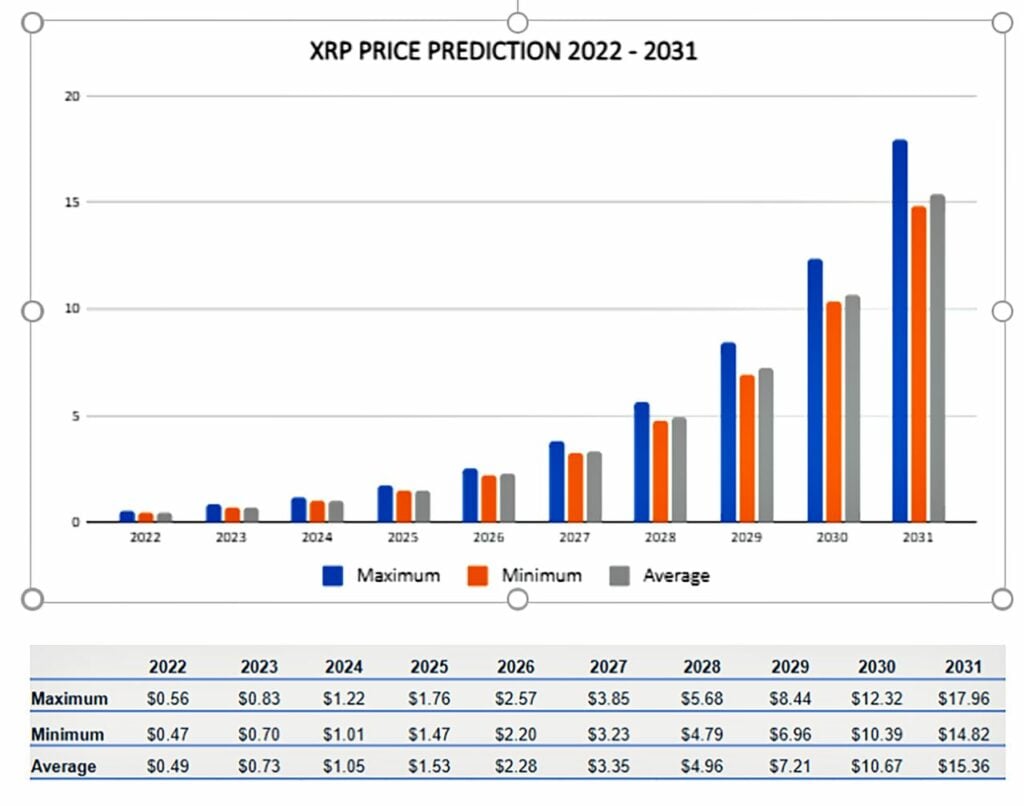
Numerous financial platforms and cryptocurrency analysts provide price predictions for XRP, often utilizing a combination of the methodologies mentioned above, sometimes augmented by machine learning algorithms. These forecasts can range from conservative estimates to highly optimistic long-term targets. For example, some projections might suggest XRP hitting $1-$5 in the near term under favorable conditions, while more bullish long-term outlooks, assuming mass adoption and a resolution to legal woes, might envision targets exceeding $10 or even higher. It is critical to view these projections with skepticism, recognizing that they are often based on specific assumptions about future market conditions, regulatory outcomes, and adoption rates, none of which are guaranteed. A common caveat is that “past performance is not indicative of future results.”
Risks and Considerations for XRP Investors
Investing in XRP, like any cryptocurrency, carries significant risks that potential investors must thoroughly understand and account for within their financial planning.
Regulatory Uncertainty
The most prominent risk for XRP remains the ongoing regulatory uncertainty, particularly the outcome of the SEC lawsuit. An unfavorable ruling could severely impede Ripple’s operations and XRP’s utility within the U.S. and potentially set a precedent for other jurisdictions. Even a favorable outcome might not completely eliminate future regulatory challenges, as governments worldwide continue to grapple with how to classify and oversee digital assets.
Market Volatility
Cryptocurrency markets are notoriously volatile. XRP’s price can experience dramatic swings in a short period, leading to substantial gains or losses. This high volatility necessitates a strong risk tolerance and a clear investment strategy. Investors should only allocate capital they can afford to lose, recognizing the speculative nature of the asset class.
Competition and Market Saturation
While XRP offers a distinct value proposition, it faces competition from both traditional payment systems (e.g., SWIFT, Visa, Mastercard, PayPal) and other blockchain-based solutions. Newer protocols, central bank digital currencies (CBDCs), and evolving fintech solutions could potentially offer alternative methods for cross-border payments, challenging XRP’s market share.
Liquidity and Trading Volume
While XRP is a highly liquid asset, sudden market events or significant institutional movements can affect its liquidity and impact price stability. Investors should be aware of the spread between bid and ask prices, especially during periods of high volatility, as this can affect execution of trades.
Investment Horizon and Risk Tolerance
Investors should carefully consider their personal financial situation, investment goals, and risk tolerance before investing in XRP. A long-term investment horizon, where one is prepared to hold through market cycles, is generally advisable for highly volatile assets. Diversifying one’s portfolio to include a range of asset classes can also help mitigate the risks associated with investing in a single, volatile digital asset. Conducting thorough due diligence and seeking advice from qualified financial professionals is paramount.
The Future Outlook and Long-Term Potential
The future outlook for XRP is characterized by both significant potential and considerable headwinds. Its long-term trajectory will largely depend on its ability to overcome regulatory hurdles and achieve widespread institutional adoption.
Scenarios for Growth
In a best-case scenario, where Ripple achieves a favorable resolution with the SEC, and financial institutions globally increasingly adopt On-Demand Liquidity (ODL) for cross-border payments, XRP could see substantial demand. Regulatory clarity would unlock liquidity and allow for easier integration into traditional financial systems. As global remittances and international trade continue to grow, XRP’s utility as a fast, low-cost bridge currency could solidify its position, driving its value upward. Furthermore, the expansion of the XRPL ecosystem beyond payments, potentially into areas like tokenization or decentralized finance (DeFi) on sidechains, could also contribute to its long-term appreciation.
The Bearish Case
Conversely, an unfavorable regulatory outcome, coupled with a lack of significant institutional adoption or the emergence of superior competitive solutions, could lead to stagnation or decline in XRP’s value. If traditional systems adapt faster, or if CBDCs become the preferred mechanism for international settlements, XRP’s unique selling proposition could diminish. A prolonged bear market in the broader crypto space could also suppress its price, irrespective of its fundamental developments.
Diversification and Strategic Investing
For any investor, it is crucial to approach XRP not as a guaranteed path to wealth, but as a component within a well-diversified investment strategy. Allocating a small, considered portion of one’s portfolio to high-growth, high-risk assets like XRP, while balancing with more stable investments, is a prudent approach. A long-term perspective, focusing on the underlying utility and adoption trends rather than short-term price fluctuations, is essential for navigating the volatile cryptocurrency market.
The Evolving Digital Asset Landscape
Ultimately, XRP’s journey is intertwined with the broader evolution of the digital asset landscape. As the world moves towards a more digitized financial system, assets that offer genuine utility, efficiency, and regulatory compliance are poised for growth. XRP, with its clear focus on institutional payments, holds a distinct position in this evolving paradigm. Its ability to navigate regulatory complexities, foster widespread adoption, and adapt to technological shifts will be the defining factors in determining what heights it is ultimately projected to hit.
aViewFromTheCave is a participant in the Amazon Services LLC Associates Program, an affiliate advertising program designed to provide a means for sites to earn advertising fees by advertising and linking to Amazon.com. Amazon, the Amazon logo, AmazonSupply, and the AmazonSupply logo are trademarks of Amazon.com, Inc. or its affiliates. As an Amazon Associate we earn affiliate commissions from qualifying purchases.