
Navigating retirement savings can be a complex journey, and understanding the tax implications of withdrawing from your 401k is a critical financial literacy skill. A 401k is a powerful employer-sponsored retirement savings plan that allows employees to invest a portion of their paycheck before taxes are taken out (for traditional 401ks), or after taxes are taken out (for Roth 401ks). While the primary goal of these plans is to provide financial security in your golden years, circumstances sometimes necessitate withdrawals before, or during, retirement. Regardless of the reason, correctly reporting these withdrawals on your annual tax return is paramount to avoid penalties, ensure compliance, and optimize your financial standing.

This comprehensive guide will demystify the process of reporting 401k withdrawals. We’ll delve into the various types of distributions, the all-important tax forms, the potential pitfalls, and strategies to minimize your tax liability. By the end, you’ll have a clearer understanding of how to manage this crucial aspect of your personal finance, empowering you to make informed decisions about your retirement funds.
Understanding 401k Withdrawals and Their Tax Implications
Before you can report a 401k withdrawal, you must understand how these distributions are taxed. The rules vary significantly based on the type of 401k you have and your age at the time of withdrawal.
The Basics of 401k Taxation
For traditional 401k plans, contributions are typically made pre-tax, meaning you didn’t pay income tax on that money when you earned it. The growth within the account is also tax-deferred. Consequently, when you withdraw from a traditional 401k, both your contributions and any earnings are generally taxed as ordinary income in the year of withdrawal. This means the money is added to your other income (like salary) and taxed at your marginal income tax rate.
Roth 401k plans, on the other hand, are funded with after-tax dollars. You pay income tax on your contributions upfront. The significant advantage here is that qualified withdrawals from a Roth 401k are entirely tax-free. For a withdrawal to be “qualified,” two conditions must be met: the account must have been open for at least five years, and the withdrawal must occur after you reach age 59½, become disabled, or are made by your beneficiary after your death.
The 10% Early Withdrawal Penalty
One of the most significant considerations for 401k withdrawals is the potential for an early withdrawal penalty. If you take a distribution from a traditional 401k before you reach age 59½, in addition to the withdrawal being taxed as ordinary income, it will typically be subject to an additional 10% early withdrawal penalty imposed by the IRS. This penalty is designed to discourage individuals from using their retirement savings for non-retirement purposes.
However, there are several important exceptions to this penalty. These include withdrawals made due to:
- Total and permanent disability.
- Withdrawals for unreimbursed medical expenses exceeding 7.5% of your Adjusted Gross Income (AGI).
- Distributions due to IRS levy.
- Withdrawals made to a beneficiary after the account holder’s death.
- Payments made under a Qualified Domestic Relations Order (QDRO) to an ex-spouse, child, or dependent due to divorce or separation.
- Substantially equal periodic payments (SEPPs) under IRS Rule 72(t).
- For certain qualified public safety employees who separate from service in or after the year they reach age 50.
- For individuals called to active duty in the military (reservists).
Understanding whether an exception applies to your situation is crucial for accurate tax reporting and avoiding unnecessary penalties.
Types of 401k Withdrawals and Their Reporting Differences
The way you report a 401k withdrawal on your tax return hinges significantly on the nature of the withdrawal itself. Not all distributions are treated equally by the IRS.
Normal Retirement Withdrawals (Age 59½ and Beyond)
Once you reach age 59½, withdrawals from your 401k are considered “normal” distributions. For a traditional 401k, these amounts are fully taxable as ordinary income but are not subject to the 10% early withdrawal penalty. For a Roth 401k, if the distribution is qualified (account open for 5+ years), it is entirely tax-free. Your plan administrator will report these distributions on Form 1099-R, indicating that no early withdrawal penalty applies.
Early Withdrawals (Before Age 59½)
If you take money out of your 401k before age 59½, it’s generally considered an early withdrawal. As discussed, these are typically subject to both ordinary income tax and the 10% early withdrawal penalty, unless a specific exception applies. It’s critical to identify and correctly report any applicable exceptions on your tax forms to avoid the penalty. Your Form 1099-R will usually indicate an early distribution code, and if an exception applies, you’ll use Form 5329, Additional Taxes on Qualified Plans (Including IRAs) and Other Tax-Favored Accounts, to claim it.
Rollovers to Another Retirement Account
A rollover involves transferring funds from one retirement account to another, such as from a 401k to an IRA, or from an old 401k to a new employer’s 401k. Rollovers are generally tax-free and penalty-free, provided they are executed correctly. There are two main types:
- Direct Rollover: The funds are transferred directly from your old plan administrator to the new one. You never physically touch the money. This is the safest way to ensure no taxes or penalties are incurred.
- Indirect Rollover: You receive a check for your 401k funds. You then have 60 days from the date of receipt to deposit the money into a new qualified retirement account. If you miss this 60-day window, the distribution becomes taxable and, if you’re under 59½, subject to the 10% early withdrawal penalty.
Even if you complete a direct rollover, you will still receive a Form 1099-R showing the distribution. However, the distribution code (often ‘G’ for direct rollover) and how you report it on your Form 1040 will ensure it’s not taxed. For indirect rollovers, careful reporting on your tax return is essential to indicate that the funds were rolled over within the 60-day window.
Loans from Your 401k
Many 401k plans allow you to borrow money from your account, which is not considered a withdrawal if repaid according to the terms. These loans typically have a repayment schedule (usually up to five years, or longer for a home purchase) and interest. If you repay the loan on time, there are no tax implications. However, if you default on the loan (i.e., you fail to make repayments) or terminate employment before the loan is repaid, the outstanding loan balance is generally treated as a taxable distribution in the year of default or termination. If this occurs before age 59½, it will also be subject to the 10% early withdrawal penalty. Your plan administrator will then issue a Form 1099-R for the defaulted loan amount.
Navigating the Tax Forms: Form 1099-R and Your Tax Return
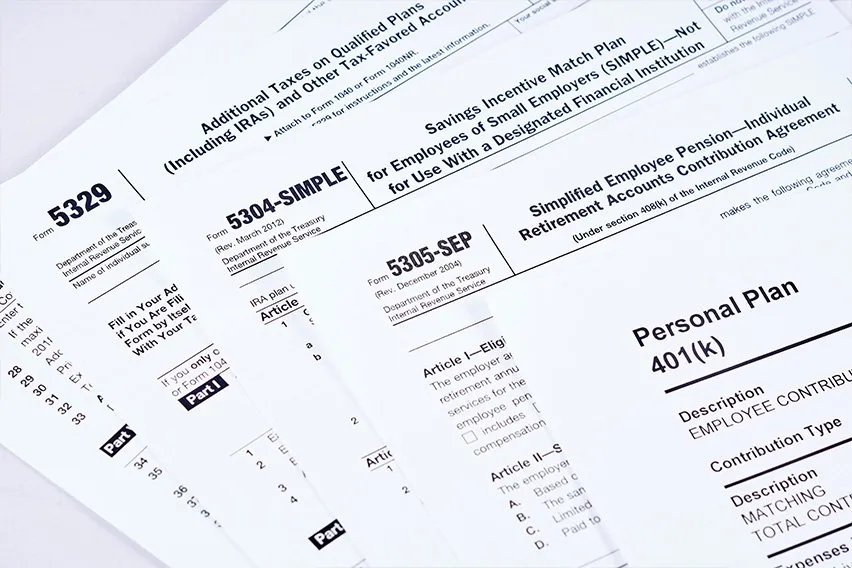
The cornerstone of reporting any 401k withdrawal is Form 1099-R, Distributions From Pensions, Annuities, Retirement or Profit-Sharing Plans, IRAs, Insurance Contracts, etc. Your plan administrator is required to send this form to you by January 31st of the year following the distribution.
Decoding Form 1099-R
Each box on Form 1099-R provides critical information:
- Box 1 (Gross Distribution): The total amount distributed from your 401k.
- Box 2a (Taxable Amount): The portion of the gross distribution that is taxable. For traditional 401ks, this is often the same as Box 1 unless a portion was non-taxable (e.g., after-tax contributions). For Roth 401ks, this might be zero for qualified distributions.
- Box 2b (Taxable amount not determined/Total Distribution): If “Taxable amount not determined” is checked, the payer could not figure the taxable amount. If “Total distribution” is checked, it means the entire balance was distributed.
- Box 4 (Federal income tax withheld): Any federal income tax your plan administrator withheld from your distribution.
- Box 7 (Distribution Code): This single or two-character code is arguably the most important box. It tells the IRS the type of distribution you received and whether it’s subject to an early withdrawal penalty or other special rules. Common codes include:
- 7: Normal distribution (no early penalty).
- 1: Early distribution (subject to 10% penalty, no known exception applies).
- 2: Early distribution (exception applies, such as disability or substantial equal periodic payments).
- G: Direct rollover and direct transfer.
- J: Early distribution from a Roth IRA or Roth 401k (non-qualified).
- L: Loans treated as a distribution.
Reporting on Form 1040
Once you have your Form 1099-R, you’ll transfer the information to your main tax form, Form 1040.
- The taxable amount from Box 2a of Form 1099-R (or your calculated taxable amount if Box 2b is checked) will be entered on the relevant line for “Pensions, annuities, and IRA distributions” (Schedule 1, line 5a for gross, 5b for taxable amount, then transferred to line 5 of Form 1040).
- If you had federal income tax withheld (Box 4), this amount will be included in your total federal withholding on Form 1040.
- If your distribution code in Box 7 of Form 1099-R indicates an early withdrawal (e.g., code 1), or if an early withdrawal penalty applies to a defaulted loan, you will typically need to file Form 5329, Additional Taxes on Qualified Plans (Including IRAs) and Other Tax-Favored Accounts. On Form 5329, you calculate the 10% penalty and, crucially, claim any applicable exceptions that would waive it. The penalty amount from Form 5329 is then transferred to your Form 1040.
Many tax software programs (like TurboTax, H&R Block, etc.) will guide you through this process step-by-step, asking you questions about your Form 1099-R and automatically filling out Form 5329 if needed.
State Tax Implications
Remember that federal tax rules are just one piece of the puzzle. Most states also have income tax, and they may have different rules regarding the taxation of 401k withdrawals. Some states might fully tax them, some might offer exemptions for retirees, and others might have different early withdrawal penalty rules. Always check your state’s specific tax regulations or consult with a local tax professional.
Strategies to Minimize Tax Impact on 401k Withdrawals
While withdrawals are taxable events, strategic planning can often reduce your tax burden, especially as you approach retirement.
Phased Withdrawals and Tax Bracket Management
If you have control over your withdrawal schedule (i.e., you’re not forced to take a lump sum), consider taking smaller, strategic withdrawals over several tax years. This can help you stay within lower income tax brackets, potentially paying less tax overall than if you took a large lump sum that pushes you into a higher bracket. This strategy is particularly relevant when you’re no longer working full-time and your income may be lower.
Required Minimum Distributions (RMDs)
Once you reach a certain age (currently 73 for most individuals, increasing to 75 in 2033), the IRS mandates that you begin taking Required Minimum Distributions (RMDs) from traditional 401ks (and traditional IRAs). Failing to take your RMDs can result in a significant penalty (25%, and potentially 10% if corrected in time, of the amount you failed to withdraw). While these are mandatory withdrawals, understanding how they fit into your overall tax plan can help manage their impact. They are taxed as ordinary income, just like other traditional 401k withdrawals.
Qualified Charitable Distributions (QCDs)
For individuals aged 70½ or older who don’t need their full RMDs for living expenses, a Qualified Charitable Distribution (QCD) can be an excellent tax-saving strategy. A QCD allows you to directly transfer up to $100,000 per year from your traditional IRA or 401k (if your plan allows direct transfers to charities) to an eligible charity. While it doesn’t reduce your adjusted gross income, the QCD amount counts toward your RMD for the year and is excluded from your taxable income. This can be particularly beneficial if you don’t itemize deductions.
Leveraging Exceptions to the Early Withdrawal Penalty
If you find yourself needing to access 401k funds before age 59½, thoroughly explore all the IRS-approved exceptions to the 10% early withdrawal penalty. Meeting the criteria for even one exception can save you a substantial amount of money. Documenting your eligibility and correctly reporting the exception on Form 5329 is crucial.
Common Pitfalls and Professional Guidance
Reporting 401k withdrawals can be tricky, and even small errors can lead to IRS inquiries or additional tax liabilities.
Mistakes to Avoid
- Not Reporting a Rollover Correctly: Failing to correctly indicate an indirect rollover on your tax return (or missing the 60-day window) can cause the entire amount to be treated as a taxable distribution, plus the 10% penalty if applicable.
- Misunderstanding Distribution Codes: Incorrectly interpreting the Box 7 distribution code on Form 1099-R can lead to errors in how the distribution is treated on your tax return.
- Failing to Claim an Early Withdrawal Penalty Exception: If an exception applies, but you don’t file Form 5329 to claim it, you’ll unnecessarily pay the 10% penalty.
- Ignoring State Tax Implications: Overlooking how your state taxes 401k withdrawals can lead to unexpected state tax bills or underpayments.
- Not Withholding Enough Tax: If you take a large withdrawal, ensure you either have enough tax withheld or make estimated tax payments to avoid an underpayment penalty.

When to Seek Professional Advice
While tax software can handle many straightforward situations, there are times when professional guidance is invaluable:
- Complex Scenarios: If you have multiple withdrawals, a combination of withdrawal types (e.g., a rollover and an early withdrawal in the same year), or unusual circumstances.
- Large Sums Involved: When significant amounts of money are being withdrawn, the potential tax implications are higher, making expert advice more critical.
- Uncertainty About Tax Implications or Planning: If you’re unsure about how a withdrawal will impact your overall financial plan, a financial advisor can provide insights.
- Seeking Tax Optimization Strategies: A qualified tax professional or financial advisor can help you develop a strategy to minimize taxes on your withdrawals now and in the future.
Correctly reporting your 401k withdrawals is more than just a compliance task; it’s a vital part of managing your retirement wealth effectively. By understanding the different types of distributions, meticulously reviewing your Form 1099-R, and leveraging available tax strategies, you can navigate this process with confidence. Proactive planning and, when necessary, consulting with financial or tax professionals will ensure that your retirement savings serve their intended purpose, providing you with financial security when you need it most.
aViewFromTheCave is a participant in the Amazon Services LLC Associates Program, an affiliate advertising program designed to provide a means for sites to earn advertising fees by advertising and linking to Amazon.com. Amazon, the Amazon logo, AmazonSupply, and the AmazonSupply logo are trademarks of Amazon.com, Inc. or its affiliates. As an Amazon Associate we earn affiliate commissions from qualifying purchases.