
Tax season is often viewed with a mixture of trepidation and confusion. For the average taxpayer, the Internal Revenue Service (IRS) code is a labyrinth of complex regulations, shifting deadlines, and dense terminology. However, the rise of financial technology has bridged the gap between professional-grade accounting and the individual consumer. TurboTax stands at the forefront of this evolution, serving as a sophisticated financial tool that translates tax law into a series of manageable, plain-English questions. Understanding how to use TurboTax effectively is not just about compliance; it is about optimizing your personal financial health, ensuring you retain as much of your hard-earned income as possible, and planning for future fiscal stability.
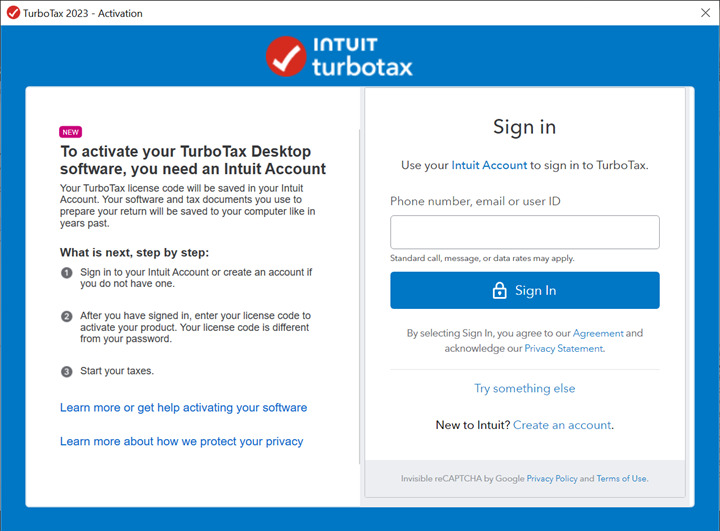
Getting Started: Choosing the Right Version for Your Financial Profile
The first and most critical step in using TurboTax is selecting the version that aligns with your specific financial situation. TurboTax is structured in tiers, with each level designed to handle increasing layers of financial complexity. Making the right choice at the outset prevents the frustration of having to upgrade mid-process or, conversely, paying for features that your financial profile does not require.
TurboTax Free Edition vs. Deluxe
The Free Edition is designed for taxpayers with simple returns. This typically includes individuals whose income is derived primarily from a standard W-2, those who claim the standard deduction, and those with limited interest income. If your financial life has moved beyond the basics—for instance, if you own a home, have significant medical expenses, or make frequent charitable contributions—the Deluxe version is generally the necessary starting point. Deluxe is engineered to search for over 350 tax deductions and credits, making it the workhorse for the average American family looking to maximize their refund.
Premier and Self-Employed Options
As your investment portfolio grows, so does the complexity of your tax obligations. TurboTax Premier is specifically tailored for taxpayers who own stocks, bonds, or rental properties. It provides the necessary tools to calculate capital gains and losses, which is essential for accurate reporting in a volatile market. For those who have embraced the gig economy or run a small business, the Self-Employed version is indispensable. It assists in identifying industry-specific deductions, such as home office expenses and vehicle mileage, which are vital for reducing the taxable income of independent contractors and entrepreneurs.
The Data Gathering Phase: Streamlining Your Tax Documentation
Before logging into the platform, successful tax preparation begins with organization. TurboTax is highly efficient, but its output is only as accurate as the data it receives. Transitioning from a shoebox full of receipts to a digital-first approach is the hallmark of modern personal finance management.
Importing W-2s and 1099s
One of the most powerful features of TurboTax is its ability to import data directly from employers and financial institutions. Thousands of companies are integrated with the Intuit ecosystem. By simply entering your Employer Identification Number (EIN) or logging into your payroll provider through the secure TurboTax portal, you can populate your return with perfect accuracy in seconds. This eliminates the risk of transposition errors—common mistakes where digits are swapped during manual entry—which are a primary trigger for IRS inquiries.
Connecting Financial Institutions
For the modern investor, manual entry of stock trades is a relic of the past. TurboTax allows users to connect to major brokerage firms and banks. Whether you are dealing with dividends, interest from a high-yield savings account, or complex cryptocurrency transactions, the platform can pull this data directly into the relevant schedules. For those involved in digital assets, this integration is particularly valuable, as it helps reconcile high-volume trades that would be nearly impossible to track manually. Ensuring all your 1099-B, 1099-INT, and 1099-DIV forms are accounted for before you begin will significantly accelerate the filing process.
Navigating the TurboTax Interface: Step-by-Step Optimization
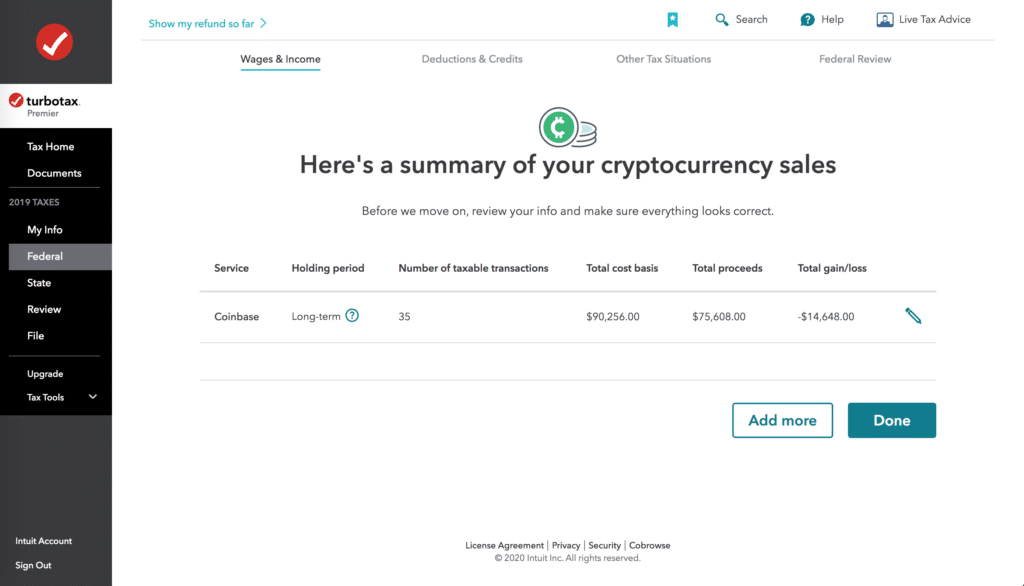
The user interface of TurboTax is designed to mimic a conversation with a tax professional. Rather than staring at a daunting Form 1040, you are presented with a series of intuitive screens. Navigating this interface correctly requires a balance of patience and attention to detail.
The Personal Information and Income Sections
The software begins by establishing your “tax identity.” This includes your filing status—Single, Married Filing Jointly, or Head of Household—which dictates your standard deduction and tax brackets. It is crucial to answer these questions accurately, as your status can have a five-figure impact on your tax liability. Once your identity is established, the “Income” section becomes the focus. TurboTax will walk you through various income streams. It is advisable to follow the “Guided” path rather than jumping between sections. This ensures that the software’s internal logic can identify potential inconsistencies or missing forms as you progress.
Maximizing Deductions and Credits
This is where TurboTax provides the most value for personal finance optimization. The software uses “Deduction Finder” technology to scan your profile for potential tax breaks. You will be asked about homeownership, educational expenses, energy-efficient home improvements, and childcare costs.
Crucially, TurboTax will calculate whether it is more beneficial for you to take the Standard Deduction or to Itemize. Since the Tax Cuts and Jobs Act of 2017, the standard deduction has been significantly higher, making itemization less common. However, for those with high state and local taxes (SALT), significant mortgage interest, or large charitable footprints, itemizing can still yield a lower tax bill. The software performs this comparison in real-time, providing a transparent look at which path saves you more money.
Review and Filing: Ensuring Accuracy and Security
The final phase of using TurboTax involves a rigorous quality control process. Before your return is transmitted to the IRS or state authorities, the software performs a comprehensive “SmartCheck” to identify errors, omissions, or “red flags” that might increase your risk of an audit.
The TurboTax Audit Support and Review Tools
One of the psychological barriers to DIY tax filing is the fear of an IRS audit. TurboTax addresses this by assigning an “Audit Risk Meter” to your return. While no software can guarantee you won’t be audited, this tool highlights entries that are statistically outside the norm for your income level. For example, if your charitable contributions are disproportionately high compared to your earnings, the software will prompt you to double-check your documentation. This “Review” stage is your opportunity to ensure that every figure entered matches your supporting documents, providing peace of mind before the final click.
E-filing and Direct Deposit Selection
Once the review is complete, the process of filing is entirely digital. E-filing is the gold standard for modern tax submission; it is faster, more secure, and provides an immediate acknowledgment from the IRS that your return has been received. During this stage, you will also select how you wish to receive your refund. Opting for direct deposit into a savings or investment account is the fastest way to get your money back. From a personal finance perspective, this is an excellent time to “pay yourself first” by directing that refund into an IRA or an emergency fund, turning a tax windfall into a long-term asset.

Post-Filing Management: Leveraging TurboTax for Year-Round Financial Health
The utility of TurboTax should not end once the “Submit” button is pressed. The data stored within the platform serves as a blueprint for your financial life in the coming year. By reviewing your completed return, you can gain deep insights into your effective tax rate and your spending habits.
Using the “Tax Caster” or similar planning tools within the TurboTax ecosystem allows you to run “what-if” scenarios for the next year. If you are planning to sell a home, start a business, or if you are expecting a child, you can estimate how these life events will impact your future tax liability. Furthermore, the platform provides a clear view of your Adjusted Gross Income (AGI), a number that is frequently required when applying for mortgages, car loans, or financial aid for education. By maintaining an active relationship with your tax data through TurboTax, you transform an annual chore into a strategic advantage for your broader financial journey.
In conclusion, using TurboTax effectively is a blend of digital organization, careful data entry, and proactive financial planning. It empowers the individual to take control of their relationship with the IRS, ensuring that they pay exactly what they owe and not a penny more. In the modern landscape of personal finance, such a tool is an essential component of a well-managed economic life.
aViewFromTheCave is a participant in the Amazon Services LLC Associates Program, an affiliate advertising program designed to provide a means for sites to earn advertising fees by advertising and linking to Amazon.com. Amazon, the Amazon logo, AmazonSupply, and the AmazonSupply logo are trademarks of Amazon.com, Inc. or its affiliates. As an Amazon Associate we earn affiliate commissions from qualifying purchases.