
The Dow Jones Industrial Average (DJIA), often simply referred to as “the Dow,” stands as one of the most recognizable and frequently cited stock market indices in the world. For over a century, its daily fluctuations have dominated financial headlines, acting as a seemingly ubiquitous shorthand for the health of the American economy and the broader stock market. Yet, beyond its constant presence in news reports, many wonder about its true purpose. Is it merely a historical artifact, a simplistic measure, or does it still hold significant weight in today’s complex financial landscape? Understanding the Dow’s purpose requires delving into its origins, its unique methodology, its utility for investors, and its acknowledged limitations.

At its core, the Dow Jones Industrial Average serves primarily as a barometer of the U.S. stock market and, by extension, the American economy. It provides a snapshot of the performance of 30 of the largest and most influential publicly traded companies in the United States. Its movements are interpreted by economists, policymakers, and individual investors alike as indicators of market sentiment, corporate profitability, and the overall trajectory of economic growth or contraction. However, its historical legacy and prominent role do not come without nuances and critiques, which are essential to fully grasp its enduring, yet evolving, purpose.
A Historical Benchmark and Economic Barometer
The Dow Jones Industrial Average isn’t just a number; it’s a piece of financial history, meticulously tracking the industrial progress and economic cycles of the United States for well over a century. Its foundational role lies in providing a digestible, long-term perspective on the performance of a select group of American corporate giants.
Origins and Evolution: Charles Dow’s Vision
Conceived by Charles Dow, co-founder of Dow Jones & Company and The Wall Street Journal, the DJIA was first published in 1896. Its initial purpose was remarkably straightforward: to measure the performance of the nascent industrial sector of the American economy. Comprised of just 12 predominantly industrial stocks at its inception – including General Electric, American Cotton Oil, and U.S. Leather – it aimed to offer a simple yet effective tool for investors to understand the market’s direction. Dow envisioned an index that could cut through the daily noise and reveal underlying trends, acting as a leading indicator of economic activity. Over the decades, the index expanded to 30 components in 1928, and its composition has evolved dramatically, shedding most of its original “industrial” character to include a diverse range of companies from technology, healthcare, finance, and consumer goods. Despite these changes, the fundamental aim remains: to gauge the performance of major U.S. corporations as a proxy for the broader economy. This historical continuity provides a unique lens through which to observe American capitalism’s journey, from the industrial revolution through the information age.
Composition and Calculation: Understanding the 30 Stocks
The DJIA is unique in its composition and calculation method compared to many other modern indices. It comprises 30 large, publicly-owned companies traded on the New York Stock Exchange (NYSE) and NASDAQ. These companies are selected by the editors of The Wall Street Journal based on their reputation, sustained growth, and broad investor interest, aiming to represent a significant portion of the U.S. market and economy. However, the selection process is not based on strict quantitative rules but rather on editorial judgment, leading to occasional changes in its constituents to maintain relevance.
Crucially, the DJIA is a price-weighted average. This means that stocks with higher share prices have a greater impact on the index’s value than stocks with lower share prices, regardless of their actual market capitalization (the total value of all outstanding shares). The sum of the prices of the 30 stocks is divided by a “Dow divisor” – a number that is adjusted over time to account for stock splits, spin-offs, and changes in the index components, ensuring the continuity of the index’s value. This methodology, while historically significant, contrasts sharply with market-capitalization-weighted indices like the S&P 500, which give more weight to larger companies based on their total market value, making the S&P 500 generally considered a more accurate reflection of the overall market. The Dow’s price-weighted nature is a key characteristic that shapes its purpose and influences how its movements are interpreted.
Reflecting Economic Health: How Its Movements Are Interpreted
For many, the Dow is the simplest and most accessible barometer of economic health. A rising Dow is generally perceived as a sign of a strong economy, indicating corporate profitability, investor confidence, and potential for job growth. Conversely, a declining Dow often signals economic contraction, corporate struggles, and investor anxiety. This interpretation, while broadly accurate in the long run, needs to be taken with a grain of salt. Because it only tracks 30 large companies, the DJIA may not fully capture the nuances of the broader economy, particularly the performance of small and mid-sized businesses, or emerging sectors not represented in the index. Nevertheless, its daily movements still serve as a powerful psychological marker, influencing consumer and business sentiment, and often shaping the narrative around economic performance in media and political discourse. Its simplicity makes it easily digestible for the general public, fulfilling its purpose of offering a quick, albeit sometimes incomplete, snapshot of the nation’s financial pulse.
More Than Just a Number: Its Role for Investors
Beyond its role as a general economic indicator, the Dow Jones Industrial Average serves several practical purposes for individual and institutional investors. While sophisticated investors often look to broader, market-capitalization-weighted indices for a comprehensive market view, the Dow still offers valuable insights, particularly concerning the performance of blue-chip companies.
Gauge of Market Sentiment: How Investors Use It to Understand Broader Trends
One of the primary uses of the DJIA for investors is as an immediate gauge of market sentiment. When the Dow moves significantly up or down, it often signals a shift in the collective mood of investors, reflecting their optimism or pessimism about the future. For instance, a sharp drop in the Dow might indicate widespread concerns about inflation, interest rate hikes, or geopolitical instability, prompting investors to reassess their portfolios and perhaps shift to safer assets. Conversely, a sustained rally can signify robust corporate earnings, technological breakthroughs, or favorable economic policies, encouraging further investment. While the Dow represents only a fraction of the market, its high visibility and daily media coverage make it a focal point for understanding the prevailing mood, influencing immediate trading decisions and providing a psychological anchor point for market participants. It’s a quick way for investors to check the pulse of the market before diving into more granular data.
Diversification and Benchmarking Portfolios: Comparing Individual Investments to the DJIA
Although not a complete representation of the entire market, the DJIA is frequently used as a benchmark against which portfolio performance is measured. An investor holding a diversified portfolio of large-cap U.S. stocks might compare their returns over a given period to those of the Dow. If their portfolio outperforms the Dow, it suggests effective stock selection or asset allocation. If it underperforms, it might signal a need for reevaluation. However, investors must be mindful that the Dow is a narrow index. A portfolio heavily weighted in small-cap stocks or international equities might not be appropriately benchmarked against the DJIA.
Furthermore, some investors, particularly those new to the market or seeking simpler diversification, might invest in exchange-traded funds (ETFs) or mutual funds that track the Dow. This allows them to gain exposure to the 30 blue-chip companies with a single investment, offering a form of immediate diversification within the large-cap U.S. stock segment. For these investors, the Dow acts as both a target and a measure of their investment strategy. Its purpose here is to provide a readily accessible, albeit limited, basket of established U.S. corporate strength.
Tracking Blue-Chip Performance: Focus on Large, Established Companies
The 30 companies that comprise the Dow are generally considered “blue-chip” stocks – large, well-established, and financially sound companies with a long history of stable earnings and dividends. These are often household names, representing leaders in their respective industries. For investors interested specifically in the performance of these industrial titans, the Dow offers a focused lens. It allows them to track how America’s corporate stalwarts are performing, providing insights into sectors that are critical to the nation’s economic output. While tech giants have gained prominence, the Dow still includes companies with significant manufacturing, financial, and healthcare footprints. Therefore, its purpose is to highlight the health and growth potential of these bedrock companies, which are often less volatile than smaller, growth-oriented firms, appealing to investors seeking stability and dividend income.
Limitations and Criticisms of the DJIA
Despite its historical significance and widespread recognition, the Dow Jones Industrial Average is not without its limitations and has faced considerable criticism from financial professionals. Understanding these shortcomings is crucial for a balanced perspective on its actual utility.
Limited Scope: Only 30 Companies, Not the Entire Market
Perhaps the most significant criticism leveled against the DJIA is its limited scope. Comprising only 30 companies, it represents a tiny fraction of the thousands of publicly traded companies in the United States. This narrow selection means that the Dow cannot truly capture the breadth and diversity of the entire U.S. stock market. It omits vast sectors, including smaller companies, emerging industries, and a significant portion of the technology sector that might be found on other exchanges. Consequently, the performance of the Dow may not accurately reflect the experiences of a typical diversified investor whose portfolio would likely include hundreds or even thousands of stocks across various market capitalizations and sectors. Relying solely on the Dow for market insights can lead to a skewed perception of overall market health, missing important trends or downturns occurring outside its select constituents. Its purpose is to track a segment of the market, not the entirety.
Price-Weighted Methodology: Skewed by High-Priced Stocks, Not Market Capitalization
The price-weighted calculation methodology of the DJIA is another major point of contention. As previously mentioned, a stock’s influence on the index is determined by its share price, not by its overall market capitalization. This means that a company with a high share price but a relatively smaller market value can have a greater impact on the Dow’s movement than a company with a lower share price but a much larger market capitalization. For instance, if a stock priced at $400 moves by 1%, it will affect the Dow far more than a stock priced at $100 moving by 1%, even if the $100 stock represents a much larger company in terms of total value. This method stands in stark contrast to market-capitalization-weighted indices like the S&P 500, where larger companies inherently have a greater influence, providing a more accurate reflection of the market’s aggregate value. The price-weighted bias of the Dow can lead to a distorted view of market performance, where the fortunes of a few high-priced stocks can disproportionately sway the entire index, diminishing its purpose as a truly representative benchmark.
Sectoral Bias: Predominantly Industrial, Despite Company Changes
While the composition of the DJIA has indeed evolved from its strictly industrial roots, the name itself and the historical legacy often imply a focus that may not fully align with the modern economy. Even with the inclusion of tech and healthcare giants, the index can still exhibit a certain sectoral bias. The selection committee aims for diversity, but the inherent nature of choosing 30 “leading” companies means certain sectors might be over or under-represented. For instance, the index has historically had a strong financial component and more recently a significant tech presence, but it often lacks comprehensive representation from emerging growth sectors or certain niche industries. This bias can mean that the Dow might not fully reflect the performance of cutting-edge technologies or rapidly growing smaller companies that are driving significant portions of the economy. For investors seeking exposure to the entire economic landscape, this sectoral concentration limits the Dow’s effectiveness as a sole market proxy.
The Dow in a Broader Market Context
To truly understand the Dow’s purpose, it must be viewed within the broader ecosystem of financial indices. It doesn’t operate in a vacuum but rather complements and contrasts with other benchmarks, each serving its own specialized function.
Comparing with Other Indices: S&P 500, Nasdaq Composite, Russell 2000
The Dow is just one of many indices used to track the stock market. The S&P 500, for instance, is widely regarded by many professionals as a superior barometer of the overall U.S. stock market. Comprising 500 large-cap companies and market-capitalization-weighted, it offers broader coverage and a more accurate reflection of market value. The Nasdaq Composite, heavily weighted towards technology and growth companies, serves as a crucial indicator for that specific sector. The Russell 2000, tracking 2,000 small-cap U.S. companies, provides insights into the performance of smaller, domestically focused businesses.
The purpose of the Dow, in this context, is to provide a highly visible, easily digestible, and historically rich narrative about a specific segment: the large, established, blue-chip American companies. It’s a quick headline grabber, while other indices offer more granular or comprehensive insights. Savvy investors and analysts typically look at a combination of these indices to form a holistic view of market performance, using each for the specific perspective it offers. The Dow provides the “big picture” of the titans, while others fill in the details of the broader market.
Understanding Market Narratives: How the Media Uses the DJIA
The Dow’s enduring purpose is inextricably linked to its role in shaping public perception and market narratives. For better or worse, the DJIA is often the first, and sometimes only, stock market index mentioned in general news reports. Its points gained or lost often serve as the immediate headline for market performance, simplifying complex financial movements into an easily digestible number. This media prominence means that the Dow heavily influences public sentiment and provides a common reference point for discussions about economic health.
While this can lead to oversimplification, it also fulfills a crucial purpose: making financial news accessible to a wider audience. The public, without deep financial knowledge, can quickly grasp the notion of “the Dow is up today,” even if they don’t understand the intricacies of its calculation or its limitations. In this sense, the Dow acts as a bridge between the complex world of finance and everyday economic understanding, solidifying its purpose as a communication tool for the market’s general direction.

Beyond Daily Fluctuations: Long-term Trends vs. Short-term Noise
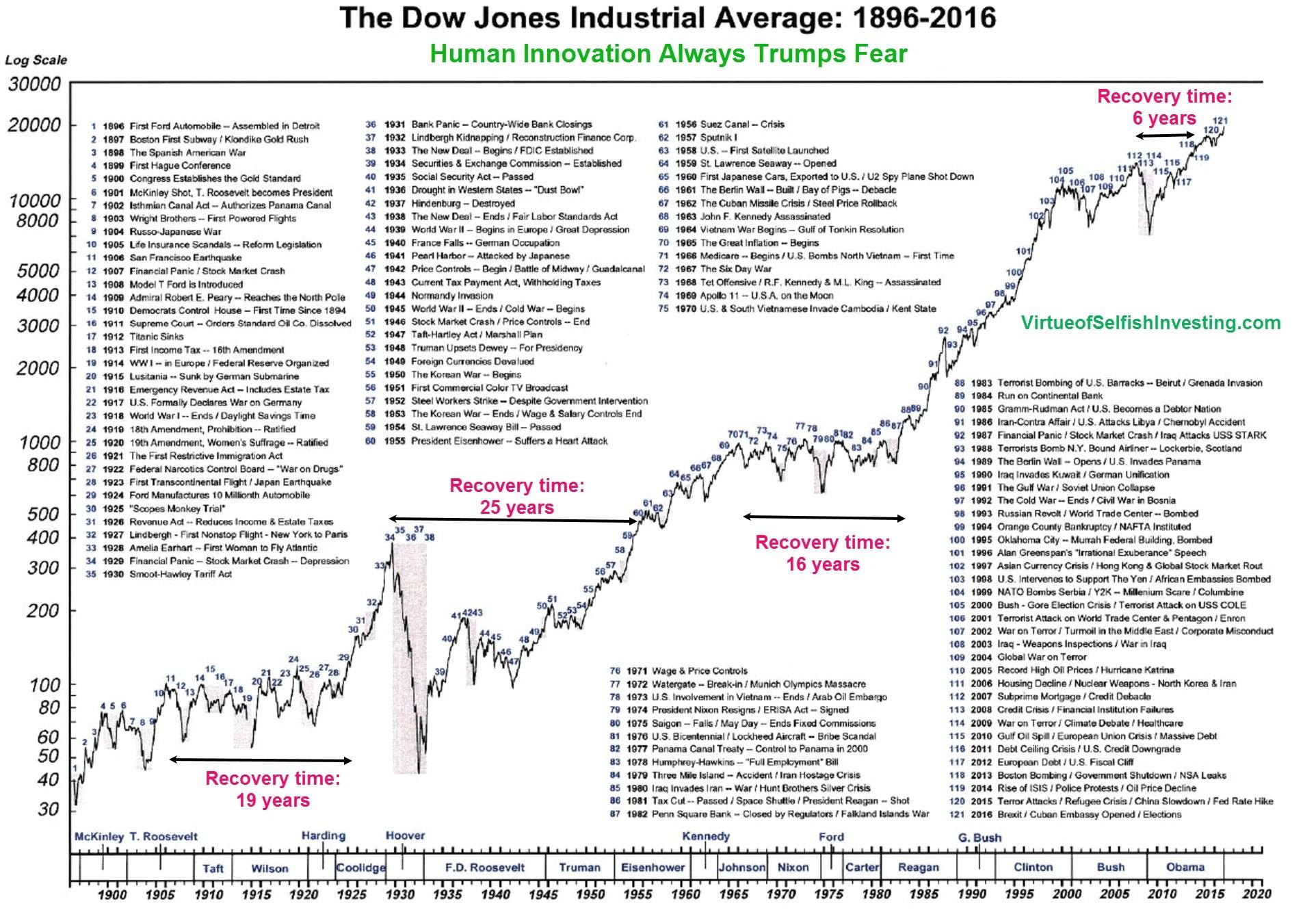
Finally, a key purpose of the Dow is to illustrate long-term trends in American corporate growth and economic development, rather than just daily noise. While daily ups and downs are reported, looking at the Dow’s performance over decades reveals patterns of innovation, recession, recovery, and expansion. Over the long term, the Dow has consistently shown an upward trajectory, reflecting the fundamental growth of the U.S. economy and the ability of its leading companies to adapt and innovate.
For long-term investors, the daily movements are less significant than the broader trends. The Dow’s historical data provides a powerful illustration of the benefits of long-term investing in well-established companies. Its consistent, albeit volatile, ascent reminds investors that despite short-term setbacks, the underlying strength of the American corporate sector has historically led to wealth creation over time. Its purpose here is to offer a compelling historical testament to the resilience and growth potential inherent in the U.S. capitalist system.
In conclusion, the Dow Jones Industrial Average, with its rich history and distinctive methodology, serves multiple, albeit sometimes nuanced, purposes. It acts as a venerable historical benchmark, a quick barometer of economic health, and a focused indicator of blue-chip corporate performance. While its limitations in scope and calculation are well-documented, its enduring visibility in media and its role in shaping public perception solidify its place as a cornerstone of financial discourse. For a comprehensive market understanding, it should always be viewed in conjunction with other indices, but its utility as a high-level summary and a symbol of American business prowess ensures its continued relevance in the world of money and finance.
aViewFromTheCave is a participant in the Amazon Services LLC Associates Program, an affiliate advertising program designed to provide a means for sites to earn advertising fees by advertising and linking to Amazon.com. Amazon, the Amazon logo, AmazonSupply, and the AmazonSupply logo are trademarks of Amazon.com, Inc. or its affiliates. As an Amazon Associate we earn affiliate commissions from qualifying purchases.