
In the intricate landscape of personal finance, understanding the true value of your assets is paramount. For many, a car represents one of the largest depreciating assets they will own, yet its financial significance often extends far beyond mere transportation. Whether you’re contemplating an upgrade, considering a trade-in, seeking an insurance policy, or simply evaluating your net worth, accurately assessing your vehicle’s market value is a critical step. This is where tools like Kelley Blue Book (KBB) become indispensable, serving as a trusted compass in the dynamic world of automotive valuation. By leveraging KBB’s comprehensive insights, individuals can make informed financial decisions, ensuring they maximize their returns and navigate the car market with confidence.

The Financial Imperative of Knowing Your Car’s Value
In personal finance, ignorance can be costly. When it comes to your vehicle, a lack of understanding regarding its current market value can lead to significant financial oversights, impacting everything from your annual budget to long-term wealth accumulation. A car, despite its depreciating nature, remains a substantial asset for most households, and its value directly influences various financial touchpoints.
Strategic Financial Planning and Asset Assessment
Knowing your car’s worth is more than just curiosity; it’s a fundamental aspect of sound financial planning. For those who frequently update their vehicles, understanding depreciation rates and current market trends allows for more strategic buying and selling. It helps in setting realistic budgets for your next purchase, factoring in the equity you can extract from your current vehicle. Furthermore, for a holistic view of your financial health, accurately assessing your car’s value contributes to a more precise net worth calculation. This figure is crucial for everything from loan applications to estate planning, providing a clearer picture of your overall financial standing. Treating your car not just as a means of transport but as a liquidable asset within your financial portfolio empowers better decision-making.
Optimizing Sales, Trade-Ins, and Insurance Policies
The most immediate and tangible financial benefit of knowing your car’s value comes into play during sales or trade-ins. Without an objective valuation, you risk underselling your vehicle, leaving money on the table that could have been reinvested or saved. KBB provides a benchmark that empowers sellers to negotiate effectively, whether with a private buyer or a dealership. For trade-ins, an accurate valuation helps you understand the true value of the deal being offered, allowing you to separate the vehicle’s worth from the negotiation tactics surrounding a new purchase.
Beyond selling, your car’s value is also a cornerstone for insurance purposes. Insurers use an approximation of your car’s market value to determine premiums for comprehensive and collision coverage. An outdated or inaccurate understanding of this value could mean you’re either overpaying for insurance that covers more than your car is worth, or worse, under-insuring an asset, leading to significant financial loss in the event of an accident or theft. Regularly checking your car’s KBB value allows you to adjust your insurance coverage appropriately, ensuring you’re neither over- nor under-protected financially.
Demystifying Kelley Blue Book (KBB): Your Financial Compass
Kelley Blue Book has evolved over a century to become one of the most recognized and trusted authorities in vehicle valuation. Far from being a simple price list, KBB utilizes a sophisticated methodology to provide highly accurate and market-relevant values, making it an indispensable financial tool for anyone interacting with the automotive market.
KBB’s Methodology: A Data-Driven Approach to Valuation
At its core, KBB’s strength lies in its extensive data collection and analytical prowess. The company compiles and processes billions of data points daily, drawing from a vast array of sources. This includes actual vehicle transactions from dealerships across the country, auction results, manufacturer pricing data, economic conditions, regional supply and demand trends, and even specific vehicle characteristics. KBB’s proprietary algorithms then synthesize this massive dataset to generate what they refer to as “Fair Market Range” values. This range acknowledges the nuances of individual sales and provides a realistic expectation for what a vehicle will likely sell for in a given market, considering all relevant factors. This robust, data-driven methodology ensures that the valuations provided are not arbitrary but reflective of real-world market dynamics, offering a dependable financial benchmark.
Understanding KBB Value Types: Tailoring to Your Financial Needs
KBB offers several distinct valuation types, each designed to address specific financial scenarios you might encounter. Understanding these differences is crucial for maximizing your financial outcomes.
- Trade-in Value: This is the amount a dealership is likely to offer you when you trade in your current vehicle towards the purchase of another. It’s typically the lowest valuation because the dealership needs to account for reconditioning costs, marketing, and profit margins. From a financial perspective, this is often the most convenient option but may yield a lower monetary return than a private sale.
- Private Party Value: This represents the estimated price you can expect to receive when selling your car directly to another individual. This value is usually higher than the trade-in value because you’re bypassing the dealership’s overhead and profit. Opting for a private party sale, while requiring more effort, often translates to a more favorable financial outcome for the seller.
- Retail Value: This is the price you can expect to pay when purchasing a used vehicle from a dealership. It reflects the costs associated with inspection, reconditioning, warranty (if applicable), and the dealership’s profit. As a buyer, understanding this value helps you assess if you’re getting a fair deal.
By providing these distinct values, KBB empowers you to strategize your selling or buying approach, aligning with your financial goals and preferred level of effort.

Key Factors Influencing Your Car’s KBB Value
While KBB employs complex algorithms, the underlying factors that significantly impact your car’s financial worth are largely intuitive. Understanding these elements allows you to anticipate valuations and, in some cases, take proactive steps to preserve or even enhance your vehicle’s market appeal.
Core Vehicle Attributes: The Foundation of Value
The fundamental characteristics of your car form the bedrock of its KBB valuation. These are immutable aspects that define the vehicle itself:
- Make, Model, and Year: These are primary identifiers. Different brands and models have varying reputations for reliability, desirability, and resale value. Newer models generally command higher prices due to less wear and tear and more up-to-date features.
- Mileage: This is one of the most significant depreciation factors. Lower mileage typically indicates less wear and tear on mechanical components, translating to a higher value. KBB models average annual mileage to assess if your car’s mileage is high, low, or average for its age.
- Trim Level and Features: A higher trim level (e.g., “Limited” versus “Base”) or desirable optional features (e.g., sunroof, premium audio, advanced safety systems, leather interior, navigation) can significantly boost a car’s value. These additions enhance comfort, convenience, and safety, making the vehicle more attractive to potential buyers.
Condition and Market Dynamics: The Nuances of Valuation
Beyond the basics, your car’s current state and the broader economic environment play a crucial role in determining its KBB value.
- Vehicle Condition: This is arguably the most subjective yet critical factor. KBB classifies condition into categories like “Excellent,” “Good,” “Fair,” and “Poor.” An “Excellent” condition car means it’s mechanically sound, has a pristine interior and exterior, and requires no reconditioning. A “Poor” condition car, conversely, has significant mechanical issues, body damage, or extensive wear. Honesty in assessing condition is vital for an accurate valuation. This includes everything from tire tread depth and brake wear to the presence of dents, scratches, and interior stains. Any element that requires financial outlay for repair or replacement will reduce the value.
- Location and Market Demand: Geographic location can influence value due to regional preferences, climate, and local supply and demand. For example, a 4×4 SUV might hold higher value in a snowy region compared to a mild climate. Similarly, current market trends, such as fluctuating gas prices affecting demand for fuel-efficient vehicles or supply chain issues impacting new car inventory, can dramatically sway used car values. KBB incorporates this regional and temporal data to provide values that are specific to your area and the current market climate.
Navigating the KBB Valuation Process: A Step-by-Step Guide
Using Kelley Blue Book to ascertain your car’s worth is a straightforward process, designed to be user-friendly while providing comprehensive results. Follow these steps to generate an accurate financial assessment of your vehicle.
Step-by-Step KBB Valuation
- Visit KBB.com: Go to the official Kelley Blue Book website and look for the “What’s My Car Worth?” or similar valuation tool.
- Enter Basic Vehicle Information: Start by providing fundamental details:
- Year, Make, Model: Select these from the dropdown menus.
- Trim Level: Be specific here. A higher trim often means more features and a higher value. If you’re unsure, check your car’s owner’s manual or VIN decoder.
- Mileage: Provide the accurate current mileage on your odometer.
- Enter Your Zip Code: Your location affects market demand and local pricing, so this is crucial for a localized valuation.
- Describe Your Car’s Features and Options: This is where you detail specific add-ons that aren’t standard for your trim. This might include premium wheels, a navigation system, a sunroof, heated seats, or advanced safety packages. Be thorough, as these can add significant value.
- Assess Your Car’s Condition Honestly: This is perhaps the most critical step for accuracy. KBB will guide you through questions about the interior, exterior, mechanical soundness, and any existing damage or necessary repairs. Be realistic. An objective assessment prevents unpleasant surprises during negotiations. For instance, consider tire wear, brake life, fluid leaks, warning lights, body damage, interior wear and tear, and any modifications.
- Select Your Valuation Type: Choose whether you want to see the Trade-in Value, Private Party Value, or Retail Value, depending on your financial objective.
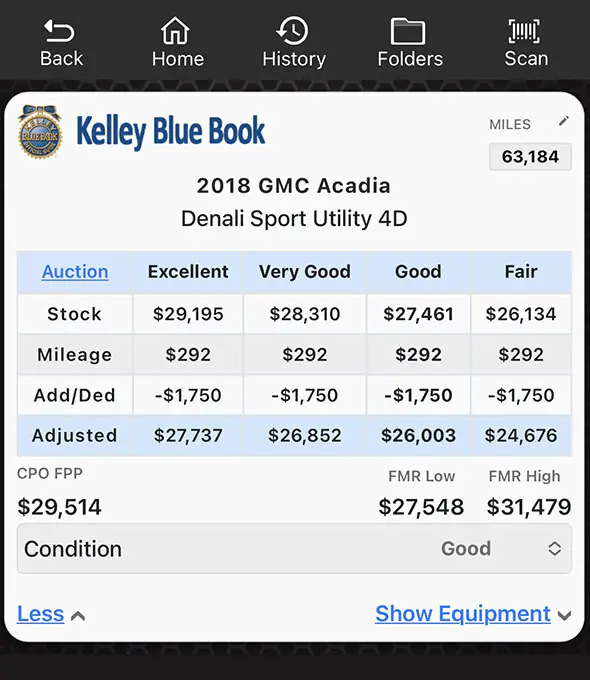
Once these steps are completed, KBB will provide you with a comprehensive valuation, often presented as a Fair Market Range, along with insights into the factors influencing that range.
Interpreting and Leveraging Your KBB Valuation for Financial Advantage
Receiving your KBB valuation is just the beginning; the real financial power comes from how you interpret and use this information.
- Understand the Range: KBB often provides a range rather than a single number. This range accounts for slight variations in condition and local market dynamics. Aim for the higher end of the range if your car is in excellent condition and you’re selling privately.
- Negotiation Power: Armed with a KBB valuation, you gain significant leverage. When selling privately, you can confidently set your asking price. When trading in, you can counter dealership offers if they are significantly below the KBB trade-in value, or at least understand the financial implications of their offer. For buying, you can ensure you’re not overpaying for a used vehicle.
- Identify Value-Adding Opportunities: If your car’s value is lower than expected, the detailed condition assessment might highlight areas for improvement. Investing in minor repairs, a professional detail, or new tires might yield a higher return on investment by boosting your car’s perceived and actual value.
- Compare Against Other Tools: While KBB is highly respected, it’s wise to cross-reference with other reputable valuation sites like Edmunds or NADA Guides for a more comprehensive financial picture. Slight differences might exist, and having multiple data points strengthens your negotiating position.
- Time Your Sale: Monitor KBB values periodically. The used car market fluctuates based on seasonal demand, new model releases, and economic factors. Selling at an optimal time can financially benefit you. For instance, convertibles might fetch more in spring, while SUVs can see higher demand in winter months.
By meticulously following these steps and strategically utilizing the insights KBB provides, you transform a potentially complex and daunting task into a clear, empowering financial exercise. Knowing your car’s worth isn’t just about a number; it’s about making smarter financial decisions that protect your assets and enhance your wealth.
aViewFromTheCave is a participant in the Amazon Services LLC Associates Program, an affiliate advertising program designed to provide a means for sites to earn advertising fees by advertising and linking to Amazon.com. Amazon, the Amazon logo, AmazonSupply, and the AmazonSupply logo are trademarks of Amazon.com, Inc. or its affiliates. As an Amazon Associate we earn affiliate commissions from qualifying purchases.