
Intel, a titan in the global semiconductor industry, commands an enormous operational footprint that extends across design, manufacturing, and sales worldwide. As of late 2023 and early 2024, Intel’s employee count has typically hovered in the range of 120,000 to 130,000 individuals globally, though this figure is dynamic and subject to ongoing strategic adjustments, hiring initiatives, and restructuring efforts. For a company of Intel’s stature, this isn’t merely a headcount; it’s a critical financial metric, a massive cost center, and a fundamental asset that underpins its operational scale, innovative capacity, and ultimately, its financial performance and market valuation.

From a business finance standpoint, understanding Intel’s workforce goes far beyond a simple number. It delves into the company’s capital allocation, operational efficiency, investment in research and development, and its ability to compete in a fiercely competitive, capital-intensive industry. Every employee represents an investment, a contributor to revenue, and a determinant of the company’s long-term financial health. This article will explore Intel’s workforce from the lens of business finance, dissecting its implications for costs, revenue generation, market strategy, and investor confidence.
The Scale of a Semiconductor Behemoth: Workforce as a Strategic Asset
Intel’s workforce size is a direct reflection of its strategic intent to maintain a vertically integrated business model, encompassing everything from chip design to manufacturing in its own fabs. This “IDM 2.0” strategy necessitates a vast and diverse workforce, unlike many “fabless” competitors who outsource manufacturing. The sheer number of employees signals the immense scale required to operate at the cutting edge of semiconductor technology, a sector characterized by monumental capital expenditure and intellectual property investment.
A Global Footprint: Distribution and Key Regions
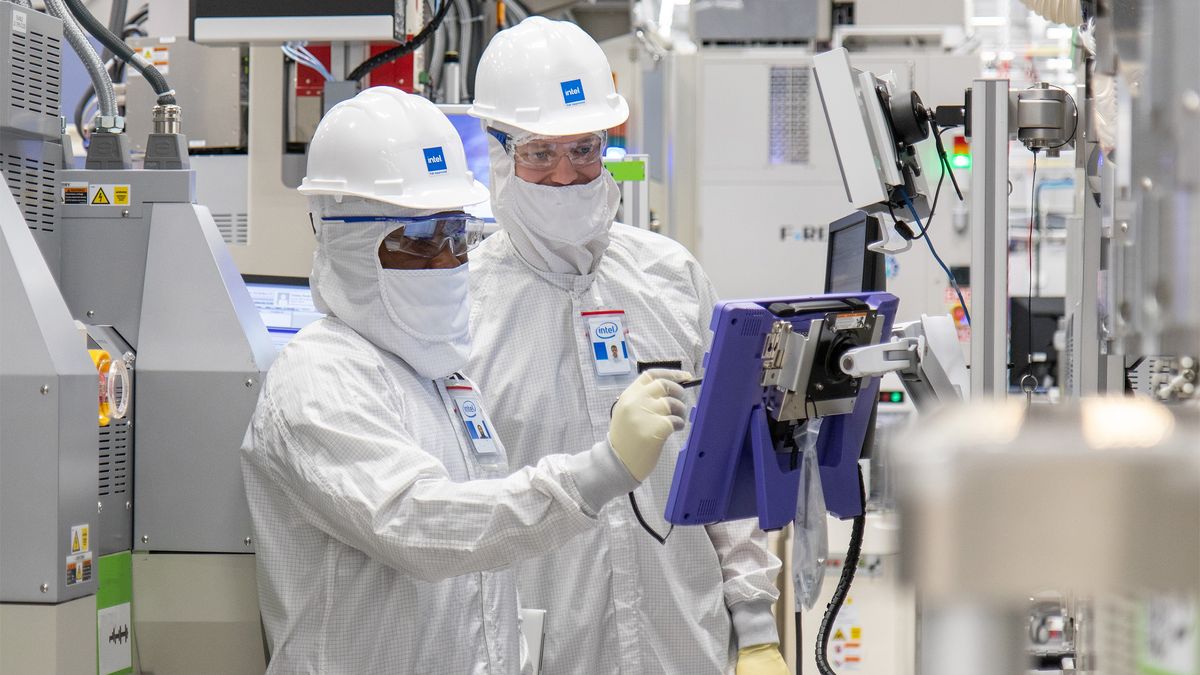
Intel’s approximate 120,000+ employees are not concentrated in a single location but are distributed across a vast global network. This includes major research and development centers in the United States (e.g., Oregon, California, Arizona), Israel, India, and Germany. Its crucial manufacturing facilities (fabs) are predominantly located in the U.S., Ireland, and Israel, with significant investments planned for new facilities in Europe (Germany) and expansions elsewhere. Sales and marketing teams are deployed across virtually every continent.
This global distribution is a financial imperative. It allows Intel to tap into diverse talent pools, optimize operational costs by leveraging different labor markets, and maintain close proximity to key customers and emerging markets. From a financial perspective, managing this global workforce involves intricate currency risk management, compliance with varied labor laws, and optimizing supply chain logistics that rely heavily on human coordination across time zones and geographies. The ability to efficiently manage such a diverse and dispersed human capital base directly impacts the company’s bottom line.
Historical Growth and Strategic Shifts
Intel’s employee count has fluctuated significantly throughout its history, mirroring industry cycles and strategic shifts. During periods of rapid expansion in the PC era, its workforce grew substantially to meet demand and drive innovation. More recently, facing intense competition and market shifts towards mobile and AI, Intel has undertaken significant restructuring efforts. These initiatives, often involving workforce reductions or reorganizations, are financially driven decisions aimed at improving efficiency, reducing operational costs, and refocusing resources on strategic growth areas.
For investors, these shifts are crucial. A company actively managing its workforce suggests a proactive approach to financial health. While layoffs incur short-term costs (e.g., severance packages), they are often intended to yield long-term benefits in terms of leaner operations, improved profitability margins, and a more agile response to market dynamics. Conversely, strategic hiring in critical areas like AI, packaging, or foundry services indicates a financial commitment to future revenue streams and regaining technological leadership.
Workforce as a Financial Driver and Cost Center
Every employee at Intel represents both an expense and a potential driver of revenue. Managing this balance is central to the company’s financial strategy. The collective salaries, benefits, and related operational costs constitute one of Intel’s largest ongoing expenditures, directly impacting its gross margins and net income.
Labor Costs and Operational Efficiency
The semiconductor industry is notoriously capital-intensive, but its reliance on highly skilled human capital is equally profound. Labor costs—salaries, wages, bonuses, stock options, and comprehensive benefits—are a substantial component of Intel’s operating expenses. For a company with over 120,000 employees, even marginal changes in compensation or workforce size can have a multi-billion-dollar impact on the income statement.
Operational efficiency, therefore, isn’t just about factory uptime or yield rates; it’s also about optimizing human capital. Financial analysts scrutinize metrics like cost per employee, labor cost as a percentage of revenue, and SG&A (Selling, General, & Administrative) expenses to gauge how effectively Intel is managing its human resources. Streamlining processes, automating tasks where feasible, and ensuring that each employee contributes meaningfully to value creation are continuous financial imperatives that directly influence profitability.
Revenue Per Employee: A Key Performance Indicator
Revenue per employee is a crucial financial metric used by investors and analysts to assess a company’s productivity and efficiency. It is calculated by dividing total revenue by the number of employees. For Intel, this figure provides insight into how effectively its vast workforce is generating sales.
In highly innovative, fabless companies like NVIDIA, revenue per employee tends to be exceptionally high due to their asset-light model and focus on high-margin intellectual property. For vertically integrated companies like Intel, which bear the massive costs of manufacturing facilities and a larger operational overhead, revenue per employee might appear lower in comparison but must be evaluated in context. A lower revenue per employee might indicate lower efficiency or a different business model with higher fixed costs, but it could also reflect significant investments in long-term R&D, which has yet to translate into immediate revenue. Investors monitor this metric for trends, expecting it to improve as the company executes its strategies and operational efficiencies take hold.
R&D Investment: Human Capital in Innovation
A significant portion of Intel’s massive workforce is dedicated to research and development. These engineers, scientists, and researchers are the lifeblood of its innovation engine, working on next-generation architectures, process technologies, and new product categories. From a financial perspective, R&D expenditure—a large component of which is human capital costs—is a critical investment in the company’s future revenue streams and competitive advantage.

Intel consistently ranks among the top companies globally in terms of R&D spending, often investing billions of dollars annually. This financial commitment to human ingenuity is essential for developing the intellectual property that drives future sales and profitability. Analysts look at R&D intensity (R&D spend as a percentage of revenue) and R&D spend per employee to understand the depth of Intel’s commitment to innovation and its potential for long-term growth. A robust and well-funded R&D workforce is seen as a strategic financial asset, vital for maintaining technological leadership and securing future market share.
Impact on Intel’s Market Position and Investor Confidence
The composition, size, and strategic deployment of Intel’s workforce profoundly influence its competitive standing, its ability to execute on strategic goals, and ultimately, how investors perceive its financial prospects. In an industry where talent is scarce and critical, human capital strategy is intrinsically linked to market success and shareholder value.
Talent Acquisition in a Competitive Landscape
The semiconductor industry is locked in a fierce “talent war,” with companies vying for the best engineers, designers, and manufacturing specialists. Intel’s ability to attract, retain, and develop a high-caliber workforce is a direct determinant of its capacity to innovate and compete. From a financial standpoint, this means significant investment in competitive compensation packages, benefits, training, and a supportive work environment.
Failure to secure top talent can lead to project delays, reduced innovation, and a weakening of market position—all of which have direct financial consequences. Conversely, successfully building a strong talent pipeline enhances Intel’s long-term financial viability by ensuring it has the human resources needed to design and produce cutting-edge technology that commands higher margins and market share. Investors view a company’s success in talent acquisition as a key indicator of its future growth potential.
Workforce Restructuring and Financial Prudence
In recent years, Intel has undergone several significant restructuring initiatives, including job reductions, reorganizations, and the divestiture of certain business units (e.g., NAND memory business, McAfee). These are not merely operational adjustments; they are financially driven decisions aimed at improving profitability, streamlining operations, and allocating capital more effectively to core, high-growth areas.
While restructuring often involves one-time costs such as severance payments, the financial goal is a leaner, more efficient organization with improved operating margins in the long run. For example, by divesting non-core assets, Intel can reduce its overall employee count and reallocate capital and human resources to areas like its foundry business or advanced packaging, which are seen as critical for future revenue growth and shareholder returns. Investors typically react positively to well-communicated restructuring plans that demonstrate financial discipline and a clear path to enhanced profitability.
Long-Term Outlook: Workforce for Future Growth
Intel’s current workforce strategy is deeply intertwined with its ambitious “IDM 2.0” vision, which aims to regain process technology leadership and establish a leading foundry service. This strategy requires not only massive capital investments in fabs but also a substantial, highly skilled workforce dedicated to R&D, manufacturing, and customer support for the foundry business.
The financial success of this long-term strategy hinges on Intel’s ability to recruit thousands of new engineers and technicians, train its existing workforce in new disciplines, and cultivate a culture of rapid execution. Investors are closely watching how Intel manages this expansion of its human capital. The ability to scale its workforce efficiently, without disproportionately increasing labor costs relative to revenue growth, will be a critical factor in determining its long-term financial health and its appeal as an investment.
Benchmarking Intel’s Workforce Against Industry Peers
To truly understand the financial implications of Intel’s employee count, it is essential to benchmark it against its major competitors in the semiconductor industry. This comparative analysis provides insights into relative operational efficiency, business models, and investment priorities.
Comparing to Other Semiconductor Giants
Consider TSMC, the world’s largest dedicated contract chip manufacturer. While TSMC has fewer total employees than Intel (around 70,000 as of 2023), it specializes purely in foundry services. Its workforce is highly concentrated in manufacturing and process technology R&D. Intel, on the other hand, designs, manufactures, and sells its own chips, requiring a broader range of functions from marketing to software development alongside its core R&D and manufacturing teams. This fundamental difference in business model explains a significant portion of the employee count disparity.
NVIDIA, a leading fabless semiconductor company, typically operates with a much smaller workforce (around 29,000 employees as of 2023). Its asset-light model, focusing purely on design and outsourcing manufacturing, leads to exceptionally high revenue per employee. While Intel cannot directly mimic this due to its IDM 2.0 strategy, the comparison highlights the trade-offs between vertical integration (higher employee count, higher fixed costs) and a fabless model (lower employee count, higher reliance on third parties).
Samsung, another vertically integrated behemoth, has a much larger overall workforce than Intel, but its operations span far beyond semiconductors (e.g., consumer electronics, displays, mobile phones). When focusing solely on its semiconductor division, the employee count would be more comparable to Intel’s, though still influenced by its broader product portfolio and different strategic emphases.
Workforce Efficiency Ratios Across the Sector
Financial analysts often look at various efficiency ratios to compare companies, regardless of their business model specifics. Beyond revenue per employee, metrics like R&D spend per employee or capital expenditure per employee can provide valuable insights. For Intel, a lower revenue per employee compared to fabless competitors is often offset by its significant capital expenditure in manufacturing and a large R&D workforce, which are investments in future capacity and innovation.
These comparisons help investors contextualize Intel’s financial performance. A company with a large, seemingly “inefficient” workforce might be making strategic long-term investments that will yield significant returns down the line. Conversely, a rapidly growing workforce might signal expanding opportunities, but also increased financial risk if not managed effectively. The ongoing restructuring at Intel, for instance, is an attempt to optimize these ratios and bring its financial performance more in line with shareholder expectations for a leading-edge technology company.
In conclusion, the question “how many employees does Intel have?” unravels into a complex financial narrative about a company’s scale, strategic choices, cost management, investment in innovation, and competitive positioning. Intel’s vast workforce is not merely a headcount; it is a dynamic and critical financial asset, a significant cost center, and a fundamental indicator of its long-term financial health and ability to deliver shareholder value in the ever-evolving semiconductor landscape.
aViewFromTheCave is a participant in the Amazon Services LLC Associates Program, an affiliate advertising program designed to provide a means for sites to earn advertising fees by advertising and linking to Amazon.com. Amazon, the Amazon logo, AmazonSupply, and the AmazonSupply logo are trademarks of Amazon.com, Inc. or its affiliates. As an Amazon Associate we earn affiliate commissions from qualifying purchases.