
A business plan is often mistaken for a mere descriptive document or a creative manifesto. However, in the realm of high-stakes commerce, a business plan is essentially a financial architecture. It is the blueprint that demonstrates how an idea transforms into a sustainable, profit-generating machine. Whether you are seeking venture capital, a bank loan, or simply aiming to manage your own capital effectively, the “Money” aspect of your business plan is its most critical component.
To create a business plan that resonates with stakeholders, you must move beyond abstract concepts and dive deep into the mechanics of business finance, ROI projections, and capital allocation. This guide explores how to construct a business plan through a strictly financial lens, ensuring that your roadmap is paved with fiscal clarity and investment readiness.

The Core Objective: Aligning Your Business Plan with Capital Acquisition
At its heart, a business plan serves as a persuasive argument for why your business deserves capital. Investors and financial institutions do not invest in “good ideas”; they invest in viable economic models. Therefore, the first step in making your business plan is to align your narrative with the principles of capital acquisition and wealth creation.
Defining Your Financial Goals and Milestones
Before drafting a single paragraph, you must establish what financial success looks like for your venture. This involves setting specific, measurable, and time-bound milestones. Are you aiming for a specific revenue target within eighteen months? Do you intend to reach a break-even point by year two? Defining these milestones provides a framework for the rest of your plan. It transforms the document from a static piece of paper into a dynamic roadmap that tracks the appreciation of your business’s value over time.
Understanding the Investor’s Perspective: Risk vs. Reward
Every potential funder views your business plan through the lens of risk and reward. To make an effective plan, you must address these two factors head-on. High reward potential is meaningless if the risk of total capital loss is unmitigated. Your business plan should clearly articulate how you intend to protect the invested capital while maximizing the upside. This means providing data-backed evidence for your market size and your ability to capture a profitable segment of that market.
Building the Economic Engine: Detailed Financial Projections
The financial projections section is the engine room of your business plan. This is where you move from theory to reality, providing a three-to-five-year outlook on the company’s fiscal health. In the “Money” niche, accuracy and conservatism are far more valuable than unfounded optimism.
The Importance of Realistic Revenue Forecasting
Revenue forecasting is notoriously difficult for new businesses, yet it is the cornerstone of your financial plan. To make a credible forecast, use both “bottom-up” and “top-down” approaches. A bottom-up forecast looks at your production capacity, sales team efficiency, and average transaction value. A top-down forecast looks at the total addressable market (TAM) and estimates your realistic market share. By reconciling these two numbers, you provide a projection that feels grounded in reality rather than wishful thinking.
Analyzing Cost Structures: Fixed vs. Variable Expenses
A sophisticated business plan demonstrates a deep understanding of cost structures. You must distinguish between fixed costs (rent, salaries, insurance) and variable costs (raw materials, shipping, transaction fees). Investors look for “operating leverage”—the point at which your revenue grows faster than your expenses. By detailing your Cost of Goods Sold (COGS) and your operating expenses (OPEX), you show that you understand how to maintain margins even as the business scales.
Cash Flow Management: The Lifeblood of Your Venture
Profit is a matter of accounting; cash is a matter of survival. Many profitable businesses fail because they run out of cash. Your business plan must include a detailed Cash Flow Statement that tracks the timing of inflows and outflows. This is particularly crucial for businesses with long sales cycles or significant inventory requirements. Showing that you have a plan to manage accounts receivable and accounts payable demonstrates to lenders that you are a disciplined steward of money.
Strategic Resource Allocation and Funding Requirements

Once you have projected your income and expenses, the next phase of making a business plan is identifying the “gap”—the amount of capital needed to reach your milestones. This section should be a surgical analysis of how much money you need and exactly how it will be deployed.
Calculating Your Burn Rate and Runway
For startups and growing enterprises, “burn rate” (the amount of cash lost per month) and “runway” (how many months the business can survive before running out of money) are the most critical metrics. Your business plan should explicitly state your monthly burn rate and show how the requested funding will extend your runway to reach a “value-inflection point,” such as a product launch or a major partnership.
Determining the Type of Funding: Debt, Equity, or Bootstrapping
Not all capital is created equal. Your plan should reflect a strategic choice regarding your capital structure. Are you seeking equity investment, which provides cash in exchange for ownership but carries no repayment obligation? Or are you seeking debt, which preserves ownership but requires regular interest payments? Your choice should be justified by your business’s cash flow profile and your long-term wealth-building goals.
Use of Funds: Articulating Where the Money Goes
Vague requests like “working capital” are a red flag for savvy investors. To make a professional business plan, you must provide a granular breakdown of the “Use of Funds.” For example: 40% for R&D, 30% for customer acquisition, 20% for key hires, and 10% for a liquidity reserve. This level of detail shows that you have a tactical plan for turning capital into growth.
Risk Mitigation and Sensitivity Analysis
A truly “Money”-focused business plan does not shy away from potential failures; instead, it quantifies them. Financial professionals appreciate a founder who acknowledges what could go wrong and has prepared a fiscal defense.
Identifying Financial Threats and Market Volatility
External factors such as interest rate hikes, inflation, or shifts in consumer spending can derail even the best business. Your plan should include a section on market risks and how your financial model accounts for them. For instance, if your business relies on imported goods, how would a 10% currency fluctuation affect your bottom line? Acknowledging these variables builds trust with stakeholders.
Performing a Break-Even Analysis
The “break-even point” is the moment your total revenue equals your total expenses. Every business plan must include a break-even analysis. This calculation tells you (and your investors) exactly how many units you need to sell or how many clients you need to sign before the business becomes self-sustaining. It is a vital metric for assessing the inherent risk of the business model.
Preparing for Contingencies: The “Plan B” Financial Strategy
What happens if your revenue reaches only 50% of your target? A high-quality business plan includes a sensitivity analysis—often referred to as “What-If” scenarios. By presenting a “Best Case,” “Expected Case,” and “Worst Case” financial scenario, you demonstrate that you have the foresight to adjust your spending and operations if the market does not behave as expected.
The Executive Summary and Financial Conclusion
The final stage of making your business plan is the synthesis. While the executive summary appears first in the document, it should be written last, once all the financial data has been rigorously vetted.
Synthesizing Data into a Compelling Narrative
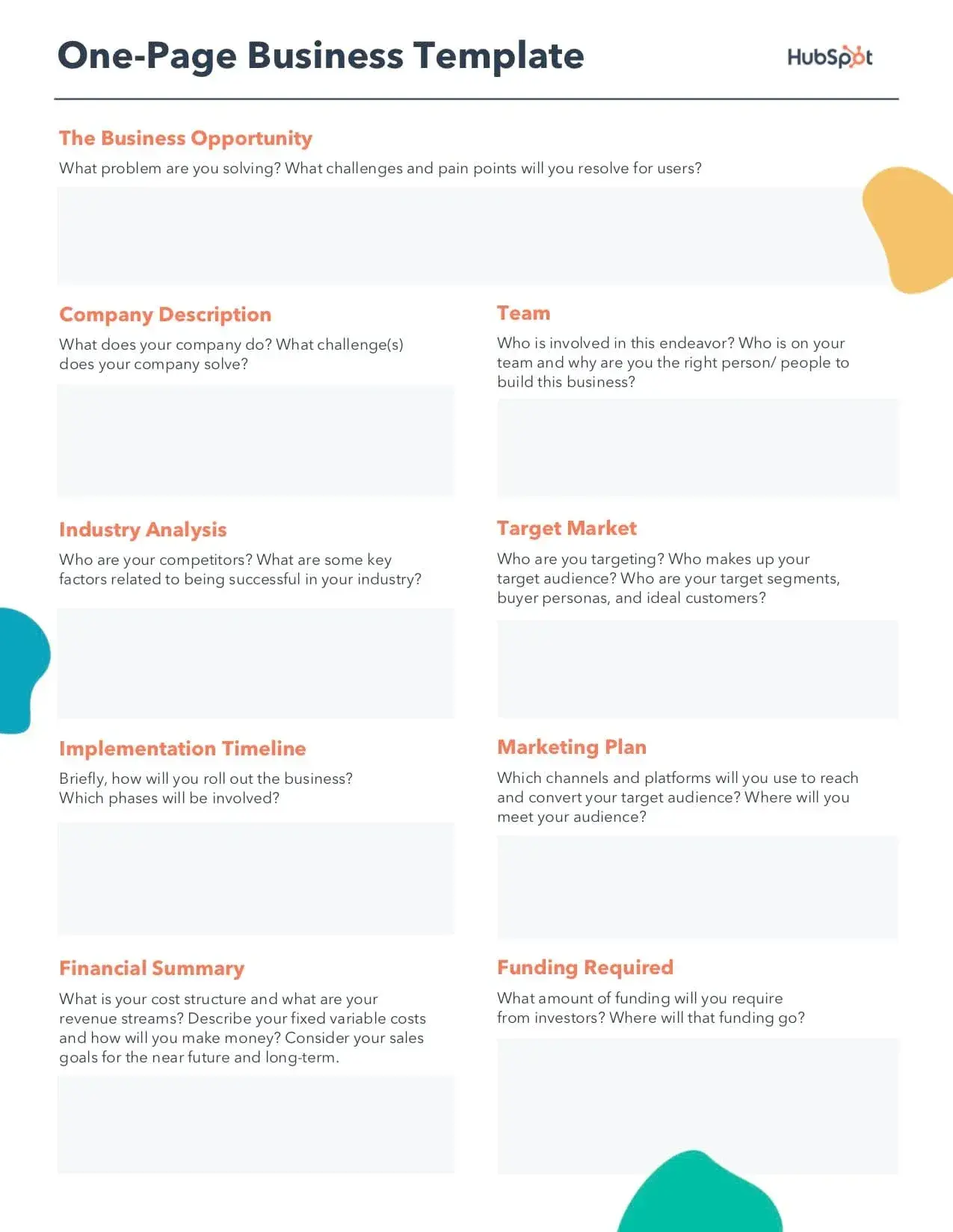
The executive summary must distill the complex financial data into a compelling story of growth and profitability. It should highlight your most impressive metrics, such as your projected Internal Rate of Return (IRR) or your Net Present Value (NPV). Use this section to bridge the gap between the “what” of your business and the “how much” of the financial return.
Monitoring and Adjusting the Plan Post-Launch
A business plan is not a “set it and forget it” document. From a financial perspective, it is a benchmark. A professional plan should conclude with a commitment to regular financial audits and variance analysis—comparing actual performance against your projections. This commitment to fiscal discipline is often the deciding factor for long-term investors.
By focusing strictly on the financial mechanics—from revenue modeling to risk mitigation—you transform a standard business plan into a powerful instrument of financial strategy. This approach ensures that your business is not just an idea, but an investable asset designed for long-term financial success.
aViewFromTheCave is a participant in the Amazon Services LLC Associates Program, an affiliate advertising program designed to provide a means for sites to earn advertising fees by advertising and linking to Amazon.com. Amazon, the Amazon logo, AmazonSupply, and the AmazonSupply logo are trademarks of Amazon.com, Inc. or its affiliates. As an Amazon Associate we earn affiliate commissions from qualifying purchases.