
Understanding the precise location of critical financial identifiers on your checks is more than just a matter of convenience; it’s fundamental to managing your personal finance, ensuring smooth transactions, and safeguarding your assets. In an increasingly digital world, paper checks might seem like relics, but they still serve vital roles and contain the foundational information that underpins many electronic payment systems. Pinpointing your account and routing numbers is essential for tasks ranging from setting up direct deposit to paying bills, and knowing where they reside on a physical check provides a valuable reference point for navigating various financial scenarios.

Understanding the Anatomy of a Check: More Than Just Paper
A check is a written, dated, and signed instruction to a bank to pay a specific amount of money to the bearer or to a named third party. While its use might have decreased in some areas, its structure holds the keys to your banking identity. Before delving into the specific numbers, it’s helpful to understand the overall layout.
Typically, a standard check contains several pieces of information:
- Drawer’s Information: Your name, address, and sometimes phone number, usually located in the top left corner.
- Date: The date the check is written, found in the top right.
- Payee Line: The phrase “Pay to the Order of,” followed by a blank line where you write the name of the person or entity receiving the payment.
- Numeric Amount Box: A small box next to the payee line where you write the dollar amount in digits.
- Written Amount Line: A line below the payee line where you write out the dollar amount in words, which legally takes precedence over the numeric amount if there’s a discrepancy.
- Memo Line: An optional line, usually in the bottom left, for noting the purpose of the payment.
- Signature Line: Your authorized signature, typically in the bottom right, validating the check.
- Bank Name and Logo: The name and emblem of your financial institution, usually centered or on the right side.
- Check Number: A unique sequential number for the check, often appearing in the top right corner and also within the special numbers at the bottom.
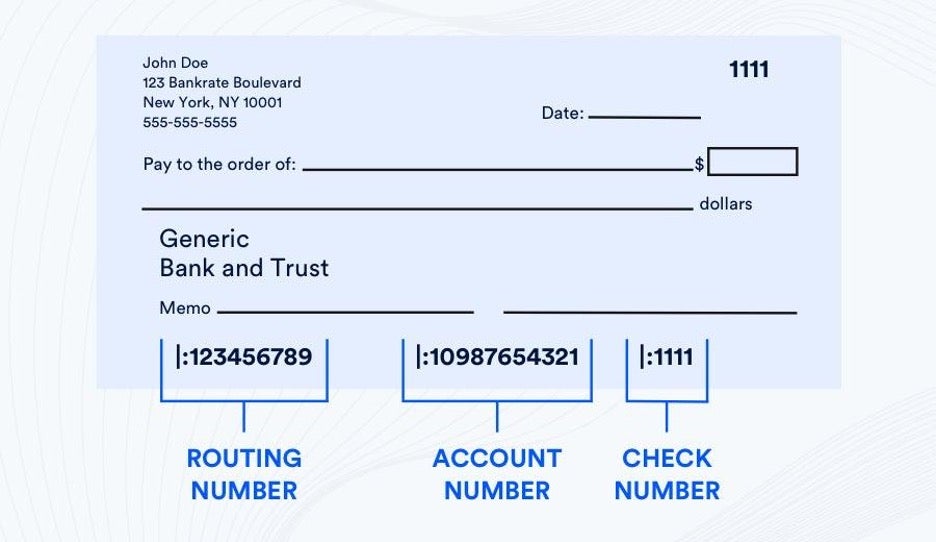
The most critical information for identifying your account and facilitating transactions is found in the Magnetic Ink Character Recognition (MICR) line, a series of special characters printed in magnetic ink at the very bottom of the check.
Pinpointing Your Account and Routing Numbers: A Visual Guide
The MICR line is where the magic happens. It’s designed for automated processing by banks and contains three distinct sets of numbers, separated by unique symbols. Understanding each set is crucial for accurate financial transactions.
-
The Routing Number (ABA Transit Number):
- Location: This is always the first set of nine digits on the far left of the MICR line. It’s typically enclosed by a special transit symbol (often resembling a stylized colon or square).
- Purpose: The routing number serves as a unique identifier for your specific financial institution within the U.S. banking system. It tells other banks where to send money to your bank. Think of it as your bank’s address in the vast financial network. All banks have at least one routing number, and larger banks might have several, often associated with different regions or transaction types. This number is essential for nearly all electronic fund transfers (EFTs), including direct deposits, wire transfers, and automated clearing house (ACH) transactions.
-
Your Account Number:
- Location: This is typically the second set of numbers you’ll find, positioned directly to the right of the routing number on the MICR line. Its length can vary, usually ranging from 10 to 12 digits, but some banks may use fewer or more. It’s also usually enclosed by a distinct symbol, sometimes called the “on-us” symbol.
- Purpose: This is your unique identifier for a specific checking account within your bank. While the routing number identifies the bank, the account number identifies your particular account at that bank. This is the number you need to provide when someone is paying you directly, or when you are setting up automatic payments from your account.
-
The Check Number:
- Location: Usually the third set of numbers on the far right of the MICR line. It also typically appears in the top right corner of the check itself.
- Purpose: This is a sequential number assigned to each check within your checkbook. It helps you keep track of the checks you’ve written, reconcile your bank statements, and identify individual transactions.
Why the Distinction Matters: Routing vs. Account
It is imperative not to confuse these two numbers. Using the wrong number for a transaction can lead to significant issues, such as funds being sent to the wrong bank or account, delayed payments, or even returned transactions that might incur fees. Always double-check which number is being requested for a specific transaction to ensure accuracy. For instance, direct deposit setup forms explicitly ask for both your bank’s routing number and your personal account number.
The Critical Role of Your Check Numbers in Financial Transactions
Beyond just writing a paper check, your account and routing numbers are foundational to a multitude of modern financial operations. These digits act as the digital coordinates for your money, facilitating seamless movement between various financial entities.
- Direct Deposit: The cornerstone of modern payroll, direct deposit relies entirely on your employer having your correct routing and account numbers. This ensures your paycheck is electronically transferred directly into your bank account, often available earlier than a physical check.
- Automated Bill Payments: Setting up recurring payments for utilities, mortgage, rent, or loan installments frequently requires providing your routing and account numbers to the service provider. This automates your financial obligations, preventing late fees and managing cash flow.
- ACH Transfers (Automated Clearing House): This vast electronic network processes a wide range of credit and debit transfers. Your routing and account numbers enable these transactions, which include direct deposits, bill pay, and person-to-person payments through various apps.
- Wire Transfers: For larger or international transactions requiring rapid and secure fund movement, wire transfers are used. While often carrying higher fees, they are critically dependent on accurate routing and account numbers for both the sender and recipient banks.
- Online Shopping and Payment Processors: While many online platforms use credit cards or digital wallets, some specific services or merchants might still require bank account details for direct debits or e-checks, leveraging your routing and account numbers.
- Setting Up New Financial Accounts: When opening investment accounts, linking to payment apps, or integrating with financial planning tools, you’ll often be asked for your routing and account numbers to securely connect your existing bank account.
- Reconciling Bank Statements: Understanding the origin of payments and debits is easier when you can cross-reference transactions with your check numbers, especially if you still write many physical checks.
Protecting Your Financial Data: Security Best Practices
Given the power these numbers hold over your funds, safeguarding them is paramount. They are prime targets for fraudsters and identity thieves. Implementing robust security practices is non-negotiable.
- Treat Checks Like Cash: Never leave blank, signed checks lying around or in plain sight. They are equivalent to handing over access to your money.
- Shred Old Checks and Statements: Do not simply toss expired checks, voided checks, deposit slips, or bank statements containing your account information into the regular trash. Invest in a cross-cut shredder to destroy these documents thoroughly, making it impossible for criminals to piece together your financial data.
- Be Wary of Phishing Scams: Financial institutions will never ask for your full account number or other sensitive details via unsolicited emails, text messages, or phone calls. If you receive such a request, assume it’s a scam. Always verify the legitimacy of any communication by contacting your bank directly using a verified phone number from their official website or a trusted statement.
- Use Secure Websites: When entering financial information online, ensure the website address begins with “https://” and look for a padlock icon in your browser’s address bar. This indicates a secure, encrypted connection.
- Monitor Your Accounts Regularly: Proactively review your bank statements and online banking activity. Set up alerts for transactions exceeding a certain amount or for unusual activity. Promptly report any unauthorized transactions to your bank.
- Exercise Caution with Shared Information: While necessary for legitimate transactions, be judicious about who you provide these numbers to. Stick to trusted institutions, reputable businesses, and individuals you know well.
- Avoid Public Wi-Fi for Banking: Public Wi-Fi networks are often unsecured and susceptible to eavesdropping. Refrain from conducting banking transactions or entering sensitive financial details when connected to such networks. Use a secure, private network or your mobile data.
- Be Mindful of Your Surroundings: When using ATMs or conducting transactions in public, be aware of “shoulder surfers” who might try to view your personal information.
Checks in a Digital Age: Relevance and Alternatives
Despite the rise of digital payment methods, paper checks still retain a certain level of relevance for specific situations. They provide a tangible record, can be useful for large transactions, and are sometimes preferred by individuals or small businesses for their simplicity or lack of transaction fees associated with electronic payments.
Continued Relevance:
- Proof of Payment: A cancelled check serves as undisputed legal proof of payment, useful for tax purposes or resolving disputes.
- Situational Payments: For certain niche transactions, or when paying individuals or small vendors who may not accept electronic payments, a check remains a practical option.
- Large Purchases: For significant transactions like a down payment on a house or certain business-to-business dealings, a check or cashier’s check is often the preferred method.

Digital Alternatives and Their Implications:
While the physical check still exists, accessing your routing and account numbers has evolved.
- Online Banking Portals: The most convenient and secure way to retrieve your account and routing numbers is through your bank’s official website or mobile app. These details are typically found under “Account Details,” “Statements,” or “Direct Deposit Information.”
- Direct Deposit Forms: Many employers provide specific forms for direct deposit setup, where you manually fill in your bank details or attach a voided check.
- Payment Apps (e.g., Zelle, Venmo, PayPal): These services largely abstract away the need to directly input routing and account numbers for most peer-to-peer transfers. They link securely to your bank account using your bank’s credentials or through micro-deposits, offering a layer of separation from your raw banking numbers.
- E-checks/Online Bill Pay: Many online bill payment systems allow you to pay directly from your bank account by inputting your routing and account numbers, essentially an electronic version of writing a check.
- Digital Wallets: Services like Apple Pay or Google Pay allow you to link credit or debit cards, but they do not typically use your direct routing and account numbers for transactions.
Ultimately, whether you’re handling a physical check or navigating digital payment platforms, the underlying importance of your account and routing numbers persists. Understanding their location, purpose, and how to protect them forms a crucial part of financial literacy in any era.
aViewFromTheCave is a participant in the Amazon Services LLC Associates Program, an affiliate advertising program designed to provide a means for sites to earn advertising fees by advertising and linking to Amazon.com. Amazon, the Amazon logo, AmazonSupply, and the AmazonSupply logo are trademarks of Amazon.com, Inc. or its affiliates. As an Amazon Associate we earn affiliate commissions from qualifying purchases.