
In the intricate world of personal finance, a few key identifiers unlock the doors to seamless money management. Among these, your checking account routing number stands out as a critical piece of information, often overlooked until it’s urgently needed. More than just a random sequence of digits, this nine-digit code is the backbone of countless financial transactions, acting as a unique identifier for your bank or credit union within the U.S. financial system.
Whether you’re setting up direct deposit for your paycheck, automating bill payments, initiating a wire transfer, or simply ordering new checks, knowing how to quickly and accurately locate your routing number is an essential skill. It empowers you to navigate your financial life with confidence, preventing delays and errors that can arise from incorrect information. This comprehensive guide will demystify the routing number, explain its crucial role, and provide clear, actionable methods for finding it whenever you need it, ensuring your financial operations run smoothly.

Understanding the Routing Number: Your Financial GPS
Before diving into how to find your routing number, it’s essential to grasp what it is and why it holds such importance in your financial life. Think of it as the postal code for your financial institution, guiding money to the correct bank, even before your specific account number directs it to your personal ledger.
What Exactly Is a Routing Number?
At its core, a routing number, often referred to as an ABA (American Bankers Association) routing transit number, is a nine-digit numerical code. Its primary purpose is to identify the financial institution (bank or credit union) responsible for processing a payment. The structure of the routing number isn’t arbitrary; it follows a specific format established by the American Bankers Association over a century ago to facilitate the processing of paper checks. While checks might be less prevalent today, the routing number’s role has expanded dramatically into the digital realm, becoming indispensable for electronic transactions.
It’s crucial to understand that your routing number is distinct from your account number. While your account number identifies your specific account within your bank, the routing number identifies your bank to the broader financial system. Together, they form a complete address for your money, ensuring funds land precisely where they’re intended. Without both, an electronic transfer or check payment simply cannot be completed correctly.
Why Is Your Routing Number So Crucial?
The significance of your routing number extends across a wide spectrum of financial activities, making it a cornerstone of modern money management. Its proper use ensures the efficient and secure movement of your funds.
- Direct Deposits: For many, the first encounter with needing a routing number comes when setting up direct deposit for paychecks, government benefits, or tax refunds. Providing this number, along with your account number, allows your employer or the issuing agency to electronically transfer funds directly into your checking account, eliminating physical checks and accelerating access to your money.
- Automated Bill Payments: Setting up recurring payments for utilities, loans, or subscriptions often requires your routing and account numbers. This automation is a cornerstone of responsible personal finance, helping to avoid late fees and streamline budgeting. The routing number ensures your chosen biller sends their payment request to the correct financial institution.
- Electronic Funds Transfers (EFTs): This broad category includes a multitude of digital transactions, from transferring money between your own accounts at different banks to sending funds to friends and family via services like Zelle (though Zelle often masks the direct routing number entry, it relies on this underlying infrastructure). ACH (Automated Clearing House) transfers, which power many of these EFTs, are entirely dependent on accurate routing numbers.
- Wire Transfers: When sending or receiving larger sums of money quickly, especially for significant purchases or international transfers, wire transfers are often used. While some banks might have specific wire transfer routing numbers that differ from their standard ACH routing numbers, the principle remains the same: the routing number directs the wire to the correct bank. Incorrect routing numbers can lead to significant delays, fees, or even lost funds.
- Ordering New Checks: If you still use paper checks, you’ll notice your routing number is pre-printed on them. When ordering new checks, your bank or check printer will require this number to ensure the checks are correctly linked to your account and institution.
In essence, the routing number acts as a universal identifier that connects your individual financial institution to the vast network of banks and credit unions, facilitating the secure and accurate exchange of funds that keeps the economy moving.
Traditional Methods: Physical Access Points
While the financial world increasingly shifts towards digital interfaces, some of the most reliable places to find your checking account routing number remain rooted in physical documents you likely already possess. These methods are straightforward and often serve as excellent starting points.
On Your Checkbook
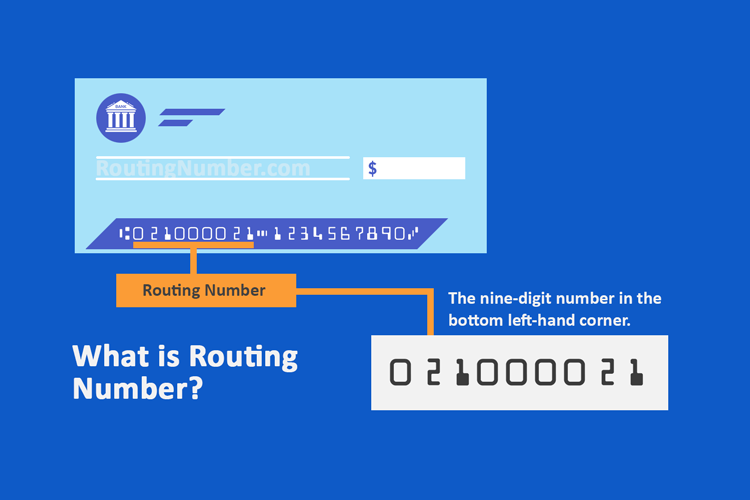
For many people, the quickest way to find their routing number is to simply pick up their checkbook. Look at the bottom of a physical check, and you’ll typically see three sets of numbers printed in magnetic ink characters (MICR). These are read from left to right:
- Routing Number: This is almost always the first set of nine digits on the far left. It’s the identifier for your bank or credit union.
- Account Number: The middle set of digits represents your specific checking account number.
- Check Number: The last set of digits, often matching the sequential number at the top right of the check, identifies that specific check.
Example Format: [ROUTING NUMBER] [ACCOUNT NUMBER] [CHECK NUMBER]
It’s important to use a blank check or one that has already been cashed, rather than relying on a deposit slip, as sometimes deposit slips may have a slightly different numbering format or might not include all three components clearly. If you have multiple checking accounts or accounts with different financial institutions, always double-check that the routing number corresponds to the specific account you intend to use. This method is incredibly reliable for the primary checking account linked to your physical checks.
Bank Statements
Another highly dependable source for your routing number is your bank statement. Whether you receive paper statements in the mail or access them digitally through your online banking portal, your routing number is almost always clearly displayed.
- Paper Statements: When you receive a physical statement, scan the document, particularly the top or bottom sections. Banks typically print essential account information, including the routing number, alongside your name, address, and account number. Look for a section labeled “Account Information,” “Bank Details,” or similar.
- Digital Statements: If you’ve opted for paperless statements, you can usually access archived versions through your online banking platform. Navigate to the “Statements” or “Documents” section, select a recent checking account statement, and view it (often as a PDF). The routing number will be present in the same location as it would be on a physical statement.
Bank statements offer a high degree of accuracy because they are official documents generated directly by your financial institution. They are particularly useful if you don’t have a checkbook handy or if you want to verify the routing number for an account that doesn’t issue paper checks.
Digital Convenience: Online and Mobile Solutions
In an increasingly digitized world, your bank’s online platforms and mobile apps have become primary hubs for managing your finances. These digital tools offer not only convenience but also secure and instant access to vital account information, including your routing number.
Your Bank’s Website (Online Banking Portal)
Virtually every modern bank and credit union provides a secure online banking portal that customers can access via a web browser. This is arguably the most common and convenient way to find your routing number when you’re at your computer.

The exact steps might vary slightly depending on your financial institution, but the general process is as follows:
- Log In Securely: Open your preferred web browser and navigate directly to your bank’s official website. Always double-check the URL to ensure you’re on a legitimate site to prevent phishing scams. Enter your username and password to log into your online banking account.
- Navigate to Account Details: Once logged in, you’ll typically land on a dashboard or account summary page. Look for a section that lists your accounts (checking, savings, credit cards, etc.). Click on the specific checking account for which you need the routing number.
- Locate Routing Number Information: Within the detailed view of your checking account, there’s usually a section labeled “Account Details,” “Account Information,” “Routing Numbers,” or “Direct Deposit Info.” Sometimes, it might be found under a tab like “Statements” or “Documents.” Click on this to expand the details.
- Identify the Number: Your routing number should be clearly displayed. Some banks might even show both the ACH routing number and, if applicable, a separate routing number for wire transfers. Pay attention to any labels indicating the type of routing number.
Many banks even provide a dedicated “Direct Deposit Form” or “Routing Number” link directly on the account overview page to streamline this process, recognizing its frequent need. Always ensure you are on a secure connection (look for “https://” in the URL and a padlock icon) when accessing sensitive financial information online.
Mobile Banking App
For those who manage their finances primarily on the go, mobile banking apps offer an equally convenient and often faster way to retrieve your routing number. These apps are designed for quick access and often feature intuitive interfaces.
Here’s a typical pathway within a mobile banking app:
- Launch and Log In: Open your bank’s official mobile app on your smartphone or tablet. Log in using your credentials, which often includes biometric authentication like fingerprint or facial recognition for added security and speed.
- Select Your Account: From the app’s home screen or main menu, tap on the checking account you’re interested in.
- Access Account Details: Look for an option like “Account Details,” “Account Info,” “View Details,” or a small gear/settings icon associated with the account. Some apps might have a dedicated section for “Routing & Account Numbers” directly.
- Find the Routing Number: The routing number will typically be displayed prominently, often alongside your account number. Some apps may even have a “Share” or “Copy” button next to it, making it easy to paste into another application if needed.
Using your bank’s mobile app is highly secure, especially with modern authentication methods. It provides instantaneous access to your routing number, which is particularly useful when you’re away from your computer or physical documents.
Contacting Customer Service
If you’ve exhausted the digital and traditional methods, or if you have a unique request (such as confirming a wire transfer routing number), contacting your bank’s customer service is always a viable option.
- Phone Call: The most direct approach is to call your bank’s customer service hotline. This number is usually found on the back of your debit card, on your bank’s website, or on your bank statement. Be prepared to verify your identity by answering security questions or providing account details.
- Secure Message/Chat: Many banks offer a secure messaging system within their online banking portal or a live chat feature on their website. These methods allow you to communicate with a representative without a phone call, often providing a written record of the interaction.
- In-Person Visit: For those who prefer face-to-face interaction or have more complex inquiries, visiting a local branch is an option. A bank teller or personal banker can quickly provide you with the correct routing number after verifying your identity.
When contacting customer service, always ensure you are speaking with an official bank representative. Never share your routing number, account number, or other sensitive information over unsecured channels or with unsolicited callers.
Special Considerations and Best Practices
While finding your routing number is generally straightforward, there are nuances and best practices that can further enhance your financial security and transaction accuracy. Understanding these will equip you to navigate more complex financial situations with confidence.
Distinguishing Between ACH, Wire, and State-Specific Routing Numbers
A common misconception is that a bank has only one routing number. While many financial institutions do use a single routing number for most common transactions, it’s not universally true. Some banks, particularly larger national ones or those with a significant presence across multiple states, might have:
- Different Routing Numbers for ACH vs. Wire Transfers: Wire transfers, due to their higher value and real-time processing nature, sometimes use a distinct routing number from the standard ACH (Automated Clearing House) routing number used for direct deposits and electronic bill payments. Always verify the correct routing number if you are initiating or expecting a wire transfer, as using the wrong one can cause significant delays and fees. Your bank’s website or customer service can clarify this.
- State-Specific or Branch-Specific Routing Numbers: Historically, some banks used different routing numbers for branches located in different states or even different regions within a state. While less common now with consolidated banking systems, it’s still possible. If you opened your account in one state but now live in another, or if you bank with a very large institution, it’s always wise to confirm the routing number that applies to your specific account, especially if it was opened many years ago. The routing number printed on your personal checks or found in your online banking portal is generally the correct one for everyday ACH transactions.
When in doubt, especially for high-value transactions or new setups, always verify the specific routing number required with the recipient or your bank directly.
When You Can’t Find It: Next Steps
There might be rare occasions when you’re unable to locate your routing number through the common methods, perhaps because you’ve just opened a new account, don’t have access to your checks or statements, or are experiencing technical difficulties.
- Don’t Guess: Never try to guess your routing number or use one you found online through an unofficial source. An incorrect routing number will lead to failed transactions, potential fees, and delays.
- Contact Your Bank Directly: This is the most reliable fallback. As discussed, your bank’s customer service via phone, secure message, or an in-person visit is equipped to provide you with the correct information after verifying your identity. They can also clarify any specifics regarding different routing numbers for various transaction types.
- Check the ABA Website (with caution): The American Bankers Association (ABA) maintains a public database of routing numbers. While this can be a useful tool for looking up a bank’s general routing number based on its name and location, it’s always best to cross-reference with your bank’s official sources (website, app, statement) to ensure accuracy for your specific account, given the potential for different numbers for wires or branches.
Security and Privacy
Your routing number, when combined with your account number, provides access to your financial funds. Therefore, protecting this information is paramount to safeguarding your personal finances.
- Treat It as Sensitive Information: While a routing number alone is less sensitive than a full account number or Social Security number, its combination with other details makes it powerful. Be mindful of where you write it down and who you share it with.
- Share Only with Trusted Parties: Only provide your routing and account numbers to legitimate entities for specific, authorized transactions (e.g., your employer for direct deposit, a reputable biller for automated payments, or your bank for wire transfers).
- Be Wary of Phishing and Scams: Never provide your routing number, account number, or other financial details in response to unsolicited emails, text messages, or phone calls, even if they appear to be from your bank. Always initiate contact with your bank through official channels if you suspect a scam.
- Secure Your Devices: Ensure your computer and mobile devices are protected with strong passwords, up-to-date antivirus software, and secure network connections, especially when accessing online banking.
By adhering to these best practices, you not only ensure the accuracy of your financial transactions but also fortify the security of your checking account against potential fraud and unauthorized access.
Empowering Your Financial Transactions
The routing number, a seemingly simple nine-digit code, is an indispensable element of your financial toolkit. It serves as the digital compass that guides your money through the vast landscape of the U.S. banking system, enabling everything from your bi-weekly paycheck to your automated mortgage payments. Understanding its purpose and knowing precisely where to find it are fundamental aspects of efficient and secure personal finance management.
Whether you prefer the tangible proof on your checkbook or bank statement, or the instant accessibility of your bank’s online portal and mobile app, multiple reliable avenues exist for locating this crucial identifier. By making it a habit to know where your routing number resides and by observing the best practices for its use and protection, you empower yourself to navigate the complexities of financial transactions with confidence and precision. In a world where financial fluidity is key, mastering the art of finding your checking account routing number is a small but mighty step towards greater financial control and peace of mind.
aViewFromTheCave is a participant in the Amazon Services LLC Associates Program, an affiliate advertising program designed to provide a means for sites to earn advertising fees by advertising and linking to Amazon.com. Amazon, the Amazon logo, AmazonSupply, and the AmazonSupply logo are trademarks of Amazon.com, Inc. or its affiliates. As an Amazon Associate we earn affiliate commissions from qualifying purchases.