
In the rapidly evolving world of personal finance, applications like Cash App have revolutionized how millions of people manage their money, send funds to friends, and even invest. With its intuitive interface and broad range of features, Cash App has become a staple for many looking for a convenient alternative or supplement to traditional banking. However, a common and critical question often arises among its users: “What’s the bank name for Cash App?” This isn’t just a matter of curiosity; it’s a fundamental query about where your money truly resides, how it’s protected, and the underlying financial infrastructure that makes this popular peer-to-peer (P2P) platform function.
Understanding Cash App’s banking relationships is crucial for financial clarity and peace of mind. Unlike a traditional bank, Cash App itself does not hold a bank charter. Instead, it operates as a financial technology (fintech) company that partners with established, regulated financial institutions to provide its services. This hybrid model allows Cash App to innovate rapidly while leveraging the security and regulatory compliance of traditional banks. For anyone using Cash App for direct deposits, sending large sums, or simply managing their daily spending, knowing the banking partners involved is key to comprehending the safety and operational mechanics of their funds.
The Core Banking Partners Behind Cash App’s Operations
While Cash App acts as the user-facing interface for a suite of financial services, it relies heavily on a network of regulated banks to facilitate transactions and hold user funds. These partnerships are essential, providing the necessary infrastructure, regulatory compliance, and most importantly, federal deposit insurance.
Sutton Bank: The Primary Bank of Record
When you delve into the terms and conditions or look at the fine print on your Cash App Card, one name consistently emerges: Sutton Bank. Based in Attica, Ohio, Sutton Bank is a key financial institution that serves as the primary bank of record for many of Cash App’s services. This partnership is vital for several reasons:
- Holding User Funds: Sutton Bank is the financial institution that often holds the pooled funds associated with Cash App user balances. When you deposit money into your Cash App account, it doesn’t just sit in a digital void; it’s typically held in an account at Sutton Bank. This arrangement means that your funds, while accessible through Cash App, are ultimately backed by a traditional, FDIC-insured bank.
- Issuing the Cash App Card: The distinctive black (or customizable) Cash App Visa Debit Card, which allows users to spend their Cash App balance in physical stores and online, is issued by Sutton Bank. This makes Sutton Bank responsible for the regulatory compliance and operational aspects related to the card’s functionality, including transaction processing and network participation (Visa).
- Regulatory Compliance: As an FDIC-insured institution, Sutton Bank brings a layer of regulatory oversight that Cash App, as a fintech company, would not have on its own. This ensures that certain banking regulations are adhered to, protecting consumers and maintaining the integrity of the financial system.
Sutton Bank has established itself as a significant player in the fintech space, specializing in partnerships with companies like Cash App to bring innovative financial products to market. Its role is fundamental to the day-to-day operation and trustworthiness of Cash App’s core services.
Lincoln Savings Bank: Expanding Financial Services
While Sutton Bank is often highlighted, Cash App also partners with other financial institutions to support its diverse range of features. Lincoln Savings Bank (LSB), headquartered in Reinbeck, Iowa, is another notable banking partner that has been instrumental in facilitating certain aspects of Cash App’s operations.
- Facilitating Specific Features: LSB’s involvement can be particularly prominent in specific financial services or money movement functions offered by Cash App. The fintech landscape is complex, and often, different banking partners specialize in distinct areas, allowing fintech companies to build a robust and resilient financial ecosystem. For instance, some users might find that their direct deposit routing numbers are associated with LSB rather than Sutton Bank, depending on the specific service or geographic region.
- Enhancing Resilience and Service Offerings: Having multiple banking partners provides Cash App with increased operational resilience. If one partner faces an issue, another can potentially pick up the slack, ensuring continuity of service. Moreover, different banks may have varying capabilities or regulatory frameworks that allow Cash App to offer a broader spectrum of financial products and services, from traditional P2P transfers to more advanced features like direct deposit and ATM access. This multi-bank approach allows Cash App to scale its services and maintain high availability for its millions of users.
Why Cash App Doesn’t Operate Like a Traditional Bank
Understanding that Cash App leverages banking partners is crucial because it highlights a fundamental distinction: Cash App is a financial technology company, not a bank in the traditional sense. This difference has significant implications for how funds are managed, regulated, and protected.
Cash App as a Financial Technology Company (FinTech)
Cash App, developed by Block, Inc. (formerly Square, Inc.), is primarily a technology company that provides financial services. Its core competency lies in creating user-friendly software interfaces and efficient digital platforms for money management. It excels at innovation, speed, and accessibility – areas where traditional banks, burdened by legacy systems and extensive regulatory requirements, sometimes lag.
- Leveraging Existing Infrastructure: Instead of building its own banking infrastructure from the ground up, which would entail obtaining a bank charter, navigating extensive regulations, and investing billions in physical and digital infrastructure, Cash App chooses to partner. This strategy allows it to focus on what it does best: developing an excellent user experience and innovative features, while relying on established banks for the underlying financial plumbing, regulatory compliance, and deposit insurance.
- Disrupting Traditional Banking: This fintech-bank partnership model is a hallmark of the modern financial landscape. It enables companies like Cash App to disrupt traditional banking by offering nimble, mobile-first solutions that cater to specific user needs, often with lower fees and greater convenience than conventional banks.
The Importance of FDIC Insurance for Your Funds
One of the most critical aspects of Cash App’s banking partnerships, particularly with Sutton Bank and Lincoln Savings Bank, is the implication for Federal Deposit Insurance Corporation (FDIC) coverage. Many users wonder if their money on Cash App is “FDIC-insured.” The answer is nuanced but reassuring:
- Indirect Coverage: Your funds held through Cash App are generally indirectly FDIC-insured. This means that while Cash App itself is not an FDIC-insured institution, the funds held on your behalf at its partner banks (like Sutton Bank or Lincoln Savings Bank) are covered by FDIC insurance.
- Protection Limit: This insurance protects your funds up to the standard maximum of $250,000 per depositor, per FDIC-insured bank, for each account ownership category. So, if your Cash App balance is held at Sutton Bank, those funds are covered up to $250,000 against the failure of Sutton Bank.
- Peace of Mind: This arrangement provides a critical layer of security, ensuring that even if one of Cash App’s partner banks were to fail, your funds would be protected by the U.S. government. It’s important to remember that this coverage applies to the bank, not to potential losses from unauthorized transactions if your account is compromised due to user negligence (e.g., sharing passwords). For that, Cash App’s own security features and fraud protection policies are your primary defense.
Navigating Your Money: Cash App’s Features and Banking Ties

The behind-the-scenes banking partnerships are integral to Cash App’s most popular features, directly impacting how users manage their personal finances through the app.
Direct Deposit and Routing Numbers
A significant advantage of Cash App for many users is its ability to facilitate direct deposits. This means users can have their paychecks, government benefits, or other income streams deposited directly into their Cash App account.
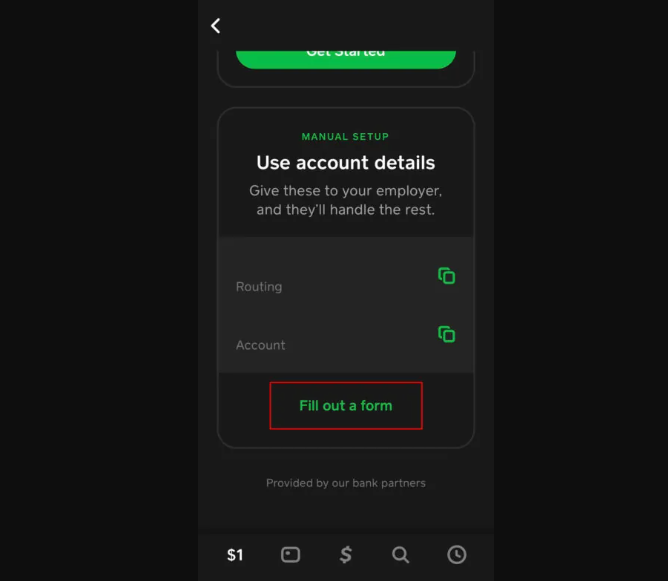
- Virtual Account Numbers: When you set up direct deposit with Cash App, you are provided with unique routing and account numbers. These are not directly from Cash App but are virtual account numbers associated with its partner banks, typically Sutton Bank or Lincoln Savings Bank. These numbers effectively act as conduits, allowing external funds to be directed into your Cash App balance, leveraging the established banking system.
- Seamless Income Management: This feature positions Cash App as a viable alternative for managing primary income, especially for those who prefer the convenience of a mobile-first platform or may not have a traditional bank account. It seamlessly integrates a core banking function into a user-friendly app.
The Cash App Card and ATM Access
The Cash App Card extends the utility of your Cash App balance into the physical world, functioning much like a standard debit card.
- Visa Debit Card: As previously mentioned, the Cash App Card is a Visa Debit Card issued by Sutton Bank. This partnership with Visa and Sutton Bank allows the card to be accepted anywhere Visa is, granting users broad access to their funds for purchases.
- ATM Withdrawals: Users can also use their Cash App Card to withdraw cash from ATMs. While Cash App offers reimbursement for ATM fees for users who receive at least $300 in direct deposits per month, the underlying transaction and fund disbursement are handled through the banking network provided by Sutton Bank and Visa. This demonstrates how a fintech company layers its services on top of traditional banking infrastructure to create a comprehensive financial tool.
Understanding Limits and Regulations
The relationship with banking partners also dictates many of the operational limits and regulatory requirements that Cash App users encounter.
- Transaction Limits: Cash App, like any financial service, has limits on how much money can be sent, received, or withdrawn over certain periods. These limits are often not arbitrary decisions by Cash App but are influenced by the compliance requirements of its banking partners and broader anti-money laundering (AML) and know-your-customer (KYC) regulations. Banks are subject to strict rules to prevent financial crime, and these rules extend to their fintech partners.
- Regulatory Compliance: The partner banks ensure that Cash App’s money transmission activities comply with state and federal regulations. This includes reporting requirements, fraud prevention measures, and identity verification processes, all of which are essential for maintaining a secure and legal financial service. Understanding these limits and the reasons behind them provides insight into the regulatory environment governing your financial transactions.
Security, Trust, and the Future of FinTech Banking
The hybrid model of fintech innovation built upon traditional banking infrastructure raises important questions about security, builds user trust, and points to the future direction of personal finance.
Ensuring the Safety of Your Funds
The safety of funds is paramount for any financial service. Cash App employs a multi-layered approach to security, combining its own technological safeguards with the robust protection offered by its banking partners.
- Cash App’s Security Measures: These include encryption, fraud detection algorithms, two-factor authentication, and the ability to lock your Cash App Card instantly from the app. These are critical for protecting your account from unauthorized access and fraudulent activity.
- Banking Partner Protection: Beyond Cash App’s internal security, the FDIC insurance provided through Sutton Bank and Lincoln Savings Bank is a cornerstone of financial safety. This governmental backing ensures that your deposits are protected in the unlikely event of bank failure, offering a fundamental level of security that digital-only services often highlight.
- User Responsibility: While robust systems are in place, personal vigilance remains crucial. Users must practice good security habits, such as using strong, unique passwords, enabling two-factor authentication, and being wary of phishing attempts, to ensure their funds remain secure.
The Hybrid Model: Benefits and Considerations
The partnership between fintech companies and traditional banks represents a significant evolution in financial services, bringing both advantages and specific considerations for consumers.
- Benefits: This hybrid model fosters innovation, allowing agile fintechs to introduce user-friendly features quickly, while relying on banks for regulatory compliance, stability, and trust. It expands financial access, offering alternatives to individuals who may be underserved by traditional banking. For the consumer, this means more choices, often better interfaces, and competitive services.
- Considerations: One area where users might perceive a difference from traditional banks is customer service. While Cash App provides support, the direct banking relationship is with its partners. For complex banking-related issues (e.g., certain disputes or account inquiries), the route to resolution might be slightly different than directly contacting a bank where you hold an account. Understanding these distinctions helps manage expectations and navigate any potential issues efficiently.

What the Partnership Model Means for Personal Finance
The existence and success of services like Cash App, built on these fintech-bank partnerships, signal a profound shift in personal finance.
- Empowering Users: This model empowers individuals with more control and flexibility over their money. It democratizes access to financial tools that were once exclusive to traditional banking, from direct deposit to debit cards and even investment opportunities. It allows users to manage their daily finances, send money globally, and engage with emerging financial trends, all from their mobile device.
- The Evolving Landscape: The lines between tech companies and financial institutions are increasingly blurring. This collaborative approach means that the future of personal finance will likely continue to be characterized by rapid innovation, personalized services, and a seamless integration of technology with the foundational security of established financial systems. As these partnerships evolve, consumers can expect even more sophisticated and convenient ways to manage their money, making financial health more accessible than ever before.
In conclusion, when you ask “What’s the bank name for Cash App?”, the answer is not a single, simple entity, but rather a strategic partnership. Primarily, Cash App relies on Sutton Bank and Lincoln Savings Bank to hold user funds and issue its debit cards, ensuring that your money benefits from the security and regulatory oversight, including FDIC insurance, of these established financial institutions. Cash App itself is a cutting-edge financial technology company that provides the interface and innovative features, effectively bridging the gap between traditional banking infrastructure and the demands of the digital age. Understanding this distinction is key to confidently using Cash App for your personal finance needs, assuring you that your funds are safe, secure, and part of a regulated financial ecosystem.
aViewFromTheCave is a participant in the Amazon Services LLC Associates Program, an affiliate advertising program designed to provide a means for sites to earn advertising fees by advertising and linking to Amazon.com. Amazon, the Amazon logo, AmazonSupply, and the AmazonSupply logo are trademarks of Amazon.com, Inc. or its affiliates. As an Amazon Associate we earn affiliate commissions from qualifying purchases.