
Cash App has transcended its initial role as a simple peer-to-peer payment platform to become a multifaceted financial tool, empowering millions to manage, spend, and even grow their money. For many, the question “how to get money in Cash App” isn’t just about receiving a payment from a friend; it extends to leveraging the app for various income streams, investment opportunities, and efficient money management. This guide delves into the legitimate and effective ways individuals can acquire funds through Cash App, focusing strictly on the financial mechanisms and strategies within the realm of personal finance and online income.
Understanding Cash App’s Core Functionality for Receiving Funds
At its heart, Cash App excels at facilitating the transfer of funds, making it an indispensable tool for receiving money from a variety of sources. Understanding these fundamental methods is the first step towards effectively getting money into your account.
Direct Deposits and Paychecks
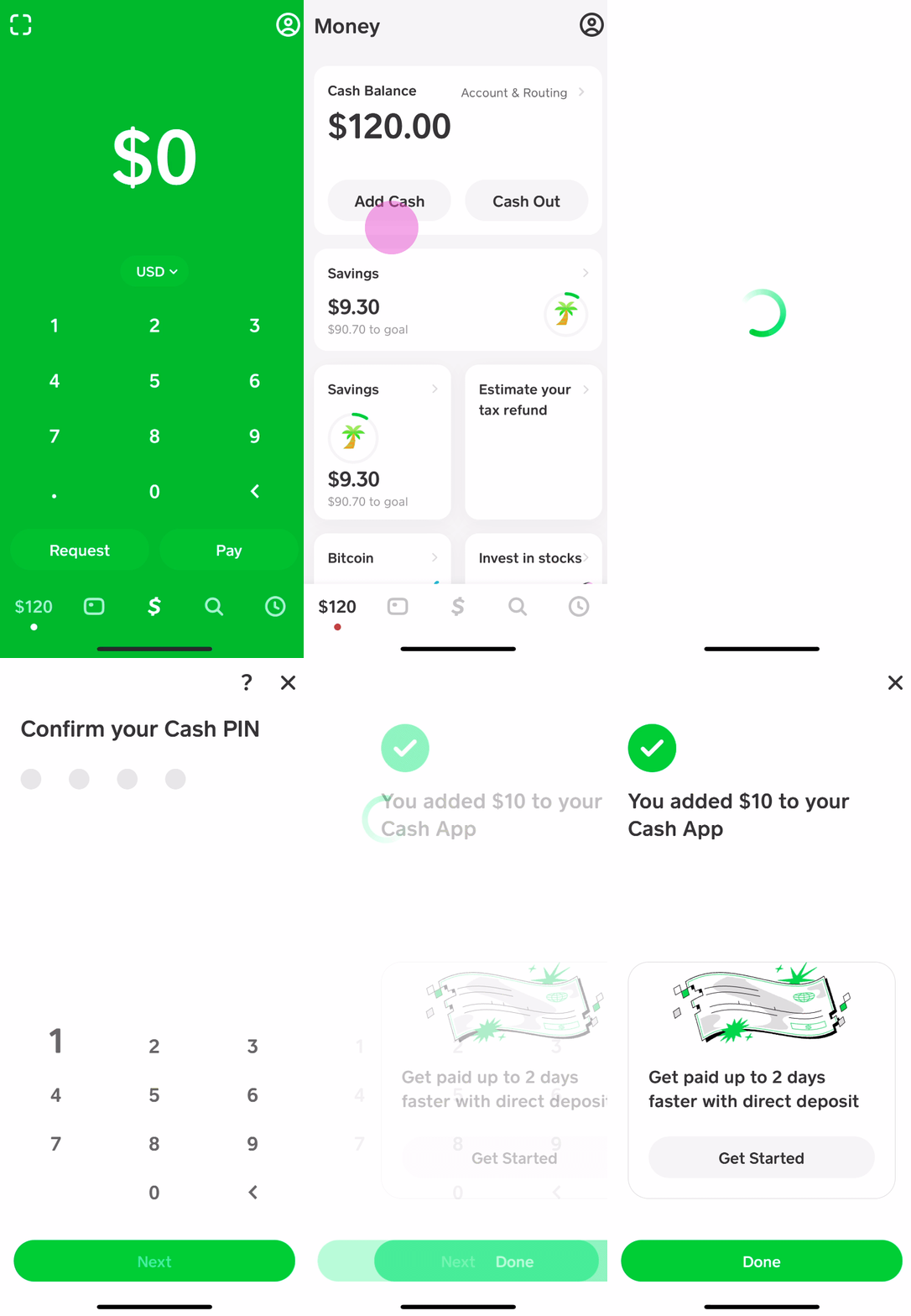
One of the most straightforward and consistent ways to receive money in Cash App is through direct deposit. This feature allows users to receive their paychecks, government benefits (like tax refunds or unemployment benefits), or other regular payments directly into their Cash App account, often up to two days earlier than traditional banks.
To set this up, you’ll need your Cash App routing and account numbers, which can be found in the “Banking” or “Money” tab of the app. Provide these details to your employer’s payroll department, government agency, or any payer that supports direct deposit. This method streamlines the receipt of regular income, integrating it seamlessly into your digital financial hub. For many, utilizing Cash App for direct deposit offers convenience and quicker access to their funds, making it a viable alternative or supplement to traditional banking for primary income.
Peer-to-Peer Transfers
The most widely recognized function of Cash App is its ability to facilitate instant peer-to-peer (P2P) transfers. Whether it’s splitting a bill with friends, receiving money from family, or getting paid for a casual favor, P2P transfers are quick and simple.
To receive money from another Cash App user, they simply need your unique $Cashtag, email, or phone number associated with your account. Once they initiate the payment, the funds are typically available in your Cash App balance almost immediately. This method is incredibly convenient for small, informal transactions and has become a default for many social money exchanges, solidifying Cash App’s role in daily financial interactions. It’s crucial to ensure you provide the correct identifying information to avoid funds being sent to the wrong recipient.
Requesting Money
Cash App’s “Request” feature is a polite and efficient way to ask for funds you’re owed. Instead of passively waiting, you can actively prompt another user for a payment. This is particularly useful for reminding someone about shared expenses, repayment of a loan, or payment for a service rendered.
To request money, navigate to the dollar sign icon on the main screen, enter the amount, tap “Request,” and then select the person you wish to request money from (they must be in your contacts or you can manually enter their $Cashtag, phone number, or email). The recipient will receive a notification and can approve the payment directly from their app. This feature adds a layer of professionalism and organization to personal financial interactions, ensuring you can systematically collect what you are owed.
Linking Bank Accounts and Debit Cards
While not a direct method of getting money into Cash App, linking external financial accounts is crucial for managing the flow of funds out of and into your Cash App balance. You can link a debit card and/or a bank account.
Linking a debit card allows you to instantly add funds to your Cash App balance from your linked bank account. This is essential for ensuring you have sufficient funds for sending payments or making purchases with your Cash Card. Conversely, when you receive money into Cash App, a linked debit card or bank account allows you to “Cash Out” or transfer your Cash App balance to your traditional bank account, providing liquidity and flexibility. This foundational step underpins almost all other financial activities within the app, making it effortless to move money between your digital wallet and traditional banking.
Leveraging Cash App for Online Income and Side Hustles
Beyond simple transfers, Cash App has become a practical tool for individuals looking to generate income from various online ventures and side hustles. Its ease of use makes it an attractive payment solution for freelancers, small business owners, and those engaging in the gig economy.
Accepting Payments for Freelance Services
Freelancers, independent contractors, and small service providers can effectively use Cash App as a primary method for receiving payments from clients. Whether you’re a graphic designer, writer, tutor, consultant, or provide local services like pet sitting or lawn care, Cash App offers a low-barrier way to accept payments.
You can provide clients with your $Cashtag, email, or phone number, and they can easily send you payments. For a more structured approach, you can send them a “Request” for the exact amount. This method is particularly popular among clients who prefer the speed and simplicity of Cash App over traditional invoicing systems for smaller projects. It’s important for freelancers to keep meticulous records of all transactions for tax purposes, as Cash App acts purely as a payment processor.
Selling Goods and Services
For individuals selling physical goods or informal services, Cash App can serve as an efficient payment portal. This applies to selling items on online marketplaces (like Facebook Marketplace or local buy/sell groups), at garage sales, or even for small-scale direct-to-consumer businesses.
Buyers can simply send payment to your $Cashtag once a deal is struck. This eliminates the need for cash transactions or more complex point-of-sale systems, simplifying the exchange for both parties. For service providers (e.g., a mobile car wash, a personal trainer), it offers a convenient way for customers to pay on the spot. While convenient, it’s crucial to exercise caution, especially when dealing with unfamiliar buyers, to ensure the legitimacy of the payment before releasing goods or services.
Participating in Paid Surveys and Micro-Tasks
Several online platforms that offer paid surveys, micro-tasks, or reward programs provide Cash App as a payout option. These platforms pay users small amounts for completing simple tasks, watching videos, or sharing opinions. While the income from any single task is minimal, consistent participation can accumulate into a modest supplemental income.
When choosing such platforms, always verify their legitimacy and check if Cash App is indeed a valid and preferred payout method. These earnings, though often small, can be a consistent way to add funds to your Cash App balance, which can then be used for spending or transferred to your bank. It’s a classic example of turning spare time into spare cash, with Cash App facilitating the final transfer.
Referral Programs and Bonuses
Cash App occasionally runs its own referral programs and promotional bonuses, offering incentives for bringing new users to the platform. Typically, when a new user signs up using your unique referral code and sends a minimum amount (e.g., $5), both you and the new user receive a bonus amount directly into your Cash App balance.
Keeping an eye on these official promotions can be a simple way to earn small, legitimate bonuses. It’s important to distinguish these official programs from unofficial or scam-related “cash flipping” schemes. Always refer to Cash App’s official communication channels for legitimate bonus opportunities and avoid anything that promises unrealistic returns.
Investing and Passive Income Opportunities on Cash App
Cash App has expanded its capabilities beyond mere transactions to include investment features, offering avenues for users to potentially grow their wealth through active and passive income strategies. These features democratize access to financial markets, even with small capital.
Investing in Stocks
Cash App allows users to buy and sell stocks directly from their app, making investing accessible even to beginners. You can purchase fractional shares, meaning you don’t need to buy an entire share of a high-priced stock; you can invest as little as $1. This lowers the barrier to entry, enabling users to build a diversified portfolio gradually.
The potential to get money from stock investments comes from two primary sources: capital appreciation (when the value of your shares increases and you sell them for a profit) and dividends (a portion of a company’s earnings paid out to shareholders). While stock investing carries inherent risks, it provides a legitimate pathway to potential financial growth over time, directly within your Cash App ecosystem. It empowers users to take a more active role in their financial future, transforming their app from a spending tool into an investment platform.
Bitcoin Investments
Similar to stocks, Cash App facilitates the buying and selling of Bitcoin (BTC), the world’s most popular cryptocurrency. Users can invest any amount they choose, making it possible to own fractions of Bitcoin. For many, Bitcoin represents a digital asset with the potential for significant appreciation, making it an attractive, albeit volatile, investment.
Getting money through Bitcoin on Cash App involves buying when the price is lower and selling when it’s higher. While the cryptocurrency market is known for its price fluctuations, it offers another avenue for potential capital gains within the app. It’s crucial for investors to understand the risks associated with cryptocurrency and only invest what they can afford to lose. Cash App’s simplified interface makes entry into the crypto market less intimidating for newcomers.
Cash App Boosts and Rewards
While not a direct way to earn money, Cash App “Boosts” and rewards effectively save you money, which is functionally equivalent to earning. The Cash Card, a customizable debit card linked to your Cash App balance, comes with “Boosts” that offer instant discounts at various merchants (e.g., coffee shops, restaurants, online stores).
Users can select a “Boost” within the app before making a purchase with their Cash Card. The discount is applied instantly at the point of sale. For example, a “10% off at a specific grocery store” boost means you save 10% on your purchase. Over time, consistently utilizing these boosts for purchases you would make anyway can result in substantial savings, indirectly increasing your disposable income available in your Cash App. This feature adds significant value to the Cash App experience for regular users, turning everyday spending into an opportunity for financial benefit.
Safeguarding Your Funds and Avoiding Scams
While Cash App offers numerous legitimate ways to get money, it’s equally important to protect your funds and recognize potential pitfalls. The digital nature of the platform makes it a target for various scams. Financial prudence and security awareness are paramount.
Recognizing Common Scams
Unfortunately, the popularity of Cash App also attracts scammers. Common schemes include:
- “Cash Flipping” Scams: Promises to multiply your money with a small upfront investment. These are always fraudulent.
- Fake Giveaways and Lotteries: Scammers posing as celebrities or official accounts, promising large sums of money in exchange for a small “processing fee” or personal information.
- Phishing Attempts: Emails or messages designed to look like they’re from Cash App, asking for your login credentials or personal data.
- Customer Service Scams: Fake support numbers or websites designed to trick users into revealing sensitive information or sending money.
- Purchase Protection Scams: Scammers sending fake payment confirmations for items you’re selling, then asking you to send the item before the payment actually clears (which it won’t).
Always be skeptical of offers that seem too good to be true, and never send money to someone you don’t know or trust, especially if they promise to send more back.
Best Practices for Secure Transactions
To protect your funds and personal information:
- Enable Two-Factor Authentication (2FA): This adds an extra layer of security, requiring a code from your phone in addition to your password.
- Use a Strong, Unique Password: Avoid easily guessable passwords and do not reuse passwords from other accounts.
- Verify Sender/Recipient Details: Double-check the $Cashtag, phone number, or email address before sending or requesting money. A single typo can send funds to the wrong person.
- Only Send/Receive from Trusted Sources: Be cautious when interacting with strangers, especially for large sums or when selling high-value items.
- Be Wary of Links: Do not click on suspicious links in emails or messages that claim to be from Cash App. Always go directly to the app or official website.
- Understand Cash App’s Limitations: Cash App is designed for peer-to-peer payments and does not offer buyer/seller protection in the same way credit card companies or PayPal might for goods and services.
Understanding Transaction Limits and Fees
Cash App has limits on how much money you can send and receive, particularly for unverified accounts. Initially, you might be limited to sending $250 and receiving $1,000 within a 30-day period. Verifying your identity (by providing your full name, date of birth, and the last four digits of your Social Security Number) typically lifts these limits significantly, allowing for larger transactions crucial for serious income generation.
While standard P2P transfers are free, Cash App does charge a small fee for instant transfers to your bank account (typically 0.5% – 1.75% of the transaction). Standard transfers (1-3 business days) are free. Being aware of these limits and fees is vital for managing your finances effectively and ensuring that you retain the maximum amount of any money you get. Fees can impact your net earnings from side hustles or investments, so always factor them into your financial planning.
Maximizing Your Cash App Experience for Financial Gain
Integrating Cash App into a broader financial strategy can significantly enhance its value as a tool for getting and managing money. Beyond the transactional aspects, strategic use can contribute to overall financial health.
Tracking Income and Expenses
When utilizing Cash App for receiving income (e.g., freelance payments, sales, survey payouts), it becomes essential to track these inflows and any associated outflows. Cash App provides a transaction history within the app, which can be useful for reviewing your financial activity. For tax purposes or detailed personal budgeting, it’s advisable to export this data or manually record it in a separate spreadsheet or budgeting app. Understanding where your money comes from and where it goes is fundamental to effective financial management and ensures you’re prepared for tax season, especially if your Cash App income constitutes a significant portion of your earnings.
Integrating with Other Financial Tools
Cash App can function as one component within a diverse financial toolkit. For instance, you might use it for immediate receipts from clients or side hustles, then transfer larger sums to a high-yield savings account or an investment brokerage for long-term growth. Its connectivity to traditional bank accounts makes this integration seamless. By linking Cash App with your primary bank and potentially other budgeting or investment apps, you create a cohesive financial ecosystem that optimizes how you get, manage, and grow your money.
Long-Term Financial Planning with Cash App
While Cash App is often associated with immediate transactions, its investment features for stocks and Bitcoin can play a role in long-term financial planning, especially for those just starting to invest. By consistently investing small, manageable amounts through the app, users can cultivate a habit of saving and investing, potentially building wealth over time. The “Boosts” also encourage disciplined spending within a budget, indirectly freeing up funds that can be allocated towards savings or investments. Viewing Cash App not just as a payment app but as a nascent financial platform can unlock its potential to contribute to your broader financial goals, making it a powerful ally in your pursuit of financial security and growth.
Conclusion
Cash App offers a robust platform for individuals looking to get money, whether through direct deposits, peer-to-peer transfers, freelance payments, side hustles, or strategic investments in stocks and Bitcoin. Its versatility as a financial tool is undeniable, providing quick and convenient access to funds and opportunities for financial growth. However, harnessing its full potential requires not only an understanding of its features but also a strong commitment to security, an awareness of potential scams, and a disciplined approach to financial management. By leveraging Cash App wisely and integrating it into your overall financial strategy, you can effectively use it as a powerful instrument to receive, earn, and even grow your money in the digital age.
aViewFromTheCave is a participant in the Amazon Services LLC Associates Program, an affiliate advertising program designed to provide a means for sites to earn advertising fees by advertising and linking to Amazon.com. Amazon, the Amazon logo, AmazonSupply, and the AmazonSupply logo are trademarks of Amazon.com, Inc. or its affiliates. As an Amazon Associate we earn affiliate commissions from qualifying purchases.