
In an increasingly digitized world, the concept of physical cash often feels like a relic of a bygone era. Mobile payment applications have surged to the forefront, transforming how individuals manage their finances, send money to friends, and even invest. Among these innovators, Cash App has carved out a significant niche, becoming synonymous with convenient, accessible, and multifaceted digital transactions. But what exactly is Cash App beyond its ubiquity in pop culture and everyday transactions? At its core, Cash App is a mobile-first financial platform designed to simplify money management, offering a suite of services that extend far beyond simple peer-to-peer payments. Developed by Block, Inc. (formerly Square, Inc.), it represents a powerful convergence of banking, investment, and digital wallet functionalities, all encapsulated within an intuitive smartphone application. This article delves into the technological architecture, diverse features, and security protocols that define Cash App, positioning it not merely as a payment tool, but as a comprehensive digital financial ecosystem. We will explore how this app leverages cutting-edge technology to deliver a seamless user experience, democratize access to financial services, and continually evolve in a competitive fintech landscape.

The Core Functionality: Simplified Digital Payments
At the heart of Cash App’s offering is its robust peer-to-peer (P2P) payment system, which revolutionized how individuals exchange money. This foundational feature is what most users initially encounter and depend on, providing an immediate solution to the age-old problem of splitting bills, paying friends back, or sending funds to family members.
Sending and Receiving Money Instantly
Cash App excels at making money transfers quick and straightforward. Users can send and receive funds almost instantaneously using a unique identifier called a “$Cashtag,” or simply by entering a recipient’s phone number or email address. This ease of use eliminates the need for complex bank transfers or the inconvenience of carrying physical cash. The underlying technology ensures that once a transaction is initiated, funds are typically available in the recipient’s Cash App balance within moments, reflecting a significant leap forward from traditional banking transfer times which can often take days. The system’s architecture is built for high availability and low latency, processing millions of transactions daily without significant delays.
Linking Bank Accounts and Debit Cards
For Cash App to function as a bridge between traditional banking and digital finance, it requires seamless integration with users’ existing financial infrastructure. Users can easily link their debit cards or bank accounts to their Cash App profile. This linkage serves multiple purposes: it enables users to fund their Cash App balance from their bank account, and crucially, it allows them to cash out their Cash App balance back into their linked bank account. The process involves secure tokenization and encryption protocols to protect sensitive financial information, ensuring that bank details are not directly stored on Cash App’s servers in an unencrypted form. This interoperability is key to Cash App’s utility, making it a flexible financial tool rather than a siloed digital wallet.
Peer-to-Peer Transactions: How it Works
The mechanics behind a P2P transaction on Cash App are a testament to modern fintech engineering. When a user initiates a payment, the app securely communicates with Cash App’s backend servers. These servers then authenticate the user, verify the availability of funds (either from the Cash App balance or a linked funding source), and process the transaction. The system employs sophisticated algorithms to detect and prevent fraudulent activities in real-time. For a payment funded by a linked debit card or bank account, Cash App initiates a transaction with the respective payment network (e.g., Visa, Mastercard) or banking institution. For funds already within the Cash App balance, the transfer is entirely internal, making it even faster and often free of charge. This complex choreography of data exchange, authentication, and fund movement happens in a fraction of a second, largely invisible to the end-user, contributing to the app’s perception of effortless transactions.
Direct Deposit Capabilities
Further blurring the lines between a mobile app and a traditional bank account, Cash App offers direct deposit features. Users can obtain a unique routing and account number, which they can provide to employers for direct deposit of paychecks, or to government agencies for benefits. This functionality transforms Cash App from a mere payment tool into a primary banking alternative for many, particularly those underserved by traditional banking institutions. The technology supporting direct deposit involves secure API integrations with banking networks, allowing Cash App to receive Automated Clearing House (ACH) transfers directly, and immediately credit them to the user’s Cash App balance. This feature underscores Cash App’s ambition to be a holistic financial platform, leveraging digital infrastructure to provide essential banking services.
Beyond P2P: Expanding Financial Technologies
While its P2P functionality laid the groundwork, Cash App has continually innovated, expanding its feature set to include a diverse array of financial services. These additions transform the app from a simple money transfer tool into a comprehensive personal finance hub, embracing investment, spending, and even tax solutions.
The Cash Card: A Customizable Debit Card
One of Cash App’s most tangible extensions is the Cash Card. This customizable, free Visa debit card is directly linked to a user’s Cash App balance, allowing them to spend funds from their account anywhere Visa is accepted, both online and in brick-and-mortar stores. The Cash Card is a physical manifestation of the digital balance, providing users with the flexibility to use their Cash App funds in real-world scenarios without needing to cash out to an external bank account. Technologically, it functions like any standard debit card, but with the added layer of management through the Cash App interface. Users can activate, deactivate, or replace their card directly from the app, offering granular control over their spending and security. Furthermore, the Cash Card integrates with “Boosts,” a rewards program that offers instant discounts at various retailers, enhancing its value proposition.
Bitcoin Trading on the Platform
Cash App was one of the first mainstream payment applications to integrate Bitcoin trading, recognizing the growing interest in cryptocurrency. This feature allows users to buy, sell, and hold Bitcoin directly within the app, democratizing access to the volatile world of digital assets. The integration simplifies the often-complex process of acquiring cryptocurrency, abstracting away the intricacies of crypto exchanges and wallets. From a technological standpoint, Cash App manages the underlying blockchain transactions, providing a user-friendly front-end interface for what would otherwise be a daunting process. It handles the secure storage of Bitcoin (though users can also transfer Bitcoin out to external wallets), market data feeds, and transaction processing, making crypto investment as straightforward as sending money.
Stock Investing Features
Building on its foray into digital assets, Cash App also introduced fractional stock investing. This feature allows users to buy and sell fractions of stocks from major companies, starting with as little as $1. This approach significantly lowers the barrier to entry for stock market participation, making investment accessible to individuals who might not have substantial capital to invest in full shares. The technology behind this involves sophisticated order routing systems that aggregate fractional share orders and execute them on behalf of users. Cash App partners with regulated brokerage firms to facilitate these transactions, ensuring compliance with financial regulations. The app provides real-time market data, portfolio tracking, and educational resources, all integrated seamlessly into the existing user interface, further cementing its role as a micro-investment platform.
Tax Filing Services (Cash App Taxes)
Expanding its financial toolkit even further, Cash App offers a free tax filing service, Cash App Taxes (formerly Credit Karma Tax). This service allows users to file their federal and state taxes directly through the app or its web interface, leveraging technology to simplify a traditionally complex and often costly process. The platform guides users through the tax preparation process, helping them identify deductions and credits, and securely submit their returns to the IRS and state tax authorities. This feature represents a significant technological undertaking, requiring robust data processing capabilities, compliance with intricate tax laws, and secure data transmission protocols. By offering this service, Cash App aims to be a comprehensive financial partner, from daily transactions to annual fiscal responsibilities.
The Technology Underpinning Cash App’s Ecosystem
The seamless user experience and rich feature set of Cash App are built upon a sophisticated technological foundation. This infrastructure is designed for scalability, security, and performance, enabling the app to handle millions of transactions and user interactions daily.
Mobile-First Design and User Experience
Cash App’s success owes much to its clean, intuitive, and mobile-first design. The user interface (UI) and user experience (UX) are meticulously crafted to simplify complex financial tasks. The app prioritizes ease of navigation, clear information presentation, and minimal steps for critical actions like sending money or investing. From a technical perspective, this means leveraging native mobile development frameworks (iOS and Android) to ensure optimal performance, responsiveness, and integration with device-specific features like biometric authentication. The design team continually iterates on the UI/UX based on user feedback and analytical data, ensuring the app remains approachable and efficient for a broad demographic.

Backend Infrastructure for Transaction Processing
At the core of Cash App is a robust backend infrastructure capable of processing a massive volume of financial transactions securely and efficiently. This typically involves a distributed system architecture, possibly utilizing cloud computing services (like AWS, Google Cloud, or Azure) to provide scalability and resilience. Key components include transaction databases (often optimized for high-speed write operations), message queues for asynchronous processing, and microservices architecture to manage different functionalities (e.g., P2P payments, Bitcoin trading, card processing) independently. The system must maintain strong consistency for financial ledgers while ensuring high availability, meaning redundant systems and failover mechanisms are critical to prevent downtime.
API Integrations and Third-Party Services
Cash App’s expansive feature set is partially enabled by extensive API integrations with various third-party services. These include payment networks (Visa, Mastercard), banking partners for ACH transfers, cryptocurrency exchanges for Bitcoin liquidity, brokerage firms for stock trading, and identity verification services for KYC (Know Your Customer) compliance. Each integration requires robust, secure APIs that can reliably exchange data and commands. Cash App’s engineering team focuses on building resilient integration layers that can handle varying API specifications, error rates, and latency, ensuring that the user experience remains smooth even when relying on external systems. This network of integrations is crucial for its ability to offer a wide range of financial services without building every component from scratch.
Scalability and Performance for Millions of Users
As Cash App’s user base has grown to tens of millions, ensuring scalability and performance has been a paramount technical challenge. The infrastructure is designed to handle spikes in transaction volume, onboarding new users, and supporting concurrent operations without degradation in service. This involves horizontal scaling (adding more servers to distribute load), efficient database indexing, caching strategies to reduce database load, and sophisticated load balancing. Performance monitoring tools are continuously employed to track system health, identify bottlenecks, and proactively address potential issues before they impact users. The engineering team focuses on optimizing code, infrastructure, and algorithms to maintain sub-second response times for critical operations, ensuring a fluid experience even under heavy load.
Ensuring Digital Security and User Trust
In the realm of digital finance, trust is paramount, and security is its bedrock. Cash App employs a multi-layered security strategy to protect user data, financial assets, and privacy against a constantly evolving threat landscape.
Encryption and Data Protection Measures
All sensitive user data, including financial details, personal identifiable information (PII), and transaction records, is encrypted both in transit (using TLS/SSL protocols) and at rest (using advanced encryption standards like AES-256). This ensures that data exchanged between the user’s device and Cash App servers, as well as data stored on Cash App’s infrastructure, is protected from unauthorized access. The implementation of strong cryptographic algorithms is regularly audited and updated to counter new vulnerabilities, forming a fundamental layer of defense against data breaches.
Fraud Prevention and Account Monitoring
Cash App leverages sophisticated fraud detection systems that employ machine learning and artificial intelligence. These systems continuously analyze transaction patterns, user behavior, and network data to identify and flag suspicious activities in real-time. Algorithms look for anomalies, such as unusually large transactions, payments to new recipients, or access from unfamiliar locations, to prevent unauthorized access or fraudulent transfers. Dedicated security teams also monitor accounts and investigate flagged activities, working proactively to protect users’ funds and identity. This dynamic and adaptive approach to fraud prevention is critical in mitigating financial crime.
User Authentication: PINs, Fingerprints, and Face ID
To protect individual accounts, Cash App implements strong user authentication measures. Users can secure their accounts with a unique PIN, and for enhanced convenience and security, integrate biometric authentication methods such as fingerprint (Touch ID) or facial recognition (Face ID) on compatible devices. These biometric safeguards offer a higher level of assurance than traditional passwords, as they are inherently tied to the user’s physical attributes, making unauthorized access significantly more difficult. The app also employs multi-factor authentication (MFA) for certain sensitive actions, requiring users to verify their identity through a second channel, such as an SMS code, before proceeding.
Tips for Maintaining Account Security
While Cash App implements robust security measures, user vigilance remains a crucial component of digital safety. The app frequently educates users on best practices for maintaining account security, including:
- Strong, unique PINs: Encouraging users to choose complex PINs and avoid easily guessable combinations.
- Enabling biometric locks: Activating Touch ID or Face ID for quick and secure access.
- Beware of scams: Warning users about phishing attempts, imposter scams, and requests for personal information outside the app.
- Regularly reviewing activity: Advising users to check their transaction history for any unauthorized activity.
- Two-Factor Authentication (2FA): Encouraging the use of 2FA whenever possible to add an extra layer of security.
By fostering a shared responsibility for security, Cash App aims to create a safer environment for all its users.
Cash App in the Digital Landscape: Impact and Future
Cash App’s journey from a simple P2P payment app to a multi-faceted financial platform highlights its significant impact on the digital landscape and hints at its continued evolution.
Competing in the Fintech Market
Cash App operates in a highly competitive fintech market, vying for user attention against giants like PayPal, Venmo, Google Pay, and Apple Pay, as well as traditional banks enhancing their digital offerings. Its competitive edge often comes from its comprehensive feature set, ease of use, and targeted marketing that resonates with younger demographics. The ability to seamlessly integrate payments, investing (stocks and Bitcoin), and banking-like services within a single app differentiates it. Technologically, its continuous innovation in areas like fractional investing and personalized debit cards keeps it at the forefront, forcing competitors to adapt and expand their own digital strategies.
Innovation and Feature Evolution
A hallmark of Cash App is its commitment to continuous innovation. The company regularly rolls out new features and enhancements, driven by user demand, market trends, and technological advancements. This agile development approach ensures the app remains relevant and responsive to the evolving needs of its user base. Future innovations could include deeper integration with e-commerce platforms, advanced budgeting and financial planning tools, further expansion into different asset classes, or even more sophisticated AI-driven financial advice. The underlying modular architecture of Cash App’s backend facilitates this rapid development and deployment of new features, allowing for experimentation and scalability.
Accessibility and Financial Inclusion
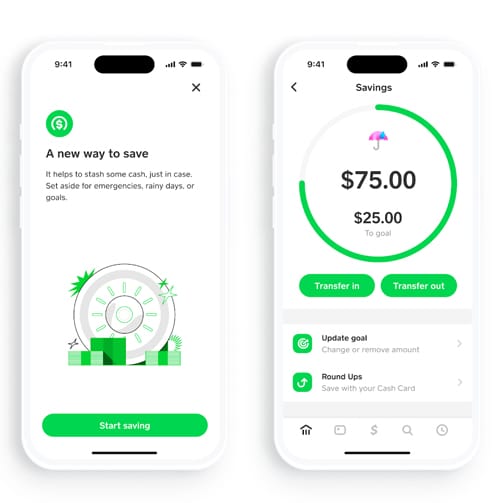
One of Cash App’s most profound impacts is its role in promoting financial accessibility and inclusion. For millions, particularly those who are unbanked or underbanked, Cash App provides essential financial services that might otherwise be out of reach. Its direct deposit feature, combined with the Cash Card, offers a viable alternative to traditional bank accounts, enabling individuals to receive wages, make purchases, and manage their money digitally without the need for a conventional banking relationship. This democratizes access to financial tools, leveraging smartphone technology to bridge gaps in traditional financial infrastructure.
The Role of Mobile Payments in Modern Economy
Cash App’s success is indicative of a broader shift towards a mobile-first, cashless economy. Mobile payment apps are no longer just conveniences; they are becoming integral to daily financial life, facilitating commerce, fostering peer-to-peer economic interactions, and empowering individuals with greater control over their money. As technology advances, these platforms are likely to become even more embedded in our financial systems, offering increasingly sophisticated services and playing an even larger role in shaping how money flows in the modern world. Cash App stands as a prime example of how technology can disrupt and redefine traditional financial paradigms, making finance more accessible, intuitive, and integrated into our digital lives.
aViewFromTheCave is a participant in the Amazon Services LLC Associates Program, an affiliate advertising program designed to provide a means for sites to earn advertising fees by advertising and linking to Amazon.com. Amazon, the Amazon logo, AmazonSupply, and the AmazonSupply logo are trademarks of Amazon.com, Inc. or its affiliates. As an Amazon Associate we earn affiliate commissions from qualifying purchases.