
Maintaining a vehicle is a fundamental aspect of responsible car ownership, crucial not just for performance and safety, but also for long-term financial prudence. Among the myriad services a car needs, the “tune-up” has long been a cornerstone of preventative maintenance. However, the modern automotive landscape has significantly redefined what a tune-up entails, leading many car owners to ponder its current relevance and, critically, its cost, especially at convenient service providers like Jiffy Lube.
This article delves into the financial considerations surrounding vehicle tune-ups and similar maintenance services, particularly through the lens of Jiffy Lube’s offerings. We’ll explore the evolution of this vital service, how Jiffy Lube typically addresses these needs, and provide a comprehensive guide to understanding the costs involved, empowering you to make informed financial decisions about your car’s health.
Understanding the “Tune-Up” in Today’s Automotive Landscape
The concept of a “tune-up” has evolved dramatically over the past few decades, transitioning from a relatively standardized set of procedures to a more diagnostic and vehicle-specific approach. Understanding this evolution is key to comprehending service recommendations and their associated costs.
Evolution of the Tune-Up: From Carburetors to Computers
Historically, a tune-up involved a predictable series of tasks designed to optimize an engine’s mechanical components. In the era of carburetors, distributors, and mechanical ignition systems, a tune-up would typically include replacing spark plugs, adjusting ignition timing, checking and adjusting valve clearances, replacing points and condenser, and adjusting the carburetor for optimal fuel-air mixture. These procedures were crucial for engine efficiency, power, and reducing emissions.
With the advent of electronic fuel injection, computer-controlled ignition systems, and sophisticated engine management units (ECUs), much of the “tuning” is now automatically handled by the vehicle’s onboard computer. Modern vehicles rarely require manual ignition timing adjustments or carburetor tuning simply because these components no longer exist in the traditional sense. Instead, the ECU continuously monitors and adjusts engine parameters for peak performance and efficiency. This shift means that the classic “tune-up” as a distinct service has largely faded, replaced by scheduled maintenance intervals that focus on component replacement and system checks.
Components of a Modern Tune-Up Equivalent
While the term “tune-up” might not appear on your service invoice, the underlying goal of optimizing engine performance and efficiency remains. Today, what was once called a tune-up is now often integrated into a vehicle’s scheduled maintenance plan or addressed through specific service items prompted by diagnostic checks. Key components that contribute to a modern “tune-up equivalent” include:
- Spark Plug Replacement: Still a fundamental element, ensuring proper ignition.
- Filter Replacements: Air filters (engine and cabin), fuel filters, and oil filters are critical for clean operation.
- Fluid Checks and Replacements: Engine oil, transmission fluid, brake fluid, coolant, and power steering fluid all need to be at optimal levels and quality.
- Ignition System Inspection: Beyond spark plugs, coils and wires may need inspection or replacement.
- Diagnostic Scans and Sensor Checks: Identifying issues indicated by dashboard warning lights (e.g., “check engine” light) or preventing future problems.
- PCV Valve Inspection/Replacement: Crucial for engine ventilation and emissions.
- Belt and Hose Inspection: Ensuring no leaks or impending failures in critical systems.
The specific combination of these services will depend on your vehicle’s make, model, age, mileage, and driving conditions, directly influencing the final cost.
When Your Car Needs a Modern Tune-Up Equivalent
Rather than a generic “tune-up,” modern vehicles operate on scheduled maintenance intervals recommended by the manufacturer, typically found in your owner’s manual. These intervals dictate when components like spark plugs, filters, and fluids should be replaced. Beyond scheduled maintenance, your car might exhibit signs indicating a need for attention:
- Decreased Fuel Economy: A noticeable drop in miles per gallon can signal inefficient engine operation.
- Reduced Power or Acceleration: The engine feeling sluggish or struggling to accelerate.
- Rough Idling or Stalling: The engine shaking or cutting out when stationary.
- Difficulty Starting: Prolonged cranking or inconsistent starting.
- Unusual Noises: Hissing, ticking, or knocking sounds from the engine bay.
- Check Engine Light: The most obvious indicator that the vehicle’s computer has detected an issue requiring diagnosis.
Addressing these symptoms promptly is not just about restoring performance; it’s a financial decision to prevent minor issues from escalating into costly repairs.
Deconstructing Jiffy Lube’s Service Offerings and Pricing
Jiffy Lube is renowned for its convenience and focus on specific, rapid maintenance services. While they may not offer a service explicitly labeled “tune-up,” they provide many of the components that constitute a modern tune-up equivalent. Understanding their service philosophy and typical pricing structures is crucial for budgeting.
Jiffy Lube’s Service Philosophy: Convenience and Specialized Maintenance
Jiffy Lube operates on a model of speed, accessibility, and specialization in routine maintenance. Their core offering is the oil change, but they also provide a range of ancillary services like tire rotations, fluid flushes, filter replacements, and diagnostic checks. They aim to get customers in and out quickly, making them an attractive option for busy individuals.
However, it’s important to recognize that Jiffy Lube, by design, may not perform the deep diagnostic work or complex repairs typically handled by full-service independent mechanics or dealership service centers. Their focus is on preventative maintenance and addressing common wear items.
Identifying Tune-Up Equivalent Services at Jiffy Lube
Since Jiffy Lube doesn’t offer a traditional “tune-up” package, you’ll need to identify individual services that collectively address the elements of a modern tune-up. These typically include:
- Oil Change Services: Their various signature service packages include oil changes, filter replacements, fluid top-offs, and visual inspections.
- Air Filter Replacement: Crucial for engine breathing and efficiency.
- Cabin Air Filter Replacement: For HVAC system performance and passenger comfort.
- Spark Plug Replacement: Available for many vehicle types, though complexity varies.
- Fuel System Cleaning Service: Aimed at improving fuel efficiency and reducing emissions.
- Transmission Fluid Exchange: Extending the life of your transmission.
- Radiator/Coolant Fluid Exchange: Maintaining engine temperature and preventing overheating.
- Diagnostic Services: While not always deep-dive, they can read “check engine” codes.
You’ll need to discuss your vehicle’s specific needs and mileage with the Jiffy Lube technician to determine which of these services are relevant to what your car might historically need from a “tune-up.”
Factors Influencing Cost at Jiffy Lube
The cost of services at Jiffy Lube, like any automotive repair facility, is not static. Several factors contribute to the final bill:
- Vehicle Make and Model: Luxury, performance, or certain import vehicles often use more expensive parts (e.g., iridium spark plugs) or require more labor-intensive procedures.
- Engine Type: V6, V8, or specialized engines might have more spark plugs or require different fluid volumes.
- Geographic Location: Labor rates and operating costs vary significantly by region and even specific neighborhoods. Services in metropolitan areas are generally more expensive than in rural ones.
- Specific Services Rendered: A basic oil change is far less expensive than a spark plug replacement combined with a fuel system cleaning and a transmission fluid flush.
- Promotions and Discounts: Jiffy Lube frequently offers coupons and online deals. Checking their website or local circulars beforehand can lead to significant savings.
- Part Quality: While Jiffy Lube typically uses standard parts, the choice of conventional, synthetic blend, or full synthetic oil will impact the oil change price.
Typical Price Range for Relevant Services at Jiffy Lube
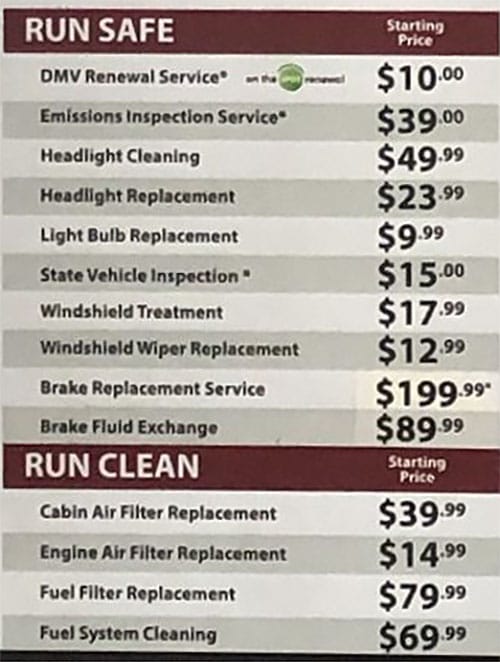
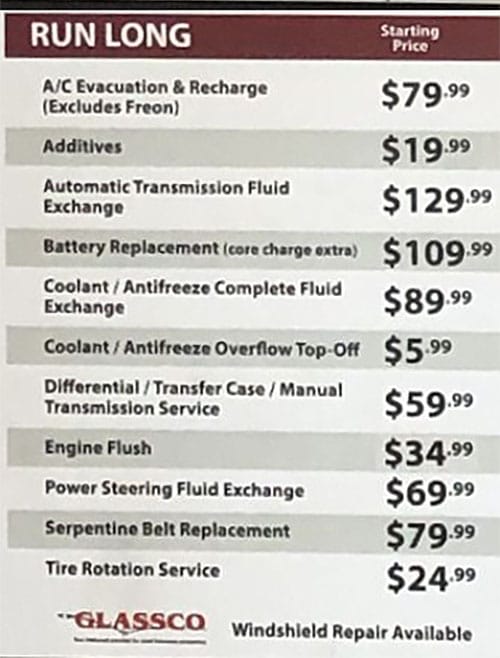
Providing an exact figure for a “tune-up” at Jiffy Lube is impossible due to the individualized nature of modern vehicle maintenance and the absence of a single “tune-up” package. However, we can offer estimated ranges for common services that contribute to a healthy engine:
- Oil Change (Signature Service): Typically ranges from $40 to $90, depending on oil type (conventional vs. synthetic) and location. This includes oil, filter, fluid top-offs, and basic inspections.
- Air Filter Replacement: Usually between $20 and $50 for parts and labor.
- Cabin Air Filter Replacement: Similar to engine air filter, $30 to $60.
- Spark Plug Replacement: This can vary widely. For a 4-cylinder engine with easily accessible plugs, it might be $100 to $200. For a V6 or V8 with difficult-to-reach plugs, or those requiring specialized iridium plugs, it could be $250 to $500 or more. Always get a specific quote for your vehicle.
- Fuel System Cleaning: Often an additive treatment, around $50 to $90.
- Transmission Fluid Exchange: Can range from $150 to $300, depending on fluid type and vehicle.
- Coolant System Flush: Typically in the $100 to $200 range.
Therefore, if your vehicle requires several of these services to address what would historically be a “tune-up,” the total cost could easily range from $200 for simpler needs up to $600-$800+ for more comprehensive requirements, especially if spark plugs are involved. It is absolutely crucial to request a detailed quote specific to your vehicle and its identified needs.
Financial Implications and Smart Spending on Car Maintenance
Understanding the costs at Jiffy Lube is just one piece of the financial puzzle. Smart car ownership requires a broader financial strategy for maintenance, ensuring you get value for your money and prevent larger financial setbacks down the road.
The Cost-Benefit of Preventative Maintenance
While maintenance costs can seem like a nuisance, they are, in fact, an investment. Neglecting routine services like oil changes, fluid flushes, and filter replacements can lead to significantly more expensive repairs in the long run. A seized engine due to lack of oil, a damaged transmission from old fluid, or a catalytic converter failure from a neglected “check engine” light can cost thousands of dollars, far outweighing the cost of preventative care. From a financial perspective, preventative maintenance saves money by extending vehicle life and avoiding catastrophic failures.
Budgeting for Automotive Care
Integrating car expenses into your personal finance budget is essential. A general rule of thumb is to set aside approximately 1% to 2% of your car’s value annually for maintenance and repairs, though this can vary based on age, mileage, and reliability. For a $30,000 car, this could mean budgeting $300 to $600 per year, or roughly $25 to $50 per month. Having a dedicated “car maintenance” fund prevents unexpected repairs from derailing your other financial goals.
Comparing Jiffy Lube to Other Options
When considering where to get your tune-up equivalent services, it’s wise to compare Jiffy Lube with other providers:
- Dealerships: Often use OEM (Original Equipment Manufacturer) parts and have specialized knowledge for specific brands, but typically come with higher labor rates. Best for warranty work or complex, brand-specific issues.
- Independent Mechanics: Can offer a good balance of expertise and competitive pricing. Many have specific specialties and can build a long-term relationship with you and your vehicle.
- DIY (Do-It-Yourself): For simple tasks like air filter changes or even spark plugs (for the mechanically inclined), doing it yourself can save significantly on labor costs. However, it requires tools, knowledge, and time, and mistakes can be costly.
Jiffy Lube excels in convenience and basic, quick services. For more complex diagnostics or if you prefer a single point of contact for all your car’s needs, an independent mechanic might be a better financial and relational choice.
Leveraging Promotions and Membership Programs
Before visiting Jiffy Lube or any service center, always check for promotions. Many chains offer coupons online, through email newsletters, or in local advertisements. Some also have loyalty programs that provide discounts or free services after a certain number of visits. Taking advantage of these can significantly reduce your overall maintenance spending. Don’t be afraid to ask about current specials or if they price match.
Maximizing Value and Ensuring Transparency
Navigating automotive services requires more than just understanding prices; it demands active participation to ensure you’re getting necessary services at a fair price.
Asking the Right Questions
When seeking services, especially if you suspect your car needs attention beyond routine oil changes, engage with the service advisor. Ask:
- “What specific services do you recommend based on my car’s mileage and symptoms?”
- “Can you provide a detailed breakdown of the costs for parts and labor for each recommended service?”
- “Are there any alternative service options or parts that could affect the price?”
- “What is the total estimated time for these services?”
- “Do you offer a warranty on parts and labor?”
A reputable service provider will be transparent and willing to answer these questions thoroughly.
Understanding Service Recommendations: Differentiating Essential from Elective
Jiffy Lube, like many quick-lube places, may offer additional services beyond what you initially came in for. It’s crucial to understand which recommendations are essential for immediate safety and performance (e.g., worn brakes, critical fluid leaks) and which are elective or preventative, that could potentially be deferred or done elsewhere (e.g., certain cosmetic fixes, or slightly worn but still functional parts). Don’t feel pressured to approve every recommendation on the spot. You have the right to decline services, get a second opinion, or research the necessity of a recommendation. A good practice is to ask for documentation or show you the worn part.
Documenting Service History: A Financial Asset
Keeping meticulous records of all maintenance and repairs is a smart financial move. This service history acts as proof of care, significantly increasing your vehicle’s resale value when it’s time to sell. Potential buyers are often willing to pay more for a car with a documented history of preventative maintenance, as it indicates a well-cared-for vehicle less likely to present hidden problems. Keep physical receipts or maintain a digital file of all your Jiffy Lube visits and other service appointments.
Beyond the Sticker Price: The True Value of Automotive Health
Ultimately, the cost of a tune-up or its modern equivalents at Jiffy Lube, or anywhere else, extends beyond the immediate financial transaction. It’s an investment in your safety, peace of mind, and the longevity of a significant asset.
Impact on Vehicle Longevity and Resale Value
A well-maintained vehicle lasts longer, performs better, and retains more of its value. By adhering to manufacturer-recommended maintenance schedules and promptly addressing issues, you can significantly extend your car’s lifespan, deferring the expensive decision of purchasing a new vehicle. When you do decide to sell, a car with a consistent maintenance history commands a higher resale price, recouping some of your preventative investment.

Safety and Reliability as Financial Assets
The most significant financial benefit of a well-tuned vehicle might be the prevention of unforeseen expenses related to breakdowns or accidents. A reliable car reduces the risk of expensive towing fees, unexpected repair bills on the road, and the lost wages or opportunities that come with being stranded. More importantly, properly functioning brakes, steering, and engine systems are paramount for safety, protecting you and your passengers from potential injury and the monumental financial and emotional costs associated with accidents.
In conclusion, while Jiffy Lube may not offer a service specifically called a “tune-up,” they provide many of the individual services that keep your car running optimally. Understanding what a modern tune-up entails, knowing what questions to ask, and budgeting effectively for vehicle maintenance are critical financial strategies for any car owner. By making informed decisions about your car’s care, you’re not just maintaining a machine; you’re safeguarding a substantial financial asset and ensuring your personal mobility and safety for years to come.
aViewFromTheCave is a participant in the Amazon Services LLC Associates Program, an affiliate advertising program designed to provide a means for sites to earn advertising fees by advertising and linking to Amazon.com. Amazon, the Amazon logo, AmazonSupply, and the AmazonSupply logo are trademarks of Amazon.com, Inc. or its affiliates. As an Amazon Associate we earn affiliate commissions from qualifying purchases.