
At first glance, the question “what is the denominator in a fraction?” might seem like a relic from elementary school mathematics, a simple concept best left in the classroom. However, for anyone navigating the complexities of personal finance, investing, or business financial management, a deep and intuitive understanding of fractions—and specifically, the denominator—is far from trivial. It is, in fact, a foundational pillar of financial literacy, underpinning everything from budgeting and saving to investment analysis and risk management.
In the realm of money, numbers tell a story. They describe our income, our expenses, our investments, and our debts. And often, these stories are told not in whole numbers, but in proportions, percentages, and ratios—all of which are inherently fractional. To truly grasp financial concepts, to make informed decisions, and to avoid common pitfalls, one must first comprehend the basic building blocks of these numerical relationships. The denominator, representing the ‘whole’ or the total number of equal parts, is the quiet hero that provides context and scale to every financial calculation, offering a lens through which we can accurately perceive our financial world.
The Denominator: A Core Concept in Financial Mathematics
Understanding the denominator isn’t just about recalling a definition; it’s about internalizing a principle that provides meaning to financial figures. It dictates the total against which a part is measured, giving context to percentages, ratios, and distributions that are omnipresent in financial discussions. Without this fundamental comprehension, many sophisticated financial tools and strategies become opaque, their true implications easily misunderstood.
Deconstructing the Fraction: Numerator, Denominator, and Value
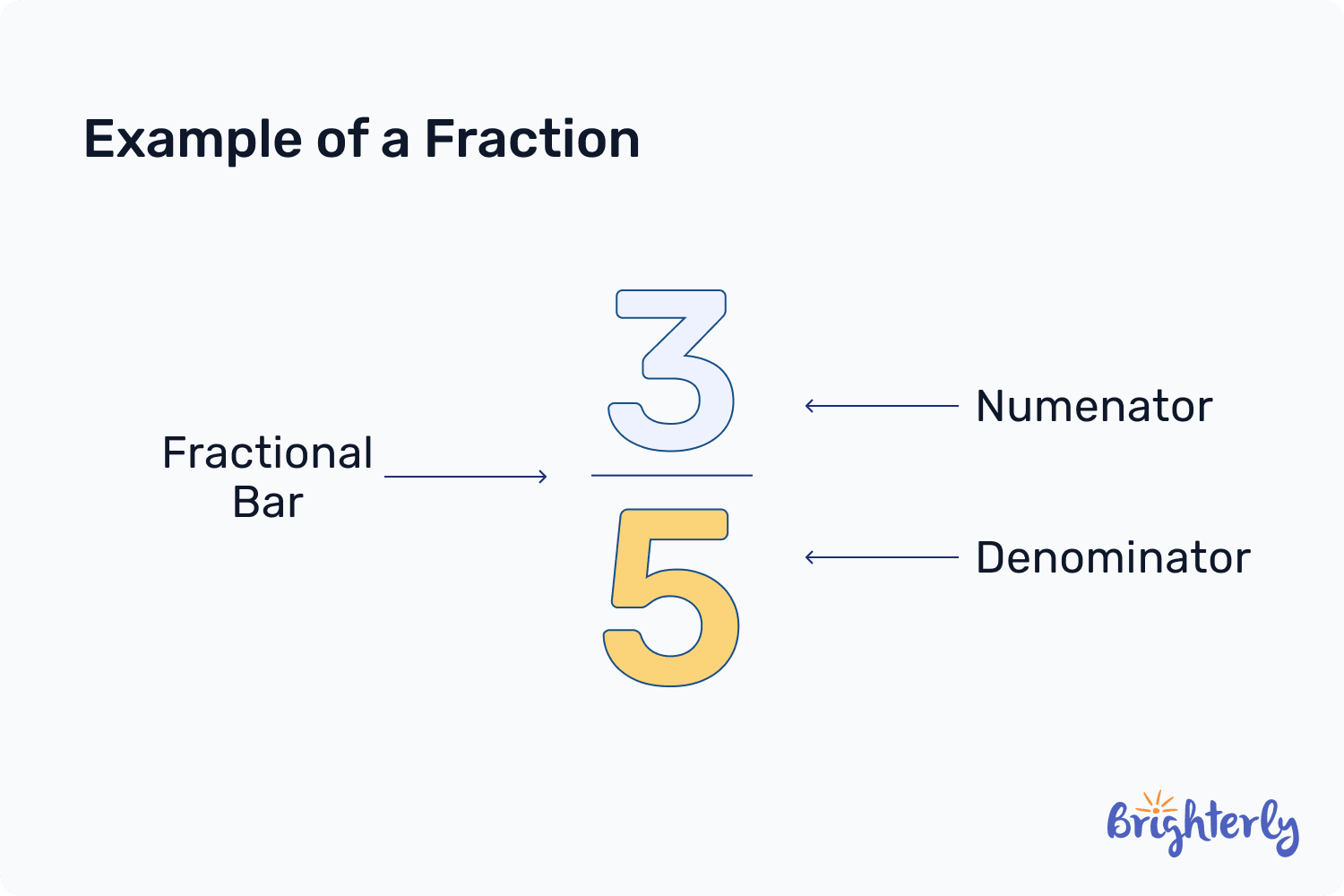
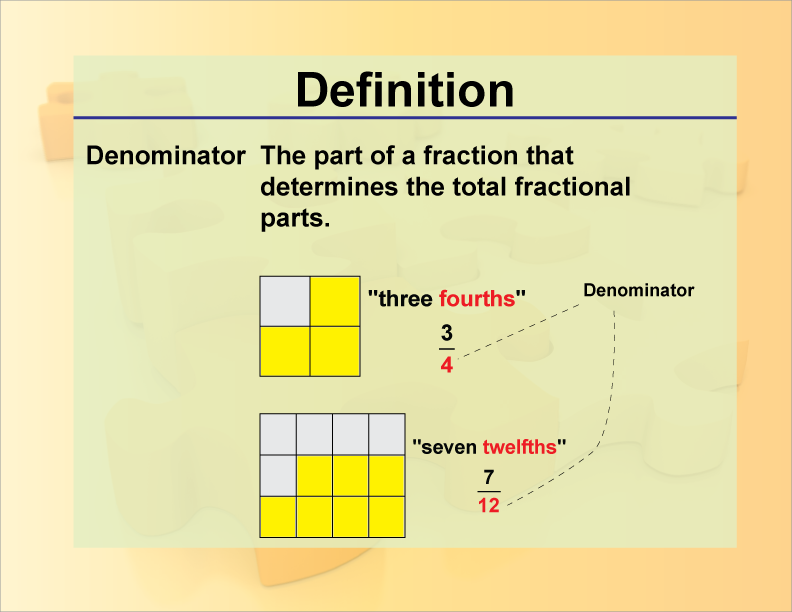
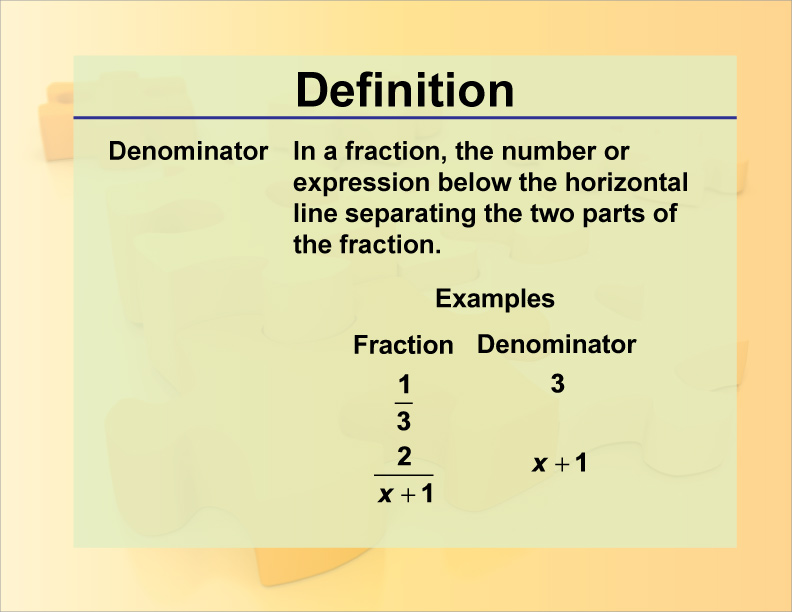
A fraction, in its simplest form, represents a part of a whole. It comprises two key components: the numerator and the denominator. The numerator, the number above the line, tells us how many parts of the whole we are considering. The denominator, the number below the line, signifies the total number of equal parts into which the whole has been divided. For instance, in the fraction 1/4, the numerator ‘1’ indicates one part, and the denominator ‘4’ indicates that the whole has been divided into four equal parts.
In a financial context, imagine a small business generating $10,000 in profit. If this profit is to be split equally among four partners, each partner receives $2,500. This can be expressed as 1/4 of the total profit. Here, the $10,000 profit is the ‘whole,’ and the ‘4’ in the denominator represents the total number of equal shares into which that whole is divided. Understanding this division is critical for fair distribution and transparent accounting.
Why the Denominator Matters: Understanding the ‘Whole’
The significance of the denominator lies in its power to define the ‘whole.’ It establishes the baseline, the complete unit against which any partial amount is measured. Without knowing the denominator, the numerator is meaningless. Knowing you have ‘one part’ isn’t helpful unless you know ‘one part of what total?’ This is profoundly important in finance.
Consider a budget: you might allocate “one-third of your income” to housing. Here, your entire monthly income is the ‘whole,’ and the ‘3’ in the denominator sets the proportion. If your income increases, the absolute amount for housing increases, but the proportion (1/3) remains constant. Similarly, in investment, if you allocate 1/5 of your portfolio to a specific sector, the denominator ‘5’ represents the total value of your entire investment portfolio. This understanding enables you to grasp asset allocation, diversification strategies, and ultimately, the overall structure of your financial health. The denominator provides the essential context, ensuring that percentages and ratios are interpreted accurately, anchoring financial decisions in a clear understanding of the full scope.
Fractions in Everyday Personal Finance: Budgeting and Beyond
From the moment we earn our first dollar to planning for retirement, personal finance is replete with fractional thinking. Budgeting, saving, managing debt, and even simple spending decisions often boil down to understanding proportions and divisions, all rooted in the concept of the denominator.
Budgeting with Fractional Thinking: Allocating Income
Budgeting is, at its core, an exercise in fractional allocation. Popular budgeting rules, such as the “50/30/20 rule” (50% for needs, 30% for wants, 20% for savings and debt repayment), are direct applications of fractions, albeit often expressed as percentages. Each percentage implicitly has a denominator of 100, representing 100% of your total income. When you allocate 20% of your income to savings, you are, in effect, setting aside 20/100 (or 1/5) of your total income. The denominator (100 or 5) represents your entire take-home pay, providing the critical reference point for how much money is going where.
A firm grasp of this allows for more effective financial planning. If you know your total income (the denominator) and your desired allocation for a particular category (the numerator), you can easily calculate the absolute dollar amount. This fractional approach enables you to visualize how each dollar contributes to the larger financial picture and how adjustments to one category impact others.
Understanding Expenses and Debt: Ratios and Proportions
Beyond income allocation, fractions are vital for understanding expenses and managing debt. Financial health often hinges on various ratios where the denominator plays a crucial role. For example, the debt-to-income ratio is a key metric lenders use to assess your ability to manage monthly payments. Here, your total monthly debt payments (numerator) are measured against your total gross monthly income (denominator). A lower ratio, implying a smaller fraction, indicates better financial standing.
Similarly, expense ratios in investment funds and interest rates on loans are essentially fractions. An interest rate of 5% is 5/100, where 100 represents the principal amount. Understanding these denominators empowers you to compare different financial products, identify hidden costs, and make choices that align with your financial goals, avoiding scenarios where a seemingly small numerator is actually large due to a small denominator.
Saving and Investing: Incremental Growth and Asset Allocation
The journey to financial independence is often paved with incremental savings, each contribution a fraction of your income. Setting a goal to save 1/10 of every paycheck for a down payment, for instance, uses the denominator of ’10’ to define the total income. Over time, these consistent fractional contributions accumulate into substantial sums.
In investing, asset allocation—the strategy of dividing your investment portfolio among different asset categories—is fundamentally fractional. An investor might decide to allocate 60% (6/10 or 3/5) of their portfolio to stocks and 40% (4/10 or 2/5) to bonds. Here, the denominator represents the total value of the investment portfolio. By understanding the denominator, investors can visualize their risk exposure, diversify effectively, and ensure their portfolio aligns with their risk tolerance and long-term objectives. It helps them see not just how much they have in stocks, but how much that represents relative to their entire investment wealth.
Investing and Business Finance: Denominators in Action
The world of investing and business finance is a complex web of valuations, returns, and risks, all expressed through ratios and percentages that rely heavily on the foundational understanding of fractions and their denominators. From the individual investor picking stocks to corporate finance professionals making strategic decisions, the denominator provides essential context.
Stock Market Fundamentals: Shares, Dividends, and Ownership
In the stock market, fractions are implicit in the very structure of ownership. When you buy shares in a company, you are acquiring a fraction of its ownership. The denominator here is the total number of outstanding shares issued by the company. If a company has 10 million shares outstanding (the denominator) and you own 10,000 shares (the numerator), you own 10,000/10,000,000 or 1/1000th of the company. This fraction determines your voting power and your proportional claim on profits through dividends.
Dividends themselves are often stated as ‘dollars per share.’ However, when assessing a stock’s attractiveness, investors look at the dividend yield, which is the annual dividend per share (numerator) divided by the stock’s current price per share (denominator). This fractional comparison tells you the return on your investment relative to its current market value, making the denominator crucial for comparative analysis.
Understanding Returns and Ratios: The Denominator as the Base
Financial analysis relies heavily on ratios, and in almost every ratio, the denominator provides the crucial benchmark. Take Return on Investment (ROI), a fundamental metric for evaluating investment performance. ROI is calculated as Net Profit (numerator) divided by the Cost of Investment (denominator). The denominator, in this case, sets the base against which the profit is measured, giving true meaning to the return generated. An investment might generate a $1,000 profit, but a 10% ROI (meaning the cost was $10,000) is very different from a 100% ROI (meaning the cost was $1,000).
Similarly, the Price-to-Earnings (P/E) ratio, a widely used valuation metric, compares a company’s share price (numerator) to its earnings per share (denominator). The earnings per share, reflecting the company’s profitability allocated to each share, forms the critical denominator that helps investors gauge whether a stock is over- or undervalued relative to its earnings power. Without understanding that earnings per share represents the company’s total earnings divided by the total number of shares, the P/E ratio’s insight would be lost.
Risk Management and Diversification: Spreading the ‘Whole’ Investment
Diversification, a cornerstone of prudent investment strategy, is fundamentally a fractional concept. The goal is to spread risk by allocating parts of your total investment (the whole, or the denominator) across various asset classes, industries, and geographies. An investor might aim for a portfolio where no single asset constitutes more than 5% (5/100 or 1/20) of the total portfolio value. Here, the ‘total portfolio value’ is the denominator, providing the context for limiting individual risk exposure.
By understanding the denominator in terms of their total investment capital, investors can strategically allocate fractions of that capital to different types of assets—stocks, bonds, real estate, commodities—to achieve a balanced risk-return profile. This fractional allocation helps mitigate the impact of poor performance in any single part of the portfolio, preserving the integrity of the ‘whole.’
Beyond the Basics: Advanced Financial Literacy and Denominators
The relevance of the denominator extends far beyond basic budgeting and investment definitions, permeating more sophisticated aspects of financial planning and evaluation. Its underlying principle is woven into the fabric of complex financial instruments and long-term strategic decisions.
Interest Rates and Compound Growth: Fractional Components of Time
Interest rates, whether on savings accounts, loans, or investments, are essentially fractions applied over time. An annual interest rate of 5% means that 5/100 of the principal amount is earned or charged each year. When compounded, this fractional interest is applied not just to the initial principal but also to the accumulated interest, leading to exponential growth or debt. The ‘time’ component in compound interest calculations can also be viewed fractionally—for example, compounding quarterly means applying 1/4 of the annual rate four times a year. Understanding these fractional components allows individuals to grasp the true cost of debt and the immense power of long-term investing.
Financial Planning and Goal Setting: Breaking Down Big Goals
Achieving significant financial goals, such as buying a house, funding a child’s education, or retiring comfortably, often requires breaking down a large total sum (the ‘whole’ or the denominator) into smaller, manageable savings targets over time. If you need $200,000 for a down payment in 10 years, you’re essentially looking at accumulating 1/10 of the total goal each year, which then breaks down further into monthly or weekly savings contributions—each a fraction of your income. This fractional decomposition of large goals makes them less daunting and provides a clear roadmap for consistent progress. The denominator here represents the ultimate financial objective, allowing planners to create actionable steps.
Evaluating Financial Products and Services: Understanding Underlying Ratios
When evaluating complex financial products like mortgages, annuities, or insurance policies, one encounters a myriad of fees, rates, and terms that are often presented as ratios or percentages. Mortgage rates, insurance premiums relative to coverage, or the expense ratios of mutual funds all rely on a clear understanding of the denominator. For instance, an insurance premium might be a fraction of the insured value, and a fund’s expense ratio is a fraction of the total assets under management. A financially literate individual, armed with an understanding of the denominator, can critically assess these offerings, compare alternatives, and identify the most cost-effective and beneficial options, avoiding products where a seemingly small numerator (e.g., a low fee percentage) applied to a large denominator (e.g., a large principal or total asset value) results in a substantial cost.
Conclusion
The question “what is the denominator in a fraction?” is far more profound than it initially appears when viewed through the lens of financial literacy. It is not merely a mathematical definition but a fundamental concept that underpins nearly every aspect of managing money, making investments, and understanding economic forces. From meticulously crafting a personal budget to dissecting complex corporate financial statements, the denominator provides the essential context, the ‘whole’ against which every ‘part’ is measured.
Mastering the denominator empowers individuals to move beyond simply reciting numbers to truly comprehending their financial significance. It enables informed decision-making, fosters critical thinking about financial products and advice, and ultimately lays the groundwork for building lasting wealth and achieving financial independence. In a world increasingly driven by data and complex financial instruments, an intuitive grasp of this basic mathematical building block transforms individuals from passive recipients of financial information into active, astute navigators of their financial destiny. The denominator, in its quiet way, is truly the silent hero of financial literacy, providing clarity and context that is indispensable for anyone seeking to master their monetary future.
aViewFromTheCave is a participant in the Amazon Services LLC Associates Program, an affiliate advertising program designed to provide a means for sites to earn advertising fees by advertising and linking to Amazon.com. Amazon, the Amazon logo, AmazonSupply, and the AmazonSupply logo are trademarks of Amazon.com, Inc. or its affiliates. As an Amazon Associate we earn affiliate commissions from qualifying purchases.