
Navigating the complexities of child support can be one of the most financially challenging aspects for parents undergoing separation or divorce. Beyond the emotional toll, establishing a fair and sustainable financial arrangement for raising children requires a clear understanding of legal frameworks, financial inputs, and future planning. Child support is not just a legal obligation; it’s a critical financial mechanism designed to ensure that children continue to receive the financial support they need from both parents, maintaining a standard of living as close as possible to what they would have experienced if their parents remained together.
This guide delves into the financial intricacies of child support determination, offering insights into the factors that influence calculations, the various models used across jurisdictions, and the practical steps parents can take to understand and manage these vital financial commitments. By focusing on the monetary aspects, from income assessment to expense allocation and long-term financial planning, we aim to demystify this oftendaunting process.
The Foundational Principles of Child Support
At its core, child support is a legal and financial imperative. Its determination is rooted in fundamental principles designed to prioritize the child’s well-being and ensure equitable parental contribution, irrespective of the parents’ marital status.
Purpose and Legal Obligation
The primary purpose of child support is to provide for the financial needs of children whose parents are separated or divorced. This includes essential expenses such as food, shelter, clothing, medical care, and education, as well as broader costs related to their upbringing, extracurricular activities, and overall welfare. The underlying principle is that both parents share a continuing financial responsibility for their children. This responsibility doesn’t diminish with separation; rather, it is formalized through child support orders to ensure consistency and fairness.
Legally, child support is typically mandated by state or provincial laws, which outline specific guidelines and formulas for its calculation. These laws recognize the ongoing financial partnership of parenting and seek to prevent one parent from bearing a disproportionate financial burden while the other contributes less. Failure to adhere to a child support order can result in severe legal consequences, underscoring its status as a serious legal and financial obligation.
Who Pays and Who Receives
Generally, child support is paid by the non-custodial parent (the parent with less overnight parenting time) to the custodial parent (the parent with more overnight parenting time). However, this traditional view has evolved, particularly with the rise of shared custody arrangements where both parents have significant time with the children. In such cases, the determination of who pays whom often boils down to a calculation based on each parent’s income, with the parent earning more typically paying support to the other, even if parenting time is shared. The goal is always to balance the financial resources available to the children across both households.
It’s crucial to understand that child support payments are for the benefit of the child, not the receiving parent. The funds are intended to cover the child’s direct and indirect expenses, contributing to their standard of living. This distinction is important for both the payer and receiver to remember, as it frames the financial transaction within the context of the child’s needs.
Key Financial Variables in Child Support Calculation
The exact amount of child support determined by a court or administrative agency is not arbitrary; it’s the result of a precise calculation based on several quantifiable financial factors. Understanding these variables is crucial for both parents to anticipate and plan for their financial obligations or entitlements.
Understanding Parental Income
The income of both parents is arguably the most significant factor in child support calculations. However, “income” is often broadly defined and can include more than just wages or salaries. Courts typically look at gross income from all sources, which might encompass:
- Salaries, wages, bonuses, commissions, and tips: Regular earnings from employment.
- Self-employment income: Net profits from a business after allowable deductions.
- Overtime pay and second jobs: Consistent additional earnings.
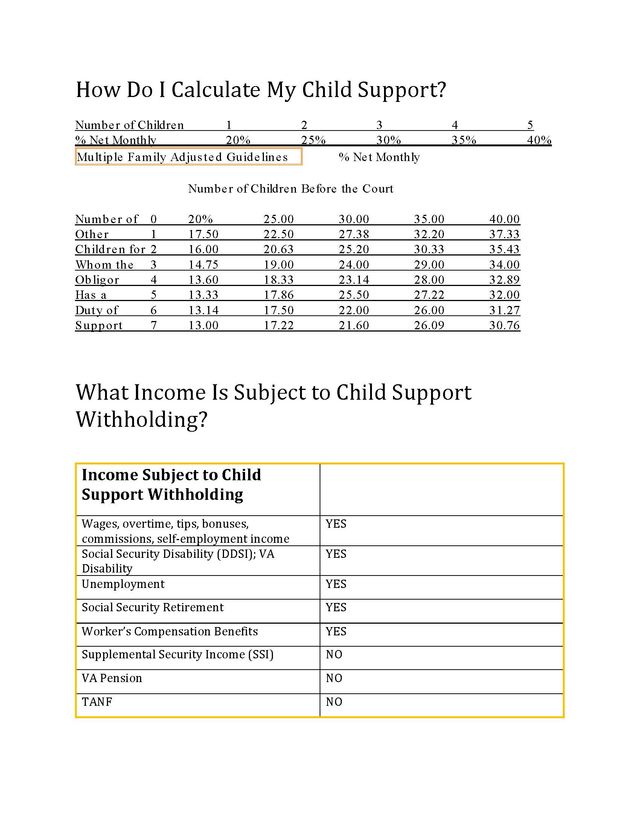
- Disability benefits, unemployment benefits, and workers’ compensation: Income replacement.
- Social Security benefits: Certain government benefits.
- Rental income: Profits from real estate investments.
- Alimony (spousal support) received: If applicable, this can be considered income for the recipient.
- Investment income: Dividends, interest, and capital gains.
Some jurisdictions may also consider “imputed income” if a parent is intentionally unemployed or underemployed to avoid child support obligations. This means the court may assign an income level to that parent based on their earning capacity, education, skills, and past employment history. Deductions for specific items, such as taxes, mandatory union dues, health insurance premiums, and pre-existing child support or alimony orders, are typically applied to arrive at a “net” or “adjusted” income figure, which is then used in the final calculation.
Custody Arrangements and Parenting Time
The amount of time each parent spends with the children (known as parenting time or physical custody) plays a substantial role in child support calculations. Jurisdictions often distinguish between:
- Sole Physical Custody: One parent has the children for the majority of the time, and the other parent has visitation. The non-custodial parent typically pays support.
- Shared/Joint Physical Custody: Both parents have significant, often near-equal, parenting time with the children. In these scenarios, the child support calculation often involves offsetting obligations based on each parent’s income and the number of overnights. The parent with the higher income may still pay support to ensure the children’s needs are met equally in both homes.
- Split Custody: Each parent has sole custody of one or more children. This is less common and results in separate support calculations for each parent.
The rationale is that the parent with more overnight time with the children directly bears a greater portion of the daily expenses (food, utilities, housing costs) and therefore may require more financial assistance from the other parent.
Accounting for Child-Related Expenses
Beyond basic needs, specific child-related expenses are factored into the child support determination. These often include:
- Healthcare Costs: This typically covers health insurance premiums for the children and uninsured medical expenses (co-pays, deductibles, prescription costs). The cost of premiums is often allocated between parents, and uninsured costs are usually split according to their respective income percentages.
- Childcare Costs: Expenses for daycare, after-school care, or nannies that enable a parent to work are often included. These are usually added to the basic support obligation and shared proportionally.
- Educational Expenses: Tuition for private school, tutoring, or special educational needs can be factored in, particularly if these were part of the children’s lives prior to the separation or if specifically agreed upon.
- Extracurricular Activities: Costs for sports, music lessons, clubs, and other enrichment activities may also be included, especially if they are significant or were a consistent part of the child’s life.
These “extraordinary” expenses are typically added to the basic child support obligation and are often shared between parents in proportion to their incomes, ensuring that the child’s pre-separation standard of living is maintained as much as possible.
Navigating State-Specific Child Support Models
The method by which child support is calculated is not uniform across all jurisdictions. While the core principles remain consistent, the specific formulas and guidelines can vary significantly from state to state or country to country. Understanding the model applicable in your jurisdiction is paramount.
The Income Shares Model
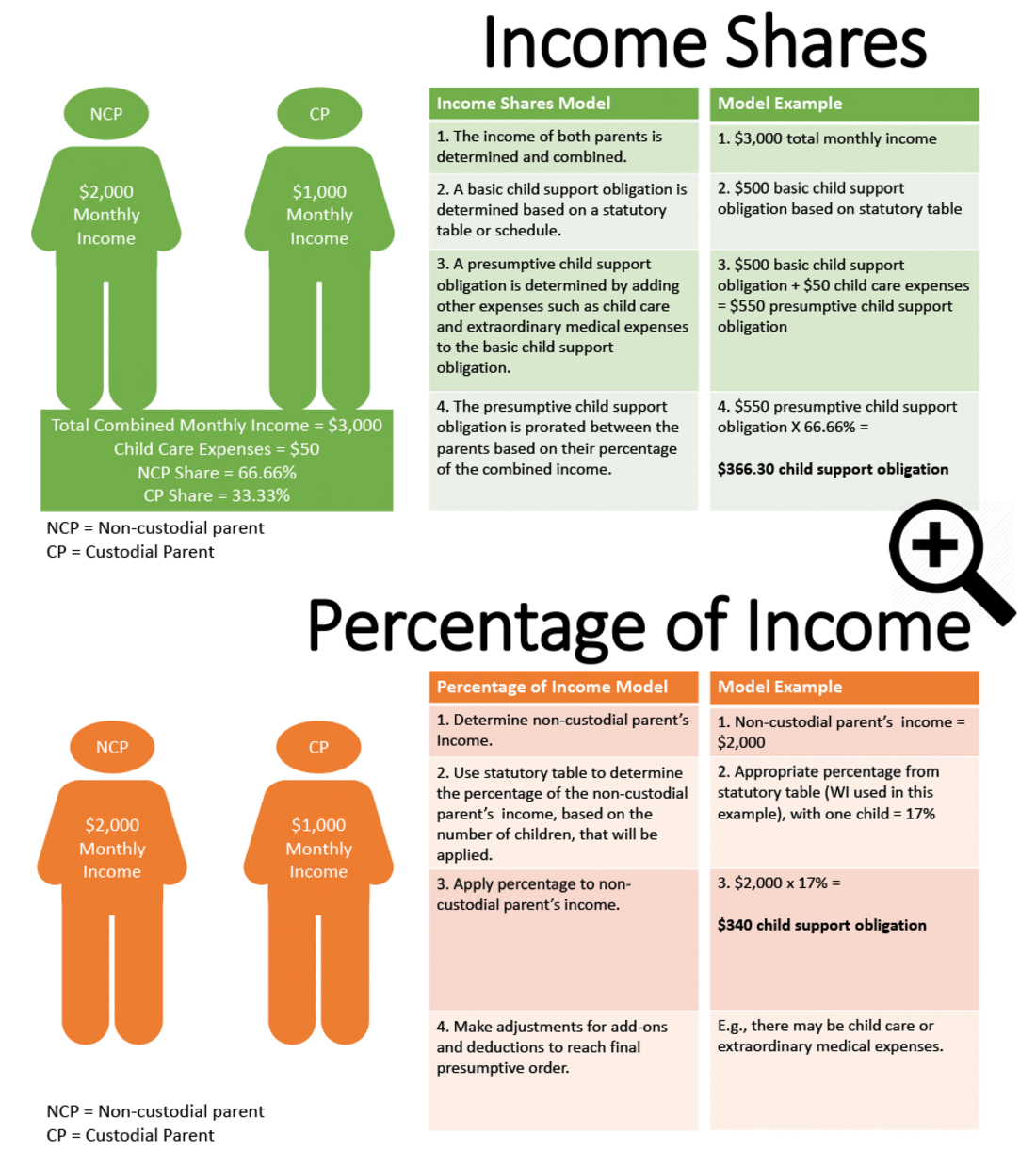
The Income Shares Model is the most prevalent approach in the United States, adopted by the majority of states. This model is based on the premise that children should receive the same proportion of parental income they would have received if their parents lived together. The calculation generally involves:
- Determining the combined adjusted gross income of both parents.
- Referencing a schedule or table (often provided by the state’s child support guidelines) that indicates the total amount of support a two-parent family with that income and number of children would typically spend on their children. This establishes the “basic support obligation.”
- Prorating this basic obligation between the parents based on their individual percentage contributions to the combined income. For example, if Parent A earns 60% of the combined income and Parent B earns 40%, Parent A is responsible for 60% of the basic obligation, and Parent B for 40%.
- Adjusting for parenting time and extraordinary expenses: The calculations are then adjusted to account for who pays for health insurance, childcare, and how much time each parent spends with the children. The non-custodial parent’s share is then paid to the custodial parent.
This model aims for fairness by considering the financial capacity of both parents and aligning support with actual family spending patterns.
Other Common Calculation Methods
While the Income Shares Model dominates, other models exist:
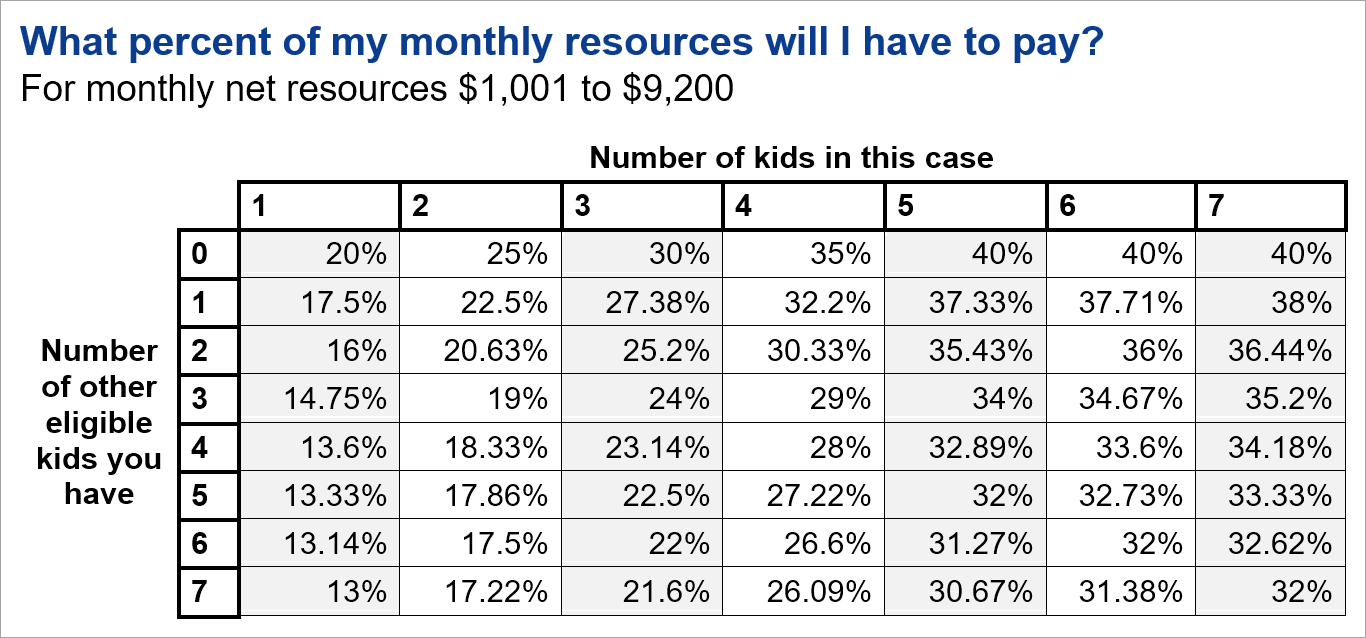
- Percentage of Income Model: Used by a few states, this model calculates child support as a percentage of the non-custodial parent’s income only. The percentage may be fixed or may vary based on the number of children. It generally does not consider the custodial parent’s income, which is a key difference from the Income Shares Model.
- Melson Formula: This is a more complex model, used in a few jurisdictions, that aims to ensure each parent’s basic needs are met before calculating child support, then calculates a standard of living allowance for the children, and finally considers the children’s additional needs or expenses. It prioritizes the self-sufficiency of both parents and the children.
Each model has its unique approach and nuances. Regardless of the model, the overarching goal remains to ensure adequate financial provision for the children.
The Importance of Local Guidelines
Given the variations in calculation models and specific guidelines, it is critically important to consult the child support laws and guidelines of the specific state, province, or country where the child support order will be issued. These guidelines are often detailed statutes or administrative rules that specify how income is defined, what deductions are allowed, how parenting time affects calculations, and what extraordinary expenses can be included. Many jurisdictions provide online calculators or worksheets to help parents estimate child support, though these are typically for informational purposes only and should not replace legal advice. Legal professionals specializing in family law are invaluable resources for accurately interpreting and applying these local guidelines.
A Step-by-Step Guide to Estimating Child Support
While the exact calculation is best left to legal professionals and the courts, understanding the general steps involved can empower parents to prepare financially and mentally.
Documenting Financial Information
The first and most critical step is to gather comprehensive financial documentation. This forms the basis of all calculations and ensures accuracy. You will need:
- Income records: Pay stubs (recent several months), W-2 forms, 1099 forms, tax returns (past 2-3 years), business ledgers (for self-employed individuals).
- Expense records: Health insurance statements showing premium costs for children, childcare invoices, receipts for extraordinary medical or educational expenses, documentation of other support obligations (alimony or child support for other children).
- Asset and Debt statements: While not always directly used in child support calculation, understanding your overall financial picture is crucial for long-term planning and potential property division which can indirectly impact financial capacity.
Thorough documentation helps avoid disputes, provides a clear picture of each parent’s financial capacity, and allows for accurate application of the state’s guidelines.
Calculating the Basic Support Obligation
Once financial information is compiled, the next step, particularly in Income Shares states, involves determining the combined adjusted gross income of both parents. This figure is then cross-referenced with the state’s child support guidelines (often tables or schedules) to arrive at a “basic support obligation” — the theoretical amount a family with that income and number of children would typically spend on their children each month. This figure represents the total financial need of the children based on parental income.
Following this, each parent’s percentage contribution to this combined income is calculated. For instance, if Parent A contributes 70% of the combined income, they are theoretically responsible for 70% of the basic support obligation, with Parent B responsible for the remaining 30%.
Adjustments for Specific Circumstances
The basic support obligation is rarely the final figure. Several adjustments are typically made to account for the unique circumstances of each family:
- Credit for direct payments: The non-custodial parent receives a credit for their share of the basic obligation. If they are paying for health insurance for the children or the majority of childcare costs, these direct payments are often deducted from their overall support obligation, or the costs are added to the basic obligation and then prorated.
- Parenting time adjustments: In shared custody arrangements, many states apply a formula that reduces the support paid by the higher-income parent to account for the significant expenses incurred by the lower-income parent during their extensive time with the children. This is often done using a multiplier or a shared-custody worksheet.
- Extraordinary expenses: As discussed, additional costs for education, specialized medical care, or significant extracurricular activities are usually added to the basic support amount and allocated between parents based on their income percentages.
These adjustments ensure that the final child support order is tailored to the specific financial realities and parenting arrangements of the family, aiming for a fair distribution of costs.
Modifying, Enforcing, and Managing Child Support Financially
A child support order is not necessarily set in stone forever. Life circumstances change, and understanding how to modify, enforce, and financially manage child support is crucial for both parents.
When and How to Modify an Order
Child support orders can be modified if there is a “material change in circumstances.” What constitutes a material change varies by jurisdiction but commonly includes:
- Significant change in income: A substantial increase or decrease in either parent’s income (often a 10-15% change).
- Change in custody or parenting time: A shift in the number of overnights or the primary residence of the child.
- Change in child’s needs: New medical conditions, special education requirements, or the child reaching the age of majority.
- Change in healthcare or childcare costs: A substantial increase or decrease in these expenses.
- New child support or alimony obligations: For a subsequent child or marriage.
The modification process typically involves filing a petition with the court, providing updated financial information, and demonstrating that a substantial change has occurred. It’s important to seek modification as soon as possible after a change, as modifications are rarely retroactive. Legal counsel is highly recommended to navigate this process effectively.
Financial Planning and Tax Considerations
For the payer, child support payments are generally not tax-deductible at the federal level in the United States, nor are they deductible in many other countries. For the recipient, child support payments are generally not considered taxable income. This tax treatment differs significantly from alimony (spousal support), which, for agreements entered into before 2019, was often taxable to the recipient and deductible for the payer. Understanding this distinction is vital for accurate tax planning.
From a financial planning perspective, both parents need to integrate child support into their household budgets.
- For the payer: Child support represents a fixed monthly expense that must be accounted for. It’s crucial to adjust spending and savings goals accordingly. Failing to budget for child support can lead to financial strain and potential legal issues.
- For the recipient: While child support is a vital source of income for the children’s needs, it should not be the sole basis for financial security. It’s advisable to build emergency savings, pursue career advancement, and plan for long-term financial independence, as child support typically ends when the child reaches adulthood.
Financial tools, such as budgeting apps or personal finance software, can be instrumental in tracking income, expenses, and child support payments, helping both parents maintain financial stability and accountability. Engaging with a financial advisor who understands post-divorce finances can also provide invaluable guidance in restructuring personal budgets, managing assets, and planning for future financial goals, ensuring that child support effectively contributes to the children’s well-being without jeopardizing the long-term financial health of either parent.
Determining child support is a complex but essential financial process that impacts families for years. By understanding the underlying principles, the financial variables involved, the specific guidelines of your jurisdiction, and the financial implications, parents can approach this challenge with greater confidence and work towards securing their children’s financial future.
aViewFromTheCave is a participant in the Amazon Services LLC Associates Program, an affiliate advertising program designed to provide a means for sites to earn advertising fees by advertising and linking to Amazon.com. Amazon, the Amazon logo, AmazonSupply, and the AmazonSupply logo are trademarks of Amazon.com, Inc. or its affiliates. As an Amazon Associate we earn affiliate commissions from qualifying purchases.