
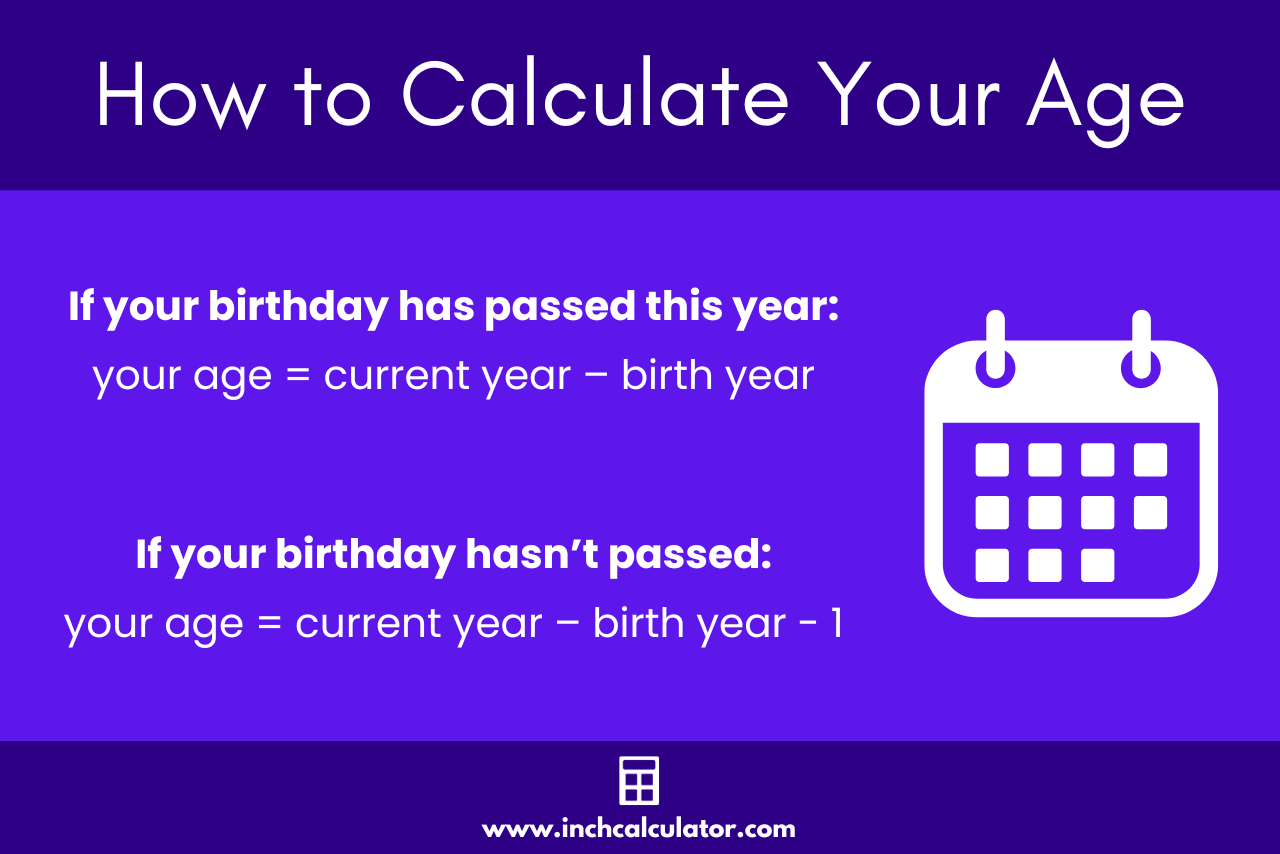
The simple question, “how old will I be in 2060,” might seem like a mere mathematical exercise, a casual query about the passage of time. Yet, for the financially astute individual, this seemingly innocuous question unlocks a profound gateway into strategic long-term financial planning. It’s not just about a numerical age; it’s about a future self, a future lifestyle, and the economic landscape that will define it. In a world where financial security is increasingly a self-directed endeavor, understanding your temporal position relative to a significant future milestone like 2060 becomes an indispensable cornerstone of wealth management, retirement preparation, and legacy building. This article delves into why calculating your age in 2060 isn’t just a curiosity, but a crucial starting point for designing a robust financial future.
The Foundational Role of Your Future Age in Financial Strategy
Understanding your age in 2060 moves beyond a simple calendar calculation; it’s about grasping your financial lifespan and the strategic opportunities and challenges that lie within it. This future marker provides a concrete horizon against which all long-term financial decisions—from investment allocations to retirement savings targets—must be calibrated.
Beyond the Calendar: Calculating Your Financial Lifespan
Let’s assume, for instance, you are 35 years old today in 2024. In 2060, you will be 71. This single calculation immediately frames a wealth of financial implications. A 71-year-old in 2060 is likely retired or nearing the end of their working life, heavily reliant on accumulated savings and passive income. This age dictates an investment horizon of approximately 36 years, a timeframe long enough to leverage the immense power of compounding, but also one that demands careful consideration of evolving risk tolerances and market cycles.
Conversely, if you are 55 today, you’ll be 91 in 2060. This drastically alters the planning paradigm. The investment horizon is much shorter, emphasizing capital preservation and income generation over aggressive growth. Healthcare costs become a more immediate and significant concern, and estate planning moves to the forefront. The point is, your age in 2060 isn’t just a number; it’s the anchor for your entire financial narrative, defining the duration of your accumulation phase, the anticipated length of your draw-down period, and the types of financial products and strategies that will be most appropriate for your unique situation. It dictates whether your focus should be on maximizing aggressive growth or safeguarding accumulated wealth, shaping every decision you make from now until that pivotal year.
The Urgency of Long-Term Perspective
The adage “the best time to plant a tree was 20 years ago; the second best time is now” perfectly encapsulates the urgency of long-term financial planning, especially when considering a distant future like 2060. The compounding effect, often hailed as the eighth wonder of the world, is an exponential force that rewards early and consistent contributions. A dollar invested today has far more time to grow, reinvest its earnings, and generate returns on those reinvested earnings by 2060 than a dollar invested five or ten years from now.
Furthermore, a long-term perspective inherently buffers against market volatility. Short-term fluctuations, which can be alarming to new investors, tend to smooth out over decades. By focusing on 2060, investors are encouraged to “stay the course,” resisting the temptation to panic sell during downturns and allowing their investments to recover and grow over the long haul. This long view also provides ample time to adjust strategies, correct course, and adapt to unforeseen economic shifts, making the path to financial security by 2060 far more resilient than reactive, short-term planning could ever achieve. The sheer magnitude of time between today and 2060 underscores that procrastination is the most expensive mistake one can make in personal finance.
Crafting Your Retirement Blueprint for 2060 and Beyond
For many, 2060 will represent a pivotal point – the threshold of retirement or deep into their golden years. A robust financial plan for this period requires more than just saving; it demands a clear vision and meticulous calculation.
Defining Your Vision: What Does Retirement Look Like in 2060?
Before you can build a financial roadmap, you need a destination. What does “retirement” mean to you in 2060? Will you be traveling the world, pursuing hobbies, volunteering, or simply enjoying quiet time with family? Your vision might include living in a specific location, perhaps downsizing or moving closer to loved ones. It could involve supporting grandchildren’s education, pursuing a second career, or maintaining a specific standard of living. This isn’t just a daydream; it’s a critical component of your financial strategy.
The more detailed and concrete your vision, the better you can quantify the financial resources required to achieve it. For example, extensive international travel demands a different savings target than living a comfortable, quiet life at home. Healthcare considerations, lifestyle choices, and even legacy aspirations (e.g., leaving an inheritance) all shape this vision and, consequently, your financial needs. This imaginative exercise provides the emotional fuel and practical parameters for your savings and investment goals, transforming an abstract concept into an actionable plan.
Quantifying the Need: Estimating Future Expenses
Once your retirement vision for 2060 is clear, the next step is to translate it into hard numbers. Estimating future expenses requires a realistic assessment of potential costs, critically factoring in inflation. What costs $100 today might cost $200 or more in 2060 due to the erosion of purchasing power. Housing (mortgage or rent), utilities, food, transportation, leisure activities, and, crucially, healthcare will all need to be budgeted for. Healthcare costs, in particular, are projected to continue rising significantly and will likely be a substantial expenditure in later life.
Consider potential income streams beyond traditional savings. Will you have a pension? Social Security benefits (and what their value might be in 2060)? Will you work part-time? These elements help determine the “gap” that your personal savings and investments need to fill. Many financial experts suggest that you’ll need 70-80% of your pre-retirement income to maintain your lifestyle, but a personalized estimate is always superior. Utilizing online retirement calculators and financial planning software can provide valuable insights, helping you project your expenses and income, and thus your overall capital requirements for a fulfilling retirement in 2060.
Bridging the Gap: Savings Rates and Contribution Strategies
With a clear vision and quantified needs, the focus shifts to how you will accumulate the necessary capital by 2060. This involves aggressive savings rates and strategic utilization of various investment vehicles. Maximizing contributions to tax-advantaged accounts like 401(k)s, 403(b)s, and IRAs (Traditional or Roth, depending on your income and tax situation) is paramount. These accounts offer significant tax benefits that can dramatically accelerate wealth accumulation over decades.
For those closer to retirement, “catch-up” contributions allowed by the IRS can further boost savings. Beyond retirement accounts, consider taxable brokerage accounts for additional investment flexibility, particularly if you anticipate exceeding the contribution limits of retirement-specific vehicles. Regular, automated contributions—”paying yourself first”—are key to consistency. As your income grows, periodically increasing your savings rate ensures you stay on track. The power of compounding, combined with consistent and maximized contributions over the decades leading up to 2060, will be the engine that drives your financial security in retirement.
Mastering Investment Strategies for Decades of Growth
Achieving your financial goals for 2060 necessitates an intelligent and disciplined approach to investing. The long time horizon offers unique advantages that, when leveraged correctly, can lead to substantial wealth accumulation.
Diversification Across Asset Classes: Building a Resilient Portfolio
A cornerstone of long-term investing is diversification. For a horizon stretching to 2060, a well-diversified portfolio means spreading your investments across various asset classes, such as stocks, bonds, real estate, and potentially alternative investments. Stocks (equities) offer the highest potential for long-term growth and are typically appropriate for younger investors with a long time horizon. However, they come with higher volatility. Bonds, while offering lower returns, provide stability and income, acting as a counterbalance to stocks, especially as you approach your target date of 2060.
Real estate, through REITs (Real Estate Investment Trusts) or direct ownership, can offer both appreciation and income, often serving as an inflation hedge. The specific allocation will depend on your risk tolerance, but a common strategy is to start with a higher equity allocation when young and gradually shift towards a more conservative mix of bonds and income-generating assets as 2060 approaches. This strategic rebalancing ensures your portfolio remains resilient against market shocks while continually aligning with your evolving financial goals and proximity to retirement.
The Power of Compounding and Rebalancing

Compounding is the engine of long-term wealth creation. It’s the process of earning returns on your initial investment and on the accumulated returns from previous periods. Over a 36-year period (from 2024 to 2060), this effect is transformative. Consistent investment, coupled with the reinvestment of dividends and capital gains, allows your money to work harder for you, exponentially increasing your wealth. Even small, regular contributions can grow into significant sums over such an extended timeframe.
Equally important is regular portfolio rebalancing. This involves adjusting your asset allocation back to your target percentages periodically (e.g., annually). If stocks have performed exceptionally well, your equity allocation might exceed your target, making your portfolio riskier. Rebalancing would mean selling some stocks and buying bonds, bringing your portfolio back into alignment. This disciplined approach ensures you automatically “buy low and sell high” to a certain extent, and, critically, keeps your risk exposure consistent with your financial plan as you journey towards 2060.
Leveraging Financial Tools and Professional Guidance
Navigating the complexities of long-term investing for 2060 doesn’t have to be a solitary endeavor. A plethora of financial tools and professional guidance are available to assist. Online brokerage platforms offer a wide range of investment options, educational resources, and analytical tools. Robo-advisors provide automated, algorithm-driven portfolio management, often at a lower cost than traditional advisors, making sophisticated diversification and rebalancing accessible to a broader audience. These tools can help you track your progress, project future values, and make informed decisions.
For more personalized and complex financial situations, engaging a qualified financial planner or wealth manager is invaluable. They can help clarify your goals for 2060, assess your risk tolerance, construct a tailored investment portfolio, and provide ongoing advice, adapting your strategy as life circumstances and market conditions evolve. Their expertise can be particularly beneficial in optimizing tax efficiency, navigating complex investment products, and ensuring all aspects of your financial life are aligned with your long-term vision.
Anticipating and Mitigating Future Financial Challenges
Even with a robust investment strategy, the road to 2060 is not without potential pitfalls. Proactive planning for challenges like inflation and healthcare costs is essential to secure your financial future.
The Inflationary Imperative: Protecting Purchasing Power
One of the most insidious threats to long-term financial security is inflation. The rising cost of goods and services erodes the purchasing power of your savings over time. A dollar in 2024 will likely buy significantly less in 2060. Therefore, your investment returns must not only generate growth but also outpace the rate of inflation to ensure your capital retains its real value.
To counter inflation, it’s crucial to invest in assets that have historically provided returns exceeding inflation, such as equities, real estate, and Treasury Inflation-Protected Securities (TIPS). Keeping a significant portion of your portfolio in cash, while providing liquidity, will be detrimental to your long-term purchasing power. Your financial plan for 2060 must explicitly account for an average inflation rate, adjusting your savings targets and income needs accordingly to ensure that your future wealth truly supports your desired lifestyle.
Healthcare Costs in an Evolving Landscape
Healthcare expenses are a major concern for individuals nearing and in retirement, and this will likely hold true, if not intensify, by 2060. The cost of medical care, prescription drugs, and long-term care can be staggering, potentially derailing even the best-laid financial plans. Planning for 2060 must include a dedicated strategy for these costs.
Utilizing a Health Savings Account (HSA) if you’re eligible can be an incredibly powerful tool. HSAs offer a triple tax advantage: tax-deductible contributions, tax-free growth, and tax-free withdrawals for qualified medical expenses. For those with decades until 2060, an HSA can accumulate significant tax-free savings specifically earmarked for future healthcare needs. Additionally, considering long-term care insurance might be prudent, especially as you get closer to 2060, to protect against the potentially devastating costs of extended care. Understanding the future of Medicare/Medicaid and integrating these potential benefits into your plan will also be vital.
Estate Planning and Legacy Building
As you plan for 2060, it’s not just about your personal financial well-being, but also about the legacy you wish to leave. Estate planning, often perceived as a concern solely for the very wealthy or elderly, is a critical component of a comprehensive financial strategy for anyone with assets and dependents. By 2060, your assets could be substantial, and having a clear plan for their distribution is essential.
This involves drafting a will to specify how your assets should be distributed, establishing trusts to manage wealth for beneficiaries (especially minors or those with special needs), and considering powers of attorney for financial and healthcare decisions. Strategic use of charitable giving can also be integrated into your estate plan, allowing you to support causes you care about while potentially benefiting from tax advantages. Planning this well in advance of 2060 ensures that your wishes are honored, your loved ones are protected, and your financial legacy is managed efficiently and effectively.
Proactive Steps for a Secure 2060
The journey to 2060 is long, but it’s manageable with consistent effort and a commitment to ongoing financial education. Small, consistent actions today compound into significant security tomorrow.
Regular Financial Check-ups and Adjustments
Your financial plan for 2060 is not a static document; it’s a living blueprint that requires regular review and adjustment. Life happens: careers change, families grow, health circumstances evolve, and market conditions shift. Scheduling annual or semi-annual financial check-ups allows you to assess your progress toward your 2060 goals, identify any deviations, and make necessary course corrections.
During these check-ups, review your budget, monitor your investment performance, rebalance your portfolio, update your beneficiaries, and reassess your risk tolerance. Adapt your savings rate and investment strategy as your income or expenses change. Staying agile and responsive to both your personal circumstances and the broader economic environment ensures your plan remains relevant and effective, keeping you firmly on track to achieve your financial objectives by 2060.
Diversifying Income Streams: Beyond the Traditional Paycheck
While a traditional career forms the bedrock of most financial plans, relying solely on a single income stream can introduce vulnerability. As you look towards 2060, consider diversifying your income sources to enhance financial resilience and accelerate wealth accumulation. This could involve exploring side hustles, leveraging online income opportunities (e.g., freelancing, e-commerce, content creation), or building passive income streams through rental properties, dividend stocks, or royalties.
Diversified income provides a safety net against job loss or economic downturns, offering greater flexibility and control over your financial destiny. It can also significantly boost your ability to save and invest more aggressively for 2060, particularly in the earlier decades of your working life, compounding your capital faster and providing a greater sense of security as you approach retirement.
Embracing Financial Literacy as a Lifelong Journey
The financial landscape is ever-evolving, with new products, regulations, and economic theories emerging constantly. To successfully navigate the decades leading up to 2060, a commitment to lifelong financial literacy is essential. This means continuously educating yourself on personal finance principles, investment strategies, tax laws, and economic trends.
Read reputable financial publications, listen to expert podcasts, attend webinars, and consider enrolling in personal finance courses. Understanding concepts like inflation, diversification, asset allocation, and tax planning will empower you to make informed decisions and avoid costly mistakes. Financial literacy isn’t about becoming a market guru; it’s about gaining the confidence and knowledge to manage your own money effectively, advocate for your financial best interests, and adapt your strategies intelligently as the world progresses towards 2060.
In conclusion, the question “how old will I be in 2060” serves as a powerful catalyst for embarking on a journey of comprehensive financial planning. It shifts our focus from the immediate to the long-term, demanding foresight, discipline, and a proactive approach to managing wealth. By meticulously defining your retirement vision, quantifying your needs, implementing strategic investment practices, and mitigating future challenges, you can transform that simple age calculation into a secure, prosperous, and fulfilling financial reality. The future isn’t fixed; it’s forged by the financial decisions you make today.
aViewFromTheCave is a participant in the Amazon Services LLC Associates Program, an affiliate advertising program designed to provide a means for sites to earn advertising fees by advertising and linking to Amazon.com. Amazon, the Amazon logo, AmazonSupply, and the AmazonSupply logo are trademarks of Amazon.com, Inc. or its affiliates. As an Amazon Associate we earn affiliate commissions from qualifying purchases.