
Understanding your potential Social Security benefit is a cornerstone of effective retirement planning. For many Americans, Social Security represents a significant, if not primary, source of income in their golden years. However, the question of “how much” is rarely simple, as benefits are highly individualized, based on a complex interplay of personal work history, age at claiming, and broader economic factors. Delving into these variables provides clarity and empowers individuals to make informed decisions about their financial future.
Understanding the Foundation of Social Security Benefits
Social Security is a comprehensive federal insurance program designed to provide financial protection to millions of Americans. Established in 1935, its primary purpose has evolved to include retirement, disability, and survivor benefits. These benefits are funded through dedicated payroll taxes, known as Federal Insurance Contributions Act (FICA) taxes, paid by workers and their employers. Essentially, today’s workers pay for today’s retirees and beneficiaries, with the promise that future generations will do the same.
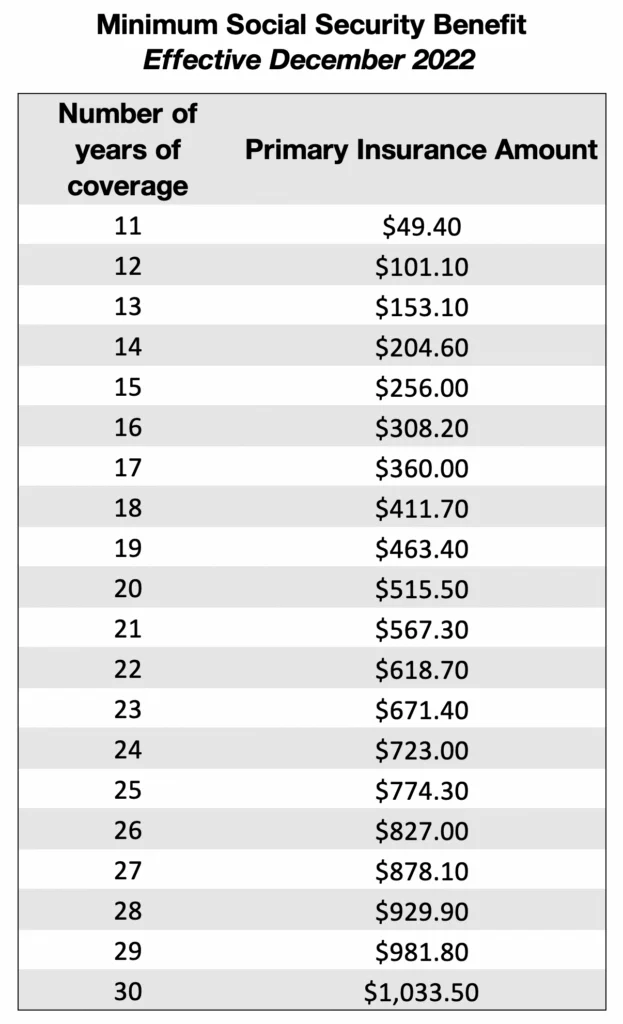
Eligibility for Social Security benefits hinges on earning “credits” through employment. Most individuals need 40 credits, typically earned over 10 years of work, to qualify for retirement benefits. Each year, you can earn up to four credits. While retirement benefits are the most commonly discussed, it’s crucial to remember that Social Security also provides a financial safety net for those who become disabled and for the families of deceased workers.
Key Factors Influencing Your Social Security Payouts
The amount you receive from Social Security is not arbitrary but is meticulously calculated based on several critical factors. Understanding these elements is essential to project your own benefit and plan accordingly.
Your Earnings Record
The most significant determinant of your Social Security benefit is your lifetime earnings record. The Social Security Administration (SSA) calculates your benefit based on your Average Indexed Monthly Earnings (AIME). This involves:
- Indexing Past Earnings: Your past earnings are adjusted (indexed) to account for changes in average wages in the national economy over time. This ensures that earlier earnings reflect their relative value compared to more recent earnings.
- Top 35 Years: The SSA takes your 35 highest-earning years, after indexing, and sums them up. If you have fewer than 35 years of earnings, the missing years are counted as zero, which can significantly reduce your average.
- Monthly Average: This sum is then divided by 420 (the number of months in 35 years) to arrive at your AIME. A higher AIME directly translates to a higher potential benefit.
Your Age at Claiming
When you decide to start receiving your benefits is perhaps the most impactful choice you’ll make regarding your payout amount.
- Full Retirement Age (FRA): This is the age at which you are entitled to 100% of your primary insurance amount (PIA), which is your benefit before any adjustments for early or late claiming. Your FRA depends on your birth year: it’s 66 for those born between 1943 and 1954, and it gradually increases to 67 for those born in 1960 or later.
- Claiming Early (Age 62): You can begin collecting benefits as early as age 62, but doing so results in a permanent reduction of your monthly payment. The reduction can be substantial, up to 30% if your FRA is 67. This lower amount is locked in for the rest of your life, though it will receive annual cost-of-living adjustments.
- Claiming Late (Up to Age 70): Conversely, delaying your claim past your FRA can significantly increase your monthly benefit. For each year you delay, you earn Delayed Retirement Credits of approximately 8% per year, up until age 70. This can result in a permanent increase of up to 32% over your FRA benefit if your FRA is 66, and you wait until 70. There is no further increase in benefits after age 70.
The Cost-of-Living Adjustment (COLA)
To ensure that benefits retain their purchasing power amidst inflation, Social Security benefits are subject to an annual Cost-of-Living Adjustment (COLA). The COLA is typically announced in October and takes effect in January of the following year. It is based on the Consumer Price Index for Urban Wage Earners and Clerical Workers (CPI-W). While COLAs help protect against inflation, they are not guaranteed to match every individual’s personal inflation experience.
Other Factors
While less common, other factors can also influence your Social Security benefit:
- Spousal Benefits: If you are married, divorced (under certain conditions), or widowed, you may be eligible for benefits based on your spouse’s or ex-spouse’s earnings record, which could be higher than your own.
- Government Pension Offset (GPO) and Windfall Elimination Provision (WEP): These provisions can reduce Social Security benefits for individuals who also receive pensions from employment not covered by Social Security (e.g., some government jobs).
Calculating Your Estimated Social Security Benefit
While the SSA performs the intricate calculations, understanding the basic methodology and utilizing available tools can give you a clear estimate of what to expect.
The AIME and PIA Formula
After your AIME is determined, the SSA uses a progressive formula to calculate your Primary Insurance Amount (PIA). The PIA is the benefit you receive if you claim at your Full Retirement Age. The formula uses “bend points” that create a tiered structure, ensuring that lower earners receive a higher percentage of their average earnings back as benefits compared to higher earners. For example, in 2024, the formula applies:

- 90% of the first $1,174 of your AIME
- 32% of your AIME between $1,174 and $7,078
- 15% of your AIME above $7,078
These bend points are indexed annually for inflation. This progressive formula means Social Security is designed to be more impactful for those with lower lifetime earnings.
Practical Tools for Estimation
You don’t need to be a mathematician to get a reliable estimate of your Social Security benefits:
- Your Social Security Statement: This is the most crucial document. If you’re 60 or older and not yet receiving benefits, the SSA mails you a statement three months before your birthday. Everyone else can access their statement online by creating a “my Social Security” account at www.ssa.gov/myaccount. This statement provides personalized estimates for retirement, disability, and survivor benefits at various claiming ages.
- SSA.gov’s Benefit Calculators: The SSA website offers a suite of online calculators, from quick estimators to detailed calculators, allowing you to project benefits under different scenarios (e.g., claiming at 62, FRA, or 70).
- Financial Advisors: A qualified financial advisor can integrate your Social Security estimates into your broader retirement plan, offering strategies to maximize benefits in conjunction with other assets.
Average Benefits vs. Individual Reality
It’s common to hear about “average” Social Security benefits, but these figures can be misleading without context. For instance, as of January 2024, the average monthly Social Security benefit for a retired worker was approximately $1,907. However, this average encompasses a wide range of individual situations. A worker with consistently high earnings who delays claiming until age 70 could receive well over $3,000 per month (the maximum possible at age 70 for someone reaching FRA in 2024 was around $3,822). Conversely, someone with a sporadic work history or lower earnings who claims early might receive closer to the minimum. Your personal benefit will depend entirely on your unique earnings record and claiming strategy.
Strategies to Maximize Your Social Security Benefits
Maximizing your Social Security benefit requires thoughtful planning and, for some, strategic decision-making throughout your career.
Work Longer and Earn More
Since your benefit is based on your 35 highest indexed earning years, working longer can often be beneficial. If you are currently in your peak earning years, continuing to work can replace lower-earning years from earlier in your career with higher ones, thereby increasing your AIME. Even a few extra years of high earnings can significantly boost your overall benefit calculation.
Delay Claiming if Possible
As discussed, delaying your claim beyond your Full Retirement Age (FRA) up to age 70 can lead to substantial increases in your monthly payment due to Delayed Retirement Credits. This strategy is particularly powerful if you are in good health, have other retirement savings to live on, and anticipate a long lifespan. The guaranteed, inflation-adjusted increase is a valuable asset that few other investments can offer.
Coordinate with Your Spouse
For married couples, coordinating claiming strategies can yield a higher combined lifetime benefit. While the “file and suspend” strategy is no longer available for most, understanding spousal benefits remains crucial. One spouse might claim their benefit early, while the higher-earning spouse delays theirs to maximize delayed retirement credits. Upon the death of a spouse, the surviving spouse can claim the higher of their own benefit or their deceased spouse’s benefit. Consulting with a financial advisor specializing in Social Security can help couples navigate these complex decisions.
Review Your Earnings Record Annually
Errors in your earnings record can negatively impact your future benefits. It’s prudent to review your Social Security statement annually, or at least every few years, to ensure that all your earnings are accurately reported. If you find discrepancies, contact the SSA immediately with supporting documentation (like W-2s or tax returns) to correct them.
Understand Taxation of Benefits
Depending on your “provisional income” (which includes your adjusted gross income, tax-exempt interest, and 50% of your Social Security benefits), a portion of your Social Security benefits may be subject to federal income tax. Up to 85% of your benefits could be taxable. Planning for this tax liability is an important part of your overall retirement income strategy. Some states also tax Social Security benefits, so it’s wise to research your state’s specific rules.

Social Security in Your Broader Financial Plan
While Social Security is a vital component of retirement income for most Americans, it is typically designed to replace only a portion of your pre-retirement income – generally around 40% for the average earner. It is rarely sufficient to maintain your desired lifestyle on its own.
Therefore, it’s crucial to view Social Security as one pillar of a multi-faceted retirement plan. Personal savings through 401(k)s, IRAs, and other investment vehicles, along with potential pension income, remain indispensable. Integrating your estimated Social Security benefits into your overall financial projections helps you understand how much more you need to save to bridge any income gaps and meet your retirement goals. Considering longevity risk – the possibility of living longer than expected – and rising healthcare costs, a robust and diversified financial plan that accounts for Social Security is essential for a secure retirement. Consulting with a financial advisor can provide personalized guidance and ensure your Social Security strategy aligns perfectly with your broader financial objectives.
aViewFromTheCave is a participant in the Amazon Services LLC Associates Program, an affiliate advertising program designed to provide a means for sites to earn advertising fees by advertising and linking to Amazon.com. Amazon, the Amazon logo, AmazonSupply, and the AmazonSupply logo are trademarks of Amazon.com, Inc. or its affiliates. As an Amazon Associate we earn affiliate commissions from qualifying purchases.