
Navigating the landscape of retirement income can be complex, especially for individuals who wish to continue working while receiving Social Security benefits. The desire to remain professionally active, supplement retirement income, or simply enjoy a sense of purpose often clashes with a common misconception: that earning money while on Social Security will automatically cause a reduction or forfeiture of benefits. The reality is far more nuanced, offering considerable flexibility for those who understand the rules. This article aims to demystify the Social Security Administration’s (SSA) earnings limits, providing a comprehensive guide to how much you can earn, when it matters, and strategies to optimize your financial well-being in retirement.
Understanding Social Security’s Earnings Limit
The Social Security system is designed to provide a foundational income for retirees, but it includes provisions to manage how much individuals can earn from work before their benefits are affected. These “earnings limits” are crucial to understand, as they vary significantly based on your age relative to your Full Retirement Age (FRA).
The Basics of Earnings Limits
The earnings limit is an annual cap on how much you can earn from wages or self-employment before the SSA begins to withhold a portion of your Social Security benefits. This limit applies only if you are receiving benefits before you reach your Full Retirement Age (FRA). The primary rationale behind these limits is to prevent individuals from claiming full retirement benefits prematurely while still maintaining a robust full-time working income. It’s important to distinguish between earned income (wages, net self-employment earnings) and unearned income (pensions, annuities, investment income, capital gains, etc.), as only earned income counts towards the limit.
Age-Based Rules: Before Full Retirement Age (FRA)
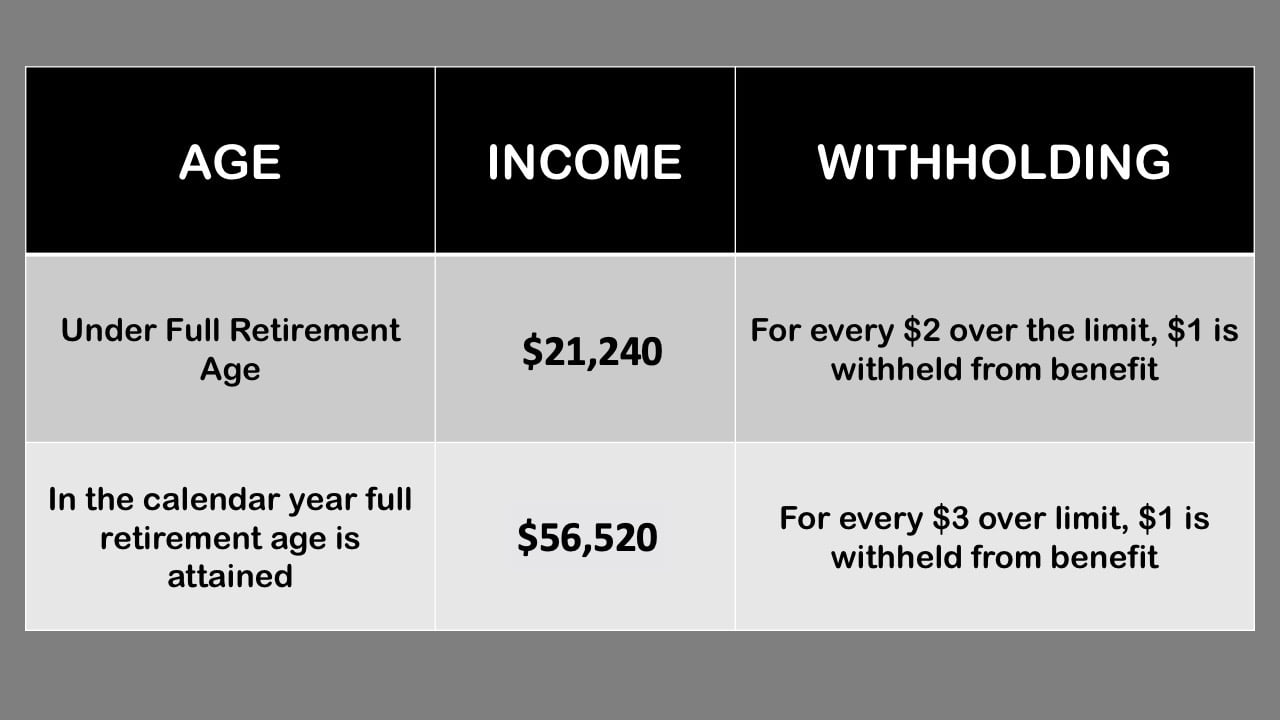
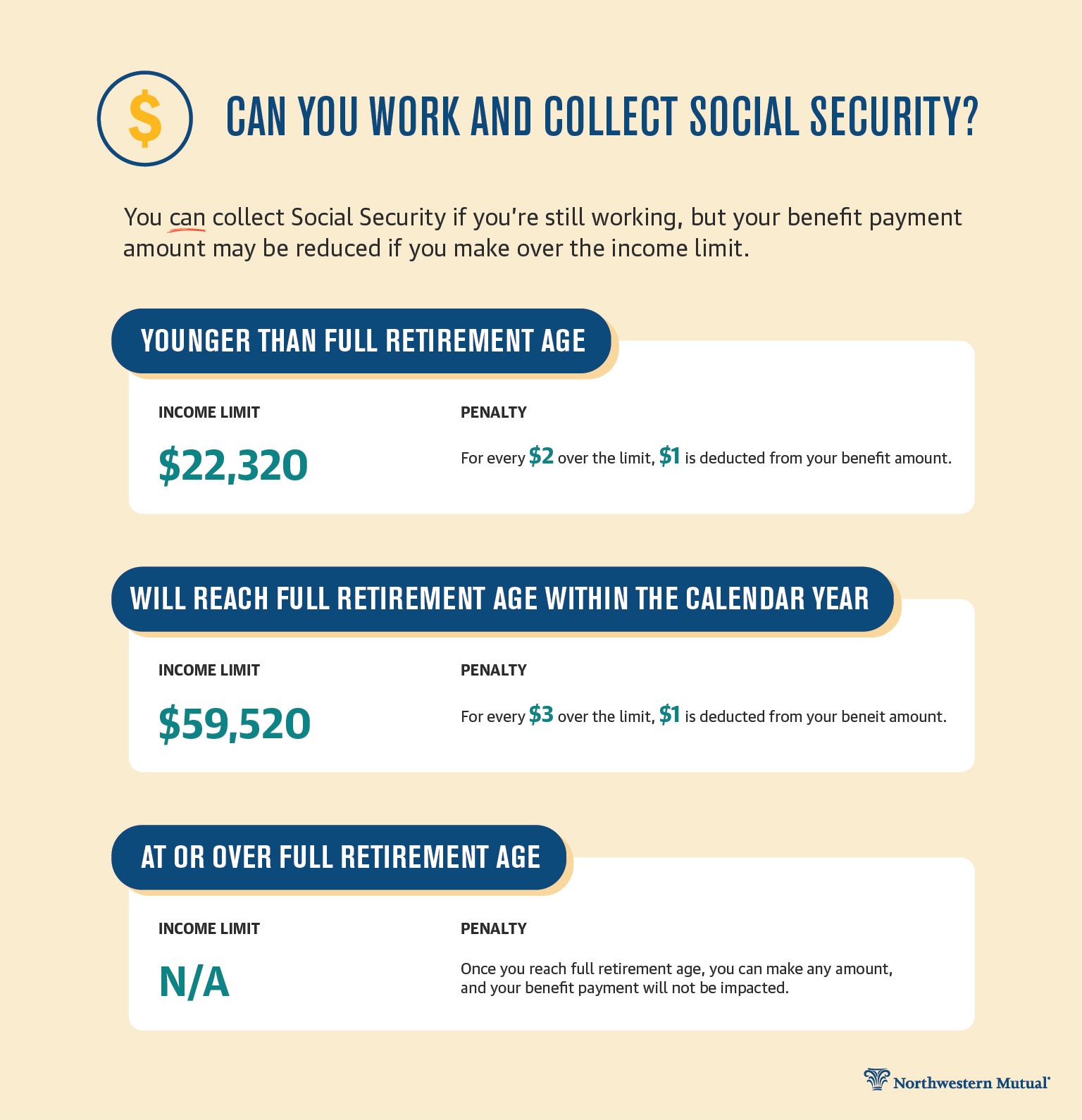
For individuals who claim Social Security benefits before their Full Retirement Age (FRA) and continue to work, a specific earnings limit applies. For 2024, if you are under your FRA for the entire year, the SSA will deduct $1 from your benefits for every $2 you earn above $22,320. This limit is adjusted annually for inflation, so it’s essential to check the most current figures.
Consider an example: If your annual earnings are $32,320, which is $10,000 over the limit, the SSA would withhold $5,000 from your total annual benefits ($10,000 / 2 = $5,000). This withholding can occur in various ways, such as skipping a few monthly payments until the withheld amount is reached or reducing each monthly payment. It’s a critical factor for early filers to consider, as it can significantly impact their anticipated monthly income.
The Year You Reach Full Retirement Age (FRA)
The year you reach your Full Retirement Age (FRA) introduces a more generous earnings limit. For 2024, in the year you reach FRA, the SSA will deduct $1 from your benefits for every $3 you earn above $59,520. Crucially, this higher limit only applies to earnings made before the month you reach your FRA. Once you hit your FRA, the earnings limit disappears entirely. This specific rule provides a transitional period, allowing individuals to earn more in their final months or year before their benefits become unrestricted.
No Earnings Limit at or After Full Retirement Age (FRA)
Perhaps the most liberating aspect of Social Security’s earnings rules is what happens once you reach your Full Retirement Age (FRA). At this point, the earnings limit is entirely removed. This means you can earn an unlimited amount from work without any reduction in your Social Security benefits. This is a pivotal milestone for many retirees, as it allows them to fully enjoy their earned benefits alongside any income from continued employment or new ventures, without penalty. Understanding your specific FRA, which varies based on your birth year (e.g., 66 for those born 1943-1954, gradually increasing to 67 for those born 1960 or later), is fundamental to long-term financial planning.
Strategies to Maximize Earnings While Receiving Benefits
Given the nuances of the Social Security earnings limits, strategic planning is essential to maximize your financial security in retirement. There are several approaches individuals can take to optimize their income, whether they choose to work part-time, full-time, or leverage other income sources.
Delaying Social Security Benefits
One of the most powerful strategies, particularly for those who anticipate continuing to work, is to delay claiming Social Security benefits beyond the earliest eligibility age of 62. For each year you delay claiming benefits past your Full Retirement Age (FRA) up to age 70, your monthly benefit amount increases by a certain percentage, known as “delayed retirement credits.” These credits can boost your monthly payment significantly, often by 8% per year.
If you are able to work and cover your expenses, delaying benefits allows you to earn income without worrying about the earnings limit, while simultaneously growing your future monthly Social Security payout. This can lead to a much higher guaranteed income stream for the rest of your life, making it an attractive option for healthier individuals who expect a longer lifespan.
Understanding Your Full Retirement Age (FRA)
Knowing your exact Full Retirement Age (FRA) is not just a detail; it’s a cornerstone of effective retirement planning. Your FRA dictates when the earnings limits cease to apply and when you qualify for 100% of your primary insurance amount (PIA). For those born between 1943 and 1954, FRA is 66. It then gradually increases by two months for each birth year thereafter until it reaches 67 for those born in 1960 or later.
Accurately identifying your FRA allows you to make informed decisions about when to claim benefits, when to potentially scale back work, or when you can freely earn without penalty. Miscalculating your FRA could lead to unexpected benefit reductions or, conversely, cause you to needlessly limit your earnings. The SSA website provides a clear chart to determine your FRA based on your birth year.
Strategic Income Planning
Not all income counts towards the Social Security earnings limit. This distinction is vital for those planning their retirement finances. Income from pensions, annuities, interest, dividends, capital gains, and other investments generally does not count towards the earnings limit. Only wages from employment and net earnings from self-employment are considered “earned income” by the SSA.
This provides an opportunity for strategic income planning. If you are working before your FRA and approaching the earnings limit, you might consider shifting some of your income streams. For instance, you could focus on generating more passive income from investments or managing assets, rather than increasing your wage-based earnings, to avoid triggering a benefit reduction. Consulting with a financial advisor can help structure your income in the most tax-efficient and benefit-preserving manner.
Part-Time or Gig Work
For many, the idea of full retirement is less appealing than a gradual transition. Part-time work or engaging in the “gig economy” can be an excellent way to supplement income without necessarily hitting the Social Security earnings limit, especially if you’re before your FRA. Flexible work arrangements, consulting roles, or freelance projects can provide an income stream that keeps you productive and engaged, while allowing you to manage your earnings to stay below the annual thresholds if desired.
This approach offers the best of both worlds: continued professional engagement and supplemental income, while preserving the maximum possible Social Security benefits during the years before your FRA. It requires careful monitoring of earnings, but the flexibility often outweighs the administrative effort.
The Impact of Earnings on Taxation of Benefits
Beyond the direct reduction of benefits due to earnings limits, another significant financial consideration for working retirees is the potential for their Social Security benefits to become taxable at the federal level. This depends on your “combined income,” which includes half of your Social Security benefits plus your adjusted gross income and any tax-exempt interest.
Combined Income Thresholds
The Internal Revenue Service (IRS) sets specific “combined income” thresholds that determine whether a portion of your Social Security benefits will be subject to federal income tax.
- For single filers:
- If your combined income is between $25,000 and $34,000, up to 50% of your Social Security benefits may be taxable.
- If your combined income is above $34,000, up to 85% of your Social Security benefits may be taxable.
- For those married filing jointly:
- If your combined income is between $32,000 and $44,000, up to 50% of your Social Security benefits may be taxable.
- If your combined income is above $44,000, up to 85% of your Social Security benefits may be taxable.
These thresholds are not indexed for inflation, meaning that more retirees may find their benefits taxed over time as other income sources increase. It’s crucial to understand that it’s your total income (including earned income, pensions, investments, etc.) that determines this, not just your earnings subject to the Social Security limit.
Federal Tax Brackets for Social Security Benefits
Once your combined income exceeds the thresholds, a portion of your Social Security benefits becomes taxable at your ordinary income tax rates. It’s never 100% of your benefits; the maximum taxable amount is 85%. This means that while your benefits provide a vital income stream, their net value can be reduced by federal taxes, especially if you continue to earn substantial income from work or other sources. This is an important consideration for budgeting and overall financial planning in retirement.
State Taxation
In addition to federal taxes, some states also tax Social Security benefits. While the majority of states do not, a handful (e.g., Colorado, Connecticut, Kansas, Minnesota, Montana, New Mexico, Rhode Island, Utah, Vermont, West Virginia) may tax a portion of your benefits, often based on income thresholds similar to the federal rules. This adds another layer of complexity to financial planning for retirees, particularly those who are considering relocating or who live in one of these states. Checking your state’s specific tax laws is an essential step to accurately project your net retirement income.
Reporting Earnings and Potential Recalculations
Accuracy and transparency are paramount when you’re working while receiving Social Security benefits. Proper reporting of your earnings to the SSA is not just a formality; it’s crucial to ensure you receive the correct benefit amounts and avoid future complications.
The Importance of Accurate Reporting
If you are receiving Social Security benefits and are under your Full Retirement Age (FRA), you are required to report your estimated earnings to the SSA for the current year. This allows the SSA to withhold the appropriate amount from your benefits throughout the year, preventing an overpayment. If you earn more than you estimated, you should update your earnings projection with the SSA. Conversely, if you earn less, you may be due additional payments.
Failure to accurately report earnings can lead to significant issues. If the SSA determines you’ve been overpaid, they will typically seek to recover those funds, often by withholding future benefits. This can create unexpected financial hardship. Therefore, proactive and accurate reporting is always the best approach. The SSA uses information from your W-2 forms or self-employment tax returns to verify your reported earnings, so any discrepancies will eventually come to light.
Benefit Recalculations
A common concern among those whose benefits are reduced due to the earnings limit is whether that money is simply “lost.” The good news is that it’s not. If some of your Social Security benefits are withheld because of your earnings, the SSA doesn’t keep that money indefinitely. Instead, once you reach your Full Retirement Age (FRA), your monthly benefit amount is recalculated to account for those withheld funds.
Essentially, for every dollar that was withheld due to the earnings limit, your future monthly benefit is slightly increased. This recalculation is designed to ensure that you ultimately receive all the benefits you’re entitled to over your lifetime. While you might experience a temporary reduction in benefits before your FRA, you are compensated with a higher monthly payment once you pass that age. This mechanism is often overlooked but is a key feature that provides a long-term advantage to those who continued working.
What Counts as “Earned Income”
To reiterate, not all income sources are treated equally by the Social Security Administration when calculating earnings limits. It is critical to understand precisely what constitutes “earned income”:
- Wages: This includes gross wages, salaries, commissions, and bonuses from employment. It’s the amount before any deductions for taxes, insurance, or retirement contributions.
- Net Earnings from Self-Employment: This refers to the profit you make from running your own business or working as an independent contractor, after deducting allowable business expenses.
Conversely, the following types of income typically do not count towards the earnings limit:
- Pensions and annuities
- Investment income (e.g., interest, dividends, capital gains)
- Rental income (unless you are a real estate professional)
- Government benefits (e.g., veterans’ benefits, workers’ compensation)
- Inheritances
- Gifts
This distinction allows for strategic financial planning, where individuals can generate income from non-earned sources without impacting their Social Security benefits before FRA.
Conclusion
Working in retirement while receiving Social Security benefits is not only possible but, with careful planning, can be a highly effective strategy for enhancing your financial security and quality of life. The key lies in understanding the nuanced rules surrounding earnings limits, your Full Retirement Age (FRA), and the potential tax implications.
Before your FRA, strategic management of your earned income can help you avoid or minimize benefit reductions. After your FRA, the removal of earnings limits opens up a world of possibilities for continued work without penalty. Furthermore, while the SSA may temporarily reduce benefits due to high earnings before FRA, these withheld amounts contribute to a recalculated, higher monthly benefit once you reach your FRA, ensuring you don’t permanently lose out.
Whether you choose to work part-time to supplement your income, embark on a new career, or simply enjoy the engagement of a gig, being informed is your most valuable asset. Proactive planning, accurate reporting, and potentially consulting with a financial advisor or the Social Security Administration directly, will empower you to make the most of your retirement years, balancing work and leisure effectively while maximizing your financial well-being.
aViewFromTheCave is a participant in the Amazon Services LLC Associates Program, an affiliate advertising program designed to provide a means for sites to earn advertising fees by advertising and linking to Amazon.com. Amazon, the Amazon logo, AmazonSupply, and the AmazonSupply logo are trademarks of Amazon.com, Inc. or its affiliates. As an Amazon Associate we earn affiliate commissions from qualifying purchases.