
Understanding how your Social Security benefits are calculated is not merely a matter of curiosity; it’s a critical component of effective retirement planning. For millions of Americans, Social Security represents a foundational pillar of financial security in their later years. However, the process behind determining an individual’s monthly benefit can appear complex, involving a series of calculations based on an extensive earnings history, age, and specific programmatic rules. Demystifying this process is essential for making informed decisions about when to claim benefits, how to maximize your entitlement, and what to expect financially in retirement. This comprehensive guide will break down the intricate steps the Social Security Administration (SSA) uses to figure out your benefit amount, offering clarity and actionable insights for your financial future.

The Foundation: Your Earnings Record
At its core, Social Security is an earned benefit, directly tied to the contributions you and your employers make through payroll taxes over your working life. The first and most crucial step in calculating your future benefit involves meticulously documenting your earnings history.
A Lifetime of Contributions
Every year you work and pay Social Security taxes (FICA taxes), a portion of your earnings is recorded by the SSA. These taxes fund the Social Security trust funds, which, in turn, pay benefits to retirees, survivors, and people with disabilities. Your individual benefit amount is a reflection of your average earnings over your career, making it imperative that your earnings record is accurate and complete. Unlike a pension plan where benefits might be based on your final few years of salary, Social Security looks at a much broader span of your working life. This long-term perspective means that even early career earnings, properly indexed, play a role in your eventual benefit.
The Importance of Taxable Earnings
Not all income is considered for Social Security purposes. Only “taxable earnings” up to an annual limit, known as the Social Security Wage Base, are counted. This wage base is adjusted annually to account for changes in average wages in the U.S. For example, if the wage base in a given year is $168,600, any earnings above that amount in that year will not be subject to Social Security taxes nor will they be counted in your benefit calculation. This limit ensures that the program focuses its progressive benefit formula on a broad range of incomes without disproportionately benefiting extremely high earners. It’s a common misconception that contributing more above the wage base will increase benefits; understanding this limit is key to accurate planning.
Checking Your Earnings Record
Given the immense importance of your earnings record, regularly checking its accuracy is paramount. The SSA maintains an online portal at SSA.gov where you can create a secure “my Social Security” account. Through this account, you can access your Social Security statement, which details your reported earnings year by year, estimated benefits at different claiming ages, and other crucial information. Errors, though rare, can occur (e.g., due to employer reporting mistakes, incorrect Social Security numbers). Correcting these discrepancies promptly is vital, as there are time limits for making corrections. A missing year of high earnings could significantly impact your future benefit amount, emphasizing the need for proactive review.
Calculating Your Average Indexed Monthly Earnings (AIME)
Once your comprehensive earnings record is established, the SSA moves to the second major step: determining your Average Indexed Monthly Earnings (AIME). This figure is a cornerstone of your benefit calculation, representing your average monthly earnings over a specific period, adjusted for wage growth over time.
Identifying the “High 35”
The SSA doesn’t simply average all years of your earnings. Instead, it selects the 35 years in which you earned the most money. This “highest 35 years” rule is incredibly beneficial for many workers, as it allows periods of lower earnings (e.g., due to education, career changes, unemployment, or starting a family) to be excluded from the calculation. If you have worked fewer than 35 years, “zero” earnings years will be factored into the calculation until you reach 35 total years, which will naturally lower your AIME. Conversely, working more than 35 years means that your lowest earning years will be replaced by higher earning years, potentially increasing your AIME.
The Role of Indexing
Perhaps the most sophisticated aspect of the AIME calculation is “indexing.” Imagine earning $10,000 in 1985. Due to inflation and wage growth, $10,000 today has significantly less purchasing power. To ensure fairness and reflect the true value of your past earnings relative to current wage levels, the SSA adjusts (indexes) your earnings from past years. This adjustment accounts for the general increase in wages throughout the economy between the year you earned the money and the year you turn 60. Earnings after age 60 are not indexed; they are included at their nominal value. Indexing ensures that your early career contributions are given appropriate weight in the benefit calculation, preventing them from being devalued by decades of inflation. Without indexing, someone who earned a substantial salary in the 1970s would see their early career contributions drastically undervalued compared to someone earning the same relative amount today.
From Annual to Monthly
After identifying your 35 highest indexed earning years, the SSA sums these indexed annual earnings. This total indexed lifetime earnings figure is then divided by 420 (which is 35 years multiplied by 12 months). The result of this division is your Average Indexed Monthly Earnings (AIME). This single monthly figure serves as the input for the final stage of the primary benefit calculation.
Translating AIME into Your Primary Insurance Amount (PIA)
With your AIME established, the SSA can now determine your Primary Insurance Amount (PIA). The PIA is the monthly benefit you are entitled to receive if you claim benefits exactly at your Full Retirement Age (FRA). It’s the base figure from which all other adjustments (for early or delayed claiming, spousal benefits, etc.) are made.
The Bend Points Formula
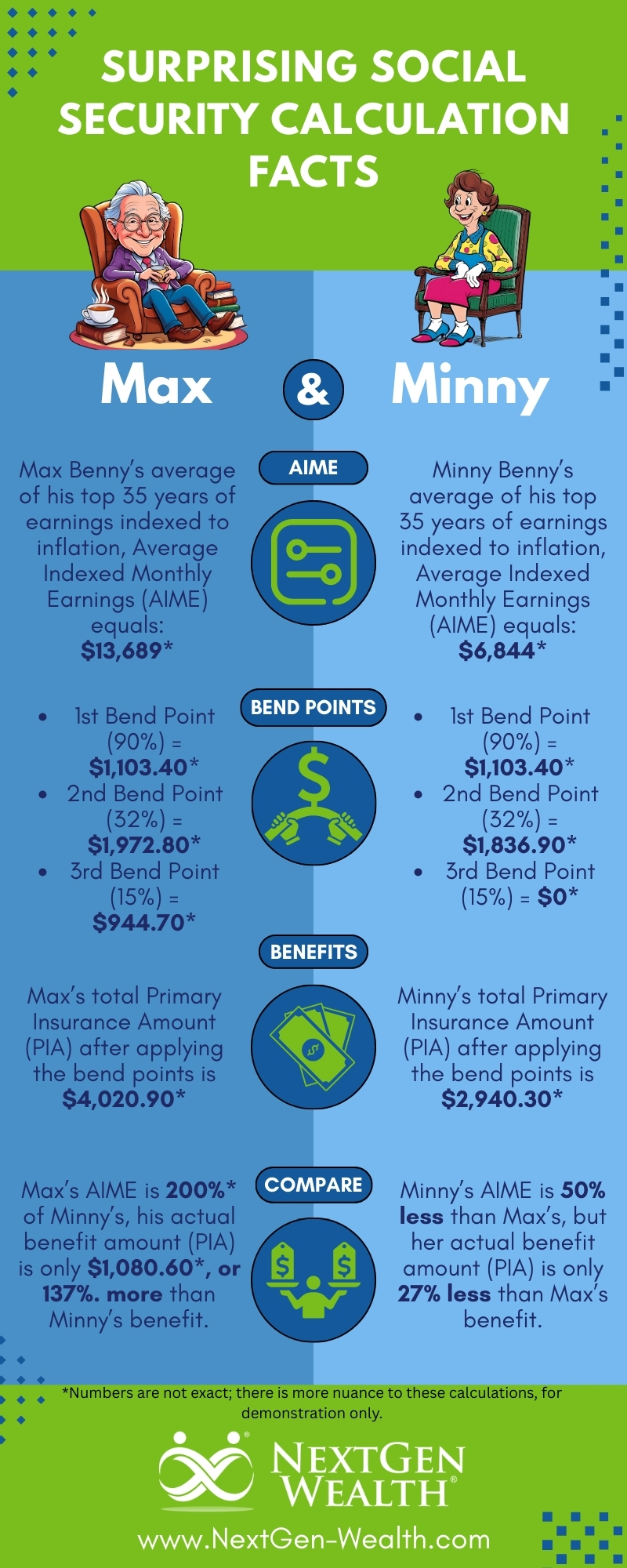
The conversion of AIME to PIA is not a straightforward percentage; it’s a progressive formula that utilizes “bend points.” Bend points are specific dollar amounts for your AIME that separate three different segments of your earnings. For each segment, a different percentage is applied:
- 90% of the first segment of AIME
- 32% of the AIME amount between the first and second bend point
- 15% of the AIME amount above the second bend point
These bend points are dynamic and are adjusted annually based on changes in the national average wage index, similar to how the Social Security Wage Base is updated. This progressive formula ensures that Social Security provides a higher percentage return on contributions for lower-income workers, fulfilling its mission as a social safety net.
Why Bend Points Matter
The bend points system is a fundamental design feature of Social Security, reflecting a balance between individual equity (benefits tied to contributions) and social adequacy (ensuring a minimum level of support for all). For instance, someone with an AIME of $1,500 might receive roughly 90% of their AIME as their PIA, whereas someone with an AIME of $6,000 might receive closer to 40-50% of their AIME as their PIA. While higher earners still receive a larger absolute benefit, lower earners receive a larger proportion of their average earnings back. This progressive structure is a hallmark of the Social Security program, aimed at reducing poverty among the elderly and disabled.
The Full Retirement Age (FRA) Connection
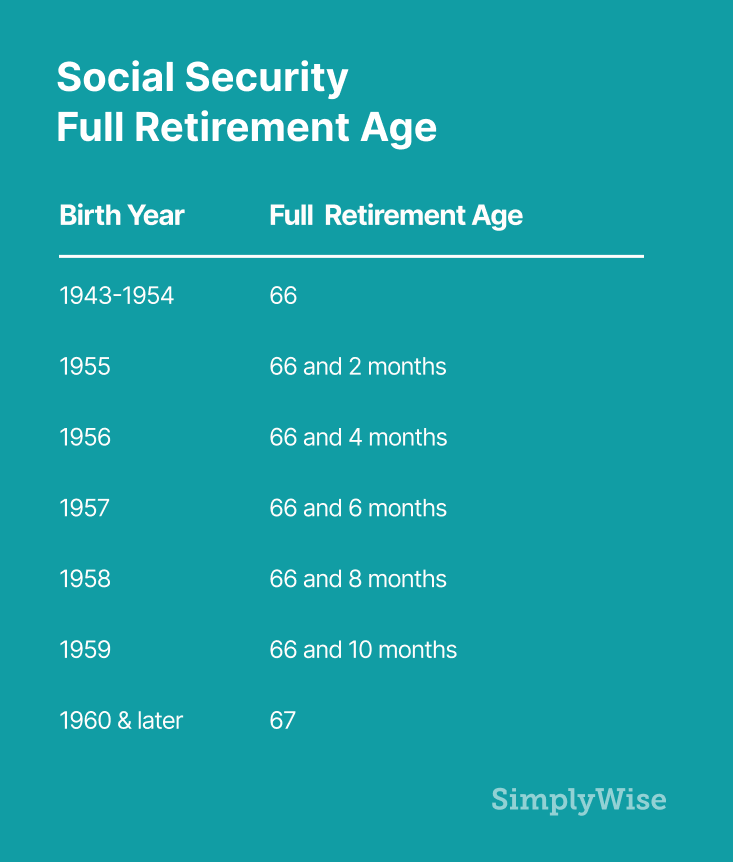
It is crucial to remember that the PIA is the benefit you receive only if you begin claiming benefits precisely at your Full Retirement Age (FRA). Your FRA depends on your birth year. For those born between 1943 and 1954, FRA is 66. For those born in 1960 or later, FRA is 67. For birth years in between, it’s 66 and a certain number of months. The PIA is the starting point for all other benefit calculations, meaning any decision to claim benefits before or after your FRA will modify this base amount.
Factors Influencing Your Actual Benefit Amount
While the PIA represents your full, unadjusted monthly benefit, several factors can alter the actual amount you receive. These adjustments are critical for maximizing your benefits and understanding the various provisions of the Social Security system.
Claiming Age and Delayed Retirement Credits
The most significant factor influencing your actual benefit amount is the age at which you choose to start receiving benefits. You can claim Social Security as early as age 62, but doing so will permanently reduce your monthly benefit. For each month you claim before your FRA, your benefit is reduced. Conversely, if you delay claiming benefits past your FRA, up to age 70, you earn Delayed Retirement Credits (DRCs). These credits permanently increase your monthly benefit by a certain percentage (typically 8% per year) for each year you delay. There’s no additional increase for delaying past age 70, so it rarely makes sense to wait beyond that point. The decision of when to claim is highly personal and depends on factors like health, other income sources, and life expectancy.
Spousal and Survivor Benefits
Social Security extends beyond individual benefits, offering crucial protections for families. If you are married, your spouse may be eligible for benefits based on your earnings record, typically up to 50% of your PIA, provided they meet certain criteria and you have filed for your own benefits. A divorced spouse may also be eligible if the marriage lasted at least 10 years and they meet other conditions. Similarly, survivor benefits are paid to eligible widows, widowers, and minor children upon the death of a worker. These benefits can provide vital financial support during difficult times, often calculated as a percentage of the deceased worker’s PIA. Understanding these auxiliary benefits is essential for comprehensive family financial planning.
Taxation of Benefits
It’s important to note that a portion of your Social Security benefits might be subject to federal income tax. This depends on your “combined income,” which is generally your adjusted gross income plus any tax-exempt interest income and one-half of your Social Security benefits. If your combined income exceeds certain thresholds, up to 85% of your Social Security benefits may be taxable. While not everyone pays taxes on their benefits, higher earners are more likely to. Some states also tax Social Security benefits, though most do not.
The Windfall Elimination Provision (WEP) and Government Pension Offset (GPO)
For individuals who also receive a pension from employment not covered by Social Security (e.g., some government jobs, like certain state or local police, firefighters, or teachers), two specific provisions may affect their Social Security benefits:
- Windfall Elimination Provision (WEP): This provision can reduce your PIA if you receive a pension from non-covered employment and also have enough Social Security-covered earnings to qualify for a Social Security benefit. It modifies the bend points formula, primarily affecting the 90% factor, to prevent what the SSA considers an unintended “windfall” for those who contributed relatively little to Social Security but have substantial earnings from non-covered work.
- Government Pension Offset (GPO): This affects individuals who receive a government pension from non-covered work and are also eligible for a Social Security spousal or survivor benefit based on their spouse’s (or ex-spouse’s) earnings record. The GPO can reduce the spousal/survivor benefit by two-thirds of the amount of your government pension.
These provisions are complex and can significantly impact benefits, requiring careful consideration for those affected.
Strategic Planning for Maximizing Your Benefits
Understanding the calculation methodology empowers you to make strategic decisions that can significantly impact your retirement income. While you cannot change your past earnings record, you can influence future outcomes.
Working Longer and Earning More
The most direct way to increase your Social Security benefit is to extend your working career, especially if you have fewer than 35 years of earnings, or if your later career years are among your highest earning years. Each additional year of high earnings can replace a lower-earning year (or a zero-earning year) in your “high 35” calculation, thereby increasing your AIME and, consequently, your PIA. Even if you’ve worked 35 years, a high-earning year late in your career can still push out an earlier, lower-indexed earning year, leading to a higher benefit.
Understanding Your Break-Even Point
Deciding when to claim Social Security involves calculating a “break-even point.” This is the age at which the total cumulative benefits received from delaying (higher monthly payments over a shorter period) would equal the total cumulative benefits from claiming early (lower monthly payments over a longer period). For example, while claiming at 62 provides more payments initially, the higher monthly payments from delaying often catch up and surpass the early claimer’s total benefits around age 78-82, assuming average life expectancy. This analysis is crucial for determining the optimal claiming strategy based on your personal health, financial needs, and longevity expectations.
Utilizing Online Tools
The SSA offers invaluable online tools to help you with your planning. Your “my Social Security” account provides personalized benefit estimates at various claiming ages based on your actual earnings record. These calculators allow you to model different scenarios and understand the financial implications of your choices. There are also numerous independent online Social Security calculators that can provide further insights and help you visualize the impact of different claiming strategies.
Consulting a Financial Advisor
For complex situations, such as coordinating benefits with a spouse, navigating WEP/GPO, or integrating Social Security into a broader retirement portfolio, consulting a qualified financial advisor specializing in retirement planning can be highly beneficial. They can help you weigh your options, project future income, and devise a strategy tailored to your unique circumstances, ensuring you maximize your Social Security benefits as part of your overall financial well-being.
In conclusion, while the Social Security benefits calculation involves multiple layers—from indexing earnings to applying bend points and considering claiming age—it is a transparent process designed to provide a predictable and progressive income stream in retirement. By understanding how your benefits are figured, regularly checking your earnings record, and making informed decisions about when and how to claim, you can ensure that Social Security serves its intended purpose as a strong and reliable foundation for your financial future. Proactive engagement with your Social Security planning is not just wise; it’s an imperative step towards a secure and comfortable retirement.
aViewFromTheCave is a participant in the Amazon Services LLC Associates Program, an affiliate advertising program designed to provide a means for sites to earn advertising fees by advertising and linking to Amazon.com. Amazon, the Amazon logo, AmazonSupply, and the AmazonSupply logo are trademarks of Amazon.com, Inc. or its affiliates. As an Amazon Associate we earn affiliate commissions from qualifying purchases.