
The concept of “percentage of increase” is a cornerstone of financial understanding, a vital metric that empowers individuals and businesses alike to measure growth, assess performance, and make informed decisions. Far more than just a mathematical calculation, it provides a standardized way to compare changes over time, stripping away the absolute size of numbers to reveal the true magnitude and rate of progress. Whether evaluating investment returns, tracking salary growth, analyzing business revenue, or understanding economic shifts, grasping how to calculate and interpret a percentage increase is fundamental to financial literacy and strategic planning.
Understanding the Fundamentals: Defining and Calculating Financial Growth
At its core, a percentage increase quantifies the relative change between an initial value and a final (higher) value. It expresses this change as a proportion of the initial value, scaled to a base of 100. This standardization allows for meaningful comparisons across different scales and contexts, making it an indispensable tool in the financial world.
The Core Formula: Measuring Relative Change
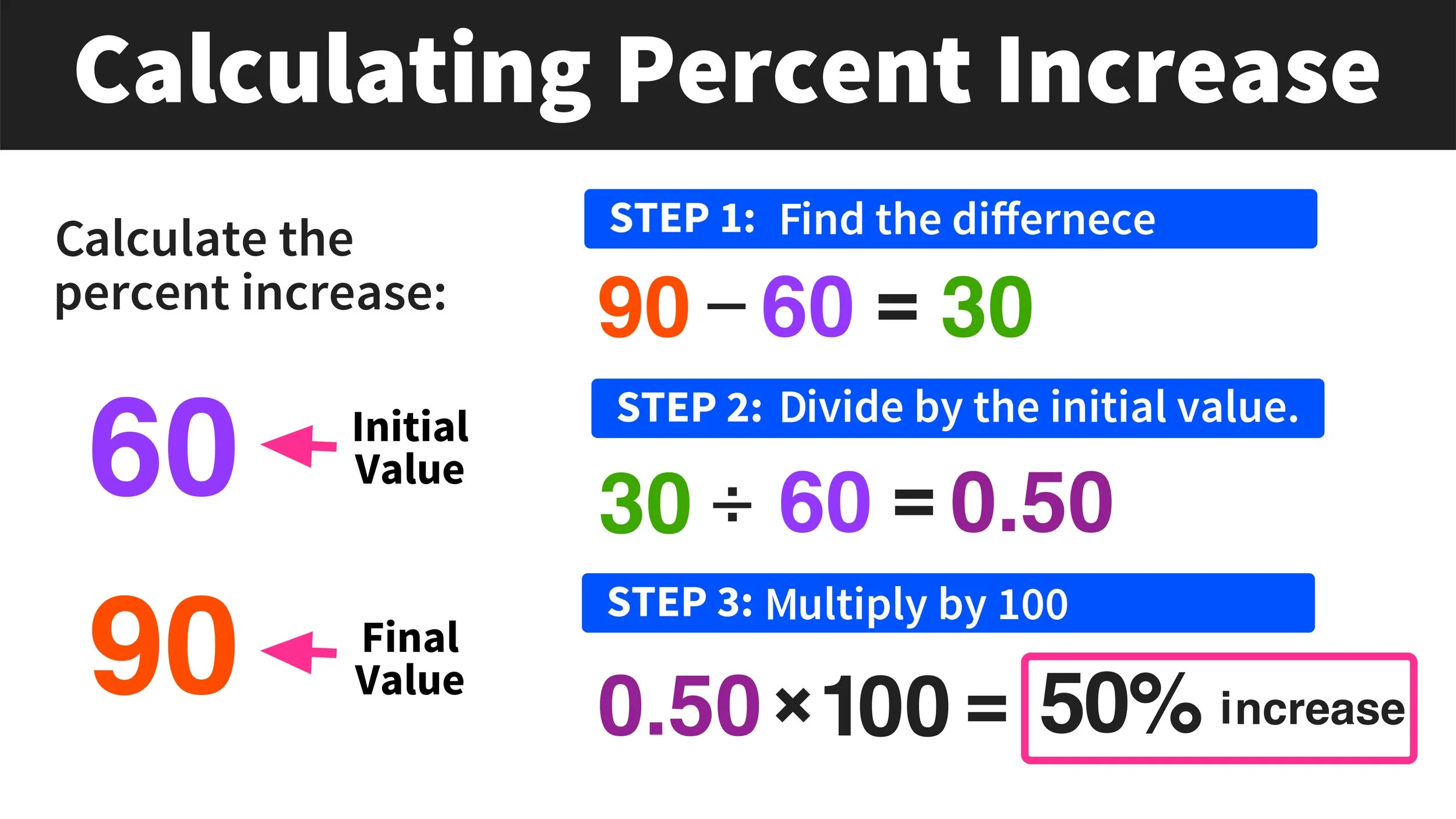
The calculation for a percentage increase is straightforward:
- Find the absolute increase: Subtract the initial value from the final value.
- Absolute Increase = Final Value – Initial Value
- Divide the absolute increase by the initial value: This gives you the proportional increase.
- Proportional Increase = Absolute Increase / Initial Value
- Multiply by 100: Convert the proportion into a percentage.
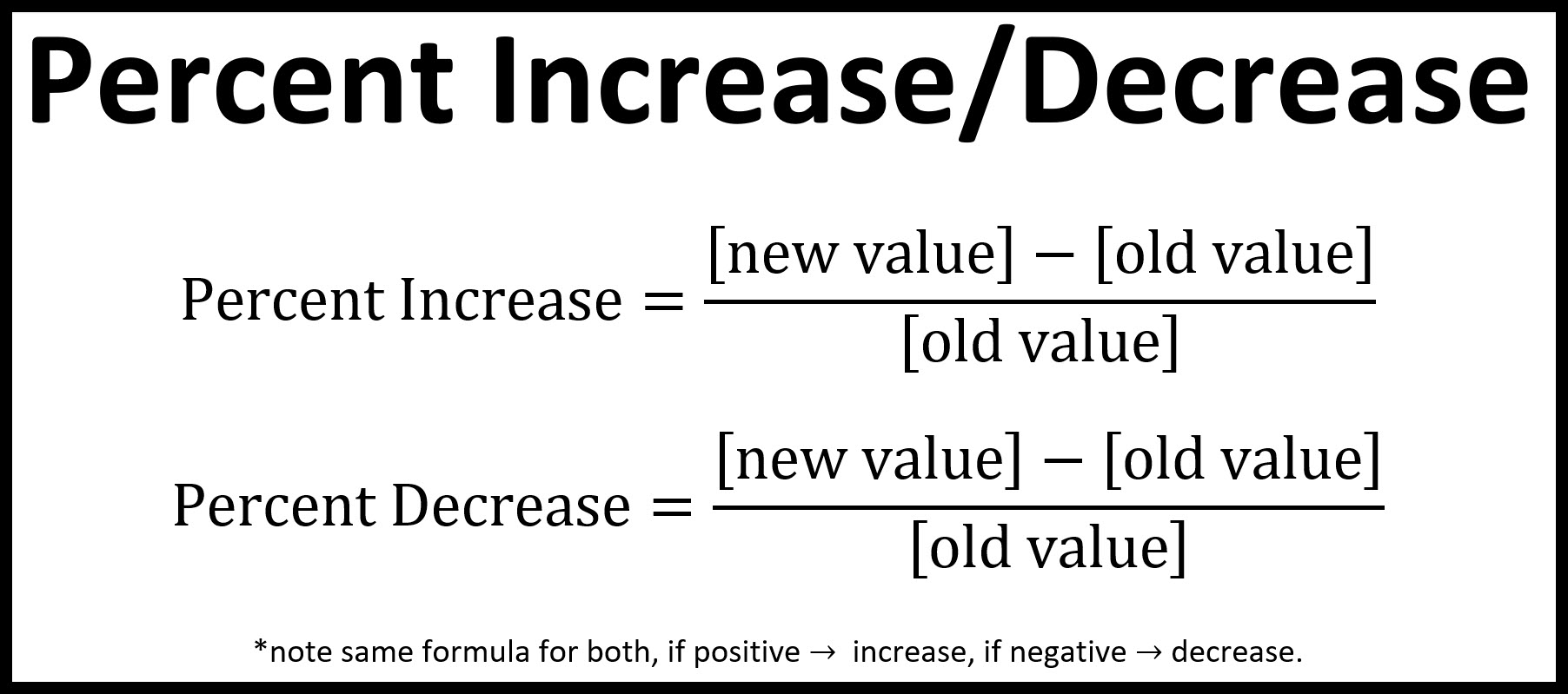
- Percentage Increase = (Absolute Increase / Initial Value) × 100%
Alternatively, a combined formula is:
- Percentage Increase = ((Final Value – Initial Value) / Initial Value) × 100%
Practical Examples in Personal Finance
Consider a personal finance scenario. If your investment portfolio grew from $10,000 at the start of the year to $11,500 by year-end:
- Absolute Increase = $11,500 – $10,000 = $1,500
- Percentage Increase = ($1,500 / $10,000) × 100% = 0.15 × 100% = 15%
This 15% tells you that your portfolio increased by 15 cents for every dollar initially invested. Similarly, if your annual salary increased from $60,000 to $63,000:
- Absolute Increase = $63,000 – $60,000 = $3,000
- Percentage Increase = ($3,000 / $60,000) × 100% = 0.05 × 100% = 5%
These simple examples illustrate how percentage increase provides a clear, comparable metric for growth, regardless of the starting absolute figures. It allows for an apples-to-apples comparison of performance, which is crucial when evaluating diverse financial situations or products.
The Indispensable Role of Percentage Increase in Financial Analysis
The utility of percentage increase extends across virtually every facet of finance, from individual savings goals to macroeconomic policy. It serves as a benchmark, a performance indicator, and a critical component in forecasting and risk assessment.
Evaluating Investment Performance
For investors, the percentage increase is the primary metric for assessing returns. Whether you’re looking at stocks, bonds, mutual funds, or real estate, investment performance is almost always quoted as a percentage return over a specific period. A 10% return on a $1,000 investment is easily comparable to a 10% return on a $100,000 investment, even though the absolute dollar gains differ significantly. This allows investors to compare different assets, managers, or strategies effectively. It’s also vital for understanding the power of compounding, where initial percentage gains on smaller sums progressively lead to larger absolute gains as the base value itself grows.
Tracking Business Growth and Profitability
In business finance, percentage increase is central to analyzing a company’s health and trajectory. Key performance indicators (KPIs) like revenue growth, profit margin increase, customer acquisition rate, and market share expansion are frequently expressed as percentages.
- Revenue Growth: A 20% increase in quarterly revenue signals strong sales performance.
- Profit Margin Increase: An increase in net profit margin from 10% to 12% indicates improved operational efficiency.
- Market Share: If a company’s market share grew from 15% to 18%, it reflects successful competitive strategies.
These metrics allow management to assess past strategies, set future targets, and communicate performance to stakeholders, including investors, employees, and board members. Lenders also heavily rely on these percentage-based growth figures when evaluating loan applications and a company’s capacity for repayment.
Understanding Economic Indicators and Inflation
On a broader scale, percentage increase is the language of macroeconomics. Governments, economists, and central banks constantly monitor and report on percentage changes in various economic indicators:
- GDP Growth: The percentage increase in Gross Domestic Product (GDP) is the primary measure of a nation’s economic expansion.
- Inflation Rate: The percentage increase in the Consumer Price Index (CPI) reflects the rate at which the general level of prices for goods and services is rising, indicating a decline in purchasing power.
- Unemployment Rate Changes: While often reported as absolute percentage points, the rate of change in unemployment can also be analyzed as a percentage increase or decrease in the number of unemployed individuals.
Understanding these percentage increases helps policymakers make decisions on interest rates, fiscal spending, and trade policies, all of which directly impact personal finances and business environments. A high inflation percentage increase, for instance, erodes the real returns on savings and investments, necessitating different financial strategies.
Navigating the Nuances: Beyond the Simple Number
While the calculation of percentage increase is straightforward, its interpretation requires a deeper understanding of contextual factors. Blindly comparing percentages without considering their underlying base values or timeframes can lead to misleading conclusions and poor financial decisions.
The Importance of the Base Value
The “initial value” or “base value” against which the increase is calculated is critically important. A small absolute increase can translate to a large percentage increase if the base value is very small. Conversely, a large absolute increase might appear as a modest percentage if the base value is substantial.
- Example 1 (Small Base): If a new side hustle earns $100 in its first month and $200 in its second, that’s a 100% increase. While impressive percentage-wise, the absolute earnings are still low.
- Example 2 (Large Base): If a large corporation increases its quarterly profit from $1 billion to $1.1 billion, that’s a $100 million absolute increase, but only a 10% percentage increase.
Both are “100 million” and “100%” figures, but their financial significance is vastly different due to the base. It’s crucial to consider both the percentage increase and the absolute dollar amount to gain a complete picture.
Annualized vs. Period-Specific Increases
Financial returns and growth figures are often quoted over specific periods—monthly, quarterly, or annually. However, for comparison purposes, they are frequently annualized. An annualized return converts a return over a shorter period (e.g., 2% over three months) into an equivalent annual rate.
- If an investment gains 2% in a single month, a simple projection might suggest a 24% annual return (2% x 12 months). However, this linear projection ignores compounding and market volatility.
- True annualized returns account for compounding. A more accurate annualized return for a monthly 2% gain would be (1 + 0.02)^12 – 1 ≈ 26.82%.
Understanding whether a quoted percentage increase is for a specific short period or an annualized figure is critical, especially in investment advertising where short-term, high percentage gains might be presented in a way that implies sustained annual performance.
The Impact of Compounding
Compounding is often referred to as the “eighth wonder of the world” due to its profound impact on wealth accumulation. It means earning returns not only on your initial investment but also on the accumulated returns from previous periods. When we talk about percentage increases in investments over long periods, compounding plays a massive role. A seemingly modest annual percentage increase, when compounded over decades, can lead to exponential growth.
- An initial $10,000 investment with a consistent 7% annual percentage increase will not just grow by $700 each year. In year one, it grows by $700. In year two, it grows by 7% of $10,700, and so on. Over 30 years, it would grow to over $76,000.
This exponential effect underscores why even small differences in percentage increases (e.g., 6% vs. 8% annual return) can lead to dramatically different outcomes over the long term.
Strategic Applications: Leveraging Percentage Increase for Informed Decisions
Beyond mere measurement, percentage increase is a powerful tool for strategic financial planning, risk management, and achieving long-term goals.
Setting Realistic Financial Goals
Whether saving for a down payment, retirement, or a child’s education, financial goals are often framed around desired percentage increases in wealth or income. Understanding current growth rates (e.g., your investment portfolio’s historical percentage increase) allows you to set realistic targets. If you aim to double your net worth in five years, you’re targeting an average annual percentage increase of approximately 14.87% (calculated using the Rule of 72 or more precise financial formulas). Knowing this target helps in selecting appropriate investment vehicles or adjusting savings rates.
Assessing Risk and Opportunity
Different investments carry different levels of risk, typically correlated with their potential for percentage increase. High-growth stocks might offer the potential for a 20%+ annual increase, but also carry a higher risk of significant percentage decrease. Stable bonds might offer only a 3-5% annual increase but with much lower volatility. By evaluating the historical percentage increases and decreases (volatility) of various asset classes, individuals can construct diversified portfolios that align with their risk tolerance and desired return percentages. Similarly, businesses use percentage increase projections to evaluate potential new ventures, weighing the projected revenue and profit increases against the associated capital expenditure and operational risks.
Optimizing Budgets and Expenses
Analyzing percentage increases isn’t limited to income and investments; it’s also crucial for managing expenses. Tracking the percentage increase in categories like housing, transportation, or food costs helps identify areas where spending is growing unsustainably. For example, if your discretionary spending increased by 20% last quarter while your income only increased by 5%, it’s a clear signal to reassess your budget. Businesses perform similar analyses to control operating costs, negotiate better supplier contracts, and maintain healthy profit margins. Identifying that raw material costs have increased by 15% year-over-year allows a company to explore alternative suppliers or adjust pricing strategies.
In essence, “what percentage of increase” is not merely a question of arithmetic but a gateway to deeper financial insight. It provides the crucial context needed to evaluate performance, understand economic forces, and make strategic choices that drive financial well-being and growth for individuals and organizations alike. Mastering its calculation and nuanced interpretation is a non-negotiable skill for anyone navigating the complexities of the financial world.
aViewFromTheCave is a participant in the Amazon Services LLC Associates Program, an affiliate advertising program designed to provide a means for sites to earn advertising fees by advertising and linking to Amazon.com. Amazon, the Amazon logo, AmazonSupply, and the AmazonSupply logo are trademarks of Amazon.com, Inc. or its affiliates. As an Amazon Associate we earn affiliate commissions from qualifying purchases.