
Understanding how to calculate a percentage from two numbers is more than just a mathematical exercise; it’s a cornerstone of financial literacy. In the world of money, percentages are the language we use to compare, evaluate, grow, and manage our finances effectively. From tracking investment returns and analyzing budget allocations to understanding loan interest and profit margins, percentages provide clarity and context to raw numbers. They allow us to standardize comparisons, making sense of financial data regardless of the absolute scale.
This article will demystify the process of deriving a percentage from two numbers and illuminate its indispensable role across personal finance, investing, and business operations. We’ll explore the simple formula and then dive deep into practical applications, empowering you to leverage this fundamental skill to make more informed and strategic financial decisions.
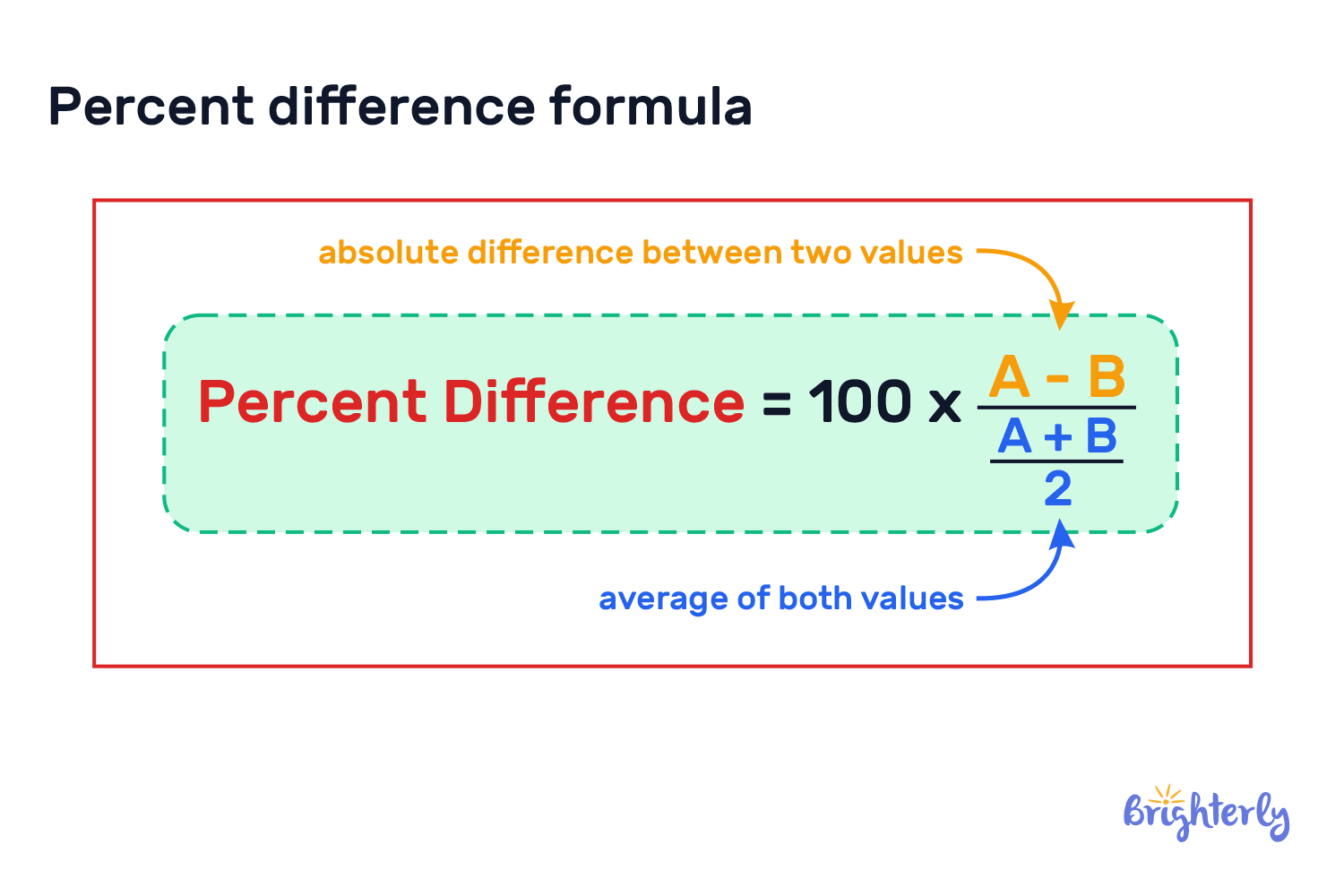
The Core Concept: Understanding the Percentage Formula
At its heart, a percentage represents a portion of a whole, expressed as a fraction of 100. The word “percent” literally means “per hundred.” When you want to find out what percentage one number (the part) is of another number (the whole), you’re essentially asking: “If the whole were 100, what would the part be?”
The Basic Formula Explained
The fundamental formula for calculating a percentage is elegantly simple:
Percentage = (Part / Whole) * 100
Let’s break down each component:
- Part: This is the specific amount or quantity that you want to express as a percentage. It’s the subset, the portion, or the change you are interested in.
- Whole: This is the total amount, the original value, or the base against which the part is being compared. It represents 100% of the context you’re analyzing.
- Divide (/): You divide the “Part” by the “Whole.” This step yields a decimal number, which represents the fraction of the whole that the part constitutes.
- Multiply by 100 (* 100): Multiplying the resulting decimal by 100 converts it into a percentage. This expresses the fraction in terms of “per hundred.”
Practical Components: Identifying the “Part” and the “Whole”
The biggest challenge for many isn’t the calculation itself, but correctly identifying which number is the “Part” and which is the “Whole.” Misidentifying these can lead to wildly incorrect financial conclusions.
- When calculating a discount: The discount amount is the “Part,” and the original price is the “Whole.”
- When calculating profit margin: The profit is the “Part,” and the revenue is the “Whole.”
- When calculating growth: The amount of growth/change is the “Part,” and the original value is the “Whole.”
- When calculating expense ratio: The expense amount is the “Part,” and the total income/asset is the “Whole.”
Always ask yourself: “What portion am I looking at, and what is the total amount that portion belongs to?”
Simple Calculation Examples
Let’s illustrate with some everyday financial scenarios:
-
Scenario 1: Calculating a Discount
You see a shirt that originally cost $50, and it’s on sale for $35. What is the percentage discount?- Discount amount (Part) = Original Price – Sale Price = $50 – $35 = $15
- Original Price (Whole) = $50
- Percentage Discount = ($15 / $50) * 100 = 0.3 * 100 = 30%
-
Scenario 2: Understanding a Tip
You pay $80 for dinner and want to leave a $16 tip. What percentage tip did you leave?- Tip amount (Part) = $16
- Dinner cost (Whole) = $80
- Percentage Tip = ($16 / $80) * 100 = 0.2 * 100 = 20%
These basic examples underscore how frequently we encounter percentages in daily financial transactions, often without even realizing the underlying calculation.
Applications in Personal Finance: Making Your Money Work Harder
For individuals, mastering percentage calculations is paramount for effective personal financial management. It empowers you to understand the true impact of your financial decisions and to track your progress towards financial goals.
Calculating Savings Growth and Interest Rates (APY, APR)
One of the most critical applications is in understanding how your money grows (or shrinks) over time.
- Savings Growth: If you started the year with $10,000 in your savings account and ended with $10,500 (after interest), your growth is $500.
- Percentage Growth = ($500 / $10,000) * 100 = 0.05 * 100 = 5%
- Annual Percentage Yield (APY): This represents the real rate of return earned on an investment, taking into account the effect of compounding interest. Banks advertise APY for savings accounts and CDs.
- Annual Percentage Rate (APR): This is the yearly interest rate charged on borrowed funds. Whether it’s a credit card, personal loan, or mortgage, understanding the APR (and how it translates into your monthly payments) is crucial for debt management. For instance, if you borrow $1,000 and pay $50 in interest over a year, your APR is ($50 / $1,000) * 100 = 5%.
Budgeting and Expense Analysis
Budgeting is fundamentally an exercise in percentage allocation. Percentages help you visualize where your money goes relative to your income.
- Percentage of Income Spent on Housing: If your monthly income is $4,000 and your rent is $1,200, your housing expense is ($1,200 / $4,000) * 100 = 30% of your income. Financial advisors often recommend keeping this below 30-35%.
- Categorical Spending: You can track what percentage of your total expenses goes to food, transportation, entertainment, etc. This helps identify areas where you might be overspending and can adjust your habits accordingly. For example, if you spend $600 on food out of total monthly expenses of $3,000, that’s ($600 / $3,000) * 100 = 20% dedicated to food.
Debt Management: Understanding Interest Payments and Payoff Progress
Debt can be a significant burden, and percentages are essential for navigating it.
- Interest on Debt: Knowing the interest rate (APR) on your credit card allows you to calculate the interest portion of your payments. If you carry a $2,000 balance at an 18% APR, the annual interest is $2,000 * 0.18 = $360. This helps you grasp the true cost of carrying a balance.
- Payoff Progress: Tracking your percentage of debt paid off can be highly motivating. If you started with a $10,000 loan and have paid off $4,000, you’ve paid off ($4,000 / $10,000) * 100 = 40% of your debt.
Leveraging Percentages in Investing: Informed Decision-Making
For investors, percentages are the lingua franca of performance measurement, risk assessment, and portfolio construction. They allow for an apples-to-apples comparison of different investments and strategies.

Measuring Investment Returns (ROI, Capital Gains)
How do you know if an investment was successful? Through its percentage return.
- Return on Investment (ROI): This is arguably the most common metric. If you invested $1,000 and it grew to $1,200, your profit is $200.
- ROI = ($200 / $1,000) * 100 = 0.2 * 100 = 20%
This allows you to compare the performance of different stocks, mutual funds, or real estate ventures, regardless of the initial capital invested.
- ROI = ($200 / $1,000) * 100 = 0.2 * 100 = 20%
- Capital Gains/Losses: When you sell an asset for more (or less) than you paid for it, the percentage change is critical for tax implications and future investment strategies.
Portfolio Allocation and Diversification
Diversification, the strategy of spreading investments across various asset classes, is managed through percentages.
- Asset Allocation: A common strategy might be 60% stocks, 30% bonds, and 10% cash. This percentage breakdown dictates your risk exposure and potential returns. If your portfolio is $100,000, then $60,000 should be in stocks, $30,000 in bonds, and $10,000 in cash. As market values fluctuate, you’ll use percentages to rebalance your portfolio back to your target allocations.
- Sector Allocation: Within stocks, you might allocate percentages to different industries (e.g., 20% tech, 15% healthcare, 10% energy). This further refines your diversification strategy.
Analyzing Stock Performance and Dividend Yields
Specific investment metrics rely heavily on percentages.
- Stock Performance: The daily, monthly, or annual change in a stock’s price is always expressed as a percentage. This instantly tells investors the magnitude of the movement.
- Dividend Yield: For income investors, the dividend yield is crucial. It’s the annual dividend per share divided by the share price, multiplied by 100. A stock paying a $2 annual dividend with a share price of $50 has a dividend yield of ($2 / $50) * 100 = 4%. This allows comparison of income-generating investments.
Business Finance: Driving Growth and Profitability
In the business world, percentages are the lifeblood of financial analysis, performance measurement, and strategic planning. They enable companies to understand their financial health, market position, and operational efficiency.
Profit Margins and Markup Calculations
These are fundamental for pricing strategies and assessing business viability.
- Gross Profit Margin: This measures how much profit a company makes from its sales after accounting for the cost of goods sold (COGS).
- Gross Profit Margin = ((Revenue – COGS) / Revenue) * 100
If a company sells goods for $100,000 and COGS is $60,000, its gross profit is $40,000. The margin is ($40,000 / $100,000) * 100 = 40%.
- Gross Profit Margin = ((Revenue – COGS) / Revenue) * 100
- Net Profit Margin: This goes further, showing the percentage of revenue left after all expenses, including taxes, have been deducted. It’s a key indicator of overall profitability.
- Net Profit Margin = (Net Income / Revenue) * 100
- Markup: Businesses use markup to set prices. If a product costs $60 to make and is sold for $100, the markup is ($40 profit / $60 cost) * 100 = 66.67%.
Sales Growth and Market Share Analysis
Percentages are vital for understanding a company’s position and trajectory in the market.
- Sales Growth: Comparing current period sales to a prior period’s sales provides a percentage growth rate. If sales grew from $1,000,000 to $1,200,000, the growth is ($200,000 / $1,000,000) * 100 = 20%. This indicates expansion or contraction.
- Market Share: A company’s market share is its sales as a percentage of the total sales in its industry. If the total market for widgets is $1 billion and your company sells $100 million worth of widgets, your market share is ($100 million / $1 billion) * 100 = 10%. This is a critical metric for competitive analysis.
Expense Ratios and Operational Efficiency
Managing costs is crucial for profitability, and percentages reveal efficiency.
- Operating Expense Ratio: This compares a company’s operating expenses to its revenue. A lower ratio indicates better cost management.
- Operating Expense Ratio = (Operating Expenses / Revenue) * 100
- Debt-to-Equity Ratio: While not a direct percentage calculation, it’s a ratio that often informs financial health. Other ratios like current ratio or quick ratio also provide percentage-based insights into liquidity.
Financial Tools and Technology: Streamlining Your Calculations
While the underlying formula is simple, financial tools and technology significantly streamline percentage calculations, especially when dealing with large datasets or complex scenarios.
Spreadsheets (Excel, Google Sheets) for Automated Percentage Calculations
Spreadsheets are arguably the most powerful and accessible tools for financial calculations. They allow you to:
- Enter Formulas Directly: You can easily input
=(A2/B2)*100into a cell to calculate a percentage. - Format Cells: Simply changing the cell format to “Percentage” automatically converts a decimal (e.g., 0.25) to a percentage (25%). This removes the need to multiply by 100 manually.
- Automate Calculations: Once the formula is set, you can drag it down a column to apply it to hundreds or thousands of rows of data, making tasks like expense analysis or investment tracking incredibly efficient.
Online Calculators and Financial Software
Numerous online percentage calculators and financial software packages (like QuickBooks, Mint, or various investment platforms) integrate percentage calculations seamlessly.
- Online Calculators: For quick, one-off calculations (e.g., calculating a tip, a discount, or simple interest), these are invaluable.
- Financial Software: These tools automatically track your income, expenses, investments, and debts, often presenting key metrics and growth rates as percentages on dashboards, providing instant financial insights without manual calculation.
The Importance of Accuracy and Double-Checking
Regardless of the tool used, maintaining accuracy is paramount in financial calculations. A misplaced decimal point or incorrect identification of the “part” or “whole” can lead to significant errors in financial planning and decision-making. Always double-check your inputs and understand the context of the numbers you are analyzing.

Conclusion
The ability to calculate a percentage from two numbers is far from a trivial arithmetic skill; it is a foundational component of financial literacy and empowerment. From managing personal budgets and assessing investment performance to driving business profitability and understanding market dynamics, percentages provide the indispensable framework for comparison, analysis, and informed decision-making.
By mastering the simple formula and diligently applying it across various financial contexts, you gain a powerful tool to demystify complex financial data. Whether you’re a student learning about interest, an individual planning for retirement, an investor tracking returns, or a business owner optimizing operations, the command of percentages is your gateway to greater financial insight and strategic control. Embrace this fundamental skill, and unlock a clearer understanding of your financial world.
aViewFromTheCave is a participant in the Amazon Services LLC Associates Program, an affiliate advertising program designed to provide a means for sites to earn advertising fees by advertising and linking to Amazon.com. Amazon, the Amazon logo, AmazonSupply, and the AmazonSupply logo are trademarks of Amazon.com, Inc. or its affiliates. As an Amazon Associate we earn affiliate commissions from qualifying purchases.