
In the intricate world of finance, understanding growth, change, and performance is paramount. Whether you’re tracking your personal investments, analyzing business revenue, or simply trying to comprehend the impact of inflation on your daily expenses, the ability to accurately calculate a “percent of an increase” is an indispensable skill. It’s more than just a mathematical operation; it’s a critical tool for making informed financial decisions, negotiating effectively, and planning for a prosperous future.
Every day, we encounter figures that represent change – from the rise in stock prices to the increase in your utility bill, or even the growth in your savings account balance. Expressing these changes as a percentage provides a standardized and easily comparable metric that absolute figures alone cannot offer. A dollar increase might seem small, but if it represents a 50% jump on a tiny base, its significance is entirely different. This guide will demystify the process, providing a comprehensive, step-by-step approach to calculating percent increases and demonstrating its profound relevance across various financial contexts.
Understanding the Fundamentals of Percent Increase
Before diving into the mechanics, it’s crucial to grasp what a percent increase truly represents and why it holds such weight in financial analysis.
What is Percent Increase?
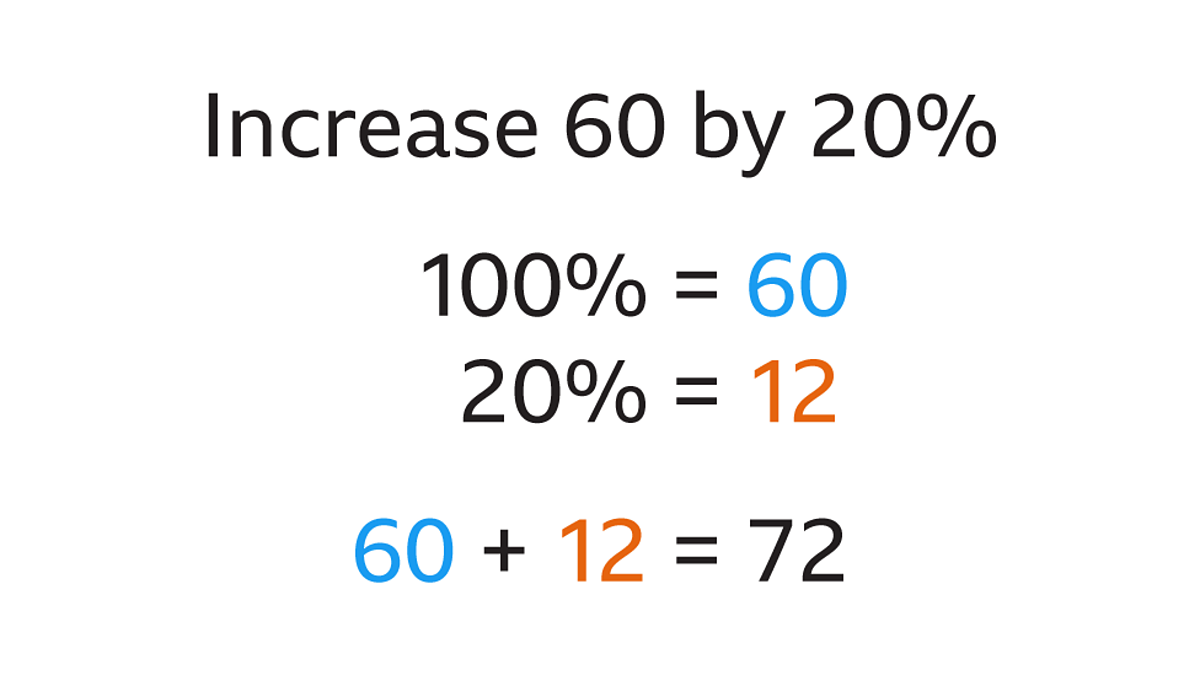
At its core, a percent increase quantifies the relative change between an initial value and a final, larger value. It tells us how much something has grown in relation to its starting point, expressed as a fraction of 100. For instance, if your salary goes from $50,000 to $55,000, the absolute increase is $5,000. However, the percent increase (10%) provides a more insightful perspective, allowing you to compare that growth against inflation, industry standards, or even your own past performance. It normalizes the change, making it universally understandable, regardless of the scale of the original numbers.
In personal finance, this could be the rise in your investment portfolio’s value over a year, the increase in your rent, or the growth in your monthly income. For businesses, it might reflect year-over-year revenue growth, an increase in market share, or the expanding cost of goods sold. Each scenario, despite its varying scale, benefits from the clarity that a percentage increase brings.
The Basic Formula Explained
The calculation of a percent increase hinges on a straightforward formula that requires two key components: the “Original Value” (or initial value) and the “Final Value” (or new value).
The formula is as follows:
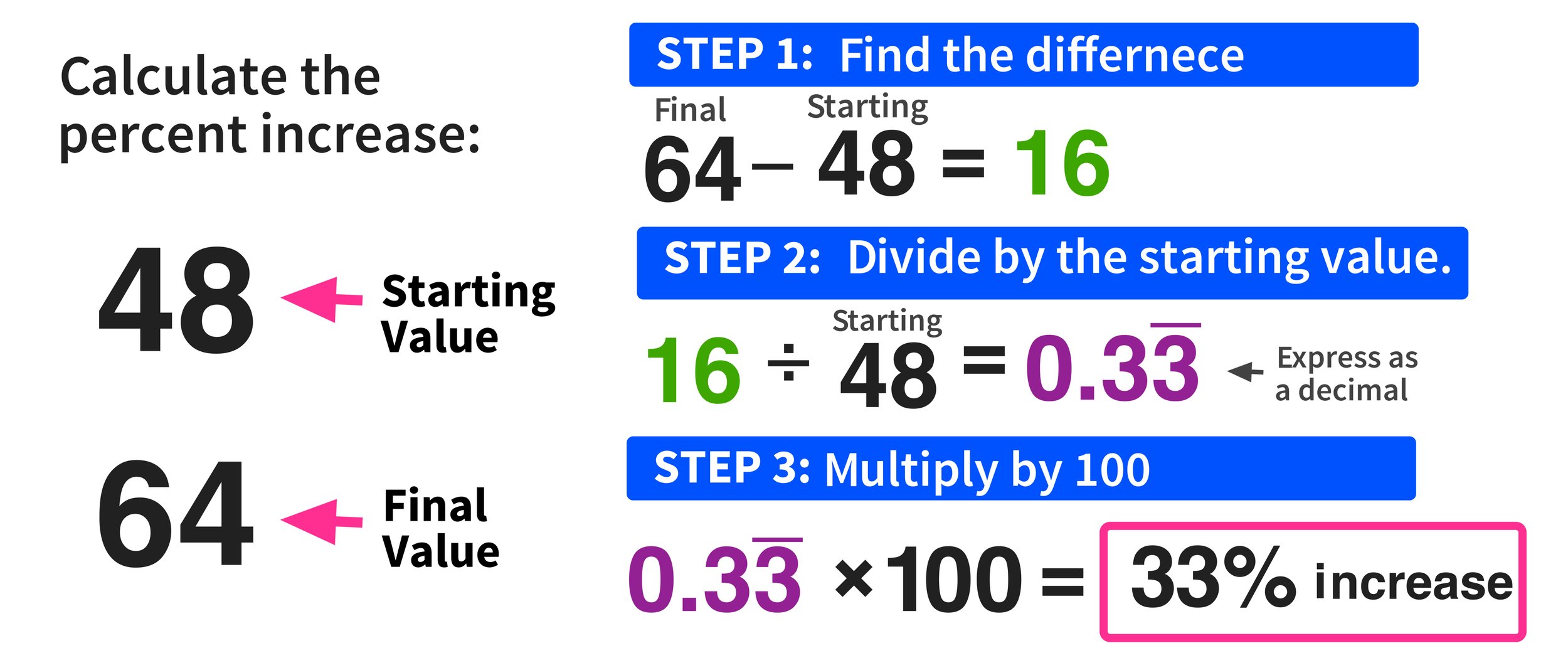
Percent Increase = ((Final Value - Original Value) / Original Value) * 100
Let’s break down each part:
- Final Value (or New Value): This is the larger number, the amount after the increase has occurred.
- Original Value (or Initial Value): This is the smaller number, the starting amount before the increase.
Final Value - Original Value: This part calculates the absolute increase or the raw difference between the two numbers. This result will always be positive for an increase./ Original Value: Dividing the absolute increase by the original value gives you the proportional increase or the increase expressed as a decimal. This step is critical because it roots the increase back to its starting point, providing the relative measure.* 100: Multiplying the proportional increase by 100 converts the decimal into a percentage, making it easily interpretable.
Why it Matters in Personal Finance
Understanding percent increase is foundational for sound personal finance.
- Budgeting and Expense Management: It helps you track how much your living expenses (groceries, utilities, rent) are increasing over time, informing necessary adjustments to your budget. Are your expenses rising faster than your income?
- Salary and Income Growth: When negotiating a raise, knowing the percentage increase you’re asking for, or being offered, allows for a more informed comparison against inflation rates or industry benchmarks.
- Investment Performance: The most common application for many, calculating the percentage return on investments helps you assess how well your assets are growing, whether it’s stocks, mutual funds, or real estate. It’s the core of Return on Investment (ROI).
- Debt Management: While often framed as a decrease (in debt owed), understanding percentage changes in interest rates can significantly impact how quickly your debt grows or shrinks.
Step-by-Step Calculation for Financial Scenarios
Let’s walk through the process with practical financial examples to solidify your understanding.
Step 1: Determine the Original and New Values
The first crucial step is to clearly identify the starting point (Original Value) and the ending point (New Value) of the change you wish to measure. Precision here is key.
- Example 1 (Investment): You invested $10,000 in a stock. A year later, it’s worth $12,500.
- Original Value = $10,000
- New Value = $12,500
- Example 2 (Income): Your annual salary was $60,000 last year. This year, it’s $63,000.
- Original Value = $60,000
- New Value = $63,000
- Example 3 (Expense): Your monthly electric bill was $80. This month, it’s $92.
- Original Value = $80
- New Value = $92
Step 2: Calculate the Absolute Increase
Subtract the Original Value from the New Value. This tells you the raw amount by which the value has grown.
- Example 1 (Investment): $12,500 (New Value) – $10,000 (Original Value) = $2,500 (Absolute Increase)
- Example 2 (Income): $63,000 (New Value) – $60,000 (Original Value) = $3,000 (Absolute Increase)
- Example 3 (Expense): $92 (New Value) – $80 (Original Value) = $12 (Absolute Increase)
Step 3: Divide by the Original Value
Take the Absolute Increase (from Step 2) and divide it by the Original Value (from Step 1). This will give you a decimal number, representing the proportional increase.
- Example 1 (Investment): $2,500 (Absolute Increase) / $10,000 (Original Value) = 0.25
- Example 2 (Income): $3,000 (Absolute Increase) / $60,000 (Original Value) = 0.05
- Example 3 (Expense): $12 (Absolute Increase) / $80 (Original Value) = 0.15
Step 4: Convert to a Percentage
Multiply the decimal result from Step 3 by 100. This converts the proportion into a familiar percentage format.
- Example 1 (Investment): 0.25 * 100 = 25% increase
- Example 2 (Income): 0.05 * 100 = 5% increase
- Example 3 (Expense): 0.15 * 100 = 15% increase
Practical Examples: Investment Growth
Let’s say you started with a mutual fund worth $5,000. After three years, it grew to $6,250.
- Original Value = $5,000
- New Value = $6,250
- Absolute Increase = $6,250 – $5,000 = $1,250
- Proportional Increase = $1,250 / $5,000 = 0.25
- Percent Increase = 0.25 * 100 = 25%
This means your mutual fund increased by 25% over the three years. To get an annualized return, you’d need to use a more complex calculation like Compound Annual Growth Rate (CAGR), but for overall growth, the simple percent increase suffices.

Practical Examples: Expense Inflation
Consider your average monthly grocery bill. Last year, it was consistently around $400. This year, due to inflation, it’s $440.
- Original Value = $400
- New Value = $440
- Absolute Increase = $440 – $400 = $40
- Proportional Increase = $40 / $400 = 0.10
- Percent Increase = 0.10 * 100 = 10%
Your grocery expenses have increased by 10%, a crucial piece of information for adjusting your budget or understanding your purchasing power.
Applying Percent Increase in Various Financial Contexts
The utility of calculating percent increase extends far beyond simple examples, touching almost every facet of financial management.
Personal Financial Planning and Budgeting
For individuals, understanding percent increases is vital for effective financial planning.
- Tracking Spending: By calculating the percent increase in discretionary spending categories month-over-month or year-over-year, you can identify trends, potential areas for savings, and assess the impact of lifestyle changes.
- Income Growth: Monitoring the percentage increase in your salary or other income streams over time helps you evaluate career progression and ensure your income keeps pace with or outpaces inflation.
- Debt Reduction Progress: While often a decrease, understanding the percentage change in your debt balance helps motivate and track progress towards financial freedom. Conversely, calculating the percentage increase in interest rates on variable-rate loans highlights potential risks.
Investment Analysis and Portfolio Management
In the investment world, percent increase is a cornerstone metric.
- Return on Investment (ROI): This is perhaps the most direct application. ROI is essentially a percent increase calculation, telling investors how much profit they’ve made relative to the initial cost.
- Compound Annual Growth Rate (CAGR): For investments over multiple periods, CAGR is a sophisticated application of percent increase, providing a smoothed, annual rate of return, assuming profits are reinvested.
- Individual Asset Performance: Comparing the percentage increase of different stocks, bonds, or funds helps investors diversify and rebalance their portfolios strategically.
- Market Benchmarking: Investors often compare the percentage increase of their portfolio against a market index (like the S&P 500) to gauge relative performance.
Business Finance and Performance Metrics
For businesses, percent increase is indispensable for evaluating operational health and growth.
- Revenue Growth: Tracking the percentage increase in revenue year-over-year is a primary indicator of a company’s success and market penetration.
- Profit Growth: Analyzing the percent increase in net profit or gross profit allows businesses to understand the effectiveness of their cost management and pricing strategies.
- Customer Acquisition/Retention: A percent increase in the customer base or customer retention rates signifies marketing and service effectiveness.
- Cost Control: Monitoring the percentage increase in operational costs can highlight inefficiencies or external pressures (like rising raw material prices).
Understanding Economic Indicators
Macroeconomic data frequently relies on percentage changes to convey impact.
- Inflation Rates: The Consumer Price Index (CPI) is often reported as a percentage increase, indicating how much the cost of goods and services has risen over a period, directly impacting purchasing power.
- Gross Domestic Product (GDP) Growth: This crucial indicator of economic health is expressed as a percentage increase, reflecting the overall growth of a country’s economy.
- Interest Rate Changes: Central banks announce percentage increases or decreases in key interest rates, which then ripple through the economy, affecting borrowing costs and investment returns.
Tools and Tips for Accurate Calculation
While the formula is simple, certain tools and practices can enhance accuracy and efficiency.
Leveraging Spreadsheets and Financial Calculators
For those dealing with numerous calculations or complex financial models, manual calculations are impractical.
- Spreadsheet Software (Excel, Google Sheets): These tools are invaluable. You can set up columns for Original Value, New Value, and then use a formula
=(B2-A2)/A2*100(assuming Original Value in A2, New Value in B2) to instantly calculate the percent increase for rows of data. This allows for quick analysis of multiple investments, expenses, or income streams. - Online Financial Calculators: Many websites offer free calculators specifically for percent change, often simplifying the input process.
- Dedicated Financial Software: Personal finance apps and investment platforms often integrate these calculations directly, presenting performance data as percentage changes automatically.
Common Pitfalls to Avoid
Even with a simple formula, errors can occur.
- Using the Wrong Base: Always ensure you divide by the Original Value, not the New Value or the absolute difference. This is the most common mistake.
- Rounding Errors: When dealing with very small numbers or multiple steps, premature rounding can lead to inaccuracies. Keep as many decimal places as possible until the final step.
- Confusing Increase with Decrease: The formula for percent decrease is slightly different (using the absolute decrease and still dividing by the original value). Ensure you’re using the correct one for the context.
- Not Accounting for Time: A 10% increase might sound good, but if it took 10 years, it’s very different from a 10% increase in one year. Always consider the timeframe.
The Importance of Context and Timeframes
A number without context is often meaningless in finance.
- Annualized vs. Sporadic: A one-time 50% increase in a volatile stock is different from a consistent 5% annual increase in a dividend-paying fund. Annualizing returns provides a standard for comparison.
- Inflation Adjustment: When discussing income or investment growth, it’s often insightful to consider the “real” (inflation-adjusted) percent increase, which shows growth in terms of purchasing power.
- Market Conditions: A 5% increase in a bull market might be considered underperforming, while a 5% increase in a bear market might be exceptional.
Beyond the Numbers: Strategic Financial Decision-Making
Calculating the percent increase is just the first step. The true value lies in how you interpret and act upon that information.
Identifying Trends and Making Projections
By consistently tracking percent increases in various financial metrics, you can identify patterns and trends. Is your income consistently growing by 3% annually? Are your healthcare costs rising by 8% per year? Understanding these trends allows you to:
- Forecast Future Finances: Project potential future income, investment returns, or expenses, which is crucial for long-term financial planning, retirement savings, and goal setting.
- Identify Opportunities: Rapid percentage increases in certain sectors might signal investment opportunities.
- Spot Red Flags: Consistently high percentage increases in debt or expenses can indicate financial trouble brewing.
Negotiating and Advocating for Yourself
Armed with percentage increase data, you gain significant leverage.
- Salary Negotiations: If you can demonstrate that your performance led to a 15% increase in sales or that your skills are worth a 10% raise compared to industry standards, your negotiation stance is much stronger.
- Contract Reviews: When reviewing service contracts or supplier agreements, understanding the percentage increase in costs helps you challenge unwarranted hikes or seek better terms.
- Rent Increases: If your landlord proposes a rent increase, knowing the percentage helps you determine if it’s reasonable compared to local market trends or if it’s excessive.
Assessing Risk and Opportunity
Percent increase calculations are fundamental to risk assessment and opportunity evaluation in investing.
- Investment Volatility: Analyzing past percentage increases and decreases in an asset’s value helps gauge its volatility and potential risk.
- Risk-Adjusted Returns: More advanced metrics often build upon percent increases to evaluate how much return you’re getting for the amount of risk taken.
- Comparative Analysis: Comparing the percentage growth of different companies or investment vehicles helps you identify those with stronger growth potential or more stable performance, aligning with your financial goals and risk tolerance.
Conclusion
The ability to calculate the percent of an increase is far more than a basic arithmetic skill; it’s a fundamental pillar of financial literacy. From meticulously managing your personal budget and evaluating your investment portfolio’s performance to understanding macroeconomic trends and making strategic business decisions, this calculation provides the clarity and context needed to navigate the financial landscape with confidence.
By mastering the simple formula and applying it consistently, you empower yourself to track growth, identify trends, negotiate effectively, and make informed choices that contribute to your financial well-being and success. In a world where numbers tell a story, knowing how to interpret percentage increases equips you with a powerful narrative for your financial journey.
aViewFromTheCave is a participant in the Amazon Services LLC Associates Program, an affiliate advertising program designed to provide a means for sites to earn advertising fees by advertising and linking to Amazon.com. Amazon, the Amazon logo, AmazonSupply, and the AmazonSupply logo are trademarks of Amazon.com, Inc. or its affiliates. As an Amazon Associate we earn affiliate commissions from qualifying purchases.