
In the intricate world of personal finance, investing, and business operations, percentages are the universal language. From understanding a loan’s interest rate to deciphering investment returns, or even just allocating your monthly budget, the ability to accurately calculate and interpret percentages is not merely a mathematical exercise – it’s a cornerstone of financial literacy and empowerment. This article delves deep into the methodologies of calculating total percentages, illustrating their critical importance across various financial domains, and equipping you with the knowledge to make more informed and strategic monetary decisions.

Understanding the Fundamentals: What is a Percentage?
Before we dive into complex calculations, a solid grasp of what a percentage represents is crucial. It’s a concept that pervades our daily lives, often without us consciously realizing its numerical foundation.
The Basic Definition: Part Out of One Hundred
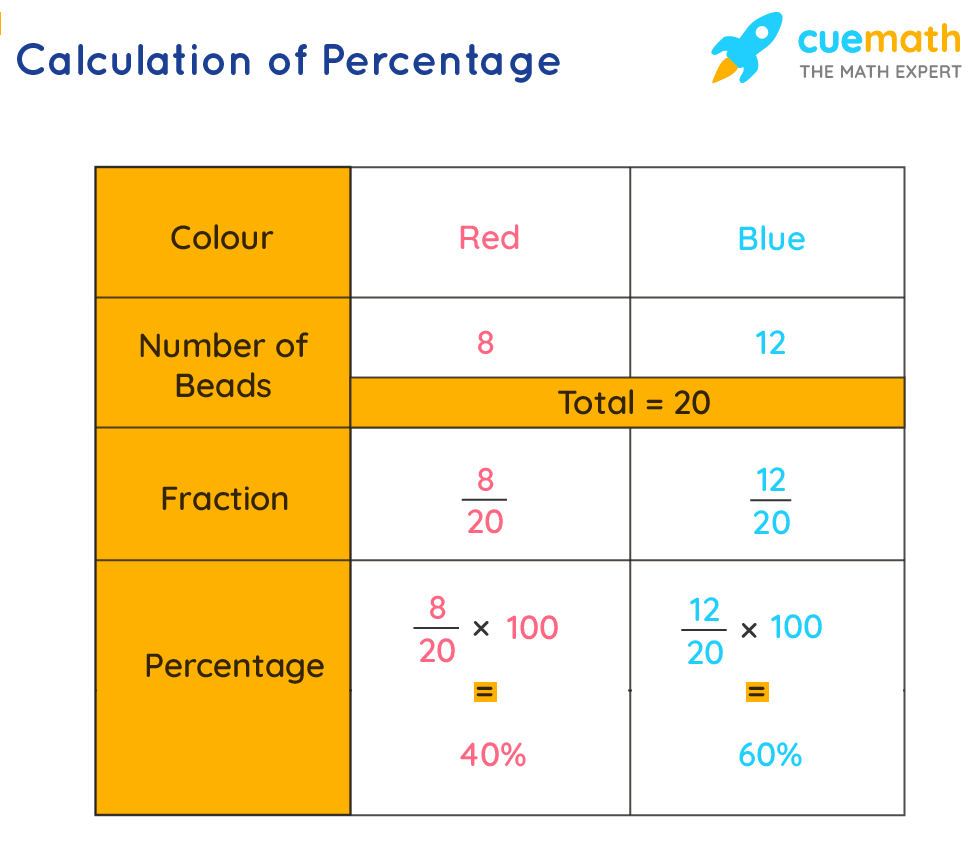
At its heart, a percentage is a way of expressing a number or a ratio as a fraction of 100. The word “percent” literally means “per one hundred” or “out of one hundred.” When you see 50%, it means 50 out of 100, or 50/100, which simplifies to 1/2. This standardized representation allows for easy comparison of proportions across different contexts, even when the original “whole” amounts are vastly different.
For instance, knowing that a company’s profit margin is 10% is more immediately informative than knowing it made $1 million profit on $10 million in sales, or $100 profit on $1,000 in sales. The percentage tells you the relative efficiency of its operations, regardless of its scale.
Why Percentages Matter in Finance
In the financial landscape, percentages are indispensable for several reasons:
- Comparability: They provide a standardized metric to compare different financial scenarios. Is a 5% return on investment good? It depends on the alternative and the risk, but the 5% gives you a clear number to evaluate.
- Contextualization: They help put raw numbers into perspective. A $50 discount on a $1,000 item (5%) feels different from a $50 discount on a $100 item (50%).
- Decision-Making: From evaluating mortgage rates to understanding sales tax, percentages directly influence financial choices and outcomes.
- Tracking Performance: Businesses and individuals use percentages to track growth, decline, and efficiency over time.
Without a firm understanding of percentage calculations, navigating financial products, budgeting effectively, or evaluating investment opportunities becomes significantly more challenging and prone to error.
Core Methods for Calculating Total Percentages
The term “total percentage” can refer to a few different calculation types, depending on whether you’re finding a part of a whole, a change between two values, or a weighted average. Mastering these core methods is fundamental.
Simple Percentage Calculation: Part / Whole x 100
This is the most common and foundational percentage calculation. It’s used when you want to express a portion of a total as a percentage.
Formula:
Percentage = (Part / Whole) x 100
Examples in Finance:
- Budget Allocation: If your total monthly income is $4,000 and you spend $800 on rent, what percentage of your income goes to rent?
($800 / $4,000) x 100 = 0.2 x 100 = 20% - Profit Margin: A business makes a profit of $50,000 on total revenue of $250,000. What is its profit margin?
($50,000 / $250,000) x 100 = 0.2 x 100 = 20% - Portfolio Allocation: If your total investment portfolio is worth $100,000 and $30,000 is invested in stocks, what percentage of your portfolio is in stocks?
($30,000 / $100,000) x 100 = 0.3 x 100 = 30%
Calculating Percentage Change: [(New Value – Old Value) / Old Value] x 100
This method is critical for analyzing growth, decline, and performance over time. It shows the relative increase or decrease between two values.
Formula:
Percentage Change = [(New Value - Old Value) / Old Value] x 100
- A positive result indicates a percentage increase.
- A negative result indicates a percentage decrease.
Examples in Finance:
- Investment Growth: Your stock investment was worth $5,000 last year and is now worth $6,000. What is the percentage increase?
[($6,000 - $5,000) / $5,000] x 100 = ($1,000 / $5,000) x 100 = 0.2 x 100 = 20% increase - Expense Reduction: Last month you spent $300 on groceries, and this month you spent $250. What is the percentage change in your grocery spending?
[($250 - $300) / $300] x 100 = (-$50 / $300) x 100 = -0.1667 x 100 = -16.67% decrease - Revenue Growth: A company’s revenue grew from $1 million to $1.2 million year-over-year.
[($1,200,000 - $1,000,000) / $1,000,000] x 100 = ($200,000 / $1,000,000) x 100 = 0.2 x 100 = 20% growth
Weighted Percentages: Accounting for Varying Contributions
Sometimes, not all “parts” contribute equally to the “whole.” In these scenarios, a simple average of percentages would be misleading. Weighted percentages account for the varying importance or size of each component.
Formula:
Weighted Percentage = (Σ (Weight_i x Percentage_i)) / Σ (Weight_i)
Where Weight_i is the magnitude of each component and Percentage_i is its individual percentage.
Example in Finance:
- Average Return on a Diversified Portfolio: You have $10,000 in Fund A (which returned 15%) and $40,000 in Fund B (which returned 5%). What is your overall portfolio return?
A simple average (15%+5%)/2 = 10% would be incorrect because Fund B is four times larger.
Overall Return = [($10,000 x 0.15) + ($40,000 x 0.05)] / ($10,000 + $40,000)
= ($1,500 + $2,000) / $50,000
= $3,500 / $50,000 = 0.07 = 7%
This calculation accurately reflects that the lower return of the larger fund had a greater impact on your total return.
Practical Applications in Personal Finance and Investing
The ability to calculate percentages translates directly into tangible financial benefits, enabling smarter decisions across various financial fronts.
Budgeting and Expense Allocation: Tracking Where Your Money Goes
Effective budgeting is about understanding your cash flow. Percentages help you categorize and visualize your spending habits relative to your income. By calculating the percentage of your income spent on housing, food, transportation, and discretionary items, you can identify areas for potential savings, adhere to financial rules like the 50/30/20 budget (50% needs, 30% wants, 20% savings/debt), and optimize your spending for your financial goals.
Understanding Investment Returns and Portfolio Diversification
For investors, percentages are indispensable. Return on Investment (ROI), compounded annual growth rate (CAGR), dividend yield, and expense ratios are all expressed as percentages. Calculating the percentage of your portfolio allocated to different asset classes (stocks, bonds, real estate) helps you assess diversification and risk exposure. Understanding these percentages allows you to compare investment performance consistently and make adjustments to align with your risk tolerance and long-term objectives.
Navigating Loans, Interest Rates, and Discounts
Whether you’re taking out a mortgage, a personal loan, or using a credit card, interest rates are presented as percentages (Annual Percentage Rate – APR). Knowing how to calculate the actual cost of borrowing, including the total interest paid over the life of a loan, is crucial. Similarly, when shopping, calculating the actual discount percentage can help you determine the true value of a sale item and decide if it’s a worthwhile purchase, especially when dealing with successive discounts.
Analyzing Financial Ratios for Business Insights
In business finance, a multitude of critical performance indicators are expressed as percentages. Profit margins (gross, operating, net), return on equity, debt-to-equity ratios, and current ratios all provide percentage-based insights into a company’s health, efficiency, and solvency. Investors use these percentages to evaluate potential investments, while business owners use them to track performance, identify trends, and make strategic decisions to improve profitability and operational efficiency.
Advanced Scenarios and Common Pitfalls
While the core methods are straightforward, real-world financial scenarios can present complexities. Being aware of these and common mistakes is part of mastering percentage calculations.
Multi-Step Percentage Calculations: Successive Discounts or Increases
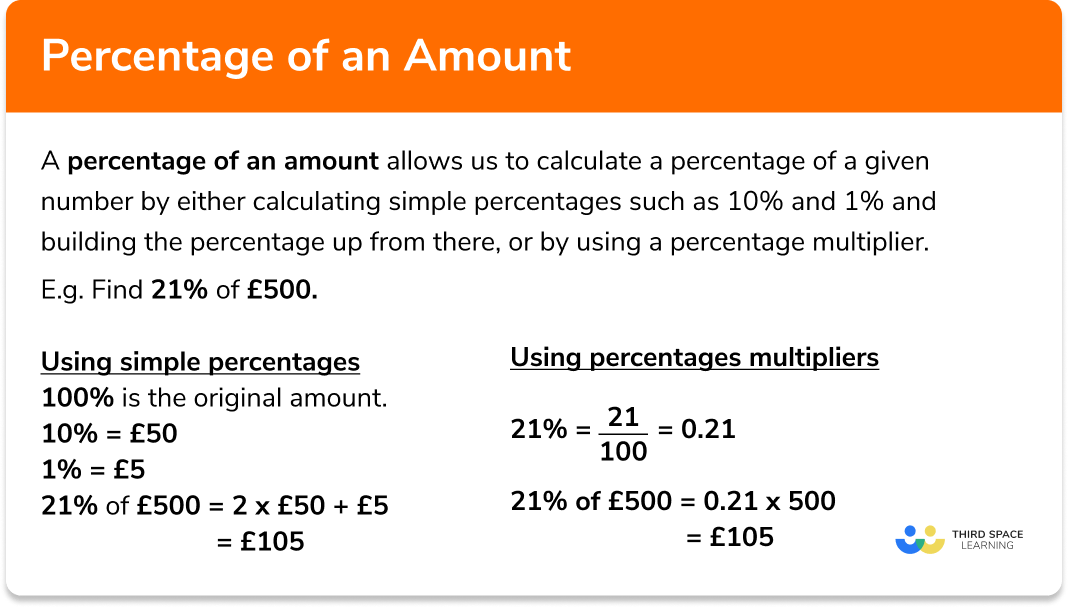
A common error occurs when dealing with sequential percentage changes. For example, if an item is discounted by 20% and then an additional 10% is applied to the discounted price, the total discount is not 30%.
Let’s say an item costs $100.
- First Discount (20%): $100 – (0.20 * $100) = $100 – $20 = $80
- Second Discount (10% on new price): $80 – (0.10 * $80) = $80 – $8 = $72
The final price is $72, meaning a total discount of $28, or 28% from the original $100. This is because each percentage is applied to a different base value. The same logic applies to successive increases, such as compound interest.
Avoiding Misinterpretations: The Importance of the “Whole”
The “whole” or the base from which a percentage is calculated is paramount. Misidentifying the base can lead to significant errors. For instance, when reporting unemployment rates, it’s crucial to understand if the “total” refers to the entire population, the working-age population, or the labor force. Each base will yield a different percentage, providing different contextual insights. Always clarify what the percentage is “of.”
The Role of Financial Tools: Spreadsheets and Calculators
While understanding the manual calculations is vital, modern financial tools like spreadsheets (Excel, Google Sheets) and dedicated financial calculators make these calculations fast and accurate. Learning to use percentage functions in these tools, such as =A1/B1 for simple percentages or complex formulas for weighted averages, significantly enhances productivity and reduces human error. These tools are indispensable for managing complex budgets, investment portfolios, and business financial models.
Mastering Percentage Calculations for Financial Empowerment
The journey from understanding the concept of a percentage to confidently applying it in various financial contexts is a journey towards greater financial empowerment. It’s a skill that pays dividends, quite literally.
Building Confidence Through Practice
Like any skill, proficiency in percentage calculations comes with practice. Start by applying these concepts to your own personal finances: calculate your actual spending percentages, the percentage increase in your savings account over a year, or the percentage of your paycheck allocated to taxes. The more you engage with these numbers, the more intuitive they will become.
Making Informed Financial Decisions
With a solid grasp of percentages, you can critically evaluate financial claims, compare different financial products, and foresee the implications of various financial choices. You’ll be able to quickly discern whether a “limited time offer” truly benefits you, understand the real cost of debt, and appreciate the power of compound interest in wealth building. This analytical capability transforms you from a passive recipient of financial information into an active, informed decision-maker.
From Theory to Real-World Impact
Ultimately, the ability to calculate total percentages is not just about crunching numbers; it’s about translating those numbers into actionable insights that profoundly impact your financial well-being. It’s about being able to confidently say, “I understand my money, I control my money, and I am strategically positioning myself for a more secure and prosperous financial future.” Embrace this fundamental skill, and unlock a new level of financial understanding and control.
aViewFromTheCave is a participant in the Amazon Services LLC Associates Program, an affiliate advertising program designed to provide a means for sites to earn advertising fees by advertising and linking to Amazon.com. Amazon, the Amazon logo, AmazonSupply, and the AmazonSupply logo are trademarks of Amazon.com, Inc. or its affiliates. As an Amazon Associate we earn affiliate commissions from qualifying purchases.