
In the world of finance, numbers tell a story, and percentages are the crucial narrative device that brings that story to life. Whether you’re managing your personal budget, evaluating an investment opportunity, analyzing business performance, or simply trying to understand a sale discount, a solid grasp of percentage calculations is not just beneficial—it’s absolutely essential. Percentages provide a standardized way to compare parts to a whole, track changes over time, and make informed financial decisions, helping us navigate the complexities of monetary flows with clarity and confidence.
This guide aims to demystify percentages, transforming what might seem like a daunting mathematical concept into an accessible and powerful tool for financial empowerment. We’ll start with the fundamentals, lay out the core formulas, and then dive deep into practical applications across personal and business finance, equipping you with the knowledge to calculate percentages accurately and apply them effectively in real-world scenarios.

The Fundamentals: Understanding What a Percentage Truly Means
At its core, a percentage is a fraction of 100. The word “percent” literally means “per one hundred.” This simple concept is incredibly powerful because it provides a universal benchmark for comparison. Instead of comparing 3 out of 5 apples to 7 out of 20 oranges, we can convert both to a percentage, allowing for an apples-to-apples comparison on a scale of 100.
Defining the Concept and Its Basic Formula
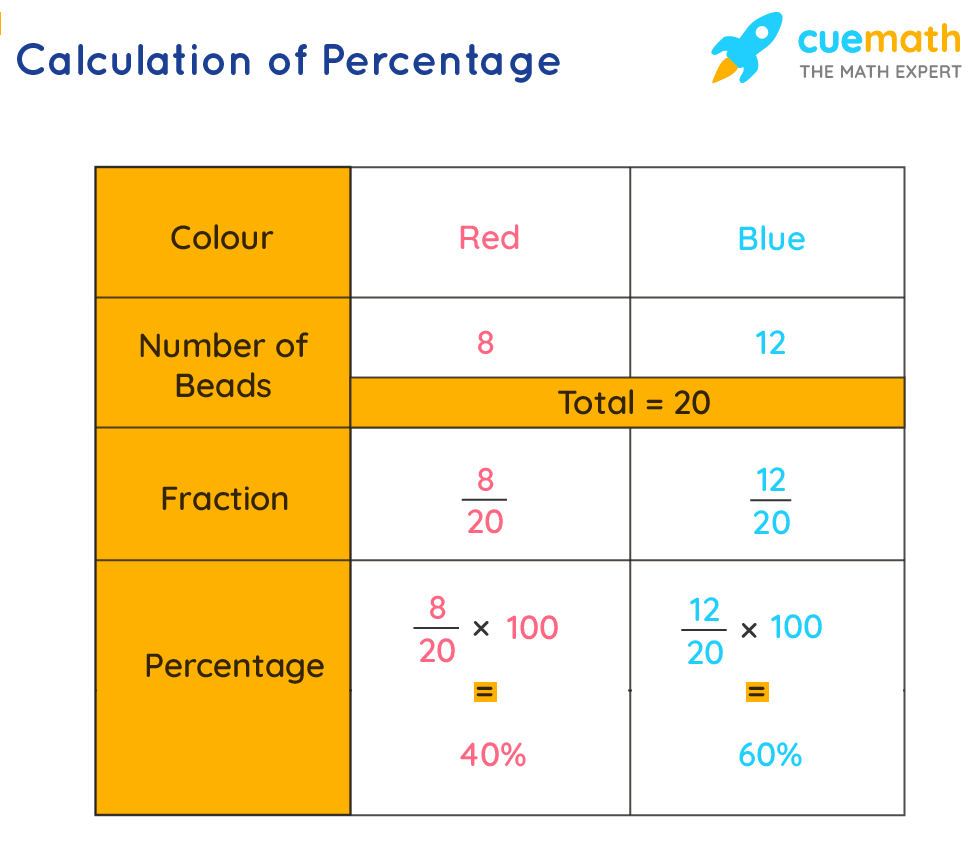
A percentage (symbolized by %) represents a proportion of a whole. If you have 50% of something, you have half of it. If you have 100%, you have the entire thing. The basic formula for calculating a percentage is straightforward:
Percentage = (Part / Whole) × 100%
Here’s what each component means:
- Part: This is the specific amount or quantity you are interested in.
- Whole: This is the total amount or quantity that the part is being compared against.
- 100%: We multiply by 100 to express the fractional relationship as a number out of one hundred.
For example, if you earned $30 in interest on an initial investment of $500, and you wanted to know what percentage that interest represents of your initial investment, you would calculate:
Percentage = ($30 / $500) × 100% = 0.06 × 100% = 6%.
Converting Between Decimals, Fractions, and Percentages
Financial calculations often involve converting between these forms.
- Decimal to Percentage: Multiply the decimal by 100. (e.g., 0.25 = 0.25 × 100% = 25%)
- Percentage to Decimal: Divide the percentage by 100. (e.g., 75% = 75 / 100 = 0.75)
- Fraction to Percentage: Convert the fraction to a decimal first by dividing the numerator by the denominator, then multiply by 100. (e.g., 1/4 = 0.25 = 0.25 × 100% = 25%)
- Percentage to Fraction: Write the percentage as a fraction over 100, then simplify. (e.g., 50% = 50/100 = 1/2)
Mastering these conversions ensures flexibility and accuracy, especially when working with financial data presented in various formats, such as interest rates as decimals in loan agreements or discounts as percentages in retail.
Percentages in Personal Finance: Managing Your Money Wisely
Percentages are a daily currency in personal finance, enabling smarter budgeting, spending, saving, and debt management. They offer a clear lens through which to view your financial habits and make necessary adjustments.
Budgeting, Expense Tracking, and Savings Goals
When you create a budget, percentages help you allocate your income effectively. For instance, common budgeting rules suggest allocating 50% of your income to needs, 30% to wants, and 20% to savings and debt repayment (the 50/30/20 rule). Calculating what percentage of your income goes to housing, groceries, or entertainment allows you to identify areas of overspending or opportunities for saving.
- Example: If your monthly take-home pay is $4,000, and your rent is $1,200, then your rent accounts for ($1,200 / $4,000) × 100% = 30% of your income. This helps you assess if you are within your target allocation for housing expenses.
Similarly, setting savings goals often involves percentages. Aiming to save 15% of every paycheck is more tangible and easier to track than saving a fluctuating dollar amount.
Navigating Discounts, Sales, and Price Changes
Every shopper encounters percentages in the form of sales and discounts. Understanding how to calculate these can save you significant money.
- Example: A shirt originally priced at $50 is on sale for 30% off.
- Discount Amount: $50 × 0.30 (or 30/100) = $15
- Sale Price: $50 – $15 = $35
Conversely, you might encounter price increases, where a product’s cost goes up by a certain percentage. Knowing how to calculate this helps you understand the impact on your budget.
Understanding Interest Rates on Loans and Savings
Interest is the cost of borrowing money or the return on lending/saving money, almost always expressed as a percentage.
- Credit Card Interest: If you carry a balance of $1,000 on a credit card with an 18% annual interest rate, you can calculate the monthly interest accrued (approximately 18%/12 months = 1.5% per month). $1,000 × 0.015 = $15 in interest for that month.
- Savings Account Interest: A savings account offering a 0.5% annual interest rate means your savings will grow by that percentage over a year.
Accurately calculating the impact of interest is critical for managing debt effectively and maximizing your savings.
Percentages in Business Finance and Investing: Driving Growth and Analysis
For businesses and investors, percentages are indispensable for measuring performance, assessing risk, and making strategic decisions. From evaluating profit margins to understanding market share, percentages provide a comparative framework that raw numbers alone cannot.
Measuring Profitability and Financial Health
Businesses use various percentage metrics to gauge their financial health:
- Gross Profit Margin: (Gross Profit / Revenue) × 100%. This shows how much profit a company makes from its sales after deducting the cost of goods sold.
- Net Profit Margin: (Net Profit / Revenue) × 100%. This reveals the percentage of revenue left after all expenses, including taxes, have been deducted. A higher net profit margin indicates greater efficiency.
- Operating Expense Ratio: (Operating Expenses / Revenue) × 100%. This tells you what percentage of revenue is consumed by operating expenses, helping to identify areas for cost reduction.
Analyzing Investment Returns and Performance
Investors heavily rely on percentages to understand the performance of their portfolios and individual assets.
- Return on Investment (ROI): ([Current Value – Original Cost] / Original Cost) × 100%. This is perhaps the most fundamental metric for investors, showing the percentage gain or loss on an investment relative to its cost.
- Annualized Return: Converts an investment return over a period (e.g., monthly, quarterly) into an annual percentage, allowing for easier comparison between different investments with varying timeframes.
- Dividend Yield: (Annual Dividends Per Share / Share Price) × 100%. For income investors, this percentage indicates the return on investment generated by dividends.
- Portfolio Allocation: Investors often allocate their portfolios by percentages (e.g., 60% stocks, 30% bonds, 10% cash) to manage risk and align with their financial goals.
Understanding Market Share and Growth Rates
Businesses frequently use percentages to understand their position within a market and track their growth.
- Market Share: (Company’s Sales / Total Market Sales) × 100%. This metric indicates the percentage of the total sales within an industry or market that a company has captured.
- Year-over-Year Growth Rate: ([Current Year’s Value – Previous Year’s Value] / Previous Year’s Value) × 100%. This is crucial for tracking revenue growth, profit growth, or customer acquisition growth, providing insights into a company’s trajectory.
Common Percentage Calculations and Avoiding Pitfalls
While the basic formula for percentages is straightforward, certain scenarios require specific approaches. Understanding these nuanced calculations and common mistakes can prevent misinterpretations and ensure accuracy in your financial analysis.
Finding the Percentage of a Number
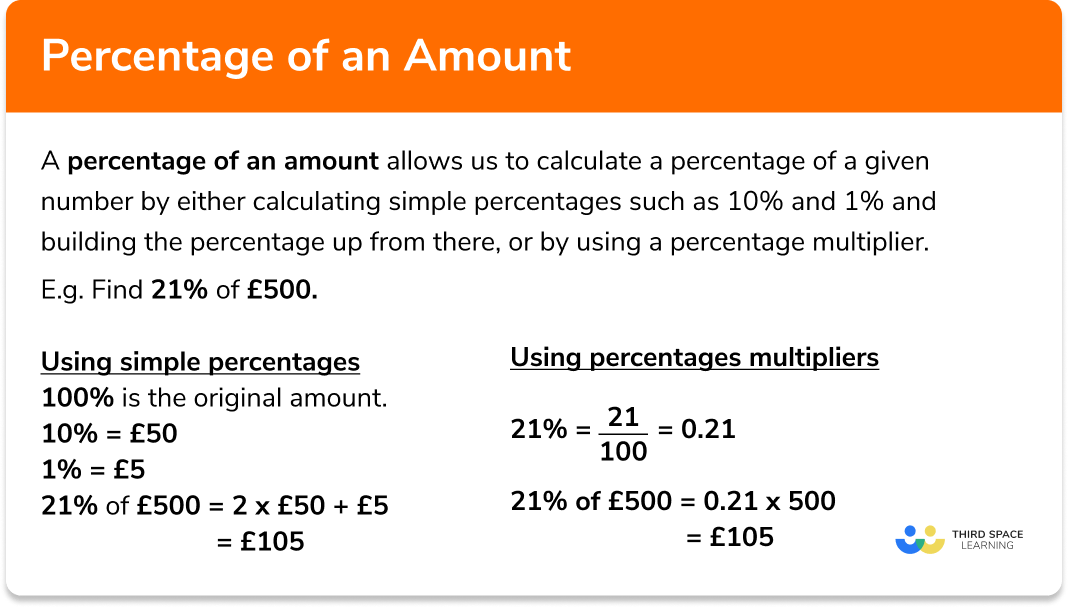
Often, you’ll need to calculate a specific percentage of a given number. This is done by converting the percentage to a decimal and multiplying it by the number.
- Formula: Percentage of Number = (Percentage / 100) × Number
- Example: What is 25% of $200?
- 0.25 × $200 = $50.
This is useful for calculating tax amounts, commissions, or portions of a budget.
- 0.25 × $200 = $50.
Calculating Percentage Increase or Decrease
When tracking financial changes over time, calculating percentage increase or decrease is vital.
- Formula:
- Percentage Change = ([New Value – Old Value] / Old Value) × 100%
- Example 1 (Increase): Your stock portfolio grew from $10,000 to $12,000.
- Percentage Increase = ([$12,000 – $10,000] / $10,000) × 100% = ($2,000 / $10,000) × 100% = 0.20 × 100% = 20%.
- Example 2 (Decrease): A company’s revenue dropped from $500,000 to $450,000.
- Percentage Decrease = ([$450,000 – $500,000] / $500,000) × 100% = (-$50,000 / $500,000) × 100% = -0.10 × 100% = -10%. (A negative sign indicates a decrease).
Distinguishing Percentage Points from Percentage Change
This is a common area of confusion, particularly in financial news and economic reports.
- Percentage Change: Refers to the proportional change relative to the original value, calculated using the formula above.
- Percentage Points: Refers to the absolute difference between two percentages.
- Example: If an interest rate increases from 4% to 5%, that’s a 1 percentage point increase.
However, the percentage change is (5 – 4) / 4 × 100% = 1/4 × 100% = 25%.
Failing to differentiate between these can lead to significant misinterpretations, especially when discussing market movements, policy changes, or economic indicators.
Tools and Best Practices for Accurate Percentage Calculations
While mental math is useful for quick estimates, leveraging modern tools ensures precision, particularly with complex financial figures.
Leveraging Calculators and Spreadsheets
- Basic Calculators: For simple calculations, a standard calculator or smartphone calculator app is perfectly adequate. Many even have a dedicated “%” key, though it’s important to understand how your specific calculator uses it (some calculate the percentage of a number, others perform discounts).
- Scientific and Financial Calculators: These offer more advanced functions, useful for complex interest calculations, annuities, and compound growth.
- Spreadsheets (Excel, Google Sheets): For recurring calculations, large datasets, or modeling financial scenarios, spreadsheets are invaluable. They allow you to set up formulas once and apply them to numerous entries, automating calculations like profit margins, investment returns, or budget allocations. For instance, in Excel, if A1 is your “Part” and B1 is your “Whole,” you can simply type
=(A1/B1)*100into a cell to get the percentage.
Mental Math Shortcuts for Quick Estimates
For on-the-fly estimations, a few mental math tricks can be helpful:
- Finding 10%: Move the decimal one place to the left (e.g., 10% of $450 is $45).
- Finding 1%: Move the decimal two places to the left (e.g., 1% of $450 is $4.50).
- Using these to find other percentages: To find 20%, double the 10%. To find 5%, halve the 10%. To find 15%, add the 10% and 5% values. These shortcuts are great for quickly estimating tips, discounts, or simple interest without needing a calculator.
Double-Checking and Understanding the Context
Always double-check your calculations, especially when dealing with significant financial implications. More importantly, always understand the context. What is the “part” and what is the “whole”? Are you calculating a percentage of a number, a percentage change, or expressing a proportion? A misplaced decimal or a misunderstood base can drastically alter the outcome and lead to erroneous financial conclusions.
Conclusion
The ability to calculate percentages of numbers is more than just a mathematical skill; it’s a foundational pillar of financial literacy. From the everyday decisions of personal budgeting and smart shopping to the complex analyses required in business finance and investment strategy, percentages provide the clarity and context needed to make informed choices.
By understanding the basic formulas, recognizing their diverse applications, and mastering the tools available, you empower yourself to interpret financial data accurately, track progress toward your goals, and identify opportunities for growth and savings. Embrace percentages as your financial compass, and you’ll find yourself better equipped to navigate the economic landscape, making every number count towards a more secure and prosperous future.
aViewFromTheCave is a participant in the Amazon Services LLC Associates Program, an affiliate advertising program designed to provide a means for sites to earn advertising fees by advertising and linking to Amazon.com. Amazon, the Amazon logo, AmazonSupply, and the AmazonSupply logo are trademarks of Amazon.com, Inc. or its affiliates. As an Amazon Associate we earn affiliate commissions from qualifying purchases.