
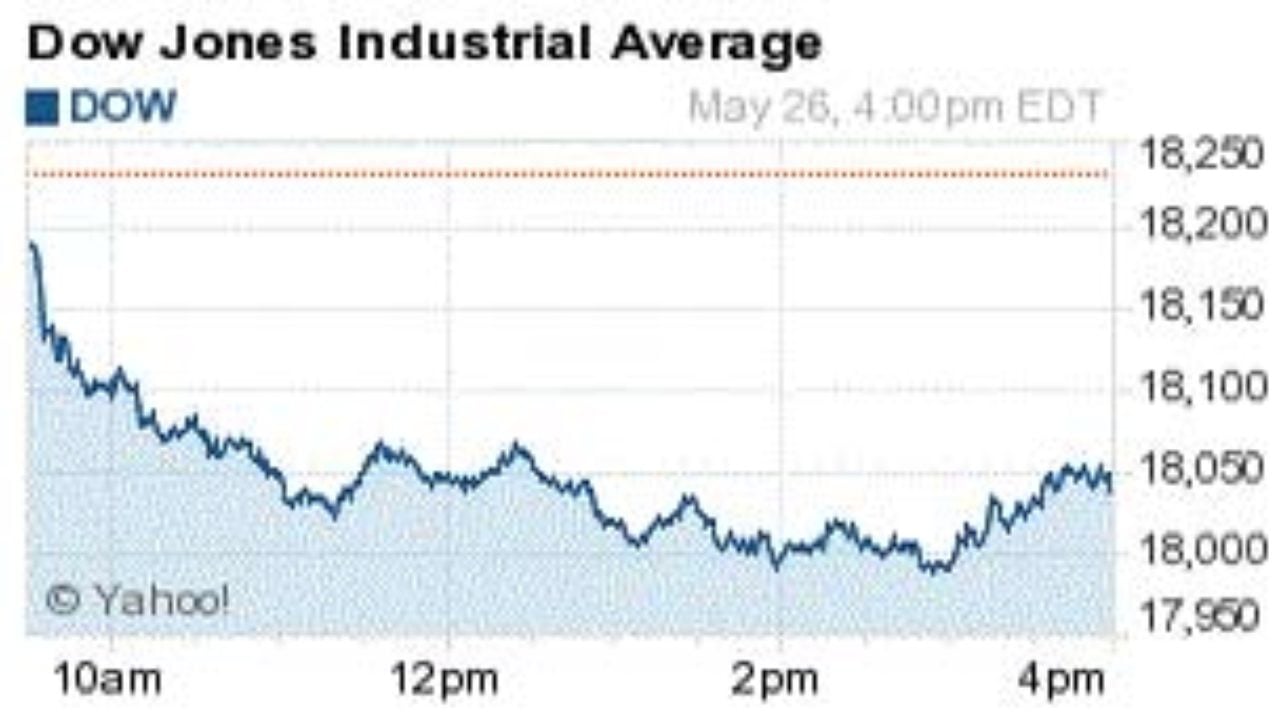
In the world of finance, few questions are as ubiquitous as “How’s the Dow doing today?” For the casual observer, it is a temperature check for the American economy. For the seasoned investor, it is a specific metric that reflects the performance of 30 of the most significant publicly traded companies in the United States. While the Dow Jones Industrial Average (DJIA) is often used interchangeably with “the market,” understanding what it actually represents—and why its daily fluctuations matter to your personal wealth—is essential for anyone looking to navigate the complexities of modern investing.
Decoding the Dow Jones Industrial Average (DJIA)
To understand how the Dow is doing today, one must first understand what the Dow actually is. Founded in 1896 by Charles Dow and Edward Jones, the index originally consisted of just 12 industrial companies. Today, it has evolved into a list of 30 “blue-chip” companies representing various sectors, from technology and healthcare to consumer goods and financial services.
The Blue-Chip Benchmark
The companies included in the Dow are leaders in their respective industries. Names like Apple, Microsoft, Coca-Cola, and Goldman Sachs populate the list. Because these companies are so large and influential, their financial health is often viewed as a proxy for the health of the broader U.S. economy. When people ask how the Dow is doing, they are essentially asking if the giants of American commerce are gaining or losing value. For a personal investor, the Dow serves as a benchmark. If your portfolio is consistently underperforming compared to the Dow, it may be time to re-evaluate your asset allocation.
How the Index is Calculated: The Price-Weighted Model
Unlike the S&P 500 or the Nasdaq, which are market-capitalization-weighted, the Dow is a price-weighted index. This means that companies with higher stock prices have a greater impact on the index’s movements than those with lower stock prices, regardless of the company’s actual size or total market value. To maintain consistency despite stock splits and dividends, the index uses the “Dow Divisor”—a figure that adjusts the total sum of the prices to ensure that corporate actions don’t artificially move the index. Understanding this nuance is vital; it explains why a major price swing in a high-priced stock like UnitedHealth can move the Dow more significantly than a similar percentage move in a lower-priced stock like Verizon.
Factors Influencing Today’s Market Performance
When you check the ticker and see the Dow is up 300 points or down 500, it is rarely a random occurrence. Market movements are the result of a complex interplay of macroeconomic data, corporate performance, and investor psychology.
The Role of the Federal Reserve and Interest Rates
In the current financial climate, perhaps no single entity influences the Dow more than the Federal Reserve. The Fed’s decisions regarding interest rates are the primary driver of market volatility. When the Fed raises rates to combat inflation, borrowing becomes more expensive for companies, which can squeeze profit margins and lead to a “down” day for the Dow. Conversely, when the Fed signals a pause or a cut in rates, the market often rallies. Investors looking at the Dow today are often actually looking at a reaction to the latest Federal Open Market Committee (FOMC) minutes or employment data.
Corporate Earnings and Economic Indicators
Four times a year, we enter “earnings season,” a period where the 30 companies in the Dow report their quarterly financial results. These reports are the lifeblood of the index. If a heavyweight like Caterpillar reports strong global sales, it can lift the entire index. Furthermore, broader economic indicators—such as the Consumer Price Index (CPI), Gross Domestic Product (GDP) growth, and unemployment rates—provide the backdrop for daily movements. If the economy is growing, the Dow typically trends upward; if recession fears loom, the index feels the pressure.
Geopolitical Events and Market Volatility
The Dow does not exist in a vacuum. International conflicts, trade negotiations, and global supply chain disruptions can cause immediate and sharp reactions in the stock market. Because the Dow consists of multinational corporations with significant overseas operations, a shift in foreign policy or a change in currency exchange rates can impact their bottom line. Investors must remain cognizant of the fact that “the Dow today” is as much a reflection of global stability as it is of domestic productivity.
Interpreting the Numbers for Your Personal Finance
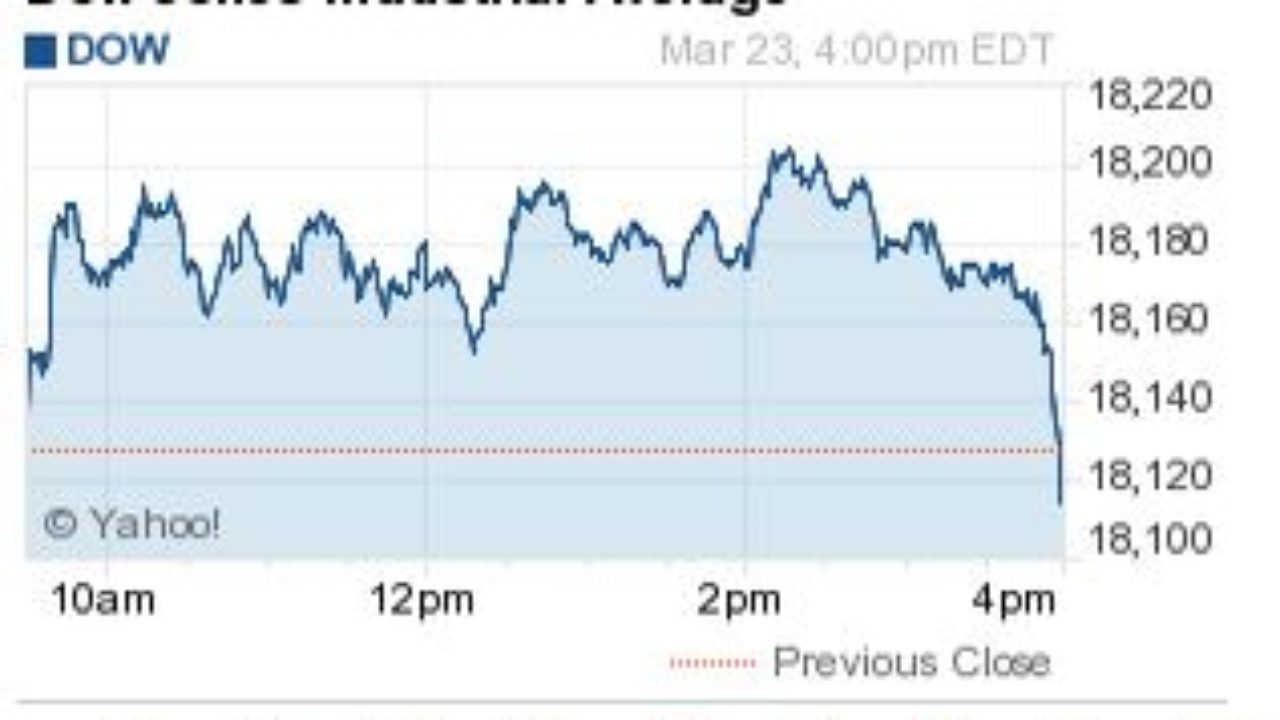
Seeing the Dow in green or red on your smartphone screen is one thing; understanding what it means for your bank account is another. It is easy to get caught up in the “noise” of daily trading, but financial literacy requires a more measured perspective.
The Difference Between Price Action and Intrinsic Value
Daily fluctuations in the Dow represent “price action”—the immediate consensus of buyers and sellers. However, the “intrinsic value” of the companies within the index does not change as rapidly as the ticker suggests. A 1% drop in the Dow today doesn’t mean the 30 largest companies in America are suddenly 1% less valuable in terms of their assets and long-term potential. Successful investors distinguish between market sentiment (how people feel) and fundamental value (how the business is performing).
Why You Should Not Panic Over Daily Fluctuations
For the average person saving for retirement or a home, the daily movement of the Dow is largely irrelevant to their long-term goals. The “Money” niche is often dominated by talk of “market timing,” but history shows that “time in the market” is a far more reliable strategy. Panic selling during a Dow downturn is one of the most common ways investors lose wealth. By understanding that volatility is a feature, not a bug, of the stock market, you can maintain a disciplined approach to investing, utilizing strategies like dollar-cost averaging to build wealth over decades rather than days.
Tools and Strategies for Modern Investors
In the digital age, tracking the Dow and managing your investments has never been easier. However, the abundance of information requires a strategy to filter out the essential from the trivial.
Top Financial Tools for Real-Time Tracking
To stay informed, investors use a variety of tools. Platforms like Bloomberg and Reuters provide deep institutional analysis, while apps like Yahoo Finance, CNBC, and Morningstar offer user-friendly interfaces for tracking the Dow in real-time. For those more hands-on, brokerage platforms like Fidelity, Charles Schwab, or Vanguard provide not only the “what” of market movements but also the “why” through integrated research reports. Utilizing these tools allows you to look past the headline number and see which specific sectors are driving the day’s performance.
Passive vs. Active Investing via the Dow
If you want your finances to mirror the performance of the Dow, you don’t have to buy all 30 stocks individually. Exchange-Traded Funds (ETFs) like the SPDR Dow Jones Industrial Average ETF Trust (ticker: DIA) allow investors to buy a “piece” of the entire index. This is a form of passive investing that offers diversification and low fees. On the other hand, active investors might use the Dow as a starting point, looking for “dogs of the Dow”—the highest-yielding stocks in the index—as a specific value-investing strategy. Choosing between these approaches depends on your risk tolerance and the amount of time you can dedicate to managing your portfolio.
The Dow in the Broader Economic Context
While “How’s the Dow doing?” is the classic question, it is important to remember that the Dow is only one part of a larger financial ecosystem. To truly understand your financial standing, you must look at the Dow in relation to other benchmarks.
Dow vs. S&P 500: Which One Matters More?
While the Dow is the most famous index, many financial professionals consider the S&P 500 to be a more accurate representation of the overall market because it includes 500 companies and is market-cap weighted. Often, the Dow might be “up” while the Nasdaq (which is tech-heavy) is “down.” This divergence tells a story: perhaps investors are rotating out of risky tech stocks and into stable, “old economy” industrial stocks. By comparing the Dow’s performance today against the S&P 500 and the Nasdaq, you can gain a clearer picture of where the “smart money” is moving.

Building a Resilient Portfolio Beyond the Index
Ultimately, your personal financial health shouldn’t depend solely on 30 companies. A resilient portfolio includes a mix of large-cap stocks (like those in the Dow), small-cap stocks, international equities, and fixed-income assets like bonds. While the Dow is an excellent barometer for the sentiment of American big business, a diversified strategy ensures that a bad day for the Dow isn’t necessarily a bad day for your entire financial future.
In conclusion, when you ask “How’s the Dow doing today?”, you are tapping into a century-old tradition of gauging economic progress. By looking beyond the daily points and percentages, and understanding the underlying economic drivers and investment principles, you can turn a simple news headline into a powerful tool for building and protecting your wealth. Whether the Dow is soaring to new heights or undergoing a correction, the informed investor remains calm, focused on the long-term horizon, and always ready to adapt to the ever-changing landscape of the financial world.
aViewFromTheCave is a participant in the Amazon Services LLC Associates Program, an affiliate advertising program designed to provide a means for sites to earn advertising fees by advertising and linking to Amazon.com. Amazon, the Amazon logo, AmazonSupply, and the AmazonSupply logo are trademarks of Amazon.com, Inc. or its affiliates. As an Amazon Associate we earn affiliate commissions from qualifying purchases.