
Bank stocks are integral to the global economy, serving as barometers for financial health and market sentiment. When shares of these financial behemoths experience a downturn, it often signals a confluence of macroeconomic pressures, sector-specific challenges, and shifts in investor confidence. Understanding the underlying reasons behind this decline is crucial for investors navigating the complex landscape of the financial markets. Currently, several powerful forces are converging to create a challenging environment for the banking sector, leading to observable downward pressure on their stock valuations.
Macroeconomic Headwinds Weighing on the Sector
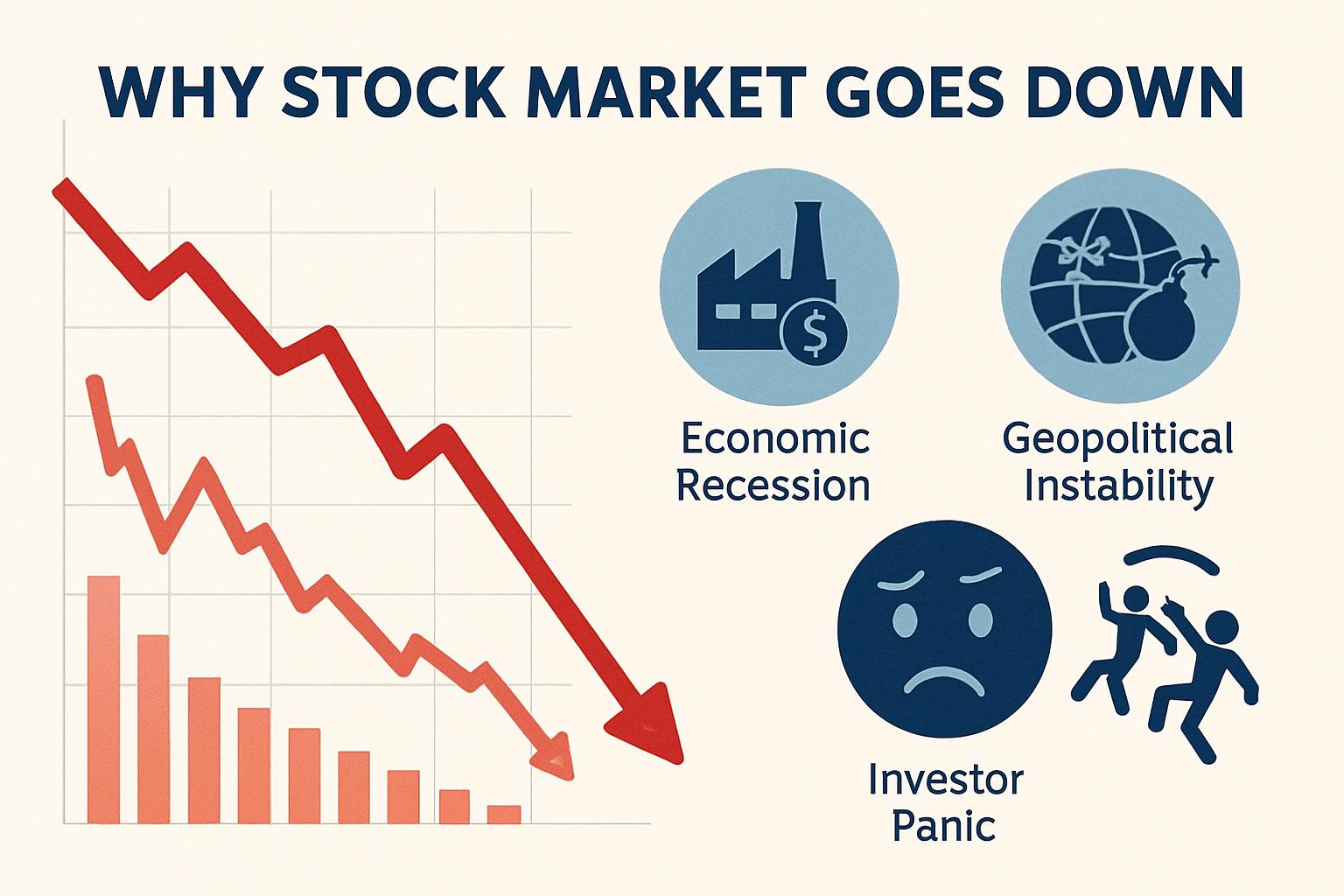
The performance of bank stocks is intrinsically linked to the broader economic environment. When the macroeconomic picture darkens, financial institutions often find themselves at the forefront of investor pessimism. A primary concern revolves around the persistent threat of inflation, which central banks globally have been aggressively combating through a series of interest rate hikes. While higher rates might initially seem beneficial for banks by increasing the revenue generated from lending, the rapid pace and magnitude of these hikes can quickly become a double-edged sword. Furthermore, the specter of a potential economic recession looms large, driven by tighter monetary policies and the erosion of consumer purchasing power. Such an environment typically leads to reduced demand for credit, increased loan defaults, and a general slowdown in business activity, all of which directly impair bank profitability and asset quality. Geopolitical instabilities, such as ongoing conflicts or trade disputes, also contribute to market volatility and investor uncertainty, often causing a flight to safer assets away from cyclical sectors like banking. These overarching economic forces create a difficult operating environment, putting downward pressure on bank stock valuations as investors anticipate weaker future earnings and higher risks.
Interest Rate Environment
The rapid shift from a low-interest-rate regime to a significantly higher one presents a complex challenge for banks. Initially, rising rates can boost net interest income (NII), the difference between what banks earn on loans and what they pay on deposits, as loan rates adjust upwards faster than deposit rates. However, this benefit is not indefinite. As rates continue to climb, the risk of deposit outflows increases, with customers seeking higher yields elsewhere, such as money market funds or government bonds. This phenomenon, known as deposit beta, indicates how quickly banks must raise deposit rates to retain funds. A higher deposit beta can compress NII margins. Moreover, prolonged high rates can dampen loan demand across various segments, including mortgages, auto loans, and corporate lending, as borrowing becomes more expensive. This reduction in loan origination volume directly impacts a bank’s ability to grow its interest-earning assets, further constraining revenue growth. The yield curve inversion, where short-term rates exceed long-term rates, is another critical indicator that often precedes economic downturns and signals difficult times ahead for banks, as their business model thrives on borrowing short and lending long.
Inflationary Pressures and Recession Fears
Inflationary pressures directly impact banks through several channels. While rising prices increase the cost of operations for banks themselves, a more significant concern is how inflation erodes consumer and business purchasing power. This erosion can lead to decreased economic activity, reducing the demand for new loans and potentially increasing the likelihood of defaults on existing ones. Consumers struggling with higher living costs might prioritize essential spending over debt repayment, leading to an uptick in non-performing loans (NPLs). For businesses, high inflation coupled with rising interest rates makes capital expenditure and expansion plans less viable, further slowing down lending activity. The aggressive monetary policy measures employed to curb inflation often elevate the risk of a recession. In a recessionary environment, unemployment rises, consumer spending falls, and corporate profits decline. These conditions directly translate into higher credit losses for banks, as more borrowers struggle to meet their financial obligations. Investors, anticipating these challenges, often de-risk their portfolios by selling off bank stocks, which are perceived as highly cyclical and vulnerable during economic downturns.
Sector-Specific Challenges and Regulatory Scrutiny
Beyond the broad economic trends, the banking sector faces its own unique set of challenges that contribute to the downward pressure on stock prices. These issues often relate to the inherent business model of banking, evolving competitive landscapes, and the ever-present hand of regulatory oversight.
Net Interest Margin Compression
As discussed, while initial rate hikes can expand Net Interest Margin (NIM), sustained high rates, particularly when coupled with intense competition for deposits, can lead to NIM compression. Banks are increasingly pressured to offer more competitive rates on deposits to prevent funds from flowing to alternative investments that yield higher returns. This pressure is amplified by the ease with which customers can now switch banks or move funds digitally. Furthermore, the composition of bank balance sheets plays a crucial role. Banks with a higher proportion of fixed-rate loans (like long-term mortgages originated when rates were lower) may see their asset yields lag behind their funding costs as rates rise, further squeezing NIM. The flattening or inversion of the yield curve also exacerbates this issue, as it diminishes the profitability of traditional “borrow short, lend long” banking activities. Analysts closely watch NIM trends, and any signs of contraction typically lead to negative revisions in earnings forecasts, prompting investors to re-evaluate bank stock valuations downwards.
Loan Growth Deceleration
A robust economy typically fuels demand for credit, driving loan growth across various categories – consumer, commercial, and real estate. However, in the current environment characterized by high interest rates, inflation, and recession fears, loan growth has begun to decelerate significantly. Businesses are postponing expansion plans due to higher borrowing costs and uncertain economic outlooks, leading to a slowdown in commercial and industrial lending. Similarly, the housing market has cooled considerably as mortgage rates have surged, deterring potential homebuyers and refinancing activity. Consumer loan growth, while still present in some segments, is also slowing as consumers become more cautious with discretionary spending and take on less new debt. For banks, lending is a core revenue driver, and a slowdown in this area directly translates to weaker earnings potential. Investors react negatively to decelerating loan pipelines, viewing it as a sign of weakening future profitability and reduced opportunities for asset expansion, thereby contributing to declining stock prices.
Increased Capital Requirements and Stress Tests
Following the 2008 financial crisis, regulatory bodies globally have implemented more stringent capital requirements and conducted rigorous stress tests to ensure the resilience of the banking system. While these measures are vital for financial stability, they can also impose significant costs on banks. Meeting higher capital adequacy ratios often means retaining more earnings or issuing new equity, which can dilute shareholder value. Stress tests, designed to assess a bank’s ability to withstand severe economic shocks, can force banks to adjust their lending practices, reduce riskier assets, or limit shareholder distributions (dividends and share buybacks) if their capital buffers are deemed insufficient. Recent proposals for even stricter capital rules, such as those related to Basel III endgame reforms, create further uncertainty and potential headwinds for bank profitability. The market often interprets increased regulatory burdens as constraints on future earnings and growth, leading to downward pressure on stock valuations as investors price in higher compliance costs and reduced flexibility.
The Impact of Changing Consumer Behavior and Digital Transformation
The banking industry is in the midst of a profound transformation driven by technological advancements and evolving customer expectations. These shifts, while offering long-term opportunities, also present immediate challenges that can impact bank stock performance.
Deposit Flight and Liquidity Concerns

One of the most immediate challenges in a rising interest rate environment is the risk of deposit flight. As interest rates on savings accounts and checking accounts lag behind market rates, customers, especially those with larger balances, are increasingly inclined to move their money to higher-yielding alternatives. This can include money market funds, Treasury bills, or even rival banks offering more competitive rates. The ease of digital banking facilitates these transfers, making deposit migration faster and more widespread than in previous cycles. For banks, deposits are a crucial, low-cost source of funding. A significant outflow of deposits can force banks to seek more expensive wholesale funding, thereby increasing their cost of capital and putting pressure on profitability. Concerns about deposit stability and liquidity can quickly erode investor confidence, as seen in recent regional banking stresses, leading to sharp declines in stock prices as investors question the health and funding stability of financial institutions.
Competition from Fintech and Neobanks
The traditional banking model faces increasing competition from agile fintech companies and neobanks. These digital-first entities often leverage advanced technology to offer more seamless user experiences, specialized financial products, and sometimes more competitive rates without the overhead of physical branch networks. While many fintechs collaborate with traditional banks, others directly compete for customers in areas like payments, lending, and investment services. This competition forces established banks to invest heavily in their own digital transformation, which requires significant capital expenditure and can impact short-term profitability. The threat of disintermediation, where traditional banks lose direct customer relationships to these newer players, is a long-term concern that can weigh on investor sentiment. The market may perceive established banks as slow to adapt or at a disadvantage in attracting digitally native generations, leading to lower valuations compared to faster-growing tech-enabled financial platforms.
Mortgage Market Volatility
The mortgage market is a significant component of many banks’ lending portfolios and a key driver of non-interest income through origination fees and servicing. The dramatic increase in interest rates over the past year has severely impacted mortgage activity. Higher rates have led to a sharp decline in mortgage originations, as fewer people can afford to buy homes and refinancing activity has all but dried up. This reduction in volume directly hits banks’ fee income from mortgage services. Furthermore, the value of mortgage-backed securities held on bank balance sheets can fluctuate with interest rate changes, potentially leading to unrealized losses. While these may not immediately impact regulatory capital for held-to-maturity securities, they can still create investor anxiety about the underlying health of a bank’s asset portfolio. A highly volatile and depressed mortgage market reduces a key revenue stream and adds uncertainty to asset valuations, contributing to the negative sentiment surrounding bank stocks.
Investor Sentiment and Market Dynamics
Beyond fundamentals, investor sentiment and broader market dynamics play a critical role in determining bank stock performance. Perceptions of risk, future growth prospects, and relative valuations heavily influence buying and selling decisions.
Risk Aversion and Flight to Safety
In periods of economic uncertainty, geopolitical instability, or heightened financial market stress, investors typically become more risk-averse. This often leads to a “flight to safety,” where capital moves out of riskier assets, such as cyclical stocks like banks, and into perceived safe havens like government bonds or defensive sectors. The banking sector, being intrinsically linked to the health of the economy, is often among the first to see outflows when recession fears mount or when there are concerns about credit quality deteriorating. Even if a specific bank’s fundamentals remain strong, broad market sentiment can drag down its stock price. Recent bank failures and liquidity scares, though mostly contained, have amplified this risk aversion, making investors exceptionally wary of any signs of weakness in the financial system. This cautious stance leads to lower valuations for the sector as a whole, irrespective of individual bank performance.
Valuation Concerns and Future Earnings Outlook
Bank stocks are often valued based on their earnings potential, dividend payouts, and book value. When the outlook for the economy is uncertain, and challenges like NIM compression, decelerating loan growth, and increased regulatory costs are present, analysts tend to revise down their earnings forecasts for banks. Lower earnings forecasts directly translate into lower price targets from analysts, prompting investors to adjust their valuations downwards. Furthermore, if investors perceive higher risks in the banking sector, they demand a higher risk premium, meaning they are willing to pay less for each dollar of earnings or book value. This leads to a compression in valuation multiples (e.g., Price-to-Earnings, Price-to-Book). Concerns about the sustainability of dividend payouts, especially if earnings come under pressure or regulatory bodies encourage dividend restraint, can also deter income-focused investors, further contributing to selling pressure. The combination of reduced earnings expectations and a more cautious valuation approach from the market collectively drives bank stock prices lower.
Navigating the Uncertainty: What Investors Should Consider
For investors with exposure to the banking sector, or those considering it, understanding the current landscape is crucial. While challenges persist, the banking industry remains a cornerstone of the economy, and differentiating between sound institutions and those more vulnerable is key.
Diversification and Long-Term Perspective
Given the inherent cyclicality of the banking sector and its sensitivity to macroeconomic factors, diversification remains a fundamental principle for investors. Over-concentration in bank stocks, especially during periods of uncertainty, can expose a portfolio to significant volatility. Instead, a balanced portfolio that includes various asset classes, sectors, and geographic regions can help mitigate risks. Furthermore, adopting a long-term investment horizon is often beneficial when it comes to banking. While short-term fluctuations are common, well-managed banks with strong franchises tend to recover and grow over full economic cycles. Investors focused on long-term capital appreciation and dividend income should look beyond daily headlines and assess the intrinsic value of these institutions over several years.
Focus on Fundamental Strength
Not all banks are created equal, and during challenging times, the divergence between strong and weak performers becomes more pronounced. Investors should scrutinize key fundamental metrics such as capital adequacy ratios (CET1), asset quality (non-performing loan ratios, loan loss provisions), deposit stability (deposit mix, cost of deposits), efficiency ratios, and management quality. Banks with robust balance sheets, diversified revenue streams, conservative lending practices, and strong liquidity positions are better positioned to weather economic storms. Institutions that have effectively managed their interest rate risk exposure and have a sticky, low-cost deposit base are also likely to outperform. Focusing on banks with a proven track record of navigating various economic cycles and maintaining consistent profitability is a prudent approach.

Monitoring Key Economic Indicators
Staying informed about the broader economic environment is paramount for bank stock investors. Closely monitoring indicators such as inflation rates, central bank interest rate policies, unemployment figures, GDP growth, consumer spending data, and housing market trends can provide valuable insights into the potential trajectory of the banking sector. Changes in these indicators directly influence loan demand, credit quality, and bank profitability. Additionally, keeping an eye on regulatory developments, especially concerning capital requirements and stress test results, is important. A proactive approach to understanding these macroeconomic and regulatory shifts allows investors to anticipate potential impacts on bank earnings and adjust their investment strategies accordingly, rather than reacting solely to market movements.
aViewFromTheCave is a participant in the Amazon Services LLC Associates Program, an affiliate advertising program designed to provide a means for sites to earn advertising fees by advertising and linking to Amazon.com. Amazon, the Amazon logo, AmazonSupply, and the AmazonSupply logo are trademarks of Amazon.com, Inc. or its affiliates. As an Amazon Associate we earn affiliate commissions from qualifying purchases.