
For anyone engaged in the financial world, from seasoned investors to curious beginners, understanding when the market opens and, crucially, when it closes, is fundamental. It’s not merely a time stamp; it dictates when you can execute trades, influences price volatility, and shapes strategic decisions. The concept of “market close” is far more nuanced than a simple closing bell, encompassing extended trading hours, global market interplay, and a host of factors that impact an investor’s day-to-day operations and long-term planning.
In a globalized economy, financial markets operate almost continuously around the clock, with different regions taking the lead as the day progresses. Yet, for individual exchanges, the “close” signifies an important transition—a pause in regular trading that carries significant implications for order fulfillment, price discovery, and risk management. This guide will delve deep into the intricacies of market closing times, exploring standard hours, extended sessions, special circumstances, and the strategic considerations every investor should be aware of to navigate the markets effectively and professionally.
Understanding Standard Market Operating Hours
The heartbeat of traditional stock market activity is primarily defined by the regular trading hours of major exchanges. These hours are the busiest, most liquid, and often the most transparent periods for investors to buy and sell securities.
Major Stock Exchanges: NYSE and Nasdaq
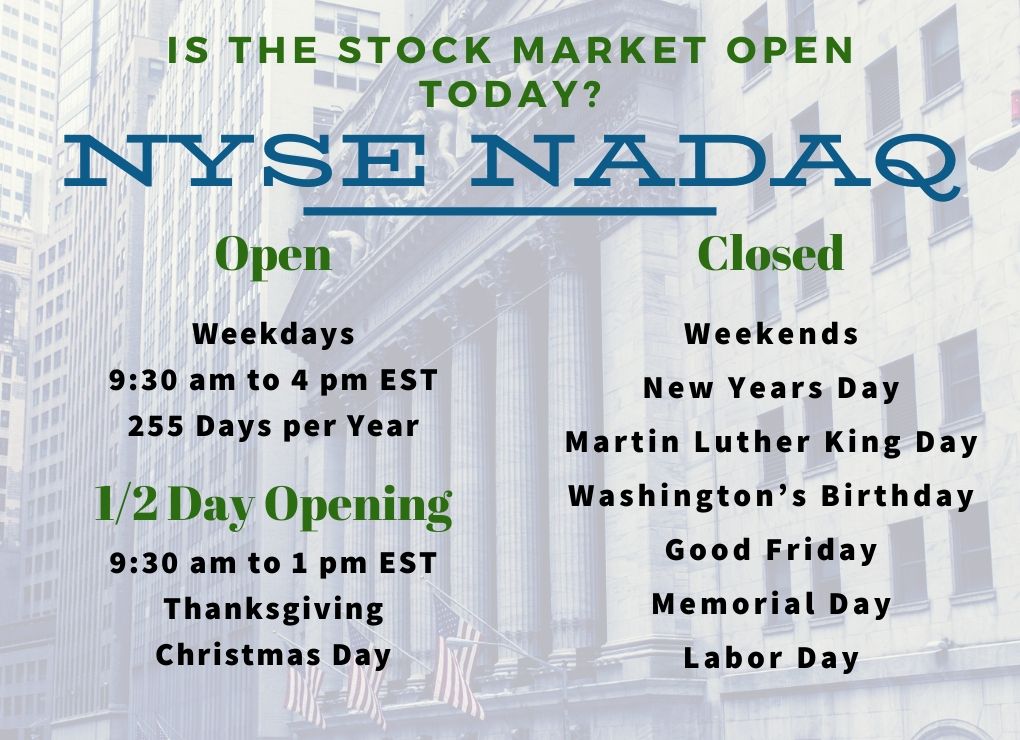
In the United States, the two most prominent stock exchanges, the New York Stock Exchange (NYSE) and the Nasdaq Stock Market, operate on a consistent schedule. Their standard trading hours are from 9:30 AM Eastern Time (ET) to 4:00 PM ET, Monday through Friday. During this 6.5-hour window, the vast majority of stock trading occurs. This period is characterized by high liquidity, tight bid-ask spreads, and typically represents the official closing price used for daily valuation and performance metrics. These hours are meticulously planned to align with typical business operating hours, allowing companies to release news and investors to react within a structured framework.
The activity within these hours is dynamic, often seeing surges in volume at the open (influenced by overnight news and pre-market activity) and the close (as institutional investors adjust portfolios and execute large orders). Understanding this core window is crucial for individual investors to gauge market sentiment and execute trades with optimal pricing and liquidity.
Global Markets: A 24/7 World
While the NYSE and Nasdaq adhere to their specific 9:30 AM to 4:00 PM ET schedule, the concept of a “global market” truly operates on a near 24/7 basis. As one major market closes, another is typically opening, creating a continuous flow of trading activity across different time zones and continents. For instance, when the U.S. markets are winding down, Asian markets like the Tokyo Stock Exchange (TSE) or the Shanghai Stock Exchange (SSE) are preparing to open or are already in full swing. Similarly, European markets such as the London Stock Exchange (LSE) or Euronext (covering Paris, Amsterdam, Brussels, etc.) bridge the gap between Asian and American trading sessions.
This interconnectedness means that news and economic events occurring during U.S. market off-hours can significantly impact how U.S. stocks open the next day, reflecting the sentiment carried over from global trading. For investors with international portfolios or those interested in global macro trends, understanding these staggered closing and opening times is vital for a comprehensive market perspective. It underscores that while specific exchanges have defined closing bells, the overall financial ecosystem never truly sleeps.
What “Close” Truly Means for Investors
Beyond simply marking the end of the trading day, “market close” holds profound significance for investors. Firstly, it finalizes the official closing price of a security, which is critical for portfolio valuation, performance calculation, and often used as a benchmark for various financial products. Secondly, it marks the deadline for most regular market orders to be executed. Any market orders placed after 4:00 PM ET will typically be queued for the next trading day’s open, subject to overnight price movements.
For institutional investors and professional traders, the close is a critical period for portfolio rebalancing, managing risk exposures, and settling trades. For all participants, it’s a time to reflect on the day’s events, analyze market movements, and prepare strategies for the upcoming session. The close also initiates the period when companies often release critical information, such as earnings reports or corporate announcements, knowing that investors will have time to digest the news before the next trading day’s open. This strategic timing influences pre-market and after-hours trading significantly.
Beyond the Bell: Extended Trading Hours and Their Nuances
While 9:30 AM to 4:00 PM ET defines the regular trading session, the markets continue to hum before and after these hours through “extended trading.” These periods offer opportunities but also come with distinct characteristics and risks that investors must understand.
Pre-Market Trading
Pre-market trading typically occurs between 4:00 AM ET and 9:30 AM ET for U.S. stock exchanges. This session allows participants to react to overnight news, corporate announcements made after the previous day’s close, or global market movements before the main exchange opens. For example, if a major earnings report is released at 7:00 AM ET, investors can begin trading shares based on that information in the pre-market.
However, pre-market trading is generally characterized by lower liquidity compared to regular hours. Fewer buyers and sellers mean that spreads between bid and ask prices can be wider, and even small orders can have a more significant impact on a stock’s price. This lower liquidity often leads to increased volatility. While it offers an early opportunity to capitalize on news, it also carries higher risk due to potentially erratic price movements and less efficient order execution. It is largely dominated by institutional investors and professional traders who have access to advanced trading platforms and tools.
After-Hours Trading
Similar to pre-market, after-hours trading extends the trading day, typically running from 4:00 PM ET to 8:00 PM ET. This session allows investors to react to news that breaks immediately after the market close, such as late-day earnings releases, analyst downgrades/upgrades, or political announcements. Many significant market-moving events, particularly quarterly earnings reports, are intentionally scheduled for after-hours to allow companies to disseminate information without disrupting live trading and give investors time to process.
Like pre-market, after-hours trading also suffers from reduced liquidity and increased volatility. Investors need to be aware that the prices seen in after-hours trading may not accurately reflect where a stock will open the next day. The relatively thinner order books mean that significant price swings can occur on lower trading volumes. While extended hours offer flexibility, they demand a keen awareness of these market characteristics and are generally more suited for experienced traders.
The Role of Electronic Communication Networks (ECNs)
Extended hours trading is primarily facilitated by Electronic Communication Networks (ECNs). Unlike the traditional open outcry system or even the market maker model of the main exchanges, ECNs are automated systems that match buy and sell orders electronically. They aggregate orders from various participants and execute trades when a match is found.
ECNs allow investors to place orders and receive executions outside of standard exchange hours. However, it’s important to note that not all brokers offer full access to all ECNs, and some may have limitations on the types of orders or the stocks that can be traded during extended hours. The fragmentation of liquidity across multiple ECNs during extended hours contributes to the wider spreads and increased volatility, as the consolidated view of supply and demand found during regular market hours is less prevalent. Understanding how ECNs operate is key to successfully navigating the less structured environment of extended trading.
Factors Influencing Market Closure and Special Schedules
While regular trading hours are a constant, there are several instances where market schedules deviate. Understanding these exceptions is crucial for every investor to avoid surprises and plan accordingly.
Public Holidays and Exchange Closures
Financial markets, particularly stock exchanges, observe a number of public holidays throughout the year, during which they remain closed. In the U.S., these typically include New Year’s Day, Martin Luther King, Jr. Day, Presidents’ Day, Good Friday, Memorial Day, Juneteenth, Independence Day, Labor Day, Thanksgiving Day, and Christmas Day. On these days, no trading occurs, and all market activity ceases.
Additionally, exchanges may have early closures on days preceding or following certain holidays, such as the day after Thanksgiving (Black Friday) or Christmas Eve. On these days, trading might conclude at 1:00 PM ET instead of 4:00 PM ET. It is paramount for investors to consult the official holiday schedules published by the NYSE and Nasdaq well in advance to avoid any missteps in order placement or portfolio management. These closures can impact liquidity leading up to the holiday and influence how investors position themselves.

Early Closures and Market Halts
Beyond scheduled holidays, markets can experience early closures or temporary trading halts under specific circumstances. Early closures might be announced due to unforeseen events, though this is rare. More common are market-wide trading halts, often triggered by “circuit breakers.” Circuit breakers are pre-defined thresholds designed to slow down trading during periods of extreme market volatility. If the S&P 500 index falls by a certain percentage (e.g., 7%, 13%, or 20%) within a single trading day, trading across all U.S. stock exchanges can be halted for specific durations (15 minutes or until the end of the trading day).
These halts are intended to give investors a moment to absorb information, reduce panic selling, and restore order to the market. Individual stocks can also be halted for various reasons, such as pending news announcements (T1 halt), regulatory concerns (T2 halt), or significant price fluctuations. While these are not “market close” events in the traditional sense, they represent interruptions to regular trading that investors must be prepared for.
Futures, Options, and Other Asset Classes
It’s important to remember that not all financial instruments adhere to the same 9:30 AM to 4:00 PM ET schedule as traditional stocks.
- Futures and Options: These derivatives often have much longer trading hours, some extending nearly 24 hours a day, five days a week, with brief breaks. For example, many equity index futures contracts trade from Sunday evening well into Friday afternoon with minimal interruption.
- Forex (Foreign Exchange): The forex market is truly a 24-hour market, opening on Sunday evening and closing on Friday evening ET. Trading seamlessly shifts from one major financial center to another (Sydney, Tokyo, London, New York).
- Cryptocurrencies: Most cryptocurrency exchanges operate 24 hours a day, 7 days a week, with no official closing times, reflecting the decentralized nature of these digital assets.
- Bonds: The bond market typically closes earlier than the stock market, often at 3:00 PM ET, and may have different holiday schedules.
Investors dealing with diverse asset classes must independently verify the trading hours for each specific market, as they can vary significantly and impact strategy, liquidity, and risk exposure.
Strategic Implications of Market Close for Investors
The market close isn’t just a time indicator; it carries significant strategic weight for how investors manage their portfolios, execute trades, and mitigate risk.
Order Placement Strategies
The timing of order placement around market close can greatly influence execution price and certainty.
- Market Orders: Placing a market order just before the close guarantees execution but not a specific price. During periods of high volatility near the close, the executed price might differ significantly from the last quoted price.
- Limit Orders: A limit order, conversely, specifies the maximum price you’re willing to pay or the minimum you’ll accept. If your limit price isn’t met by the close, the order may remain unfilled or expire, depending on its duration (e.g., “Good-Till-Cancelled” or “Day” order).
- Good-Till-Cancelled (GTC) Orders: These orders remain active until they are executed or cancelled by the investor, potentially spanning multiple trading days and therefore surviving market close. However, they need to be reviewed periodically.
Investors often use “Market-on-Close” (MOC) or “Limit-on-Close” (LOC) orders, especially institutions, to ensure execution at or near the closing price. Understanding these order types and their implications is crucial for precise trade management around the closing bell.
Managing Risk and Volatility
Market close introduces unique risk factors. Holding positions overnight or over a weekend exposes investors to “gap risk,” where a stock’s opening price the next day or after a weekend is significantly different from its previous closing price. This can be due to news breaking during off-hours, global market movements, or major economic data releases.
- Overnight Risk: Companies frequently release earnings reports after market close, leading to sharp price movements in after-hours trading that can carry over into the next day’s open.
- Weekend Effect: Some studies suggest a slight tendency for markets to open lower on Monday than they closed on Friday, though this effect is debated and not consistently reliable. Nevertheless, major news events or geopolitical developments over a weekend can dramatically impact Monday’s opening.
Astute investors carefully weigh the potential rewards against these overnight and weekend risks. Some might choose to reduce position sizes or close out highly volatile positions before the close, while others might use options strategies to hedge against potential adverse movements.
The Importance of Staying Informed
In a 24/7 global financial landscape, staying informed is paramount. Investors must:
- Monitor Financial News: Keep an eye on major financial news outlets for headlines that break after market close, as these will likely influence the next day’s open.
- Check Exchange Calendars: Regularly consult the official websites of the exchanges where you trade for holiday schedules and any special announcements.
- Understand Time Zones: Especially for international investors or those trading global assets, a clear understanding of time zones is critical to correctly interpret and react to market closing times worldwide.
- Develop a Routine: Establishing a routine for reviewing portfolios and market news before the open and after the close can significantly enhance decision-making and risk management.
Practical Tools and Resources for Tracking Market Hours
Navigating the complexities of market hours is made easier with a plethora of tools and resources available to investors. Utilizing these can ensure you’re always up-to-date and never caught off guard.
Financial News Websites and Apps
Leading financial news providers are indispensable for tracking real-time market status, including open and close times, and holiday schedules.
- Bloomberg, Reuters, The Wall Street Journal, Financial Times: These provide comprehensive market coverage, often displaying clear indicators of whether major global markets are open or closed. They also publish detailed calendars for holiday closures.
- Yahoo Finance, Investing.com, Google Finance: These widely accessible platforms offer real-time quotes and market status, often showing “Market Open” or “Market Closed” prominently next to stock tickers. They are excellent resources for quickly checking current trading hours for specific exchanges or securities.
- Dedicated Market Hour Apps: Many apps specifically focus on global market hours, providing countdowns to opens and closes, and customizable alerts for various exchanges.
Subscribing to their newsletters or utilizing their mobile apps can keep you informed on the go, ensuring you receive timely updates about any special market announcements or schedule changes.
Brokerage Platforms
Your chosen brokerage platform is often your primary interface with the markets and a vital source of information regarding trading hours.
- Clear Market Status Indicators: Most reputable brokerage platforms clearly display the current trading status of markets, indicating whether it’s regular hours, pre-market, after-hours, or closed.
- Extended Hours Trading Options: Brokerages that offer pre-market and after-hours trading will typically have specific settings or order types to facilitate these trades, often with disclaimers about the associated risks.
- Holiday Schedules and Announcements: Brokerage firms usually communicate upcoming holiday closures or early closing times to their clients through messages on their platform, email notifications, or dedicated sections on their websites.
- Alerts and Notifications: Many platforms allow you to set up custom alerts for market open/close times or for specific news events that might impact trading hours.
Familiarizing yourself with the features and notifications provided by your own brokerage platform is essential for effective trade management around market closing times.
Exchange Official Websites
For the most accurate and authoritative information on market hours, holiday schedules, and any unforeseen changes, the official websites of the stock exchanges themselves are the ultimate source.
- NYSE.com and Nasdaq.com: These sites publish detailed annual calendars outlining all trading holidays, early closures, and other important operational dates. They also provide information on circuit breaker thresholds and any emergency market announcements.
- Other Global Exchange Websites: For international investors, checking the websites of the London Stock Exchange (LSE.co.uk), Tokyo Stock Exchange (Jpx.co.jp), or Euronext (Euronext.com), among others, will provide the definitive schedules for those respective markets.
Regularly consulting these official sources ensures that investors are always working with the most up-to-date and precise information, which is critical for compliance and strategic planning.
In conclusion, “when is market close” is far more than a simple query; it’s a gateway to understanding the intricate rhythm of financial markets. From the structured cadence of regular trading hours to the extended dance of pre- and after-hours sessions, and the necessary pauses for holidays or extreme volatility, each closing bell signifies a crucial moment for investors. Mastering these dynamics—coupled with diligent information gathering and strategic planning—empowers investors to navigate the markets with confidence, optimize their trade executions, and effectively manage their financial risk in an ever-evolving global economy.
aViewFromTheCave is a participant in the Amazon Services LLC Associates Program, an affiliate advertising program designed to provide a means for sites to earn advertising fees by advertising and linking to Amazon.com. Amazon, the Amazon logo, AmazonSupply, and the AmazonSupply logo are trademarks of Amazon.com, Inc. or its affiliates. As an Amazon Associate we earn affiliate commissions from qualifying purchases.