
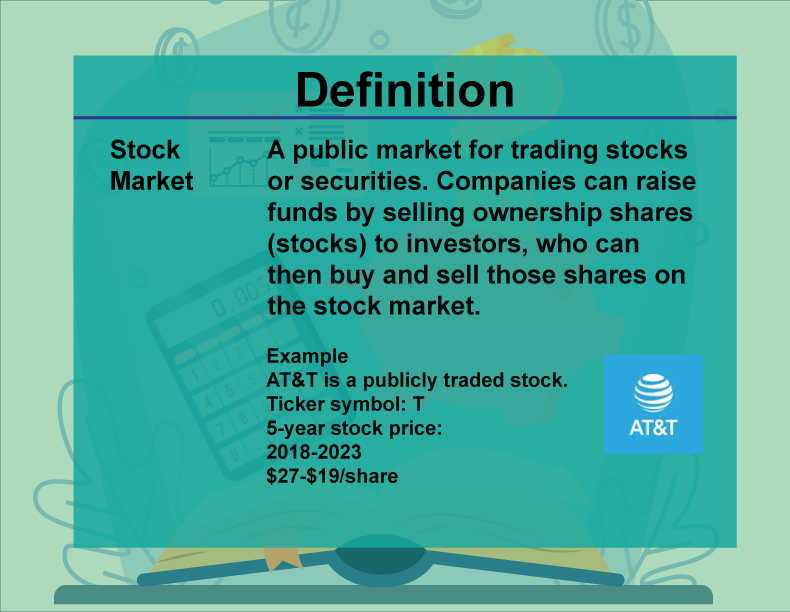
In the intricate world of finance, few terms are as fundamental yet as often misunderstood as “stock.” Far from being a mere financial instrument, stock represents a cornerstone of modern capitalism, a mechanism through which companies fuel their growth and individuals build wealth. At its simplest, a stock, also known as a share, represents a fraction of ownership in a company. When you purchase a company’s stock, you become a shareholder, meaning you own a tiny piece of that business. This seemingly straightforward concept carries profound implications, linking the fate of individual investors to the fortunes of corporations and, by extension, the broader economy. Understanding stock is not just about memorizing a definition; it’s about grasping the dynamics of ownership, investment, and capital formation that drive market economies worldwide.

The Core Concept: Ownership and Equity
The essence of stock lies in its representation of ownership. When a company issues stock, it divides its total ownership into individual units, each representing a claim on a portion of the company’s assets and earnings. This foundational principle is what distinguishes stock from other financial instruments like bonds, which represent debt.
Stock as a Unit of Ownership
Imagine a company as a pie. When that company goes public or issues new shares, it’s essentially slicing that pie into many small pieces. Each piece is a share of stock. If a company has one million shares outstanding and you own 1,000 of them, you own 0.1% of that company. This percentage, however small, carries with it certain rights and potential benefits. This ownership stake is not just symbolic; it grants you a proportional claim on the company’s net assets—what remains after all liabilities are paid—and its future earnings. It also means that as the company’s value grows, your proportionate share of that value grows with it.
Equity and Shareholders
The collective term for the ownership interest in a company is “equity.” When a company’s stock is publicly traded, it means its equity is available for purchase by the general public. Those who buy these shares are called “shareholders” or “stockholders.” As shareholders, they are often entitled to certain privileges, which typically include voting rights on key corporate decisions, such as electing the board of directors, approving mergers, or making significant changes to company policy. They also have a residual claim on the company’s earnings and assets. This “residual claim” means that in the event of liquidation, shareholders are paid only after all creditors (like bondholders and banks) have been fully compensated. This position carries both the highest risk and the highest potential for reward among a company’s capital providers.
The Role of Public Companies
While private companies can also have shareholders, the concept of “stock” is most commonly associated with publicly traded companies. These are companies that have offered their shares for sale to the general public on a stock exchange. This process, known as going public, transforms the company from a private entity to one with a broad base of external owners. The shares of public companies can then be bought and sold freely among investors in the secondary market, providing liquidity to shareholders and enabling continuous price discovery based on market demand and company performance.
Why Companies Issue Stock
Companies don’t just issue stock out of altruism; it’s a strategic decision driven by fundamental business needs, primarily the need for capital to fuel growth and operations. Issuing stock is a powerful alternative to taking on debt, offering distinct advantages for companies seeking to expand their horizons.
Raising Capital for Growth
The primary reason a company issues stock is to raise capital. Businesses need money for various purposes: to invest in new projects, expand operations into new markets, conduct research and development, acquire other companies, or simply to strengthen their balance sheet by paying down existing debt. Unlike borrowing money through loans or bonds, which obligates the company to fixed interest payments and eventual repayment of the principal, issuing stock does not create a debt. Instead, it brings in external investors who become part-owners, sharing in the company’s future profits and risks. This equity financing provides a more flexible capital structure, especially for growth-oriented companies that may not yet generate sufficient cash flow to service large debt obligations.
Initial Public Offerings (IPOs)
The most prominent way for a private company to issue stock to the public is through an Initial Public Offering (IPO). This is a monumental event where a company transitions from private ownership to public ownership by offering its shares for the first time on a stock exchange. The IPO process is complex, involving investment banks (underwriters) who help price the shares, market the offering to institutional investors, and facilitate the listing on an exchange. A successful IPO can raise substantial amounts of capital, provide significant liquidity for early investors and founders, and enhance the company’s public profile and credibility.
Secondary Offerings
After an IPO, a publicly traded company may decide to issue additional shares to the public through a “secondary offering.” This is typically done for the same reasons as an IPO—to raise more capital for further expansion, acquisitions, or other strategic initiatives. Unlike an IPO, which is the first time a company sells shares to the public, secondary offerings occur when the company is already listed on an exchange. These offerings can dilute the ownership percentage of existing shareholders because the total number of shares outstanding increases.
Liquidity for Founders and Early Investors
Beyond funding growth, issuing stock, particularly through an IPO, provides a crucial exit strategy and liquidity for a company’s founders, employees, and early-stage investors (like venture capitalists). These individuals often hold significant equity stakes that are illiquid while the company is private. Going public allows them to sell some of their shares on the open market, monetizing their investment and realizing the returns on their risk-taking and hard work. This ability to “cash out” is a significant incentive for entrepreneurs and venture capitalists to take on the risks associated with building new businesses.
Types of Stock
While the fundamental definition of stock as ownership remains constant, the financial market offers different types of stock, each with unique characteristics that appeal to various investors and serve distinct corporate purposes. The two most prevalent categories are common stock and preferred stock.
Common Stock
Common stock is the most prevalent type of stock issued by companies and is what most people refer to when they talk about “stocks.” It embodies the purest form of ownership and comes with a blend of rights and risks:
- Voting Rights: Common stockholders typically have voting rights, allowing them to elect the company’s board of directors and vote on major corporate policies. These rights give them a say in the company’s management and strategic direction, albeit often in proportion to the number of shares they own.
- Potential for Higher Capital Appreciation: Common stocks offer the greatest potential for capital gains. If the company performs well and its value increases, the price of its common stock can rise significantly, leading to substantial returns for investors.
- Variable Dividends (if any): Companies may pay out a portion of their profits to common stockholders in the form of dividends. However, these dividends are not guaranteed and can fluctuate based on the company’s financial performance and discretion of the board of directors. Companies often reinvest profits back into the business for growth instead of paying dividends.
- Residual Claim on Assets: In the event of a company’s liquidation, common stockholders have a residual claim on assets. This means they are paid only after all creditors and preferred stockholders have been fully compensated. This position carries the highest risk but also the highest potential reward.
Preferred Stock
Preferred stock is a hybrid security, possessing characteristics of both stocks and bonds. It offers a different risk-reward profile compared to common stock:
- No Voting Rights (Generally): Preferred stockholders typically do not have voting rights, surrendering this control in exchange for other benefits.
- Fixed Dividend Payments: The defining feature of preferred stock is its fixed dividend payment. These dividends are usually paid at a predetermined rate and are guaranteed (or cumulative) before any dividends are paid to common stockholders. This predictability makes preferred stock attractive to income-focused investors.
- Priority Claim on Assets and Dividends: In the hierarchy of payments, preferred stockholders have a priority claim over common stockholders for both dividends and assets in the event of liquidation. This makes preferred stock generally less risky than common stock.
- Behaves More Like a Bond: Due to fixed dividends and priority claims, preferred stock often behaves more like a bond. Its price is more sensitive to interest rate changes than to the company’s operating performance, and it offers less potential for capital appreciation than common stock.
Other Classifications (Briefly)
Beyond common and preferred, stocks can be categorized in other ways based on their characteristics or the companies they represent:
- Growth Stocks: Companies expected to grow earnings and revenue at a faster rate than the overall market.
- Value Stocks: Companies that appear to trade at a lower price relative to their fundamentals (earnings, dividends, sales).
- Income Stocks: Companies that consistently pay high dividends, often mature companies with stable earnings.
- Blue-Chip Stocks: Large, well-established, financially sound companies with a long history of reliable earnings.
- Penny Stocks: Small company stocks that trade at very low prices (typically under $5 per share), often highly speculative.
Why Investors Buy Stock
For individual and institutional investors alike, purchasing stock is a gateway to participating in economic growth and building long-term wealth. The motivations behind stock investment are diverse, ranging from seeking substantial capital gains to generating steady income.
Capital Appreciation
The most common motivation for buying stocks is the potential for capital appreciation. This means buying shares at a certain price and selling them later at a higher price, thereby realizing a profit. Investors often seek out companies they believe have strong growth prospects, innovative products, effective management, or a competitive advantage in their industry. As these companies grow and become more valuable, their stock prices tend to rise, rewarding shareholders. This long-term growth potential is a key driver for wealth accumulation, particularly over decades.
Dividend Income
While not all companies pay dividends, many established and profitable businesses distribute a portion of their earnings to shareholders in the form of regular cash payments. For income-focused investors, particularly retirees or those seeking consistent cash flow, dividend stocks can be a vital component of their portfolio. Dividends can provide a steady stream of income, and some companies even have a history of consistently increasing their dividend payouts over time, offering a hedge against inflation.
Diversification
Stocks play a critical role in a diversified investment portfolio. By combining stocks with other asset classes like bonds, real estate, and commodities, investors can spread their risk and potentially enhance their overall returns. Stocks, particularly common stocks, offer exposure to the growth potential of businesses and the broader economy, which can complement the more stable, income-generating characteristics of bonds. A well-diversified stock portfolio across different industries, geographies, and company sizes can help mitigate company-specific or sector-specific risks.
Inflation Hedge
Historically, stocks have proven to be an effective hedge against inflation over the long term. While inflation erodes the purchasing power of cash and fixed-income investments, company earnings and revenues tend to rise with inflation. As companies increase prices for their goods and services, their profitability can grow, leading to higher stock prices and dividends. This ability to maintain or increase real returns makes stocks an important component for preserving and growing wealth in an inflationary environment.
Participating in Company Success
Beyond the financial returns, many investors are motivated by the desire to own a piece of companies they admire, whose products they use, or whose mission they believe in. Investing in a company’s stock allows individuals to participate directly in its success and share in its journey. This sense of ownership can be particularly gratifying when investing in innovative startups or companies working on solutions to global challenges.
Understanding Stock Performance and Risk
Investing in stocks offers compelling opportunities for growth, but it is also inherently linked to risk. Understanding the factors that influence stock prices and the various risks involved is crucial for any investor.
Factors Influencing Stock Prices
Stock prices are dynamic and influenced by a multitude of interconnected factors:
- Company Performance: The most direct influence is the company’s financial health and performance. Strong earnings growth, increasing revenues, healthy profit margins, effective management, and positive future outlooks typically drive stock prices up. Conversely, poor financial results, scandals, or failed product launches can cause prices to fall.
- Economic Conditions: Broader economic trends significantly impact stock valuations. A strong economy with low unemployment and rising consumer spending generally creates a favorable environment for corporate profits, boosting stock prices. Conversely, recessions, high inflation, or rising interest rates can dampen corporate earnings and investor sentiment.
- Industry Trends: The performance of the industry in which a company operates plays a crucial role. Growth industries (e.g., technology, renewable energy) often see higher stock valuations, while declining or disrupted industries may face headwinds.
- Market Sentiment: Investor psychology, often termed “market sentiment,” can cause short-term fluctuations. Fear, greed, and speculation can lead to irrational buying or selling, sometimes decoupling stock prices from underlying fundamentals.
- Geopolitical Events: International relations, political stability, wars, and global health crises can create uncertainty and impact markets worldwide, affecting stock prices across sectors.
Risks Associated with Stock Investing
While stocks offer potential rewards, they also come with inherent risks:
- Market Volatility and Price Fluctuations: Stock prices can be highly volatile, experiencing significant ups and downs in short periods. Daily or even hourly price changes are common, meaning an investor’s portfolio value can fluctuate considerably.
- Company-Specific Risk (Idiosyncratic Risk): The risk that a specific company’s stock will perform poorly due to factors unique to that company, such as poor management decisions, competitive pressures, product failures, or even bankruptcy.
- Liquidity Risk: For less popular or smaller company stocks, there might not be a large enough market of buyers and sellers, making it difficult to sell shares quickly without impacting the price.
- Inflation Risk: Although stocks can hedge against inflation, persistently high inflation can erode the real returns on investments if stock price growth doesn’t keep pace.
- Systematic Risk (Market Risk): The risk that the entire market or a broad sector of the market will decline, regardless of the individual performance of a company. This risk cannot be eliminated through diversification.
Mitigating Risk through Diversification and Research
Prudent investors employ strategies to mitigate these risks. Diversification, spreading investments across various companies, industries, and asset classes, is paramount to reducing company-specific risk. Thorough research and due diligence are also critical. Understanding a company’s business model, financial statements, competitive landscape, and management team can help investors make informed decisions and avoid speculative pitfalls. Investing with a long-term perspective can also help weather short-term market fluctuations.
How Stock Fits into Your Financial Strategy
Understanding what stock is and why it exists is the first step; the next is recognizing how it integrates into a broader personal financial strategy. Stocks are not a standalone solution but a vital component that, when used wisely, can contribute significantly to achieving long-term financial goals.
Long-Term Growth Vehicle
For most individuals, stocks serve as the primary engine for long-term wealth creation. Historically, over extended periods (decades), the stock market has provided higher returns than other major asset classes, such as bonds or cash. This makes stocks an essential component for goals like retirement planning, funding education, or building a substantial nest egg. The power of compounding, where investment gains generate further gains, is particularly effective with the higher returns potential of equities over time.
Role in a Diversified Portfolio
A healthy financial strategy rarely relies solely on a single asset class. Instead, it advocates for a diversified portfolio that balances different types of investments based on an individual’s risk tolerance, time horizon, and financial goals. Stocks, with their growth potential and higher risk profile, are often balanced with lower-risk, income-generating assets like bonds. This balance helps to smooth out portfolio returns, reducing overall volatility while still providing exposure to market growth. Real estate, commodities, and alternative investments can further enhance diversification.
Investment Vehicles
Investors don’t have to buy individual stocks directly. There are several vehicles that provide exposure to the stock market:
- Individual Stocks: Directly purchasing shares of specific companies. This requires significant research and risk tolerance but offers direct control and potentially higher returns (or losses).
- Mutual Funds: Professionally managed portfolios of stocks (and sometimes other assets) from various companies. They offer diversification and professional management but come with management fees.
- Exchange-Traded Funds (ETFs): Similar to mutual funds but trade like individual stocks on an exchange. Many ETFs track specific market indices (e.g., S&P 500) or sectors, offering instant diversification at a lower cost than many mutual funds.
- Index Funds: A type of mutual fund or ETF designed to track the performance of a specific market index. They offer broad market exposure, low fees, and typically do not require active management decisions.
Getting Started
For those new to stock investing, getting started typically involves opening a brokerage account with a reputable financial institution. Many online brokerages offer user-friendly platforms, educational resources, and commission-free trading. For individuals who prefer guidance, working with a financial advisor can provide personalized investment strategies, risk assessment, and portfolio management services tailored to their specific needs. Education is paramount; understanding the basics of investing, company analysis, and market dynamics empowers individuals to make informed decisions.
In conclusion, “stock” is far more than a simple definition; it is a dynamic concept at the heart of finance. It embodies ownership, fuels corporate ambition, and offers individuals a powerful avenue for wealth creation. While it comes with inherent risks, a clear understanding of its types, its role in capital markets, and its place within a diversified financial strategy can empower investors to navigate the complexities of the market effectively, turning fractions of company ownership into tangible financial futures.
aViewFromTheCave is a participant in the Amazon Services LLC Associates Program, an affiliate advertising program designed to provide a means for sites to earn advertising fees by advertising and linking to Amazon.com. Amazon, the Amazon logo, AmazonSupply, and the AmazonSupply logo are trademarks of Amazon.com, Inc. or its affiliates. As an Amazon Associate we earn affiliate commissions from qualifying purchases.