
Embarking on the journey of stock market investing can seem daunting at first glance. Images of bustling trading floors, complex financial jargon, and flashing screens often deter potential new investors. However, in today’s digital age, the process of buying shares of stock is more accessible and straightforward than ever before. For anyone looking to grow their wealth, understand market dynamics, or simply participate in the success of their favorite companies, knowing how to acquire shares is a fundamental first step. This guide will demystify the process, breaking down the essential steps from understanding what a stock is to placing your first trade, all within the realm of personal finance and intelligent investing.
Understanding the Basics of Stock Investing
Before you can even think about purchasing shares, it’s crucial to grasp the fundamental concepts that underpin stock market investing. A solid understanding of the basics will build a confident foundation for your financial journey.
What is a Stock?
At its core, a stock (also known as equity) represents a small ownership stake in a company. When you buy a share of stock, you become a part-owner of that company. This ownership often comes with certain rights, such as the right to vote on company matters (in the case of common stock) and a claim on a portion of the company’s earnings and assets. Companies issue stocks to raise capital, which they then use to fund operations, expand, or develop new products. As a company grows and becomes more profitable, the value of its shares typically increases, benefiting its shareholders. Conversely, if a company performs poorly, its stock value may decline.
Why Invest in Stocks?
Investing in stocks offers several compelling advantages, making it a cornerstone of many long-term financial plans:
- Potential for Capital Appreciation: Historically, stocks have provided higher returns over the long term compared to other asset classes like bonds or savings accounts. As companies grow and their profits increase, the value of their shares can rise significantly, leading to substantial gains for investors.
- Dividends: Many companies distribute a portion of their profits to shareholders in the form of dividends. These regular payments can provide a steady stream of income, especially valuable for retirement planning or supplementing income.
- Inflation Hedge: Over time, inflation erodes the purchasing power of money. Stocks can act as a hedge against inflation because company earnings and asset values tend to increase with inflation, helping to preserve and grow your capital in real terms.
- Accessibility: With the proliferation of online brokerage firms and fractional share investing, owning a piece of even large, expensive companies is accessible to investors with varying budgets.
Key Terminology for New Investors
Navigating the stock market requires familiarity with some basic terminology. Here are a few essential terms:
- Brokerage Account: A specialized investment account held with a financial institution that allows you to buy and sell securities like stocks, bonds, and mutual funds.
- Share Price: The current market value of a single share of a company’s stock.
- Market Order: An instruction to buy or sell a stock immediately at the best available current price.
- Limit Order: An instruction to buy or sell a stock only when it reaches a specific price or better. This gives you more control over the price you pay or receive.
- Dividend: A payment made by a corporation to its shareholders, usually as a distribution of profits.
- Portfolio: A collection of all the investments held by an individual or organization.
- Diversification: The strategy of spreading your investments across various assets to reduce risk.
- Exchange: A marketplace where securities, commodities, derivatives, and other financial instruments are traded. Examples include the New York Stock Exchange (NYSE) and NASDAQ.
Choosing the Right Investment Platform
Once you understand the fundamental concepts, the next practical step is to select an appropriate platform through which you will conduct your trades. This platform is typically a brokerage firm.
Types of Brokerage Accounts
Most individual investors will open a taxable brokerage account, which offers flexibility in deposits and withdrawals but subjects investment gains to capital gains taxes. Other common types include:
- Individual Retirement Accounts (IRAs): Tax-advantaged accounts designed specifically for retirement savings. These include Traditional IRAs (pre-tax contributions, tax-deferred growth, taxable withdrawals) and Roth IRAs (after-tax contributions, tax-free growth, tax-free withdrawals).
- Custodial Accounts (e.g., UTMA/UGMA): Accounts set up for minors, managed by an adult custodian until the minor reaches adulthood.
Full-Service vs. Discount Brokers
Brokerage firms generally fall into two categories:
- Full-Service Brokers: These firms offer a wide range of services, including personalized financial advice, wealth management, tax planning, estate planning, and extensive research. They are ideal for investors who prefer hands-on guidance and are willing to pay higher fees for these comprehensive services.
- Discount Brokers (Online Brokers): These platforms primarily provide tools for self-directed investing, offering lower commission fees (often zero for stock trades) and streamlined online interfaces. They are perfect for investors who prefer to manage their own portfolios, conduct their own research, and make their own trading decisions. Given the rise of intuitive apps and educational resources, discount brokers have become the go-to for most new investors.
Key Factors When Selecting a Broker
When choosing an online brokerage, consider the following:
- Fees and Commissions: Look for brokers with low or zero commissions on stock trades. Be aware of other potential fees like account maintenance, inactivity fees, or fees for transferring funds.
- Investment Options: Ensure the broker offers access to the types of investments you’re interested in (stocks, ETFs, mutual funds, options, etc.).
- Research and Educational Resources: A good broker provides robust research tools, analytical reports, market data, and educational content to help you make informed decisions.
- User Experience: The platform should be intuitive, easy to navigate, and reliable, whether you’re using a desktop interface or a mobile app.
- Customer Service: Accessible and responsive customer support can be invaluable, especially for new investors.
- Minimum Deposit: Some brokers require a minimum initial deposit to open an account. Many now offer accounts with no minimum, making them more accessible.
- Security: Ensure the broker is regulated by relevant authorities (like the SEC and FINRA in the U.S.) and offers strong security measures, including SIPC insurance, which protects your securities up to $500,000 in case the brokerage firm fails.
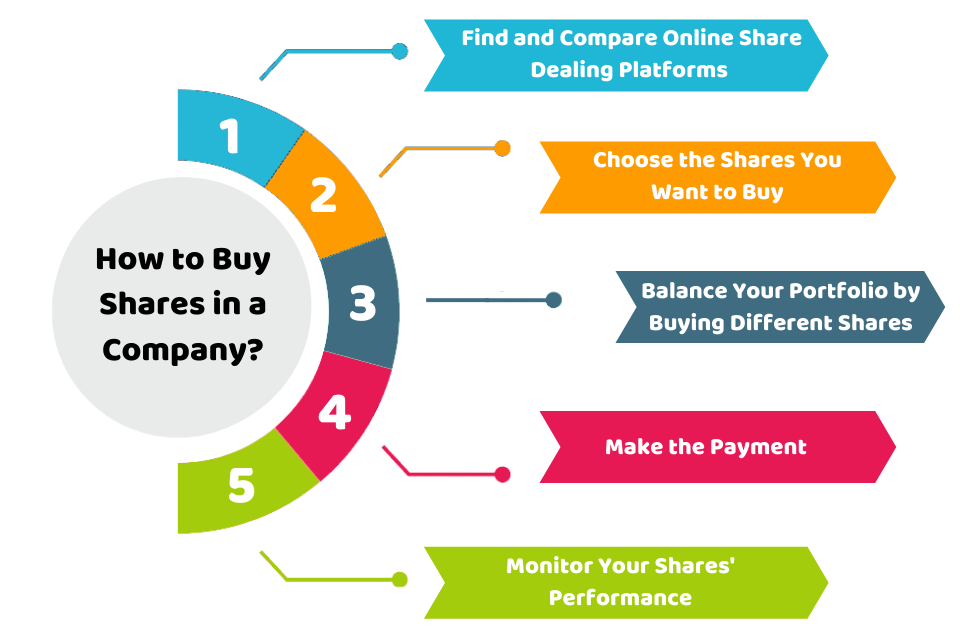
Navigating the Stock Purchase Process
With your brokerage account set up, you’re ready to move into the exciting phase of actually buying shares. This involves funding your account, identifying potential investments, and executing your trade.
Funding Your Brokerage Account
Before you can buy stocks, you need to deposit money into your brokerage account. Common methods include:
- Electronic Funds Transfer (EFT): Linking your bank account allows you to transfer funds electronically, which is often the quickest and most common method.
- Wire Transfer: For larger sums, wire transfers offer speed but may incur fees.
- Check Deposit: Mailing a physical check is an option, but it’s slower than electronic methods.
- Rollover from another retirement account: If you’re opening an IRA, you might roll over funds from an old 401(k) or another IRA.

Funds typically take a few business days to clear and become available for trading, though some brokers offer instant funding up to a certain limit.
Researching Potential Investments
This is arguably the most critical step. Never invest in a company you don’t understand. Effective research involves:
- Understanding the Company and its Business Model: What does the company do? How does it make money? Who are its competitors? What are its strengths and weaknesses?
- Financial Health: Examine the company’s financial statements (income statement, balance sheet, cash flow statement) to assess profitability, debt levels, and cash generation.
- Industry Trends and Economic Outlook: Consider the broader industry landscape and macroeconomic factors that could impact the company’s future performance.
- Management Team: Evaluate the experience and track record of the company’s leadership.
- Valuation: Compare the company’s current stock price to its earnings, sales, and book value, and to its peers, to determine if it’s trading at a reasonable valuation.
Utilize the research tools provided by your broker, financial news websites, and reputable investment analysis platforms. Don’t rely solely on tips or hype.
Placing a Buy Order
Once you’ve identified a stock you wish to purchase, you’ll log into your brokerage account and navigate to the “Trade” or “Buy/Sell” section. You’ll then need to enter:
- Ticker Symbol: A unique one-to-five-character abbreviation used to identify a publically traded stock (e.g., AAPL for Apple Inc., MSFT for Microsoft Corp.).
- Number of Shares or Dollar Amount: You can specify how many shares you want to buy, or if the broker supports it, the dollar amount you want to invest (which will then buy fractional shares or as many whole shares as possible).
- Order Type: This is crucial for controlling the price you pay.
Understanding Order Types (Market vs. Limit)
- Market Order: This tells your broker to buy (or sell) the stock immediately at the best available current price. While it guarantees execution, the exact price you pay might fluctuate slightly, especially in volatile markets, from what you saw moments before placing the order. It’s generally best for highly liquid stocks where price swings are minimal.
- Limit Order: This allows you to set a maximum price you are willing to pay for a stock (for a buy order) or a minimum price you are willing to accept (for a sell order). Your order will only be executed if the stock reaches that price or better. While it gives you price control, there’s no guarantee your order will be filled if the stock never reaches your specified limit price. Limit orders are often preferred by more experienced investors or when trading less liquid stocks.
After entering these details, you will typically review the order summary and then confirm your purchase. Congratulations, you’re now a shareholder!
Building a Smart Investment Strategy
Buying shares is just the beginning. To succeed in the long term, you need a coherent and disciplined investment strategy.
Diversification and Risk Management
One of the most fundamental principles in investing is diversification. The adage “Don’t put all your eggs in one basket” is particularly true for the stock market. Diversifying your portfolio across different companies, industries, and even asset classes (like bonds or real estate) helps mitigate risk. If one investment performs poorly, others may perform well, balancing out your overall returns. Consider using Exchange Traded Funds (ETFs) or mutual funds, which are professionally managed collections of stocks, to achieve instant diversification with a single purchase.
Long-Term vs. Short-Term Investing
Decide whether you are investing for the long term (years or decades) or attempting short-term trading (days, weeks, months). Most individual investors are better suited for long-term investing, often referred to as “buy and hold.” This strategy involves investing in quality companies and holding onto them, allowing compound interest and market growth to work in your favor over extended periods. Short-term trading is far more complex, risky, and time-consuming, requiring deep market knowledge and a tolerance for frequent losses.
Continuous Learning and Adaptation
The financial markets are dynamic and constantly evolving. Successful investors commit to continuous learning. Stay informed about economic news, company developments, and global events that could impact your investments. Regularly review your portfolio to ensure it still aligns with your financial goals and risk tolerance. As your life circumstances change, your investment strategy may need to adapt as well.
Common Pitfalls and How to Avoid Them
Even with a solid understanding, new investors often stumble. Being aware of common mistakes can help you navigate the market more effectively.
Emotional Decision-Making
Fear and greed are powerful emotions that can lead to poor investment decisions. Panic selling during market downturns or chasing “hot” stocks based on hype rather than fundamentals are classic examples. Stick to your research and your long-term plan, and avoid making impulsive decisions driven by daily market fluctuations.
Chasing Hot Stocks
Every now and then, a particular stock or sector will capture media attention with incredible growth. While it’s tempting to jump on the bandwagon, by the time a stock is widely considered “hot,” much of its rapid growth may have already occurred. Investing based on past performance alone is a dangerous game; focus instead on a company’s future potential and solid fundamentals.
Neglecting Due Diligence
Skipping the research phase and investing based on tips from friends, online forums, or unsubstantiated rumors is a recipe for disaster. Always conduct your own thorough due diligence to understand what you’re investing in and why. This means looking at financial statements, competitive landscapes, management quality, and future prospects.
In conclusion, buying shares of stock is a tangible step towards building financial independence and participating in economic growth. By understanding the basics, choosing the right platform, executing trades wisely, and committing to a disciplined, long-term strategy, any individual can confidently navigate the world of stock market investing. Remember, patience, research, and a clear understanding of your financial goals are your most valuable assets.
aViewFromTheCave is a participant in the Amazon Services LLC Associates Program, an affiliate advertising program designed to provide a means for sites to earn advertising fees by advertising and linking to Amazon.com. Amazon, the Amazon logo, AmazonSupply, and the AmazonSupply logo are trademarks of Amazon.com, Inc. or its affiliates. As an Amazon Associate we earn affiliate commissions from qualifying purchases.