
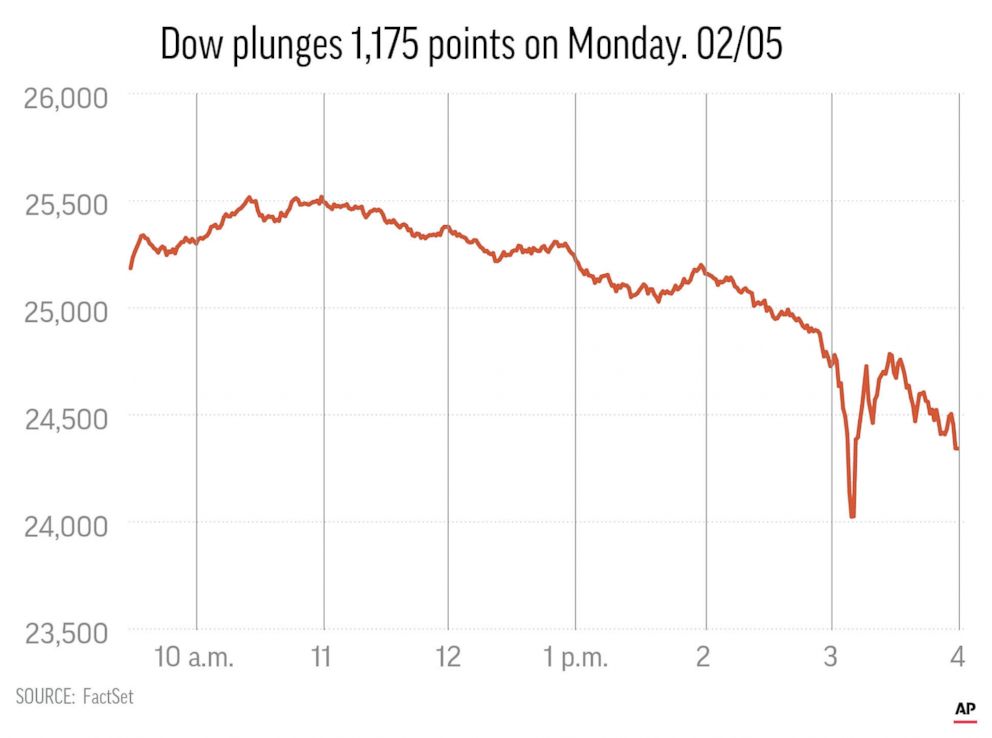
The Dow Jones Industrial Average (DJIA), often seen as a barometer for the health of the U.S. economy, can experience significant daily fluctuations. A drop in this venerable index, composed of 30 large, publicly owned companies trading on the NASDAQ and the New York Stock Exchange, is rarely attributable to a single isolated event. Instead, it typically stems from a complex interplay of macroeconomic forces, corporate performance, market psychology, and specific data releases, all converging to influence investor sentiment and trading decisions. Understanding these dynamics is crucial for anyone seeking to navigate the financial markets.
Macroeconomic Undercurrents and Monetary Policy
One of the most potent drivers of stock market movements, including dips in the DJIA, is the prevailing macroeconomic environment and the response of central banks. These broader economic forces shape the landscape in which businesses operate and investors make decisions.
Inflationary Pressures and Consumer Spending
Persistent inflation can be a significant drag on corporate profitability and consumer purchasing power. When the cost of raw materials, labor, and transportation rises, companies face shrinking profit margins if they cannot pass these costs onto consumers. Simultaneously, higher prices for everyday goods and services reduce consumers’ discretionary income, potentially leading to lower sales for businesses. News or data suggesting stubbornly high inflation, or an unexpected acceleration, can trigger a market sell-off as investors anticipate reduced corporate earnings and a potential slowdown in economic growth. The anticipation of or actual reports showing declining consumer confidence or retail sales further exacerbates this concern, signaling a potential contraction in aggregate demand.
The Federal Reserve’s Stance on Interest Rates
The Federal Reserve’s monetary policy, particularly its stance on interest rates, wields immense power over the stock market. When inflation is high, the Fed often raises its benchmark interest rate to cool the economy. Higher interest rates increase borrowing costs for businesses, making it more expensive to fund expansion, operations, or even manage existing debt. This can depress future earnings expectations. For consumers, higher rates mean more expensive mortgages, car loans, and credit card debt, further dampening spending. Moreover, higher interest rates make fixed-income investments, like bonds, more attractive relative to equities, drawing capital away from the stock market and potentially causing indices like the DJIA to fall. Any hawkish statements from Fed officials, unexpected rate hikes, or even the mere possibility of such actions can spark an immediate negative reaction in the market.
Geopolitical Events and Global Stability
Global events, from political instability and trade disputes to international conflicts or energy supply shocks, can introduce significant uncertainty into financial markets. Geopolitical tensions can disrupt supply chains, impact commodity prices (especially oil), and create an environment of fear that causes investors to move capital out of riskier assets like stocks and into safer havens such as government bonds or gold. For a globalized index like the DJIA, where many constituent companies have significant international operations and revenue streams, any event threatening global trade, economic stability, or access to critical markets can have a direct and immediate impact on their valuations, subsequently pulling the entire index down.
Corporate Performance and Sector-Specific Shocks
While macro factors set the stage, the individual performance and prospects of the DJIA’s 30 constituent companies are direct determinants of the index’s movement.
Disappointing Earnings Reports
The DJIA is an average of 30 specific stocks. If one or more of its heavily weighted components report earnings that fall short of analyst expectations, or if their forward guidance indicates a weaker outlook, it can have a disproportionate impact on the entire index. Investors interpret poor earnings as a sign of underlying weakness within the company or its sector, leading to a sell-off of that particular stock. Given the Dow’s price-weighted nature, a significant drop in a high-priced component can drag the entire average down, even if other companies are performing adequately. Beyond just earnings per share, key metrics like revenue growth, profit margins, and free cash flow are scrutinized, and any miss can lead to a negative re-evaluation of the company’s prospects.
Industry-Specific Headwinds and Regulatory Changes
Sometimes, a drop in the DJIA can be attributed to challenges facing a particular industry sector that is well-represented within the index. For example, if a significant negative development impacts the technology sector (e.g., new regulations, intense competitive pressure, or a shift in consumer preferences), and several DJIA components are tech giants, the sector’s struggles can manifest as a broader market decline. Similarly, unexpected regulatory changes, such as new antitrust investigations, stricter environmental standards, or altered taxation policies, can create uncertainty and increase operational costs for specific industries, leading to a de-rating of the companies operating within them. Investors may sell off shares in anticipation of reduced profitability or increased compliance burdens, impacting the overall index.
Market Psychology and Technical Indicators

Beyond fundamental economic and corporate news, the collective psychology of investors and the purely quantitative analysis of market charts also play a significant role in daily price movements.
Investor Sentiment and Fear Index (VIX)
Market sentiment, the overall attitude of investors towards a particular market or asset, can be a powerful, albeit often irrational, force. Fear and panic can spread rapidly, leading to widespread selling even without significant new fundamental data. Factors like social media trends, sensationalized news headlines, or a string of negative trading days can erode confidence. The CBOE Volatility Index (VIX), often called the “fear index,” measures the market’s expectation of future volatility. A sharp increase in the VIX often correlates with significant market declines, as it indicates a rising level of investor anxiety and a demand for protection against future drops. When fear dominates, investors tend to liquidate positions to preserve capital, contributing to a downward spiral.
Technical Breakdowns and Algorithmic Trading
Technical analysis, which studies past market data, primarily price and volume, to identify patterns and predict future price movements, can also influence DJIA drops. If the index breaks below key support levels (price points where buying interest has historically been strong), it can trigger further selling as traders interpret this as a signal of continued weakness. Many institutional investors and hedge funds employ algorithmic trading strategies that are programmed to buy or sell based on these technical indicators. A breach of a significant moving average or a trendline can automatically trigger massive sell orders, exacerbating a downward move. This rapid, automated selling can create momentum that is difficult to stop, pushing the index lower than fundamental data alone might suggest.
The Influence of Economic Data Releases
Scheduled economic reports provide crucial insights into the health of the economy, and their release can often cause immediate and volatile reactions in the stock market.
Key Indicators: Jobs, GDP, and Manufacturing
Regularly scheduled economic data releases are keenly watched by investors. Reports on employment (e.g., non-farm payrolls, jobless claims), Gross Domestic Product (GDP), inflation (Consumer Price Index, Producer Price Index), manufacturing activity (e.g., ISM Manufacturing PMI), and consumer confidence are all critical. A weaker-than-expected jobs report, for instance, might signal a slowdown in economic activity, potentially leading to lower corporate profits and consumer spending, thus triggering a market downturn. Conversely, an unexpectedly strong inflation report could prompt fears of more aggressive interest rate hikes from the Federal Reserve, again leading to a market sell-off. These data points provide a snapshot of the economy and often inform the Fed’s future monetary policy decisions, making their impact profound.
Central Bank Communications and Forward Guidance
Beyond just interest rate decisions, central bank communications, including meeting minutes, speeches by governors, and press conferences, are meticulously analyzed for clues about future policy direction. The Fed’s “forward guidance” – its communication about the likely future path of monetary policy – is especially impactful. Any subtle shift in tone, a perceived increase in hawkishness (favoring tighter monetary policy) or dovishness (favoring looser monetary policy), can cause immediate market reactions. If investors interpret the central bank’s communication as more aggressive on inflation or less supportive of economic growth than anticipated, it can prompt a wave of selling across equities, including the DJIA, as investors adjust their expectations for future corporate earnings and the overall economic outlook.
Understanding the DJIA’s Unique Structure
The specific mechanics of how the DJIA is calculated and its composition also play a role in how its daily movements are perceived and experienced.
Price-Weighted Index Considerations
Unlike market-capitalization-weighted indices (like the S&P 500), the DJIA is a price-weighted index. This means that stocks with higher share prices have a greater impact on the index’s value, regardless of their company’s overall market capitalization. For instance, a one-dollar change in a stock trading at $300 will have a three times greater impact on the DJIA than a one-dollar change in a stock trading at $100. Consequently, if a few high-priced components experience significant drops on a given day, their downward movement can disproportionately pull the entire index lower, even if the majority of other components are relatively stable or experiencing modest gains. This structural characteristic can sometimes amplify the perceived severity of a market downturn.

The Ripple Effect of Large-Cap Components
The DJIA’s components are all large, well-established companies, often considered bellwethers of their respective industries. Due to their size and influence, these companies frequently have extensive supply chains, broad customer bases, and significant global operations. A negative development affecting one of these giants, whether it’s a specific corporate scandal, a product recall, a major lawsuit, or a significant change in its competitive landscape, can have a ripple effect not only within its own sector but also across the broader market. Other companies that are suppliers, customers, or even competitors might see their prospects dimmed by the struggles of a DJIA titan. This interconnectedness means that negative news from one of the Dow’s 30 constituents can create a broader sense of caution or even fear, leading to a wider market sell-off and contributing to the index’s decline.
In conclusion, a drop in the DJIA on any given day is a complex event, rarely stemming from a singular cause. It is the culmination of various pressures, from the overarching macroeconomic climate and central bank policies to the specific performance of its constituent companies, the collective mood of investors, and the interpretations of unfolding economic data. For informed investors, understanding this intricate web of influences is key to contextualizing market movements and making sound financial decisions.
aViewFromTheCave is a participant in the Amazon Services LLC Associates Program, an affiliate advertising program designed to provide a means for sites to earn advertising fees by advertising and linking to Amazon.com. Amazon, the Amazon logo, AmazonSupply, and the AmazonSupply logo are trademarks of Amazon.com, Inc. or its affiliates. As an Amazon Associate we earn affiliate commissions from qualifying purchases.