
The stock market, for many, remains an enigma—a complex beast whose movements are as unpredictable as they are influential. Yet, far from being an exclusive club for finance gurus, understanding the stock market is a fundamental skill for anyone looking to build wealth, secure their financial future, or even just grasp the daily economic headlines. It is a powerful engine of economic growth, a barometer of corporate health, and a dynamic arena where capital meets innovation. Demystifying its core principles and operational mechanics is the first step towards transforming apprehension into informed participation.
This guide aims to break down the complexities of the stock market into understandable components. We will explore its foundational elements, decipher the forces that drive its movements, introduce essential investment concepts, and outline a practical path for beginners to navigate this crucial financial landscape. By the end, you should have a clearer picture of not just what the stock market is, but how it works and why it matters to your financial life.
The Foundation of Financial Markets
To truly understand the stock market, we must first grasp its fundamental building blocks and the ecosystem in which it operates. It’s more than just a place where stocks are bought and sold; it’s a critical mechanism for capital formation and wealth distribution.
What is the Stock Market?
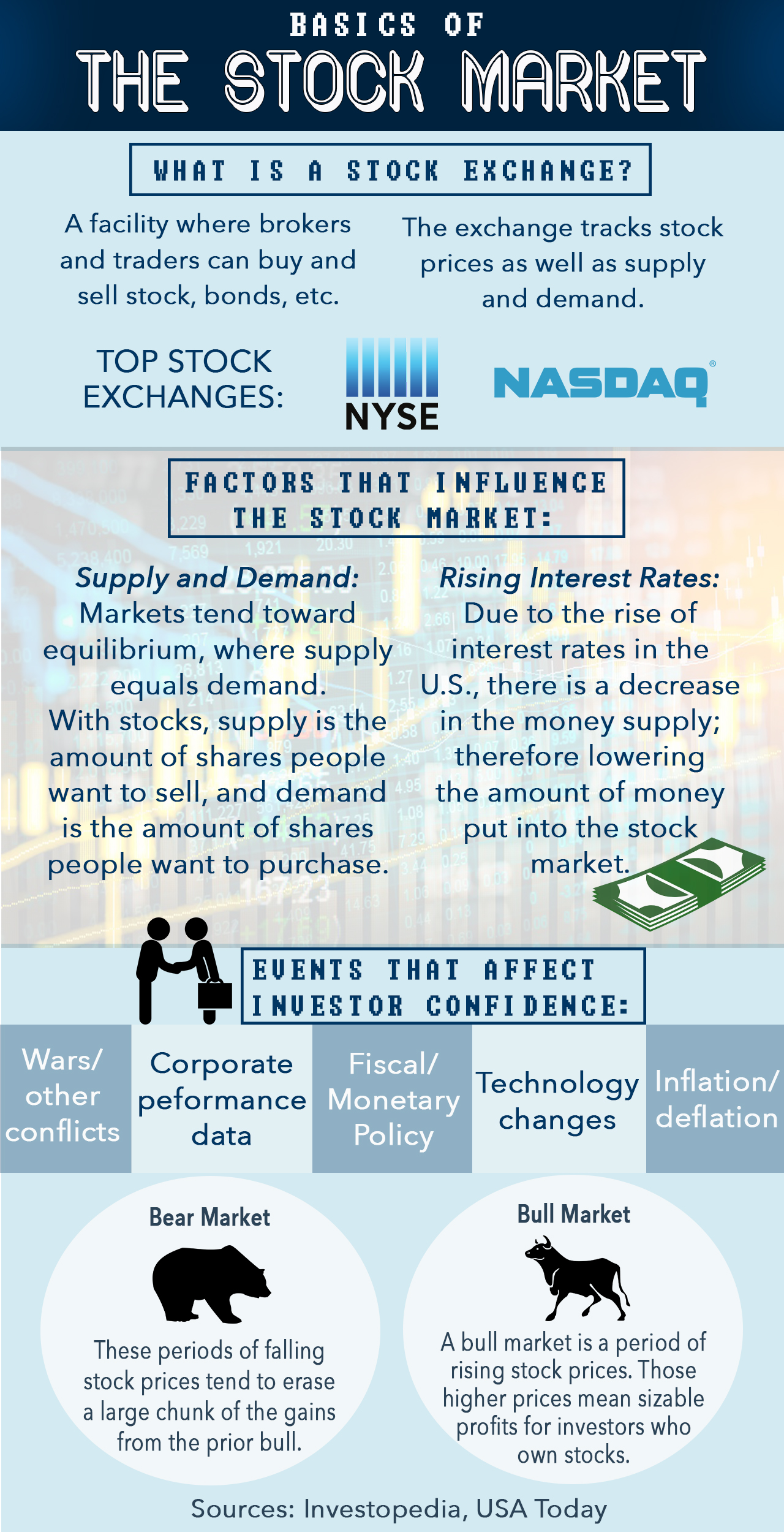
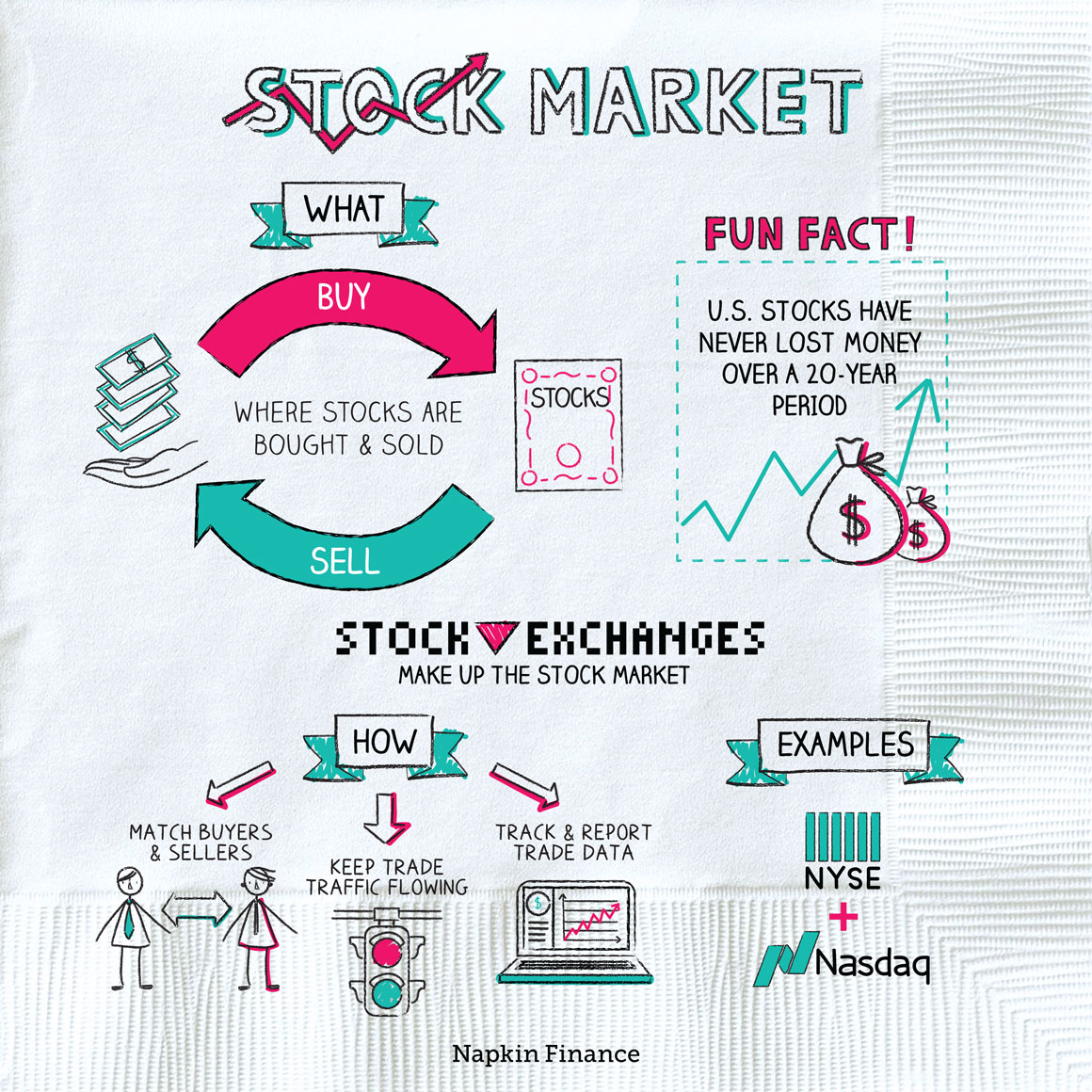
At its core, the stock market is a collection of exchanges and over-the-counter (OTC) markets where investors buy and sell shares of publicly traded companies. When you buy a share of a company’s stock, you are purchasing a tiny piece of ownership in that company. This ownership comes with certain rights, such as a claim on the company’s earnings and assets (though typically residual), and often, voting rights on corporate matters. Companies issue stock primarily to raise capital for expansion, research and development, debt repayment, or other corporate objectives, rather than relying solely on debt. For investors, the appeal lies in the potential for capital appreciation (the stock price going up) and dividends (a share of the company’s profits).
Stocks vs. Shares vs. Equities
These terms are often used interchangeably, but a subtle distinction exists:
- Stock is a general term for ownership in a company. For example, “I own stock in Apple.”
- Shares refers to specific units of stock. “I own 100 shares of Apple.”
- Equities is a broader term encompassing all forms of ownership in a company, often used in a professional or financial context. It refers to the value of ownership in assets after all liabilities have been accounted for. So, stock represents a form of equity.
Primary vs. Secondary Markets
The journey of a stock typically begins in the primary market. This is where companies first sell new issues of stock to the public to raise capital, most commonly through an Initial Public Offering (IPO). In an IPO, institutional investors and retail investors subscribe to buy shares directly from the company (or its underwriters) before they are listed on an exchange.
Once these shares have been issued, they are then traded among investors in the secondary market. This is what most people refer to when they talk about the “stock market.” Stock exchanges like the New York Stock Exchange (NYSE) and Nasdaq are examples of secondary markets, facilitating the buying and selling of existing shares between investors. Companies generally do not receive any money from trades in the secondary market; instead, the transactions occur between investors, with brokers acting as intermediaries. The secondary market provides liquidity, meaning investors can easily sell their shares when they wish, which is crucial for encouraging primary market investment.
Key Market Participants
Understanding who plays in the stock market helps to clarify its dynamics:
- Individual Investors (Retail Investors): Everyday people like you and me who buy and sell stocks, typically through brokerage accounts.
- Institutional Investors: Large organizations such as mutual funds, pension funds, hedge funds, insurance companies, and banks. They manage vast sums of money and often have significant influence on market movements.
- Brokers: Intermediaries who execute buy and sell orders on behalf of investors. They provide access to the stock exchanges.
- Market Makers: Firms that provide liquidity by simultaneously quoting both bid and ask prices for a security, ready to buy or sell.
- Analysts and Research Firms: Provide insights, forecasts, and recommendations on stocks and the broader market.
- Regulators: Government bodies (like the SEC in the U.S.) that oversee the markets to ensure fairness, transparency, and investor protection.
Deciphering Market Dynamics
The stock market is a living, breathing entity, constantly reacting to a myriad of forces. Understanding these dynamics is key to making informed decisions and tempering expectations.
Factors Influencing Stock Prices
Stock prices are a complex interplay of supply and demand, influenced by numerous factors:
- Company-Specific Performance: Earnings reports, revenue growth, profit margins, new product launches, management changes, and corporate scandals directly impact a company’s perceived value. Strong performance typically drives prices up; poor performance, down.
- Economic Indicators: Macroeconomic data such as GDP growth, inflation rates, interest rates set by central banks, unemployment figures, and consumer confidence indices can affect entire sectors or the market as a whole. For instance, rising interest rates can make borrowing more expensive for companies and make fixed-income investments more attractive, potentially drawing money away from stocks.
- Industry Trends: Shifts in technology, consumer preferences, regulatory changes, or competitive landscapes within a specific industry can significantly impact the stocks of companies operating within it.
- Geopolitical Events: Wars, trade disputes, political instability, and international agreements can create widespread uncertainty, leading to market volatility.
- Investor Sentiment: Often driven by news, rumors, or even herd mentality, investor sentiment can cause irrational exuberance or panic selling, leading to prices deviating from fundamental value.
- Supply and Demand: Ultimately, a stock’s price is determined by how many buyers are willing to purchase it versus how many sellers are willing to part with it at a given price.
Market Indexes Explained
Market indexes are powerful tools that provide a snapshot of the overall health and performance of the stock market or specific sectors within it. They are essentially weighted averages of the prices of a selected group of stocks.
- S&P 500 (Standard & Poor’s 500): A broad market index tracking the stock performance of 500 of the largest companies listed on U.S. exchanges. It’s often considered the best gauge of large-cap U.S. equities and the overall health of the U.S. economy.
- Dow Jones Industrial Average (DJIA): A price-weighted index of 30 prominent companies listed on stock exchanges in the United States. While less comprehensive than the S&P 500, it’s widely followed and provides insight into blue-chip industrial companies.
- Nasdaq Composite: A market-capitalization-weighted index of all stocks traded on the Nasdaq stock exchange. It’s heavily weighted towards technology and growth companies.
- Russell 2000: An index of 2,000 small-cap U.S. companies. It’s often used to gauge the performance of smaller companies, which can sometimes outperform or underperform larger companies.
These indexes help investors benchmark their own portfolio performance and understand broader market trends.
Bull vs. Bear Markets
The stock market experiences cycles, often characterized by two dominant phases:
- Bull Market: Characterized by rising stock prices, investor optimism, and economic growth. During a bull market, investors are generally confident, and demand for stocks is high.
- Bear Market: Characterized by falling stock prices (typically a decline of 20% or more from recent highs), widespread pessimism, and often an accompanying economic slowdown. In a bear market, investors are fearful, and supply of stocks tends to exceed demand.
Understanding these cycles helps investors manage expectations and potentially adjust strategies, though predicting their exact start and end points is notoriously difficult.
Volatility and Risk
Volatility refers to the rate at which the price of a security increases or decreases. A highly volatile stock can experience sharp, unpredictable price swings. While volatility presents opportunities for savvy traders, it also signifies higher risk. All stock market investments carry inherent risks, including the risk of losing your principal investment. Key risks include:
- Market Risk: The risk that the overall market will decline, regardless of the performance of individual stocks.
- Company-Specific Risk (Idiosyncratic Risk): Risks unique to a particular company, such as poor management, product failures, or legal issues.
- Liquidity Risk: The risk that you may not be able to sell your shares quickly enough without affecting their price.
- Inflation Risk: The risk that the purchasing power of your investment returns will be eroded by inflation.
Essential Investment Concepts and Strategies
Navigating the stock market effectively requires more than just understanding its mechanics; it demands a grasp of core investment philosophies and practical strategies.
Growth vs. Value Investing
These are two primary schools of thought for stock selection:
- Growth Investing: Focuses on companies expected to grow at an above-average rate compared to other companies or the market. Growth investors seek companies with strong earnings potential, innovative products, and expanding markets, often accepting higher valuations in anticipation of future appreciation. Examples might include young tech companies.
- Value Investing: Involves buying stocks that appear to be trading for less than their intrinsic or book value. Value investors look for “bargains”—companies that may be temporarily out of favor or undervalued by the market, believing their price will eventually rise to reflect their true worth. They often focus on established companies with strong fundamentals and consistent dividends.
Diversification: Spreading Risk
Diversification is perhaps the most crucial strategy for risk management. It involves spreading your investments across various assets, industries, and geographies to minimize the impact of any single investment performing poorly. The principle is “don’t put all your eggs in one basket.” A diversified portfolio might include:
- Different Asset Classes: Stocks, bonds, real estate, commodities.
- Different Industries: Tech, healthcare, consumer staples, financials.
- Different Geographies: Domestic stocks, international stocks, emerging markets.
- Different Company Sizes: Large-cap, mid-cap, small-cap companies.
- Different Investment Styles: A mix of growth and value stocks.
Long-Term vs. Short-Term Trading
Your investment horizon significantly impacts your strategy:
- Long-Term Investing: Focuses on holding investments for many years (often 5+ years, sometimes decades), allowing compounding returns to work their magic and riding out short-term market fluctuations. This approach often involves less frequent trading and a focus on fundamental analysis.
- Short-Term Trading: Involves buying and selling securities rapidly, sometimes within the same day (day trading) or over a few weeks or months (swing trading), to profit from short-term price movements. This approach is highly speculative, requires significant time commitment, advanced technical analysis skills, and carries much higher risk. For most individual investors, a long-term approach is generally recommended.
Fundamental vs. Technical Analysis
These are two primary methods for analyzing stocks:
- Fundamental Analysis: Involves evaluating a company’s intrinsic value by examining financial statements (income statements, balance sheets, cash flow statements), management quality, industry trends, economic outlook, and competitive landscape. The goal is to determine if a stock is undervalued or overvalued relative to its true worth.
- Technical Analysis: Studies past market data, primarily price and volume charts, to identify patterns and predict future price movements. Technical analysts believe that all known information is already reflected in the stock price and that historical price action can indicate future trends. They use indicators like moving averages, relative strength index (RSI), and MACD.
Most successful investors use a combination of both, though long-term investors typically lean more towards fundamental analysis.
Navigating the Investment Journey
For those ready to dip their toes into the stock market, a structured approach is far more effective than impulsive action.
Setting Investment Goals
Before investing a single dollar, define your financial objectives. Are you saving for retirement, a down payment on a house, your children’s education, or simply building a general wealth fund? Your goals will determine your investment horizon, risk tolerance, and the types of investments suitable for you. A long-term goal like retirement allows for higher risk tolerance and greater equity exposure. A short-term goal like a house down payment in 3 years might necessitate less volatile investments.
Choosing an Investment Platform
Once your goals are clear, you’ll need an account to buy and sell stocks.
- Brokerage Accounts: Offered by firms like Charles Schwab, Fidelity, Vanguard, or newer online brokers like Robinhood. These allow you to buy and sell a wide range of investments. They can be self-directed (you make all decisions) or advised (you get guidance).
- Robo-Advisors: Automated, algorithm-driven financial planners that manage portfolios based on your risk tolerance and goals. They typically offer low fees and are excellent for hands-off investors seeking diversified, automated investing. Examples include Betterment and Wealthfront.
- Retirement Accounts: Such as 401(k)s, IRAs (Traditional or Roth). These accounts offer significant tax advantages and are often the best place to start investing for long-term goals.
Research fees, available investments, customer service, and ease of use before choosing a platform.
Starting Small: The Power of Compounding
You don’t need a fortune to start investing. Many platforms allow you to buy fractional shares, meaning you can invest a specific dollar amount (e.g., $50) even if it’s less than the cost of a full share. The most powerful ally in long-term investing is compounding—the process where the earnings from your investments also earn returns. Starting early, even with small amounts, and consistently investing over time can lead to substantial wealth accumulation due to compounding.
Continuous Learning and Adaptation
The stock market is constantly evolving. Successful investors are lifelong learners.
- Stay Informed: Read financial news, reputable analyses, and company reports.
- Understand Your Investments: Never invest in something you don’t understand.
- Review and Adjust: Periodically review your portfolio to ensure it aligns with your goals and risk tolerance. Market conditions and your personal circumstances can change.
- Seek Professional Advice: Consider consulting a qualified financial advisor, especially for complex financial situations or if you need help developing a comprehensive financial plan.
Common Pitfalls and How to Avoid Them
The path to investment success is fraught with potential missteps. Awareness of common pitfalls can save investors from costly errors.
Emotional Investing
One of the biggest enemies of investors is their own emotions.
- Fear of Missing Out (FOMO): Buying into “hot” stocks after they’ve already surged, often at their peak.
- Panic Selling: Selling holdings during a market downturn out of fear, often locking in losses just before a recovery.
- Overconfidence: Believing you can consistently beat the market, leading to excessive risk-taking.
A disciplined approach, sticking to your investment plan, and avoiding impulse decisions driven by fear or greed are critical. Automated investing and dollar-cost averaging (investing a fixed amount regularly, regardless of market fluctuations) can help mitigate emotional responses.
Chasing Hot Tips
Relying on unsolicited “hot tips” from friends, social media, or unreliable sources is a recipe for disaster. Such advice is rarely based on thorough research and often leads to investing in companies you don’t understand, or at inflated prices. Always do your own due diligence or consult with a qualified professional.
Over-leveraging
Leverage involves borrowing money to invest. While it can amplify gains, it also significantly magnifies losses. Using margin (borrowing from your broker) without a deep understanding of the risks and sufficient capital to cover potential losses can lead to devastating financial consequences, including margin calls and forced liquidation of your assets. For most individual investors, especially beginners, it’s best to invest only what you can afford to lose and avoid leverage.
Ignoring Fees and Taxes
Fees, even small ones, can significantly erode your returns over time due to the power of compounding. Be aware of:
- Brokerage Fees: Commissions on trades. Many brokers now offer commission-free stock trading.
- Expense Ratios: Annual fees charged by mutual funds and ETFs. Look for low-cost index funds and ETFs.
- Advisory Fees: Fees charged by financial advisors (percentage of assets under management or flat fee).
Taxes also play a crucial role. Understanding capital gains tax (short-term vs. long-term), dividend taxes, and the tax benefits of retirement accounts (like 401(k)s and IRAs) can significantly impact your net returns. Tax-efficient investing strategies are an important component of a comprehensive financial plan.
In conclusion, the stock market is not a casino, but a powerful engine for wealth creation and economic growth. Understanding its mechanics, embracing fundamental investment principles like diversification and long-term thinking, and maintaining emotional discipline are the cornerstones of successful investing. While the journey requires continuous learning and adaptability, starting with a clear understanding of its foundations and a commitment to sensible strategies can empower you to confidently navigate this dynamic financial landscape and work towards achieving your financial aspirations.
aViewFromTheCave is a participant in the Amazon Services LLC Associates Program, an affiliate advertising program designed to provide a means for sites to earn advertising fees by advertising and linking to Amazon.com. Amazon, the Amazon logo, AmazonSupply, and the AmazonSupply logo are trademarks of Amazon.com, Inc. or its affiliates. As an Amazon Associate we earn affiliate commissions from qualifying purchases.