
For many, the stock market seems like a modern invention, a sophisticated engine of wealth creation and economic development that sprung up in the last century or two. Images of bustling trading floors, flashing digital screens, and complex algorithms often dominate our perception of this vital financial institution. Yet, to understand the true depth and resilience of the stock market, one must embark on a journey far deeper into history than most might imagine. Its roots are not merely decades, but centuries old, evolving from rudimentary forms of trade and debt into the intricate global network we see today. The stock market, in essence, is not just a mechanism for buying and selling shares; it is a testament to humanity’s enduring quest for capital, innovation, and shared prosperity, a foundational pillar upon which modern economies have been built.

The Ancient Roots of Financial Exchange
While the stock market as we know it is a relatively modern construct, the fundamental principles that underpin it – the transfer of ownership, the pooling of resources, the management of risk, and the pursuit of profit – have much older origins. Long before ticker tapes and digital trading platforms, societies developed ingenious ways to finance large ventures and share in their potential rewards.
Early Forms of Lending and Trading
The earliest precursors to financial markets can be traced back to ancient civilizations. In Mesopotamia, around 3000 BC, clay tablets served as contracts for loans and agricultural futures, allowing farmers to sell their harvests before they were even reaped, managing risk and securing income. The Romans, too, developed sophisticated systems of public debt and shares in tax-farming ventures, where individuals could invest in government-contracted enterprises. These early systems, while lacking the formal structure of a modern stock exchange, demonstrated a nascent understanding of transferable value and shared financial risk. Merchants in ancient Greece and Rome engaged in commodity trading and maritime loans, where investors would finance voyages in exchange for a share of the profits (or losses) upon the ship’s return. This era laid the groundwork for the concept of capital allocation and return on investment, albeit in a highly localized and less formalized manner.
Renaissance Italy and the Birth of Modern Finance
The true crucible for modern financial instruments emerged during the Renaissance in the bustling city-states of Italy. Venice, Florence, and Genoa became centers of trade and banking, pioneering innovations that would eventually lead to the stock market. Here, merchants developed sophisticated bills of exchange, a form of early credit and currency transfer that facilitated international trade. More importantly, these cities began to issue transferable shares in public debt to finance wars or large civic projects. Individuals could buy a portion of this debt, and crucially, these portions could then be bought and sold among citizens. This secondary market for debt, albeit government-issued, represented an embryonic form of what would later become share trading. These innovations moved finance beyond mere lending, introducing the concept of tradable securities and creating the demand for marketplaces where such instruments could be valued and exchanged.
The Dawn of Organized Stock Trading (17th Century)
The 17th century marked a pivotal turning point, witnessing the birth of the first truly organized stock exchanges and the emergence of the world’s first publicly traded company. This period saw a convergence of global trade, colonial expansion, and innovative financial structures that laid the direct foundations for today’s complex markets.
The Dutch East India Company: A Game Changer
The undisputed pioneer in the realm of joint-stock companies and organized trading was the Dutch East India Company (Verenigde Oostindische Compagnie or VOC), founded in 1602. To finance its ambitious, risky, and highly profitable voyages to the East Indies, the VOC needed vast amounts of capital, far exceeding what any single merchant or bank could provide. Their solution was revolutionary: they issued shares to the public, allowing hundreds, if not thousands, of individuals to invest a small portion of their wealth in the company. In exchange, these investors received a claim on a portion of the company’s future profits. Crucially, the VOC allowed these shares to be bought and sold freely among investors in Amsterdam, creating the world’s first formal stock exchange. This innovation democratized investment, pooling capital from a broad base and distributing risk, enabling ventures of unprecedented scale. The Amsterdam Stock Exchange became the global hub for trading these shares, demonstrating the power of a liquid secondary market to attract further investment.
Early Speculation and Bubbles
With the advent of organized stock trading came the inevitable companion: speculation. The inherent human desire for quick wealth, combined with the novelty and often opaque nature of these new financial instruments, led to early instances of market euphoria and subsequent busts. The most famous example, predating formal stock exchanges but illustrative of market psychology, was the “Tulip Mania” in the Netherlands during the 1630s. Speculators drove the price of tulip bulbs to astronomical levels, with some rare bulbs trading for more than the cost of houses, only for the bubble to burst spectacularly. Similarly, the early trading of VOC shares saw periods of intense speculation. These early bubbles served as stark reminders of the risks inherent in unregulated markets and the powerful psychological forces that can drive prices far beyond intrinsic value, lessons that echo even in today’s sophisticated financial world.
Expansion and Formalization in the 18th and 19th Centuries
Following the Dutch innovations, the concept of a stock market gradually spread across Europe and eventually to the Americas, becoming more formalized and playing an increasingly critical role in national economies. The Enlightenment and the Industrial Revolution provided fertile ground for the further development and institutionalization of these nascent financial systems.

London’s Coffee Houses and the Royal Exchange
In London, the origins of its famed stock exchange can be traced back to the city’s vibrant coffee houses in the late 17th and early 18th centuries. Merchants, brokers, and speculators would gather at places like Jonathan’s Coffee-House and Garraway’s to buy and sell shares, primarily in emerging joint-stock companies and government bonds. The informal nature of these gatherings eventually gave way to a more structured environment. The Royal Exchange, initially built in the 16th century for general commerce, began to see dedicated spaces for stockbrokers. However, it was not until 1773 that a group of brokers formally established their own trading floor, initially dubbed “New Jonathan’s” and later becoming the London Stock Exchange. This transition from casual gatherings to a formal institution provided greater transparency, order, and legitimacy to stock trading, attracting more capital and making London a major financial hub.
Wall Street’s Genesis: The Buttonwood Agreement
Across the Atlantic, the United States developed its own distinct financial market. The origins of what would become the New York Stock Exchange are famously attributed to the Buttonwood Agreement of 1792. Under a buttonwood tree on Wall Street, 24 stockbrokers and merchants signed an agreement to trade securities only among themselves and to charge a fixed commission. Their primary business initially involved trading newly issued U.S. government bonds (to repay Revolutionary War debt) and shares in banks like the Bank of New York. This agreement marked a crucial step towards establishing a regulated, organized market in America. As the nation grew and its economy diversified, the nascent stock market became essential for financing everything from canals and railroads to manufacturing plants, transforming from a small, local gathering into a powerful engine of national growth.
Industrial Revolution and Capital Formation
The 19th century, characterized by the transformative power of the Industrial Revolution, saw stock markets become indispensable. The massive capital required to build factories, railroads, mines, and steamships far exceeded the capacity of individual investors or even small groups of wealthy patrons. Joint-stock companies, financed by selling shares to a wide public audience through increasingly sophisticated stock exchanges, became the primary mechanism for raising this unprecedented capital. Markets in London, New York, Paris, and Berlin facilitated the growth of industrial empires, allowing investors to participate in the profits of these ventures and providing liquidity for businesses to expand. The stock market, therefore, was not merely a place for trading; it was a fundamental catalyst for technological progress and economic expansion on a global scale.
The Modern Stock Market: A Global Phenomenon
The 20th and 21st centuries have witnessed the stock market mature into a complex, globally interconnected system, shaped by technological advancements, significant economic events, and increasingly sophisticated regulatory frameworks.
20th Century Challenges and Regulations
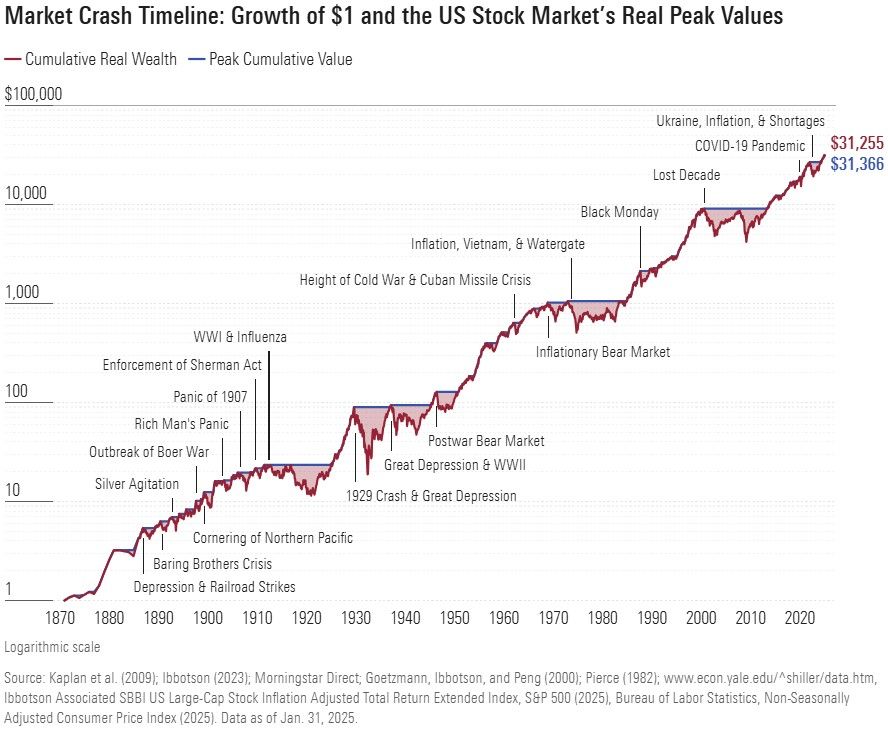
The early 20th century presented the stock market with its greatest challenges. The speculative frenzy of the “Roaring Twenties” culminated in the devastating Wall Street Crash of 1929, plunging the world into the Great Depression. This catastrophic event highlighted the inherent risks of unregulated markets and led to a profound reassessment of financial governance. In response, governments worldwide, notably the United States with the establishment of the Securities and Exchange Commission (SEC) in 1934, introduced comprehensive regulations aimed at protecting investors, ensuring market transparency, and preventing future abuses. These regulations, though constantly evolving, fundamentally changed how stock markets operated, fostering greater trust and stability.
The Digital Transformation
Perhaps no single factor has reshaped the modern stock market more than the advent of digital technology. The transition from paper certificates and shouting on trading floors to electronic trading began in earnest in the latter half of the 20th century. Computers allowed for faster order execution, greater market access, and the development of sophisticated algorithmic trading strategies. The internet, in particular, democratized access to the stock market, enabling individual investors to trade from their homes with unprecedented ease. This digital revolution not only increased efficiency and liquidity but also paved the way for a truly globalized market, where news and financial flows can impact exchanges across continents in milliseconds.
Today’s Complex Ecosystem
Today’s stock market is a highly sophisticated and dynamic ecosystem. Beyond traditional stocks, investors can trade a vast array of financial instruments, including derivatives, exchange-traded funds (ETFs), and various other structured products, catering to diverse investment strategies and risk appetites. The rise of fintech has further empowered investors with advanced analytical tools, robo-advisors, and fractional share investing. Global markets are deeply interconnected, with events in one region rapidly impacting others. While still subject to volatility and periodic crises, the modern stock market, fortified by layers of regulation and driven by constant technological innovation, remains a crucial engine for capital formation, wealth creation, and the allocation of resources that fuels economic growth worldwide.
Conclusion
The stock market, far from being a recent innovation, boasts a rich and complex history spanning over four centuries in its organized form, with conceptual roots extending back millennia. From the ancient practice of financing voyages and public works to the revolutionary Dutch East India Company, through London’s coffee houses and Wall Street’s Buttonwood Agreement, to the globally interconnected digital platforms of today, its evolution mirrors humanity’s economic and technological progress. It has weathered wars, depressions, and speculative bubbles, adapting and reinventing itself to remain an indispensable component of the global economy. Understanding this profound history not only illuminates the enduring principles of finance but also underscores the stock market’s continuing role as a vital mechanism for capital formation, innovation, and wealth distribution, a testament to its remarkable longevity and adaptability in the face of constant change.
aViewFromTheCave is a participant in the Amazon Services LLC Associates Program, an affiliate advertising program designed to provide a means for sites to earn advertising fees by advertising and linking to Amazon.com. Amazon, the Amazon logo, AmazonSupply, and the AmazonSupply logo are trademarks of Amazon.com, Inc. or its affiliates. As an Amazon Associate we earn affiliate commissions from qualifying purchases.