
In the vast landscape of finance and investing, few terms are as ubiquitous and fundamental as “stock.” Often heard in news reports, financial discussions, and personal investment strategies, the concept of a stock lies at the very heart of modern capitalism. It represents more than just a ticker symbol on a screen; it embodies fractional ownership in a company, a claim on its future earnings, and a cornerstone for wealth creation for millions. Understanding what a stock truly is, why it exists, how it functions, and how to evaluate it, is crucial for anyone looking to navigate the financial markets with confidence and insight.

Understanding the Core Concept of a Stock
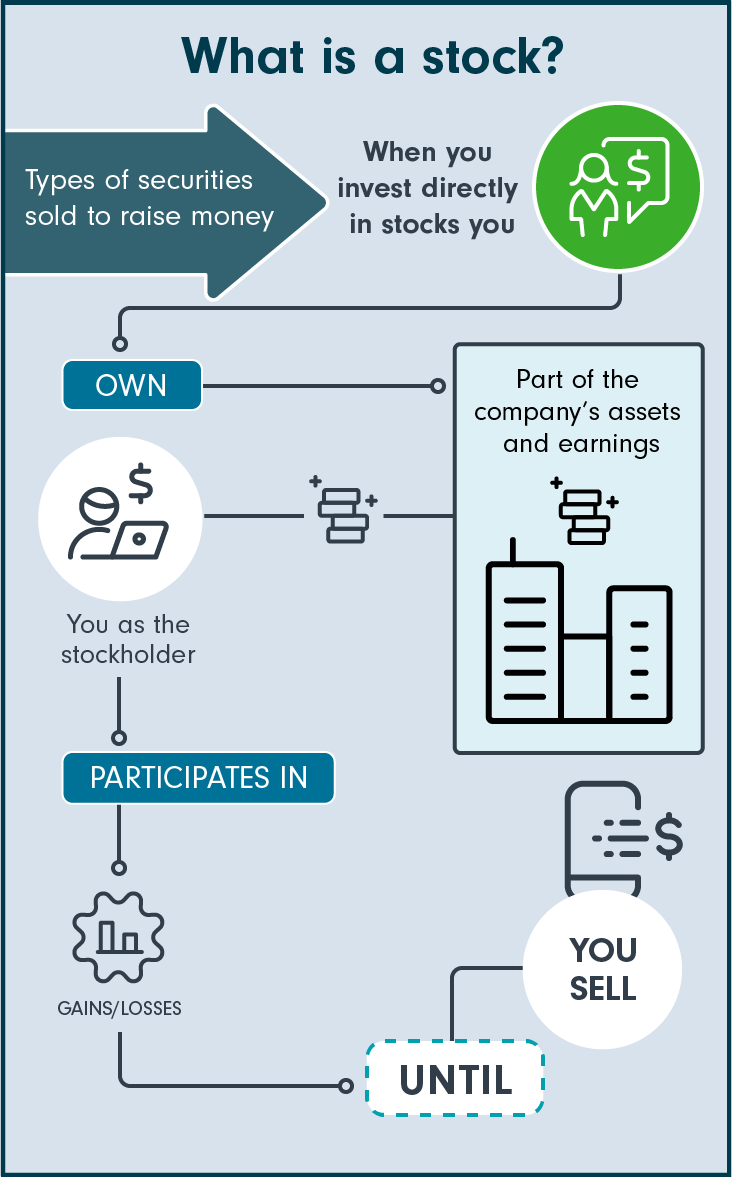
At its most basic, a stock, also known as equity, represents a fractional ownership interest in a company. When you purchase a share of stock, you are buying a tiny slice of that business, making you a shareholder. This ownership grants you certain rights and a claim on the company’s assets and earnings proportional to the number of shares you hold. Unlike debt instruments, such as bonds, which represent a loan to a company that must be repaid with interest, stocks signify a permanent stake in the company’s success or failure.
This distinction between equity and debt is fundamental. As an equity holder, you are an owner, sharing in the company’s profits (through dividends or increased stock value) and also bearing the risk of its losses. This ownership gives you a residual claim on the company’s assets – meaning if the company were to liquidate, common shareholders are paid only after all creditors, bondholders, and preferred shareholders have been satisfied. This position, while carrying higher risk than debt, also offers potentially higher rewards. The collective issuance of stocks allows companies to raise significant capital from numerous investors, which in turn fuels innovation, expansion, and economic growth, making stocks a foundational element of the global financial system.
Why Companies Issue Stock and What It Means for Investors
The issuance of stock is a critical mechanism for both companies seeking capital and individuals aiming to grow their wealth. This symbiotic relationship forms the backbone of the equity market.
For Companies: Raising Capital for Growth
For a company, issuing stock is primarily a method to raise capital without incurring debt. When a private company decides to “go public” through an Initial Public Offering (IPO), it sells shares to the public for the first time. This infusion of capital provides the necessary funds for various strategic objectives:
- Expansion: Financing new facilities, entering new markets, or scaling operations.
- Research & Development: Investing in innovation to create new products or services.
- Debt Repayment: Reducing existing financial obligations to strengthen the balance sheet.
- Acquisitions: Funding the purchase of other companies to expand market share or capabilities.
Unlike borrowing money, issuing stock doesn’t require regular interest payments, nor does it typically have a fixed repayment schedule. This “permanent capital” can be a powerful accelerator for growth. However, it also means diluting the ownership stake of existing shareholders and opening the company up to public scrutiny and regulatory oversight.
For Investors: Potential for Wealth Creation and Income
From an investor’s perspective, buying stock is a direct avenue to participate in the success of businesses and potentially build long-term wealth. The primary attractions for investors include:
- Capital Appreciation: The most common goal is to buy shares at a certain price and sell them later at a higher price, generating a profit. This increase in value is driven by factors like strong company performance, market demand for the stock, and overall economic conditions.
- Dividends: Many profitable companies choose to distribute a portion of their earnings to shareholders in the form of dividends. These payments, typically quarterly, provide a steady stream of income to investors.
- Voting Rights: Common shareholders often have the right to vote on significant company matters, such as electing board members or approving major corporate actions, giving them a voice in the company’s governance.
- Diversification: Stocks allow investors to diversify their portfolios across various industries and geographies, reducing overall risk compared to putting all assets into one type of investment.
By becoming a shareholder, an individual can align their financial interests with the growth trajectory of specific companies, making stocks a dynamic and often rewarding asset class for personal finance and investing.
The Different Types of Stocks and Their Characteristics
While the core concept of a stock as fractional ownership remains consistent, the financial markets offer various types of stocks, each with distinct characteristics that appeal to different investment strategies and risk profiles.
Common Stock
Common stock is the most prevalent type of equity and what most people refer to when they talk about “stocks.” Holders of common stock typically have voting rights, allowing them to influence corporate policy and elect the board of directors. They also have a residual claim on the company’s assets and earnings; meaning, in the event of liquidation, common shareholders are paid after bondholders and preferred shareholders. The upside potential for capital appreciation with common stock is generally unlimited, but it also carries the highest risk among the company’s securities, as dividend payments (if any) are not guaranteed and are paid after preferred dividends.
Preferred Stock
Preferred stock represents a hybrid security with characteristics of both stocks and bonds. Unlike common shareholders, preferred shareholders usually do not have voting rights. However, they receive fixed dividend payments that are paid before any dividends are distributed to common shareholders. In the event of a company’s liquidation, preferred shareholders also have a prior claim on assets compared to common shareholders. Because of their fixed dividend and priority claim, preferred stocks are generally less volatile than common stocks and are often favored by investors seeking stable income. Their potential for capital appreciation is typically more limited than common stock.
Categorization by Company Attributes and Investment Style
Beyond the legal distinctions, stocks are often categorized by certain company attributes or how investors might approach them:
- Growth Stocks: These are shares of companies expected to grow at an above-average rate compared to the overall market. They often reinvest most of their earnings back into the business, so they typically pay little to no dividends. Investors buy growth stocks hoping for significant capital appreciation.
- Value Stocks: These are stocks that appear to be trading below their intrinsic value, often characterized by low P/E ratios or high dividend yields. Investors in value stocks seek companies that the market has overlooked or undervalued, expecting their price to eventually reflect their true worth.
- Income Stocks: These are stocks of mature, stable companies that consistently pay dividends, often with a high dividend yield. They are attractive to investors seeking regular income rather than aggressive growth.
- Blue-Chip Stocks: Refers to large, well-established, and financially sound companies with a long history of stable earnings and consistent dividends. They are generally considered safer investments and cornerstones of a diversified portfolio.
- Cyclical Stocks: These companies’ revenues and profits are highly sensitive to the economic cycle. Industries like automotive, airlines, and luxury goods often fall into this category, performing well during economic expansions and poorly during recessions.
- Defensive Stocks: These stocks tend to perform consistently regardless of the economic cycle, as they typically belong to industries providing essential goods and services, such as utilities, consumer staples, and healthcare. They are considered less volatile and can offer stability during downturns.
Understanding these various classifications helps investors tailor their portfolio to match their financial goals, risk tolerance, and investment horizon.
How Stocks are Traded: Markets and Mechanisms
The trading of stocks occurs within a sophisticated global framework, designed to facilitate the efficient exchange of ownership between buyers and sellers. This process involves various markets, platforms, and intermediaries that connect investors worldwide.
Primary vs. Secondary Markets
Stock trading is typically categorized into two main types of markets:
- Primary Market: This is where new stocks are issued and sold for the first time directly by the company to investors. The most common event in the primary market is an Initial Public Offering (IPO), where a private company sells shares to the public to raise capital. Subsequent offerings by already public companies (like follow-on offerings) also occur in the primary market.
- Secondary Market: Once stocks have been issued in the primary market, they are then traded among investors on secondary markets. The company itself is not directly involved in these transactions and does not receive any proceeds from them. The secondary market is where the vast majority of daily stock trading takes place, providing liquidity to investors, meaning they can easily buy or sell shares.
Stock Exchanges and Over-the-Counter (OTC) Markets
The most prominent secondary markets are stock exchanges, such as the New York Stock Exchange (NYSE) and the Nasdaq Stock Market in the United States, or the London Stock Exchange (LSE) and Tokyo Stock Exchange (TSE) internationally. These regulated marketplaces provide a centralized location or electronic system where listed companies’ shares are bought and sold through authorized brokers.
Beyond exchanges, some stocks are traded on Over-the-Counter (OTC) markets. These are decentralized markets where trades occur directly between two parties, often through a network of dealers, rather than on a formal exchange. OTC markets typically involve smaller companies or those that do not meet the listing requirements of major exchanges.
The Role of Brokers and Trading Mechanisms
Individual investors typically access the stock market through brokerage firms. These firms act as intermediaries, executing buy and sell orders on behalf of their clients. With the advent of online trading platforms, investors can now place orders directly from their computers or mobile devices.
When placing an order, investors can choose different types:
- Market Order: An order to buy or sell a stock immediately at the best available current price.
- Limit Order: An order to buy or sell a stock at a specified price or better. The order will only be executed if the market price reaches the investor’s specified limit.
- Stop Order: An order to buy or sell a stock once the price of the stock reaches a specified price (the stop price). Once the stop price is reached, the stop order becomes a market order.
These mechanisms ensure an orderly and transparent process for price discovery and transaction execution, allowing billions of dollars worth of shares to change hands daily, reflecting continuous shifts in supply and demand.
Evaluating Stocks: Key Metrics and Fundamental Principles
Successful stock investing often hinges on sound evaluation, moving beyond mere speculation to making informed decisions based on a company’s financial health, market position, and future prospects. This process typically involves fundamental analysis, and to a lesser extent, technical analysis.
Fundamental Analysis: Uncovering Intrinsic Value
Fundamental analysis involves examining a company’s financial statements, management team, industry trends, and economic factors to determine its intrinsic value. The goal is to ascertain whether a stock is currently overvalued, undervalued, or fairly priced by the market. Key financial statements provide the bedrock for this analysis:
- Income Statement: Reveals a company’s revenues, expenses, and profit (net income) over a period.
- Balance Sheet: Offers a snapshot of a company’s assets, liabilities, and shareholders’ equity at a specific point in time.
- Cash Flow Statement: Shows how much cash a company generates and uses over a period, detailing operating, investing, and financing activities.
From these statements, various valuation metrics are derived to aid in stock evaluation:
- Earnings Per Share (EPS): A company’s net profit divided by the number of outstanding common shares. A higher EPS generally indicates greater profitability.
- Price-to-Earnings (P/E) Ratio: The current share price divided by the EPS. It indicates how much investors are willing to pay per dollar of earnings. A high P/E could suggest high growth expectations, while a low P/E might indicate an undervalued stock or a company facing challenges.
- Dividend Yield: Annual dividends per share divided by the current share price. This metric is crucial for income-focused investors, showing the return on investment from dividends alone.
- Return on Equity (ROE): Net income divided by shareholders’ equity. ROE measures a company’s profitability in relation to the equity invested by its shareholders, indicating management’s efficiency in using equity to generate profits.
- Debt-to-Equity Ratio: Total liabilities divided by shareholders’ equity. This ratio assesses a company’s financial leverage and indicates the extent to which its operations are financed by debt versus shareholders’ funds.
- Revenue Growth: The rate at which a company’s sales are increasing over time. Consistent and strong revenue growth is often a sign of a healthy and expanding business.
Technical Analysis: Studying Market Behavior
While fundamental analysis focuses on a company’s intrinsic value, technical analysis involves evaluating investments by studying past market prices and volume data. Technical analysts look for patterns, trends, and indicators to forecast future price movements. This approach assumes that all relevant information is already reflected in the stock’s price, and market psychology drives price movements. While some investors use technical analysis exclusively, many combine it with fundamental analysis for a more comprehensive view.

The Importance of Risk and Diversification
No matter how thorough the evaluation, investing in stocks always carries risk. Company-specific risks (e.g., poor management, product failures) and market risks (e.g., economic downturns, geopolitical events) can impact stock prices. Therefore, a cornerstone of wise investing is diversification—spreading investments across various stocks, industries, and asset classes to mitigate the impact of any single investment’s poor performance. A long-term perspective, combined with regular review and adjustment of one’s portfolio, is essential for navigating the dynamic world of stock investing and achieving financial objectives.
aViewFromTheCave is a participant in the Amazon Services LLC Associates Program, an affiliate advertising program designed to provide a means for sites to earn advertising fees by advertising and linking to Amazon.com. Amazon, the Amazon logo, AmazonSupply, and the AmazonSupply logo are trademarks of Amazon.com, Inc. or its affiliates. As an Amazon Associate we earn affiliate commissions from qualifying purchases.