
Securing investment is a pivotal step for many small businesses aiming for growth, expansion, or even just initial launch. It’s a process that demands meticulous preparation, strategic outreach, and a deep understanding of financial dynamics. Unlike seeking a loan, bringing on an investor means giving up a piece of your company in exchange for capital, making the selection of both your business and your potential partners a critical decision. This article will guide you through the essential stages of attracting and securing the right investors for your small business, focusing on the financial acumen and strategic thinking required to navigate this complex yet rewarding journey.
1. Laying the Financial Foundation: Preparing Your Business for Investment
Before you even think about approaching potential investors, your business needs to be in impeccable financial order. Investors are primarily interested in returns and risk mitigation, and these are best demonstrated through clear, verifiable financial data and robust future projections. This preparatory phase is not merely about tidying up; it’s about building a compelling case for financial viability and future growth.
Understanding Your Financial Health: The Non-Negotiables
Investors will scrutinize your past and present financial performance to gauge the health and potential of your business. This means having meticulously maintained financial records readily available. You’ll need profit and loss statements (P&L), balance sheets, and cash flow statements, ideally for the past 3-5 years if your business has been operational for that long. These documents should be accurate, audited (if possible and applicable), and presented clearly. They provide a historical narrative of your company’s revenue, expenses, profitability, assets, liabilities, and liquidity. Furthermore, understanding your key financial metrics – such as gross profit margin, net profit margin, customer acquisition cost (CAC), lifetime value (LTV), and burn rate – is crucial. You must be able to articulate these figures and explain their implications for your business’s future.
Developing a Robust Business Plan with Financial Projections
A comprehensive business plan is the backbone of your investor pitch. While it covers aspects like market analysis, product/service details, and operational strategies, its financial section is paramount. This section must include detailed financial projections for at least the next 3-5 years, encompassing projected P&L, balance sheets, and cash flow. These projections shouldn’t be plucked from thin air; they must be grounded in realistic assumptions, supported by market research, and reflect your strategic objectives. Investors want to see how their money will translate into revenue growth, increased profitability, and ultimately, a significant return on their investment. Be prepared to defend your assumptions and demonstrate a clear path to achieving these financial milestones.
Identifying Your Funding Needs and Usage
One of the first questions an investor will ask is: “How much money do you need, and what will you do with it?” You must have a precise figure and a detailed breakdown of how the funds will be utilized. Is it for product development, marketing campaigns, hiring key personnel, expanding into new markets, or acquiring new equipment? Each line item should be justified with a clear explanation of how it contributes to achieving your business goals and driving financial returns. Vague requests for “growth capital” will not inspire confidence. A well-defined use of funds demonstrates fiscal responsibility and a clear strategic vision, assuring investors that their capital will be deployed efficiently and effectively to generate value.
2. Exploring the Investor Ecosystem: Who to Target
The world of small business investment is diverse, with various types of investors offering different levels of capital, expertise, and engagement. Understanding this ecosystem is crucial for targeting the right partners who align with your business stage, sector, and growth ambitions. Mismatching your business with the wrong type of investor can lead to frustration and wasted effort.
Angel Investors: Early-Stage Support
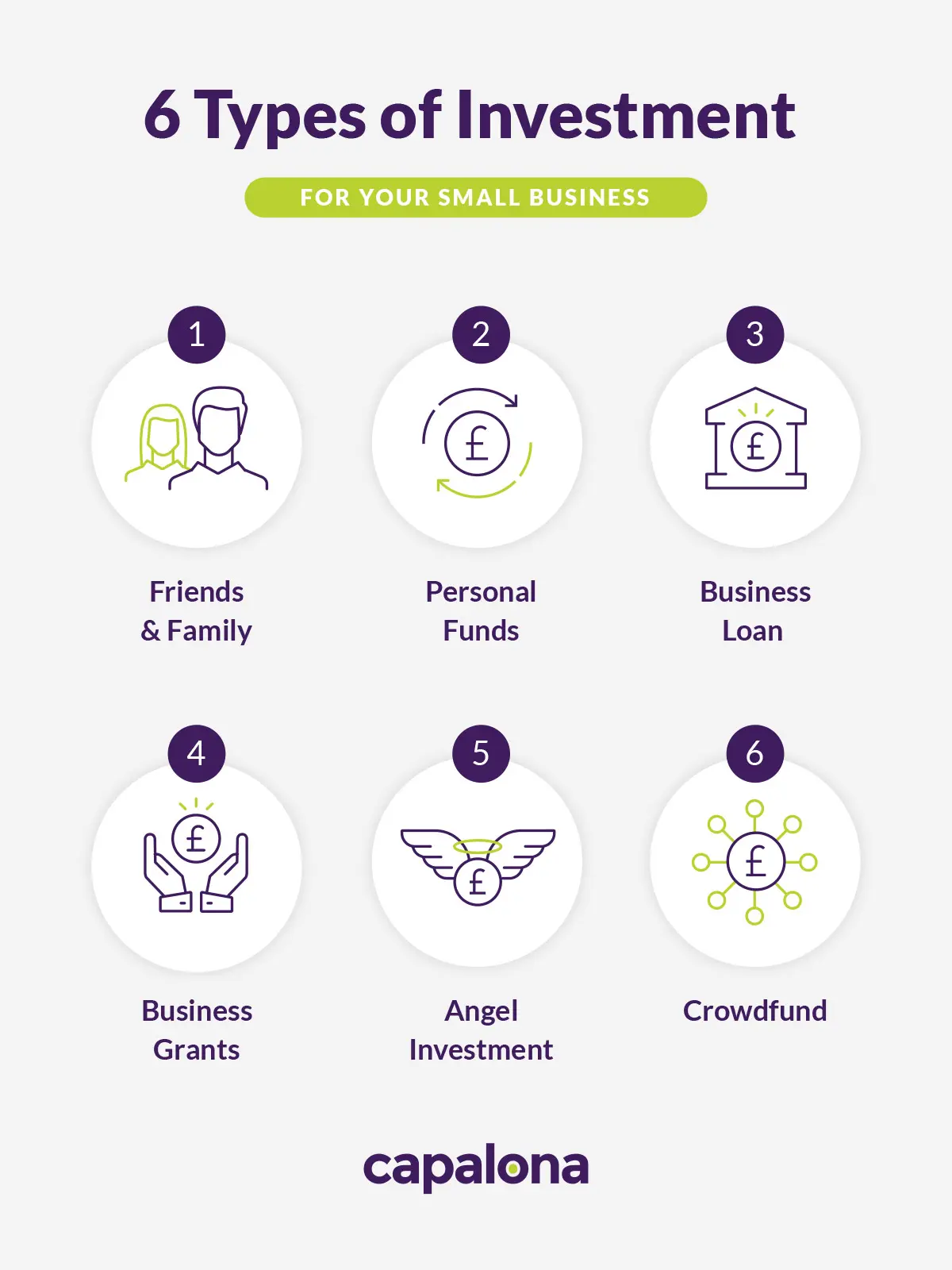
Angel investors are high-net-worth individuals who invest their own money, often in early-stage or startup companies. They typically provide smaller sums of capital compared to venture capitalists but can be invaluable for seed funding, offering not just money but also mentorship, industry connections, and strategic advice. Angels often invest in sectors they have personal experience in, making them a good fit if your business aligns with their expertise. They are often more flexible with terms than institutional investors and may be more patient with longer timelines for returns.
Venture Capital Firms: Growth-Oriented Capital
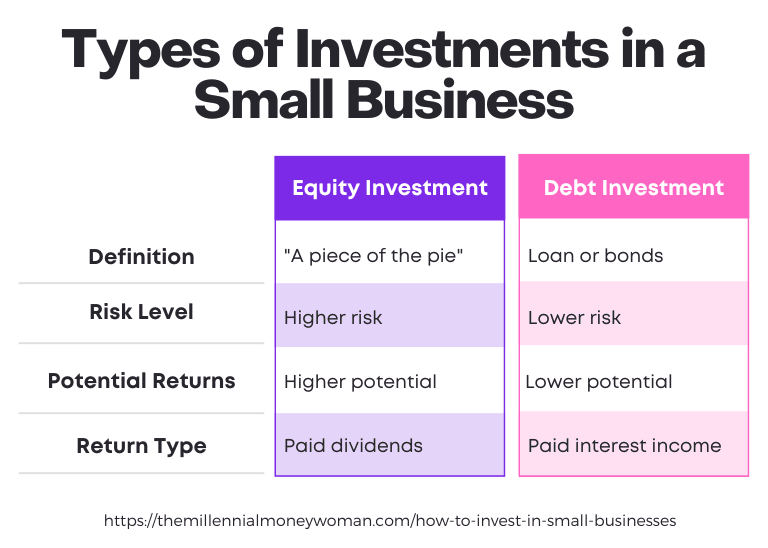
Venture Capital (VC) firms invest institutional money (from limited partners like pension funds, endowments, and high-net-worth individuals) into companies with high growth potential, typically in exchange for equity. VCs usually invest larger sums than angel investors and are often looking for businesses that can scale rapidly and achieve a significant exit (acquisition or IPO) within a few years. They are more structured in their approach, conduct extensive due diligence, and often take a more active role in guiding the companies they invest in, sometimes even taking board seats. VC firms are usually sector-specific, so research firms that specialize in your industry.
Friends, Family, and Fools (FFFs): Leveraging Personal Networks
For very early-stage businesses, particularly those without a proven track record, turning to friends, family, and sometimes even close acquaintances (“fools” being a humorous term for those willing to take a high risk on an unproven venture) can be a viable first step. This capital often comes with fewer strings attached and can be quicker to secure. However, it’s crucial to treat these investments professionally, formalizing agreements with promissory notes, equity stakes, or convertible notes to avoid personal strain and set clear expectations regarding returns and repayment. Mixing personal relationships with financial transactions requires clear boundaries and professionalism.
Crowdfunding Platforms: Democratizing Investment
Equity crowdfunding platforms allow a large number of individuals to invest small amounts of money in your company, typically in exchange for equity. This method has democratized investment, making it accessible to a broader range of businesses and investors. It’s an excellent way to not only raise capital but also to validate your product/service and build a community of enthusiastic early adopters who become stakeholders. Platforms like SeedInvest, StartEngine, and Republic facilitate this process, but require a compelling story, a strong marketing effort, and compliance with specific financial regulations.
Strategic Investors: Beyond Just Capital
Strategic investors are corporations or established businesses that invest in smaller companies, not just for financial returns, but also for strategic alignment. This could mean gaining access to new technology, expanding into new markets, securing a supply chain, or eliminating a potential competitor. A strategic investor can offer invaluable resources beyond capital, such as distribution channels, manufacturing capabilities, or marketing support. The downside might be a higher degree of control or influence over your company’s direction, so a careful assessment of alignment is necessary.
3. Crafting a Compelling Investment Proposition: The Pitch
Once your financial house is in order and you understand who you’re targeting, the next step is to articulate your business’s value proposition in a way that captures investor interest and clearly demonstrates the potential for return. Your pitch is your story, but it’s a story told through a financial lens.
The Executive Summary and Pitch Deck: Your First Impression
The executive summary is a concise, one-page overview of your business, its opportunity, your team, and your financial ask. It should be compelling enough to entice an investor to delve deeper. The pitch deck, typically 10-20 slides, expands on this, covering key areas such as the problem you’re solving, your solution, market size, business model, competitive analysis, marketing strategy, management team, traction (if any), financial projections, and the funding request. Both documents must be visually appealing, easy to understand, and devoid of jargon, focusing on the core financial narrative and potential ROI.

Highlighting Market Opportunity and Competitive Advantage
Investors want to know that your business operates in a sufficiently large and growing market. You need to clearly define your target market, demonstrate its size and growth potential, and show that there’s a genuine need for your product or service. Equally important is articulating your competitive advantage. What makes your business unique? Is it a proprietary technology, a superior business model, exceptional customer service, a unique brand, or a strong network effect? How will you defend your market position against existing and future competitors? Investors look for sustainable competitive advantages that can lead to long-term profitability.
Demonstrating Financial Viability and ROI
This is where your financial preparations come into play. Your pitch must convincingly demonstrate that your business model is financially viable and that investors can expect a significant return on their investment. This means presenting clear revenue models, cost structures, profitability timelines, and, critically, how their investment contributes to accelerating these positive financial outcomes. You should articulate your exit strategy – how investors will eventually monetize their stake (e.g., through acquisition, IPO, or dividend payouts) – as this is a primary driver for many investors. Highlight key performance indicators (KPIs) that showcase financial efficiency and growth potential.
Assembling a Strong Management Team
Investors don’t just invest in ideas; they invest in people. A strong, experienced, and passionate management team can be a significant draw. Highlight the expertise, experience, and complementary skills of your core team members. Demonstrate their past successes, their commitment to the business, and their ability to execute the business plan. If there are gaps in your team, acknowledge them and outline your strategy for bringing in key talent. A well-rounded team reduces risk and increases the likelihood of achieving financial and operational milestones.
4. The Investor Outreach Strategy: Connecting and Engaging
With your preparations complete and your pitch honed, the next challenge is reaching out to potential investors and engaging them effectively. This phase requires strategic networking, targeted communication, and persistent follow-up.
Networking and Introductions: The Power of Warm Leads
The most effective way to connect with investors is often through warm introductions. Leverage your existing network – mentors, advisors, legal and accounting professionals, other entrepreneurs – to get introductions to relevant angel investors or venture capitalists. Attend industry conferences, startup events, and pitch competitions where investors are present. These events provide opportunities to network, learn, and potentially make valuable connections. A personal introduction often carries more weight than a cold email, as it comes with an implicit vetting by a trusted source.
Online Platforms and Directories: Targeted Searches
Numerous online platforms and directories specialize in connecting entrepreneurs with investors. Websites like AngelList, Crunchbase, and various crowdfunding platforms allow you to search for investors by industry, stage, and location. While these platforms can facilitate connections, remember that they are often crowded, so your profile and pitch must stand out. Use these tools for targeted research, identifying investors whose portfolios align with your business, and then personalize your outreach.
Cold Outreach (with Caution): Standing Out
Cold emailing or LinkedIn messages can be a challenging but sometimes necessary part of investor outreach. When pursuing cold outreach, it’s crucial to be highly personalized and concise. Research each investor thoroughly to understand their investment thesis and portfolio companies. Your message should immediately state why you believe your company is a good fit for their portfolio, highlight a key achievement or compelling statistic, and include a brief, compelling executive summary or a link to your pitch deck. Avoid generic templates and focus on demonstrating that you’ve done your homework.
Mastering the Pitch Meeting
The pitch meeting is your opportunity to bring your business to life. Beyond presenting your deck, it’s about conveying your passion, demonstrating your expertise, and establishing rapport. Be prepared to answer tough questions about your market, finances, team, and risks. Practice your delivery, ensuring you can articulate your vision clearly and concisely. Be confident, but also humble and open to feedback. Remember, this is a dialogue, not just a monologue. Listen carefully to their questions and concerns, as these can provide insights into what they value most.
5. From Interest to Investment: Due Diligence and Deal Closure
Once an investor expresses serious interest, you enter a new phase involving detailed scrutiny and legal negotiations. This stage can be lengthy and complex, requiring transparency, patience, and professional guidance.
Preparing for Due Diligence: Transparency is Key
Due diligence is the investor’s process of thoroughly investigating your business to verify all information provided in your pitch and assess potential risks. This will involve deep dives into your financial records, legal documents (incorporation, contracts, intellectual property), operational procedures, customer data, and management team backgrounds. Prepare a “data room” (often virtual) with all relevant documents organized and accessible. Transparency is paramount; any discrepancies or hidden issues can immediately derail a deal. Being organized and prepared for this process will instill confidence in potential investors.
Understanding Valuation and Equity Dilution
Valuation is the process of determining the current worth of your company, which directly impacts the equity stake investors receive for their capital. This can be a complex negotiation, influenced by your business stage, market potential, competitive landscape, and comparable company valuations. You need to understand different valuation methodologies and be prepared to justify your proposed valuation. Simultaneously, consider equity dilution – the reduction in the ownership percentage of existing shareholders when new shares are issued to investors. While necessary for growth, excessive dilution can impact founders’ control and future returns, so finding a balance is crucial.
Negotiating Term Sheets and Legal Agreements
If due diligence is successful, the investor will typically present a term sheet – a non-binding document outlining the key terms and conditions of the proposed investment. This includes valuation, investment amount, equity percentage, investor rights (e.g., board seats, liquidation preferences, anti-dilution provisions), and founder vesting schedules. It’s critical to have experienced legal counsel review and negotiate the term sheet to protect your interests. Following the term sheet, detailed legal agreements (like a definitive investment agreement or share purchase agreement) will be drafted, requiring meticulous review before signing.
Post-Investment Relationship Management
Securing investment is not the end; it’s the beginning of a new relationship. Investors, especially VCs, often become active partners, providing guidance, connections, and strategic oversight. Maintaining transparent communication, providing regular financial and operational updates, and actively seeking their advice can foster a strong, productive relationship. Their success is tied to yours, so viewing them as strategic allies rather than just funders will maximize the value of their investment beyond the capital itself.
Securing investors for your small business is a marathon, not a sprint. It requires a robust financial foundation, a deep understanding of the investor landscape, a compelling narrative, strategic outreach, and diligent negotiation. By mastering these elements, you significantly increase your chances of attracting the capital needed to propel your small business to new heights.
aViewFromTheCave is a participant in the Amazon Services LLC Associates Program, an affiliate advertising program designed to provide a means for sites to earn advertising fees by advertising and linking to Amazon.com. Amazon, the Amazon logo, AmazonSupply, and the AmazonSupply logo are trademarks of Amazon.com, Inc. or its affiliates. As an Amazon Associate we earn affiliate commissions from qualifying purchases.