
Securing investment is a critical juncture for many small businesses aiming for growth, expansion, or even just initial startup capital. While the prospect can seem daunting, a strategic approach rooted in robust financial understanding and clear communication can significantly increase your chances of attracting the right capital partners. This guide delves into the essential steps and financial considerations for small business owners seeking to navigate the investment landscape successfully.
Understanding Your Funding Needs and Investor Types
Before approaching any investor, a clear understanding of your business’s financial needs and the various types of capital available is paramount. Not all money is created equal, and aligning with the right funding source is crucial for long-term success.
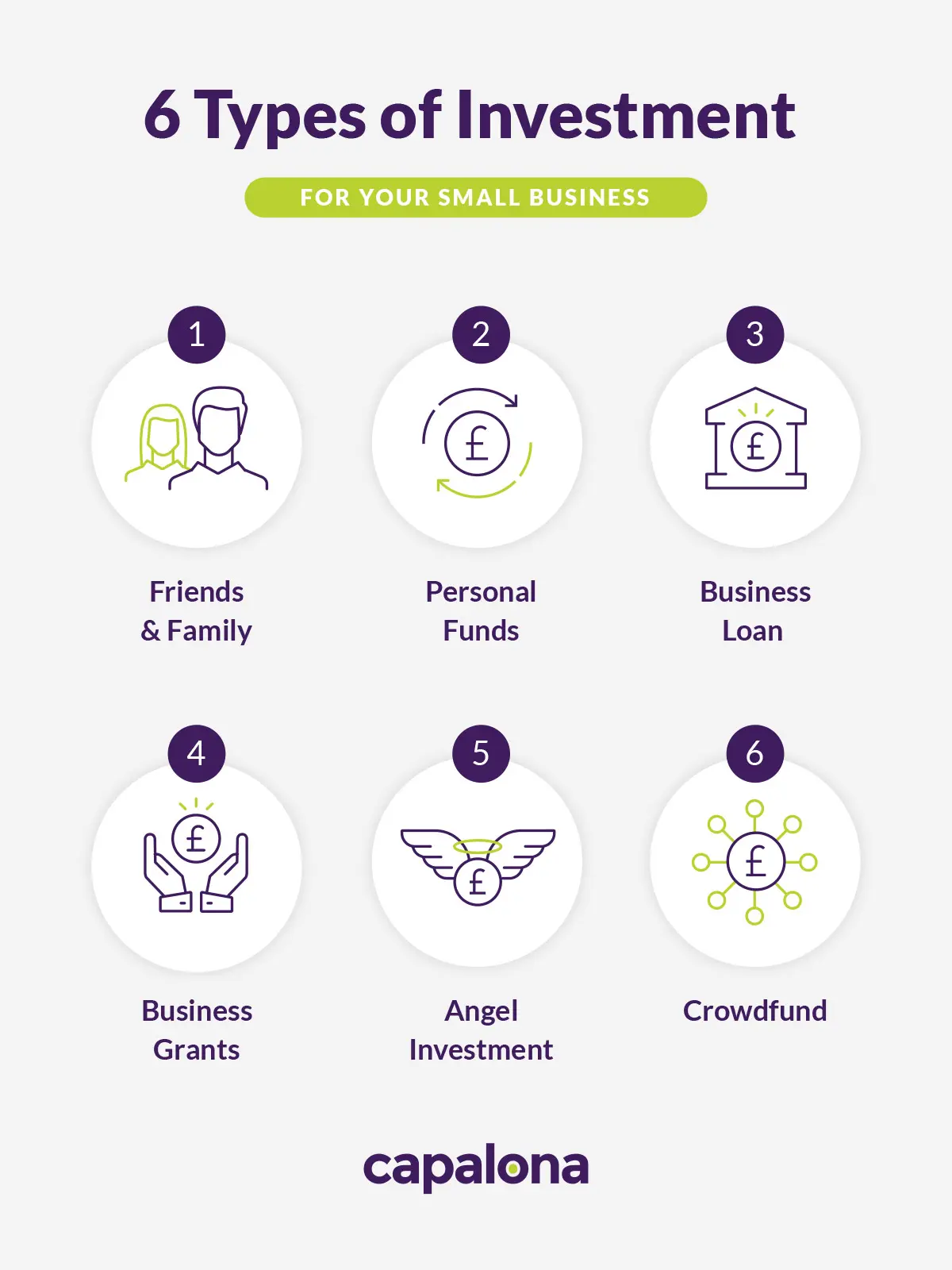
Debt vs. Equity Financing
The fundamental distinction lies between debt and equity. Debt financing involves borrowing money that must be repaid, typically with interest, over a set period. Examples include bank loans, lines of credit, or government-backed small business loans. With debt, you retain full ownership and control of your business, but you incur a fixed financial obligation regardless of your business’s performance.
Equity financing, on the other hand, involves selling a portion of your company’s ownership in exchange for capital. Investors who provide equity become shareholders and, as such, share in the company’s profits and losses, and often have a say in strategic decisions. The advantage here is that there are no fixed repayments, and the capital can be used more flexibly. However, it means diluting your ownership and sharing future profits and control. Small businesses often weigh these options based on their current cash flow, growth potential, and willingness to cede control. For high-growth businesses, equity is often preferred as it provides patient capital without immediate repayment pressures.
Angel Investors vs. Venture Capitalists
These are two primary types of equity investors that small businesses often encounter, though they differ significantly in scale and focus.
Angel Investors are typically high-net-worth individuals who invest their personal funds into early-stage companies, often in exchange for convertible debt or equity. They usually invest smaller sums (ranging from tens of thousands to a few million dollars) compared to venture capitalists and often bring valuable industry experience, mentorship, and connections to the table. Angels are often more accessible for very early-stage or seed-round small businesses due to their individual decision-making process and willingness to take higher risks on unproven concepts. They often seek returns of 5-10x their investment over a 3-7 year period.
Venture Capitalists (VCs) are institutional investors who manage funds raised from limited partners (e.g., pension funds, endowments, corporations) and invest them in companies with high growth potential, often in later stages than angels. VCs typically invest larger amounts (multi-millions to hundreds of millions) and demand a significant equity stake, board seats, and a clear path to a substantial exit (e.g., IPO or acquisition) within 5-10 years. They are less focused on personal mentorship and more on strategic acceleration and financial returns. For small businesses, attracting VC funding usually means demonstrating significant market traction, a scalable business model, and a strong management team.
Crowdfunding Platforms
For smaller capital needs or businesses with a strong community appeal, crowdfunding platforms have emerged as a viable option. There are generally two types relevant to investment:
- Equity Crowdfunding: Platforms like SeedInvest or Republic allow a large number of individuals to invest small amounts in your business in exchange for equity. This democratizes investing and can be a good way to raise capital from your customer base or broader community, often with less stringent requirements than traditional angel or VC routes.
- Debt Crowdfunding/Lending: Platforms like Kiva or Funding Circle facilitate small business loans from a collective of lenders, often with more flexible terms than traditional banks. This can be a hybrid approach, offering debt without the full due diligence of a bank.
Choosing the right investor type involves honest self-assessment of your business’s stage, capital needs, growth trajectory, and your comfort level with dilution and external influence.
Building a Compelling Investment Case
Regardless of the investor type, presenting a clear, concise, and financially sound investment case is non-negotiable. This involves articulating your business’s value proposition, market opportunity, and a realistic financial roadmap.
The Business Plan: Your Financial Roadmap
While some may argue the traditional business plan is outdated, a comprehensive document outlining your business model, strategy, and financial projections remains an essential tool. It forces you to think critically about every aspect of your operation and serves as the backbone of your investment pitch. Key financial components within your business plan include:
- Executive Summary: A concise overview of your business, its market, management team, and funding request.
- Company Description: What your business does, its mission, and its unique value proposition.
- Market Analysis: In-depth research on your target market, industry trends, competition, and your competitive advantage. This includes Total Addressable Market (TAM), Serviceable Available Market (SAM), and Serviceable Obtainable Market (SOM) to demonstrate the market’s scale.
- Organization & Management: Details about your team, their experience, and their roles. Investors primarily invest in people.
- Service or Product Line: A detailed description of what you offer and its lifecycle.
- Marketing & Sales Strategy: How you plan to reach customers and generate revenue. This should include projected customer acquisition costs (CAC) and customer lifetime value (CLTV).
- Funding Request: The exact amount of capital you’re seeking, how it will be used, and the expected return on investment for the investor.
- Financial Projections: The most critical section for investors, detailing your financial past, present, and future.
Financial Projections and Valuation
Accurate and defensible financial projections are the cornerstone of any investment proposal. Investors want to see a clear path to profitability and a return on their capital.
- Historical Financials: If applicable, provide at least three years of financial statements (income statement, balance sheet, cash flow statement). This demonstrates your business’s past performance and financial health.
- Future Projections: Develop detailed projections for the next 3-5 years, including revenue forecasts, cost of goods sold, operating expenses, and net income. These should be built bottom-up, based on realistic assumptions about sales volumes, pricing, and operational efficiencies, not just wishful thinking. Highlight key performance indicators (KPIs) relevant to your industry.
- Use of Funds: Clearly articulate how the investment capital will be deployed. Specificity is key – “marketing,” “product development,” or “hiring” needs to be broken down into tangible spending plans with expected outcomes.
- Valuation: This is often a contentious point. As a small business, you need to have a reasonable estimate of your company’s pre-money valuation (its worth before investment) to determine how much equity you’re willing to give up for the capital requested. Common valuation methods for early-stage companies include the Berkus Method, Scorecard Valuation Method, or Cost-to-Duplicate. For more mature small businesses, discounted cash flow (DCF), comparable company analysis (CCA), or precedent transactions can be used. Be prepared to justify your valuation with data and market comparables.
Demonstrating Market Opportunity and Traction
Beyond numbers, investors look for evidence that your business can execute and capture a significant market share.

- Problem/Solution Fit: Clearly articulate the problem your business solves and how your product or service provides a superior solution.
- Market Validation: Show proof that there’s a demand for your offering. This could be through pilot programs, early customer adoption, testimonials, pre-orders, or market research data.
- Traction: For existing businesses, demonstrate measurable progress. This includes revenue growth, user growth, customer retention rates, strategic partnerships, or key milestones achieved. Quantifiable results build confidence.
- Competitive Advantage: What makes your business stand out? Is it proprietary technology, a unique business model, strong brand loyalty, or exceptional customer service? Articulate your sustainable competitive edge.
Crafting Your Investor Pitch
Once your financial house is in order and your investment case is strong, you need to effectively communicate it through a compelling pitch.
The Pitch Deck Essentials
A well-structured pitch deck is your visual aid and a distilled version of your business plan. It should be concise (typically 10-15 slides) and visually appealing. Key slides from a financial perspective include:
- Problem: Clearly state the market problem.
- Solution: Introduce your product/service.
- Market Opportunity: Size of the market and target segment.
- Business Model: How you make money, including pricing strategy and revenue streams.
- Traction/Milestones: Your progress and key achievements (data-driven).
- Team: Your management team and advisors.
- Financial Projections: Summary of your 3-5 year forecasts, highlighting key revenue drivers and profitability.
- Funding Request & Use of Funds: How much money you need and exactly how it will be spent to achieve specific milestones.
- Call to Action: What you want the investor to do next.
Each slide should present a singular idea, supported by compelling data, and avoid jargon.
Mastering the Investor Presentation
The pitch itself is your opportunity to connect with investors, showcase your passion, and demonstrate your command of the business.
- Storytelling: Weave your business’s narrative throughout the presentation. Investors remember stories more than raw data points.
- Clarity and Confidence: Speak clearly, confidently, and concisely. Be enthusiastic, but not overly boastful.
- Know Your Numbers: Be able to speak to every financial projection, assumption, and valuation metric without hesitation. Investors will drill down into these details.
- Practice, Practice, Practice: Rehearse your pitch until it flows naturally. Practice in front of peers, mentors, or advisors to get feedback.
- Engage: Maintain eye contact, read the room, and be prepared to answer questions throughout, not just at the end.
Addressing Investor Questions and Due Diligence
After your pitch, investors will have questions. This is where your preparation truly pays off. Common financial questions often revolve around:
- Assumptions behind projections: Be able to justify every revenue driver, cost assumption, and growth rate.
- Unit economics: What is your customer acquisition cost (CAC), customer lifetime value (CLTV), and average revenue per user (ARPU)? How do these scale?
- Burn rate and cash runway: How quickly are you spending money, and how long will your current funds last?
- Exit strategy: How will investors get their money back? What’s the potential for acquisition or IPO?
- Competitive landscape: How do you differentiate, and what are your financial strengths against competitors?
- Valuation justification: Why is your company worth what you claim?
Be honest and transparent. If you don’t know an answer, admit it and offer to follow up. Following a successful pitch, expect a rigorous due diligence process where investors will scrutinize your financials, legal documents, contracts, and market claims. Having an organized data room (a virtual repository of all relevant documents) ready can significantly streamline this process.
Navigating the Investment Process and Beyond
Securing a verbal commitment is just one step. The subsequent stages involve legal documentation and, crucially, managing the investor relationship post-funding.
Term Sheets and Negotiation
If an investor is interested, they will typically issue a non-binding “term sheet” outlining the key conditions of the proposed investment. This document covers:
- Valuation: The agreed-upon pre-money valuation.
- Investment Amount & Equity Stake: How much money for what percentage ownership.
- Preferred vs. Common Stock: Investors often receive preferred stock, which carries certain rights and preferences over common stock (e.g., liquidation preference, anti-dilution provisions).
- Board Representation: Whether investors will get a seat on your board of directors.
- Vesting Schedules: For founders’ equity.
- Protective Provisions: Clauses that give investors veto rights over certain company actions.
It is absolutely crucial to engage experienced legal counsel specializing in startup and small business finance to review and negotiate the term sheet. This document will dictate the financial and control dynamics between you and your investors for years to come. Do not sign a term sheet without legal advice.
Legal Considerations and Closing the Deal
Once the term sheet is agreed upon, your legal team will draft definitive legal documents, including a Stock Purchase Agreement or Loan Agreement, investor rights agreements, and updated corporate bylaws. This phase involves extensive legal due diligence from the investor’s side, verifying all claims made during the pitch and confirming the company’s legal standing. The closing process culminates in the transfer of funds and the issuance of equity (or execution of loan documents). Ensure all pre-conditions to closing are met and all documentation is meticulously reviewed.

Maintaining Investor Relations
Gaining investment is the beginning, not the end. Effective investor relations are vital for ongoing support and potential future funding rounds.
- Regular Reporting: Provide investors with timely and accurate financial reports (monthly or quarterly) and updates on key performance indicators and milestones. Transparency builds trust.
- Open Communication: Keep lines of communication open. Share successes, but also be upfront about challenges and how you plan to address them.
- Leverage Expertise: Utilize your investors’ experience, networks, and strategic insights. They are now partners in your business’s success.
- Deliver on Promises: Execute your business plan and strive to meet the projections you shared. Consistently underperforming without clear explanations can strain relationships.
Successfully gaining investors for your small business hinges on a clear understanding of your financial needs, a meticulously crafted investment case backed by solid numbers, a compelling pitch, and diligent negotiation. By focusing on financial rigor and transparent communication, small business owners can attract the capital needed to fuel their growth ambitions.
aViewFromTheCave is a participant in the Amazon Services LLC Associates Program, an affiliate advertising program designed to provide a means for sites to earn advertising fees by advertising and linking to Amazon.com. Amazon, the Amazon logo, AmazonSupply, and the AmazonSupply logo are trademarks of Amazon.com, Inc. or its affiliates. As an Amazon Associate we earn affiliate commissions from qualifying purchases.