
Securing adequate funding is often the make-or-break challenge for any nascent business. While the allure of innovative ideas and disruptive technologies captivates entrepreneurs, the practicalities of financing those visions into reality demand a strategic, disciplined approach. Understanding the diverse avenues for capital acquisition, aligning them with your startup’s stage and needs, and effectively articulating your financial narrative are paramount for long-term viability and growth. This guide delves into the core principles and methods for funding your entrepreneurial journey.
Understanding Your Funding Needs and Stages
Before approaching any potential investor or lender, a clear-eyed assessment of your startup’s financial requirements is essential. Funding is not a one-size-fits-all solution; it evolves as your business progresses through distinct stages, each with unique capital demands and investor expectations.

Initial Seed Stage Requirements
The seed stage represents the earliest phase of a startup, often encompassing ideation, market research, product development, and initial team formation. Capital needs at this stage are typically lower, focusing on covering essential operating expenses to build a Minimum Viable Product (MVP) and validate core assumptions. Funding at this point is crucial for proving market demand and technical feasibility. Investors during this phase are betting heavily on the founding team and the potential of the idea, given the high level of inherent risk and lack of significant traction.
Growth Capital and Scaling
Once a startup has validated its product-market fit, achieved initial traction, and demonstrated a clear path to revenue, the focus shifts to scaling. Growth capital is required to expand operations, enter new markets, hire key personnel, enhance product features, and ramp up marketing efforts. This stage often involves larger capital injections, as the objective is aggressive growth and market penetration. Investors here look for clear metrics, scalable business models, and a robust strategy for market expansion.
Valuing Your Startup Accurately
A critical component of any funding discussion is valuation. How much is your startup worth? At the seed stage, valuation is more art than science, often based on potential market size, team experience, and the innovativeness of the idea. As you progress, valuation becomes more tied to concrete metrics like revenue, user growth, customer acquisition costs, and churn rates. Understanding common valuation methodologies – such as discounted cash flow (DCF), comparable company analysis, or the venture capital method – is vital. Overvaluing your company can deter investors, while undervaluing can lead to excessive dilution of your ownership. A balanced, defensible valuation builds trust and facilitates productive negotiations.
Bootstrap Your Way to Success
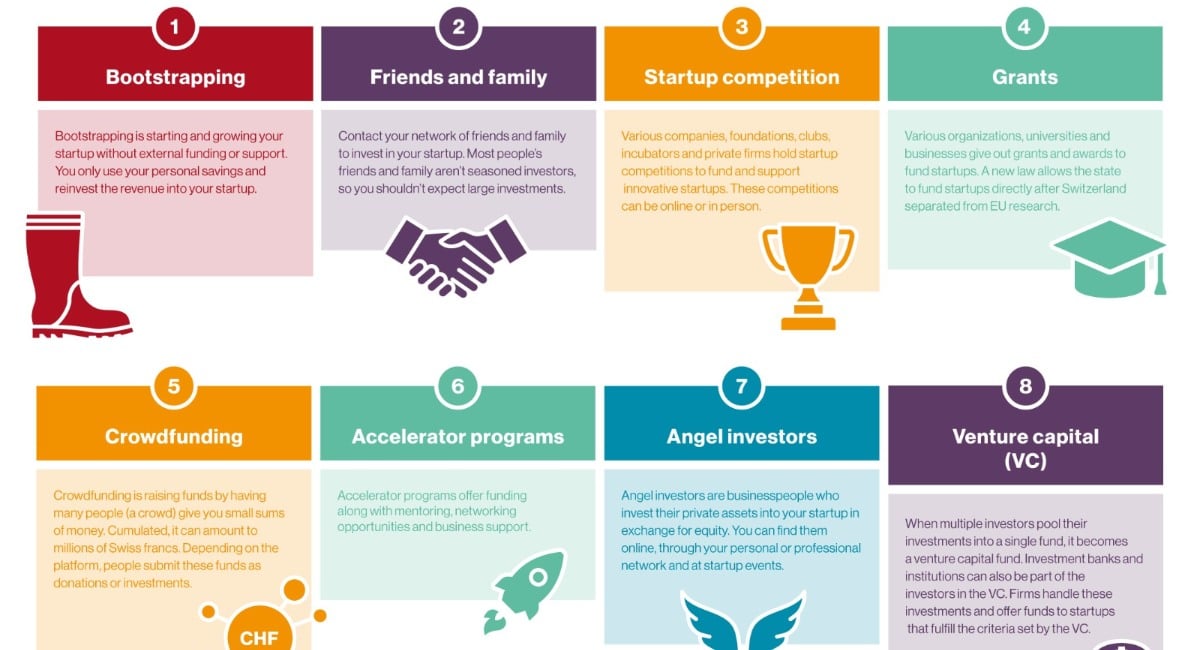
Bootstrapping, or self-funding, is the act of building a company from the ground up using personal savings, credit, or the initial revenues generated by the business. It is often the most challenging yet rewarding path, forcing founders to operate with extreme financial discipline and creativity.
Advantages of Self-Funding
Bootstrapping provides complete control over your company’s direction and equity, eliminating the need to report to external investors or dilute ownership. It instills a lean mindset from day one, encouraging efficient resource allocation and immediate focus on profitability. Founders who bootstrap develop an intimate understanding of every financial aspect of their business, fostering resilience and resourcefulness. This approach also allows for organic growth, where every dollar earned is reinvested, often leading to a more sustainable and robust business model in the long run.
Lean Operations and Expense Management
Successful bootstrapping hinges on relentless cost control and operational efficiency. This means prioritizing essential expenditures, finding creative low-cost solutions, and delaying non-critical investments. Examples include leveraging free or open-source software, utilizing co-working spaces, hiring remote talent to reduce overhead, and outsourcing non-core functions. Every expense must be justified by its direct contribution to revenue generation or core product development. The lean startup methodology, which emphasizes validated learning and iterative product development with minimal waste, aligns perfectly with a bootstrapped approach.
Revenue Generation from Day One
A core tenet of bootstrapping is to start generating revenue as quickly as possible. This might involve offering a minimum viable product or service, pre-selling, or identifying early adopters willing to pay for your solution. Early revenue not only provides much-needed capital but also serves as powerful market validation. It demonstrates that customers are willing to pay for what you offer, which is an invaluable signal to future investors, should you choose to seek external funding later. Focusing on positive cash flow and unit economics from the outset ensures financial stability and fuels organic growth.
Tapping into Early-Stage External Capital
While bootstrapping offers numerous benefits, many startups eventually require external capital to accelerate growth beyond what organic revenues can sustain. The early stages of external funding often involve sources that are more accessible before a startup has substantial traction.
Friends, Family, and Fools (FFF)
Often the first port of call for startup capital, friends, family, and sometimes acquaintances (the ‘fools’ referring to their faith in you despite the high risk) are typically willing to invest based on personal relationships and belief in the entrepreneur. This capital is often easier to secure, comes with fewer strings attached, and can be crucial for bridging the initial funding gap. However, it’s vital to treat these investments professionally, formalizing agreements with clear terms, and managing expectations to preserve relationships.
Angel Investors: More Than Just Money
Angel investors are high-net-worth individuals who provide capital for startups, usually in exchange for convertible debt or equity. Beyond capital, angels often bring invaluable industry expertise, mentorship, and a network of contacts that can significantly accelerate a startup’s progress. They typically invest in earlier-stage companies than venture capitalists and are often more risk-tolerant. Finding the right angel investor involves networking, attending pitch events, and leveraging online platforms that connect founders with accredited investors.

Grants and Competitions: Non-Dilutive Funding
Government grants (e.g., Small Business Innovation Research – SBIR, Small Business Technology Transfer – STTR in the U.S.), academic grants, and various startup competitions offer a highly attractive form of funding: non-dilutive capital. This means you receive funds without giving up any equity in your company. While often highly competitive and requiring significant effort in application writing, grants can provide substantial capital for R&D, pilot programs, or specific projects. Winning a prestigious startup competition not only provides prize money but also significant exposure and validation.
Crowdfunding Platforms: Reaching the Masses
Crowdfunding has emerged as a powerful alternative for raising capital, allowing startups to solicit small amounts of money from a large number of individuals, often via online platforms. Equity crowdfunding (where investors receive equity) and reward-based crowdfunding (where backers receive a product or perk) are the two primary models. Crowdfunding offers market validation, early customer acquisition, and marketing buzz in addition to capital. Success requires a compelling story, a well-defined product, and an engaged community.
Navigating Venture Capital and Debt Financing
As startups mature and demonstrate significant growth potential, they often turn to more substantial funding sources like venture capital and structured debt. These options come with different expectations, complexities, and levels of scrutiny.
The Venture Capital Landscape
Venture Capital (VC) firms invest in high-growth potential startups in exchange for significant equity. VCs typically invest larger sums than angel investors, often in multiple rounds (Seed, Series A, B, C, etc.) as a company scales. They seek out companies with disruptive technologies, large addressable markets, strong teams, and clear exit strategies (e.g., acquisition or IPO). While VCs provide substantial capital and strategic guidance, they also demand significant returns and influence over company decisions. The process of securing VC funding is rigorous, involving extensive due diligence, multiple rounds of pitches, and complex term sheets.
Preparing for VC Pitches
A compelling pitch deck is paramount for attracting VC interest. It must succinctly tell your startup’s story, outline the problem you solve, present your solution, describe your market opportunity, introduce your team, detail your business model, highlight traction and key metrics, and clearly state your funding ask and how the capital will be used. Beyond the deck, founders must be prepared to articulate their vision, demonstrate deep market knowledge, defend their financial projections, and confidently answer challenging questions about their business and competition. Practice, clarity, and conviction are key.
Strategic Debt Options for Startups
While equity financing involves giving up ownership, debt financing allows startups to borrow money that must be repaid with interest, typically retaining full ownership. Traditional bank loans are often difficult for early-stage startups without significant assets or revenue history. However, alternative debt options exist. Revenue-based financing (RBF), for example, involves repayments tied to a percentage of future revenue, offering flexibility. Venture debt, often offered by specialized lenders or even VC firms alongside equity investments, provides capital for growth without diluting equity further. It can be a good bridge between equity rounds or for specific growth initiatives.
Revenue-Based Financing and Alternatives
Revenue-based financing (RBF) is gaining traction as a flexible alternative to traditional equity or debt. Investors provide capital in exchange for a percentage of the company’s future revenue, often capped at a certain multiple of the initial investment. This model aligns investor interests with the company’s sales performance and avoids equity dilution. Other alternatives include factoring (selling invoices at a discount for immediate cash) or lines of credit, though these are typically available to more established businesses with predictable revenue streams.
Crafting a Compelling Financial Narrative
Regardless of the funding source, presenting a coherent, optimistic yet realistic financial narrative is non-negotiable. Funders are investing in numbers as much as ideas and teams.
The Importance of a Robust Business Plan
A comprehensive business plan serves as the blueprint for your startup and a critical document for potential investors. It outlines your company’s mission, market analysis, product/service offerings, marketing and sales strategy, management team, and, crucially, your financial projections. It demonstrates your understanding of the market, your competitive advantage, and your strategic path to profitability and growth. A well-researched and clearly articulated plan instills confidence and acts as a roadmap for your internal team.
Financial Projections that Inspire Confidence
Your financial projections – including profit and loss statements, cash flow forecasts, and balance sheets – must be meticulously prepared, justifiable, and transparent. They should reflect realistic assumptions about market size, customer acquisition costs, average revenue per user, operational expenses, and scaling trajectories. Avoid overly optimistic ‘hockey stick’ projections without strong underlying rationale. Show your work, explain your assumptions, and be prepared to discuss sensitivity analyses (what happens if key assumptions change). Credible projections are a cornerstone of investor trust.
Understanding Term Sheets and Equity Dilution
A term sheet outlines the key terms and conditions of an investment, covering valuation, equity percentage, investor rights (e.g., board seats, liquidation preferences, anti-dilution provisions), and governance. Understanding these legal and financial nuances is vital. Equity dilution, the decrease in the percentage of ownership of existing shareholders as new equity is issued, is an inevitable part of external funding. Entrepreneurs must weigh the benefits of increased capital for growth against the degree of dilution and loss of control. Seeking legal and financial counsel during term sheet negotiations is highly advisable.
Building Relationships with Potential Funders
Funding is not just a transaction; it’s a relationship. Cultivating genuine connections with potential investors, advisors, and mentors long before you need capital can significantly improve your chances of success. Attend industry events, network judiciously, seek advice, and keep potential funders updated on your progress. When the time comes to raise capital, these established relationships can provide warm introductions, valuable insights, and a higher likelihood of investment, transforming a complex process into a more collaborative partnership.
aViewFromTheCave is a participant in the Amazon Services LLC Associates Program, an affiliate advertising program designed to provide a means for sites to earn advertising fees by advertising and linking to Amazon.com. Amazon, the Amazon logo, AmazonSupply, and the AmazonSupply logo are trademarks of Amazon.com, Inc. or its affiliates. As an Amazon Associate we earn affiliate commissions from qualifying purchases.