
The stock market, a dynamic ecosystem where wealth is created and fortunes shift, operates on a precise schedule. For both seasoned traders and burgeoning investors, comprehending these operational hours is not merely a logistical detail but a critical component of a robust investment strategy. While the allure of 24/7 trading exists in some asset classes, major stock exchanges adhere to a structured daily rhythm, punctuated by opening and closing bells that demarcate the official trading day. Knowing “what time the stock market closes” is the gateway to understanding market dynamics, managing risk, and capitalizing on opportunities that arise during and outside these traditional hours.
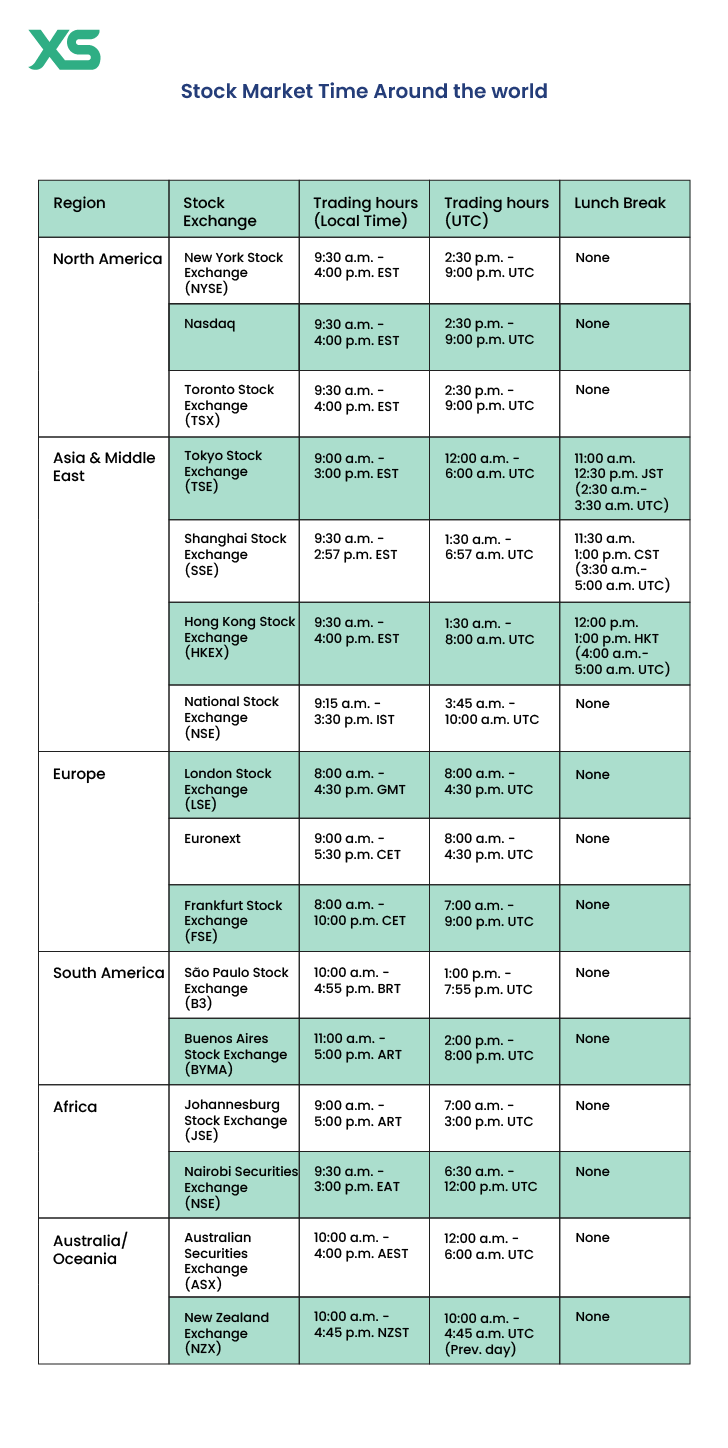
This comprehensive guide delves into the intricacies of stock market trading hours, focusing primarily on the major U.S. exchanges, their extended trading sessions, and the strategic implications for investors worldwide. We will explore why these hours exist, how technology has transformed access, and the practical considerations for navigating the market effectively.
The Standard Trading Day: What Investors Need to Know
At the heart of the U.S. equity market are the New York Stock Exchange (NYSE) and the Nasdaq Stock Market, two of the world’s largest and most influential exchanges. These platforms, where trillions of dollars worth of shares are traded daily, operate according to a specific schedule designed to concentrate liquidity and promote fair and orderly markets.
Primary U.S. Stock Exchanges: NYSE and Nasdaq
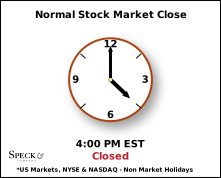
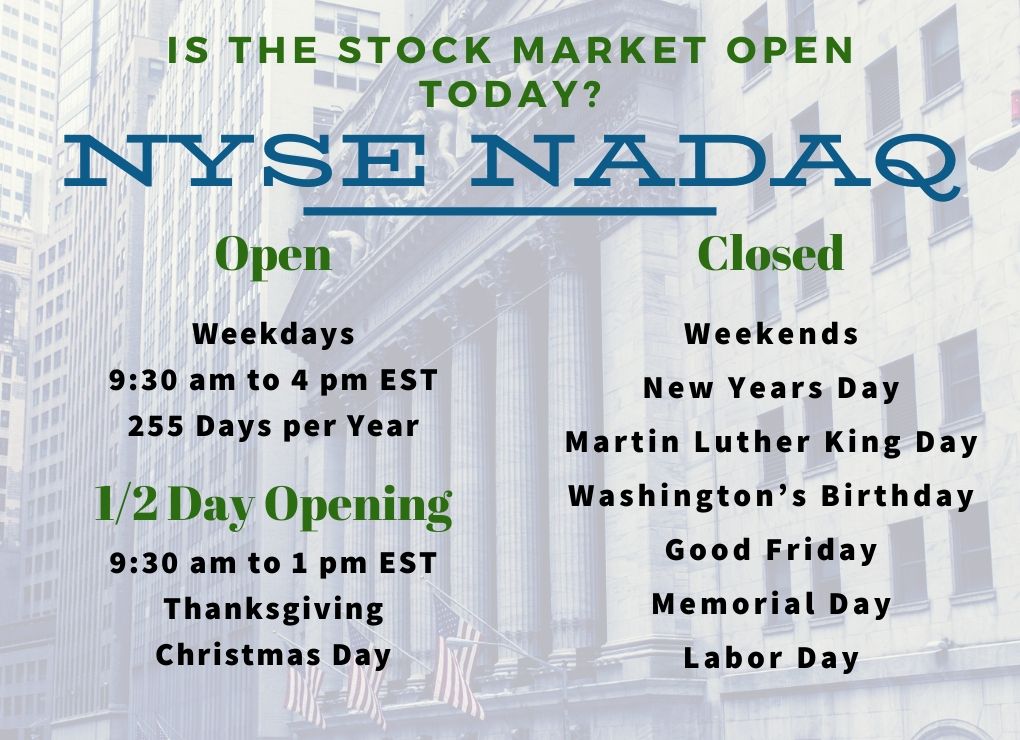
For the vast majority of individual and institutional investors, the standard trading session on the NYSE and Nasdaq runs from 9:30 AM Eastern Time (ET) to 4:00 PM ET on weekdays. This seven-and-a-half-hour window is often referred to as “regular trading hours” or “core market hours.”
- The Opening Bell (9:30 AM ET): This signifies the official start of the trading day. Trading activity can be particularly volatile in the first few minutes as investors react to overnight news, economic data releases, and pre-market trading activity. This period often sees high volume as order books are flushed out from the previous close and new orders accumulate.
- The Closing Bell (4:00 PM ET): This marks the end of the standard trading day. Similar to the open, the final minutes leading up to the close can also exhibit heightened volatility and increased trading volume. Many institutional traders and fund managers strive to execute trades near the close to achieve specific portfolio allocations or benchmark targets, leading to significant price movements in what’s sometimes called the “power hour” or “closing cross.”
During these standard hours, liquidity is typically at its highest, meaning there are plenty of buyers and sellers, which generally results in tighter bid-ask spreads (the difference between the highest price a buyer is willing to pay and the lowest price a seller is willing to accept). This high liquidity ensures efficient price discovery and easier execution of trades at fair prices.
Understanding Time Zones and Their Impact
While the official hours are quoted in Eastern Time (ET), investors across the globe must account for their local time zones. For someone in California (Pacific Time, PT), the market opens at 6:30 AM PT and closes at 1:00 PM PT. An investor in London (GMT) would see the market open at 2:30 PM GMT and close at 9:00 PM GMT. For investors in Asia or Australia, the U.S. market typically opens late at night or early morning the following day.
- Importance of Conversion: Accurately converting time zones is crucial to avoid missed opportunities or mistimed trades. Most reputable brokerage platforms will display market hours relative to the user’s local time zone, but it’s always wise for investors to double-check and understand the ET baseline.
- Implications for International Investors: For those outside the U.S., engaging with the market during its standard hours might mean adjusting personal schedules or relying on sophisticated order types that can be placed while they are not actively monitoring. This also highlights the importance of staying updated on U.S. holidays, as these will affect market closures regardless of the investor’s local calendar.
Beyond the Bell: Exploring Extended Trading Hours
The notion that stock market activity ceases precisely at 4:00 PM ET is an oversimplification in the modern financial landscape. Enabled by technological advancements and the rise of Electronic Communication Networks (ECNs), trading activity now extends beyond the traditional 9:30 AM to 4:00 PM window. These “extended trading hours” offer both opportunities and unique challenges for investors.
Pre-Market Trading: Seizing Early Opportunities
Pre-market trading refers to the period before the official opening bell. While hours can vary slightly by brokerage, it typically runs from 4:00 AM ET to 9:30 AM ET.
- What it is: During pre-market hours, investors can place buy and sell orders for stocks listed on major exchanges. This period is often characterized by lower trading volumes compared to regular hours, as fewer participants are active.
- Reasons for Pre-Market Trading: Companies frequently release important news, such as quarterly earnings reports, analyst upgrades/downgrades, or mergers and acquisition announcements, either before the market opens or after it closes. Pre-market trading allows investors to react to this news immediately, rather than waiting for the official open. Traders might use this time to adjust positions based on new information, potentially capitalizing on early price movements.
- Risks Associated: The most significant risks include lower liquidity (fewer buyers and sellers, leading to wider bid-ask spreads and potentially larger price swings) and higher volatility. A small order can have a disproportionately large impact on a stock’s price, and these price movements may not be sustained once regular trading hours commence and liquidity increases. Orders placed in pre-market are typically limit orders, meaning they will only execute at a specified price or better.
After-Hours Trading: Post-Market Reactions
After-hours trading occurs after the official closing bell, typically from 4:00 PM ET to 8:00 PM ET, though some brokerages may offer even longer sessions.
- What it is: Similar to pre-market, after-hours trading facilitates the buying and selling of stocks outside of standard market hours. It’s also conducted primarily through ECNs.
- Reasons for After-Hours Trading: Many companies choose to release their earnings reports or significant corporate news shortly after the market closes. This allows them to disseminate information without disrupting trading during regular hours. Investors then use after-hours trading to react to this late-breaking news, potentially front-running anticipated moves at the next day’s open. For example, a company with surprisingly good earnings might see its stock price jump significantly in after-hours trading.
- Risks Associated: The risks mirror those of pre-market trading: reduced liquidity, increased volatility, and wider spreads. Prices established during after-hours trading may not reflect the opening price the following day, especially if new information emerges overnight or if trading volumes were particularly low. The risk of manipulation is also slightly higher due to less oversight and fewer participants.
How Extended Hours Trading Works
Extended hours trading is predominantly executed through Electronic Communication Networks (ECNs). These automated systems match buy and sell orders electronically, bypassing the traditional exchange floor. Unlike standard trading, where market orders (buy/sell at the best available price) are common, extended hours trading almost exclusively uses limit orders. This is a protective measure for investors, as it ensures their trades are executed only at or better than a specified price, mitigating the risk of executing at an unfavorable price due to low liquidity or sudden volatility. Not all stocks are equally active in extended hours; typically, larger, more liquid stocks and those with recent news are more likely to see significant activity.
The Rationale Behind Fixed Trading Hours and Their Evolution
The structure of stock market hours isn’t arbitrary; it’s a carefully balanced system that has evolved over centuries, blending historical necessity with modern technological capabilities.
Market Efficiency and Investor Protection
Fixed trading hours serve several crucial functions, primarily to maintain market efficiency and investor protection:
- Concentration of Liquidity: By confining trading to specific hours, exchanges ensure that buyers and sellers are present simultaneously. This concentration of activity creates deep order books, leading to tighter bid-ask spreads and more efficient price discovery. Without fixed hours, liquidity could be highly fragmented, making it difficult to execute trades at fair prices.
- Orderly Markets: Regulators like the Securities and Exchange Commission (SEC) advocate for fixed hours as they facilitate greater oversight and reduce the potential for market manipulation. It provides a structured environment where market participants can assess information, react, and trade in a relatively controlled manner.
- Time for Processing and Reconciliation: The periods outside standard hours allow exchanges, brokerages, and clearinghouses to process the day’s trades, settle accounts, and perform system maintenance. This “downtime” is essential for the smooth functioning and integrity of the financial system.
The Impact of Globalization and Technology
Historically, stock exchanges were physical locations, and trading hours were dictated by geographical convenience and the limitations of manual processes. The advent of globalization and, more profoundly, technology has fundamentally altered this landscape.
- 24/7 Connectivity: The internet and advanced trading platforms have enabled instantaneous communication and transaction capabilities across continents. This technological leap initially fueled the demand for extended trading hours in traditional equities and has completely transformed other asset classes.
- Comparison to Other Asset Classes: While stocks maintain defined hours, markets like foreign exchange (forex) and cryptocurrencies operate virtually 24 hours a day, five to seven days a week. Forex trading follows the sun, moving from one major financial center to another (Sydney, Tokyo, London, New York). Cryptocurrencies, decentralized by nature, are traded around the clock without central exchange hours. This contrast highlights the regulatory and structural differences between established equity markets and newer, more digitally native asset classes.
Historical Context: From Physical Trading Floors to Digital Exchanges
Early stock markets, such as the rudimentary exchanges in Amsterdam and London centuries ago, operated on informal schedules dictated by daylight and the presence of merchants. As markets formalized, fixed hours became necessary for efficient information dissemination and physical gatherings. In the U.S., the NYSE’s original hours were much longer, but gradually shortened to the current 9:30 AM – 4:00 PM ET schedule, influenced by bank operating hours and the need for lunch breaks. The transition from bustling trading floors with human specialists to fully electronic exchanges, which began in earnest in the late 20th century, paved the way for efficient extended trading hours, allowing global investors to participate more readily and react quickly to news regardless of the time of day.
Strategic Implications for Different Investor Types
Understanding stock market hours and their nuances is critical for tailoring effective investment strategies, particularly given the varying objectives and risk tolerances of different investor types.
Day Traders and Active Investors
For day traders, who aim to profit from intra-day price movements and close all positions before the market closes, the standard 9:30 AM to 4:00 PM ET window is their primary battleground.
- Maximizing Standard Hours: These investors thrive on volatility and liquidity, which are highest during core market hours, especially around the opening and closing bells. They rely on real-time data, rapid execution, and technical analysis to make quick decisions.
- Leveraging Extended Hours Cautiously: While day traders might monitor pre-market and after-hours activity for potential catalysts, they generally approach extended hours with extreme caution. The lower liquidity and higher volatility make large-scale, short-term positions very risky. Some might use extended hours to enter or exit positions only if a significant, confirmed news event creates a clear opportunity with sufficient liquidity, but this is less common than during regular hours.
Long-Term Investors
Long-term investors, whose strategy revolves around holding assets for months or years, are less concerned with minute-by-minute price fluctuations. Their focus is on fundamental analysis, company growth, and macroeconomic trends.
- Less Affected by Intra-Day Moves: The exact timing of market open or close is generally less critical for them. A long-term investor might place an order at any point during regular hours, confident that small intra-day price swings will not significantly impact their overall return over years.
- Using Extended Hours for Specific Events: However, extended hours can still be relevant. For instance, if a company an investor wants to buy stock in reports exceptionally strong earnings after hours, and the stock sees an immediate, significant jump, a long-term investor might choose to place a buy order in extended hours to secure a position before the next day’s open, potentially at a slightly lower price than what might materialize the next day if positive sentiment builds further. Conversely, negative news might prompt them to exit a position to mitigate risk, although usually, a long-term investor would ride out such volatility unless the fundamentals have drastically changed.
International Investors
For investors located outside the U.S., navigating the time zone differences is paramount.
- Navigating Time Zone Differences: As discussed, the U.S. market opens and closes at vastly different times for investors in Europe, Asia, or Australia. This necessitates careful planning, possibly relying on automated order types (like limit orders) or adjusting personal schedules to coincide with key U.S. trading periods.
- Accessing U.S. Markets Through Global Brokers: Many international brokerage firms offer access to U.S. markets, often providing platforms that adjust market hours to the investor’s local time. It’s also important for these investors to be aware of U.S. public holidays when the exchanges are closed, as their local holidays will not affect U.S. market operations.
Practical Considerations and Best Practices for Trading Around Market Closes
Effective participation in the stock market, whether during standard or extended hours, requires more than just knowing the clock. It demands a strategic approach to volatility, liquidity, and information flow.
Understanding Market Volatility and Liquidity
- Higher Volatility at Open and Close: The periods immediately following the opening bell and preceding the closing bell often experience the highest levels of volatility and trading volume. This is due to the influx of orders accumulated overnight or end-of-day portfolio adjustments. Traders can capitalize on these movements but must also be wary of rapid price swings.
- Lower Liquidity in Extended Hours: As established, pre-market and after-hours sessions typically have significantly lower liquidity. This means that larger orders can move prices dramatically, and bid-ask spreads can be considerably wider. Investors trading during these times might find it harder to get their orders filled at their desired price, and execution may be less efficient.
Impact of Economic Data Releases and Company News
- Scheduled Releases: Important economic data (e.g., inflation reports, employment figures, GDP growth) are often scheduled for release before market open (e.g., 8:30 AM ET) or during standard hours. These releases can trigger immediate market reactions. Investors should stay informed about the economic calendar to anticipate potential volatility.
- Earnings Reports: A substantial number of public companies release their quarterly earnings reports either before the market opens (e.g., 7:00 AM ET) or after it closes (e.g., 4:05 PM ET). These announcements are major catalysts, often leading to significant price movements in extended hours and carrying over into the next day’s regular session. Monitoring these reports is crucial for both short-term traders and long-term investors.
Strategies for Managing Risk
Given the complexities and potential pitfalls, especially in extended hours, employing robust risk management strategies is paramount:
- Utilize Limit Orders: Always use limit orders, particularly during extended hours. A limit order guarantees that your trade will be executed only at the price you specify or better, preventing unexpected executions at disadvantageous prices due to low liquidity or sudden market shifts. Avoid market orders in extended hours.
- Consider Stop-Loss Orders: For active traders, stop-loss orders can help limit potential losses by automatically selling a stock if it drops to a predetermined price. While these are typically used during regular hours, understanding price levels where such orders might be triggered is important even when considering extended hour movements.
- Avoid Impulsive Decisions: Reacting purely emotionally to after-hours news without considering the underlying fundamentals or market conditions can lead to poor decisions. Take time to analyze the information and assess its true impact.
Utilizing Brokerage Tools and Resources
Modern brokerage platforms offer a suite of tools that can aid investors in navigating market hours:
- Access to Pre/After-Hours Trading: Ensure your brokerage offers extended hours trading if you intend to use it. Understand their specific policies, hours, and available order types.
- Real-Time Data and News Feeds: Access to real-time market data, company news, and economic calendars is indispensable for making informed decisions, especially around market open and close, and during extended hours.
- Educational Resources: Many brokers provide educational content explaining the nuances of trading hours, order types, and risk management. Leveraging these resources can significantly enhance an investor’s understanding and capabilities.
In conclusion, knowing “what time the stock market closes” is far more than a simple fact; it’s the baseline for understanding the intricate rhythms of financial markets. From the bustling standard trading hours to the cautious opportunities of extended sessions, each period presents distinct characteristics and demands a tailored approach. By grasping these dynamics, employing sound risk management, and leveraging available tools, investors can position themselves to make more informed decisions and navigate the ever-evolving landscape of global equity markets with greater confidence and strategic insight.
aViewFromTheCave is a participant in the Amazon Services LLC Associates Program, an affiliate advertising program designed to provide a means for sites to earn advertising fees by advertising and linking to Amazon.com. Amazon, the Amazon logo, AmazonSupply, and the AmazonSupply logo are trademarks of Amazon.com, Inc. or its affiliates. As an Amazon Associate we earn affiliate commissions from qualifying purchases.