
The question “how much is the stock market worth?” seems simple on the surface, but its answer is complex, dynamic, and deeply intertwined with the global economy. It’s not a static figure you can find on a balance sheet; rather, it’s a constantly fluctuating aggregate value representing the collective worth of all publicly traded companies worldwide. Understanding this figure—and the forces that shape it—is fundamental for investors, economists, and anyone seeking to grasp the monumental scale of global finance.
At its core, the stock market’s worth is the sum total of the market capitalization of every single company listed on every stock exchange around the globe. Market capitalization, or “market cap,” for a single company is calculated by multiplying its current share price by the total number of its outstanding shares. When you extrapolate this calculation across thousands upon thousands of companies, from multinational giants like Apple and Saudi Aramco to smaller, regional enterprises, you begin to appreciate the colossal figures involved. This aggregate value is a real-time, living indicator, reflecting not just current profits and assets but also future expectations, investor sentiment, and global economic health. It’s a barometer of human endeavor, innovation, and perceived value, always in motion, always reacting to a myriad of influences from geopolitical shifts to technological breakthroughs.
Understanding the Concept of “Market Capitalization”
To fully grasp the “worth” of the stock market, we must first dive into the concept of market capitalization, not just for individual companies, but in its collective sense. It’s the primary metric used to quantify the size of a company and, by extension, an entire market.
Global vs. National Stock Markets
When we talk about “the stock market,” we often refer to it as a singular entity, but in reality, it’s a vast network of interconnected yet distinct national and regional markets. Each country, or even economic bloc, typically has its own primary stock exchanges—the New York Stock Exchange (NYSE) and Nasdaq in the U.S., the Japan Exchange Group (JPX), the London Stock Exchange (LSE), Euronext, and the Shanghai Stock Exchange (SSE), to name a few. Each of these exchanges lists thousands of companies, and their combined market capitalization constitutes the national stock market’s worth. The “global stock market” worth is simply the grand total of all these individual national market capitalizations. This distinction is crucial because while these markets are increasingly intertwined, influenced by global capital flows and macroeconomic trends, they also retain unique characteristics, regulatory environments, and investor bases. A downturn in one major economy can ripple globally, but local policies and events can also drive significant divergence in performance.
The Sum of All Valuations
The global stock market’s worth is literally the sum of all individual companies’ market caps. Imagine calculating the market cap for every single company listed on every stock exchange—from the smallest micro-cap firm to the largest mega-cap corporation—and then adding all those figures together. This monumental calculation yields a figure that typically runs into the tens, if not hundreds, of trillions of U.S. dollars. This collective valuation is a testament to the immense wealth generated and held in publicly traded equities. It represents not just the tangible assets of these companies but also their intangible value—their brands, intellectual property, future growth prospects, and the collective belief of millions of investors in their ability to generate profits. This “sum” is not just an academic exercise; it’s a critical indicator for policymakers and economists, reflecting the underlying health and potential of the global capitalist system.
Why the Number Fluctuates Constantly
Perhaps the most defining characteristic of the stock market’s worth is its incessant fluctuation. This figure is not fixed; it changes second by second, minute by minute, throughout trading hours across the globe. Why? Because the underlying components—the share prices of individual companies—are constantly moving. Share prices are determined by a complex interplay of supply and demand, influenced by a myriad of factors. Company-specific news (earnings reports, product launches, mergers, management changes), industry trends, macroeconomic data (inflation, interest rates, GDP growth, employment figures), political events, technological advancements, and even broad investor sentiment all play a role. A major company’s stock price can surge or plummet on a single news item, and when multiplied by millions or billions of shares, this can significantly alter its market cap. Aggregate these shifts across thousands of companies, and the global stock market’s worth becomes a dynamic, living entity, a real-time reflection of the world’s economic pulse and collective expectations.
The Astonishing Scale of Global Equity Markets
To truly appreciate the answer to “how much is the stock market worth,” one must grapple with the sheer scale of global equity markets. These are not just large; they are colossal, dwarfing many other asset classes and representing an immense concentration of wealth and economic power.
Key Stock Exchanges and Their Dominance
A handful of dominant stock exchanges account for the vast majority of global market capitalization. The New York Stock Exchange (NYSE) and Nasdaq, both based in the U.S., are consistently the largest and second-largest exchanges globally by market cap. Together, they list many of the world’s biggest and most influential companies, especially in technology, finance, and consumer goods. Other major players include the Japan Exchange Group (JPX) in Tokyo, the Shanghai Stock Exchange (SSE) and Shenzhen Stock Exchange in China, Euronext (which operates exchanges in Paris, Amsterdam, Brussels, Lisbon, and Dublin), the London Stock Exchange (LSE), and the Hong Kong Stock Exchange (HKEX). Each of these exchanges serves as a vital artery in the global financial system, facilitating capital formation, price discovery, and liquidity for countless companies. Their collective strength and interconnectedness underpin the stability and growth of the global financial ecosystem, though their individual fortunes can rise and fall with regional economic shifts and geopolitical developments.
Trillions Upon Trillions: Quantifying the Total Value
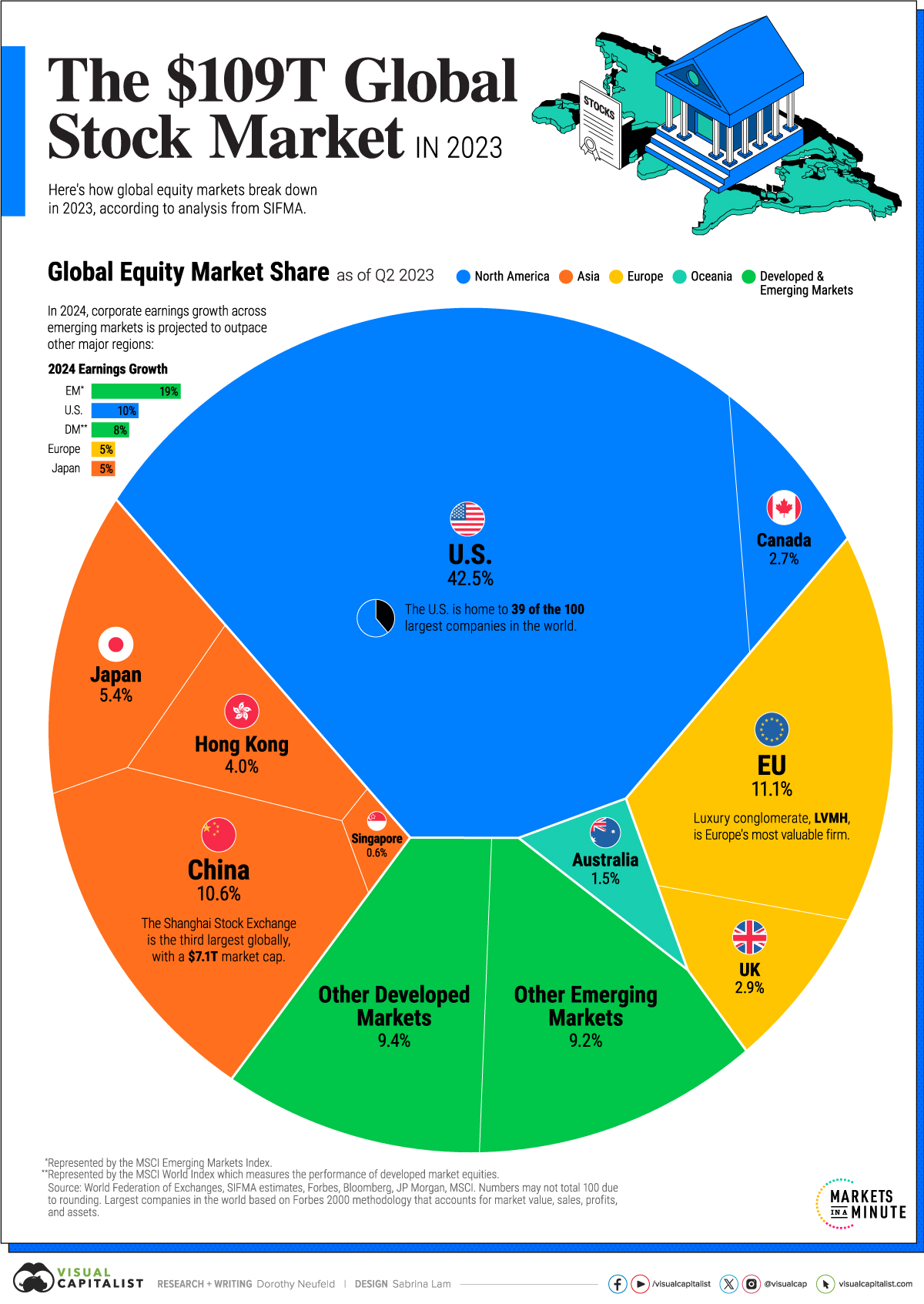
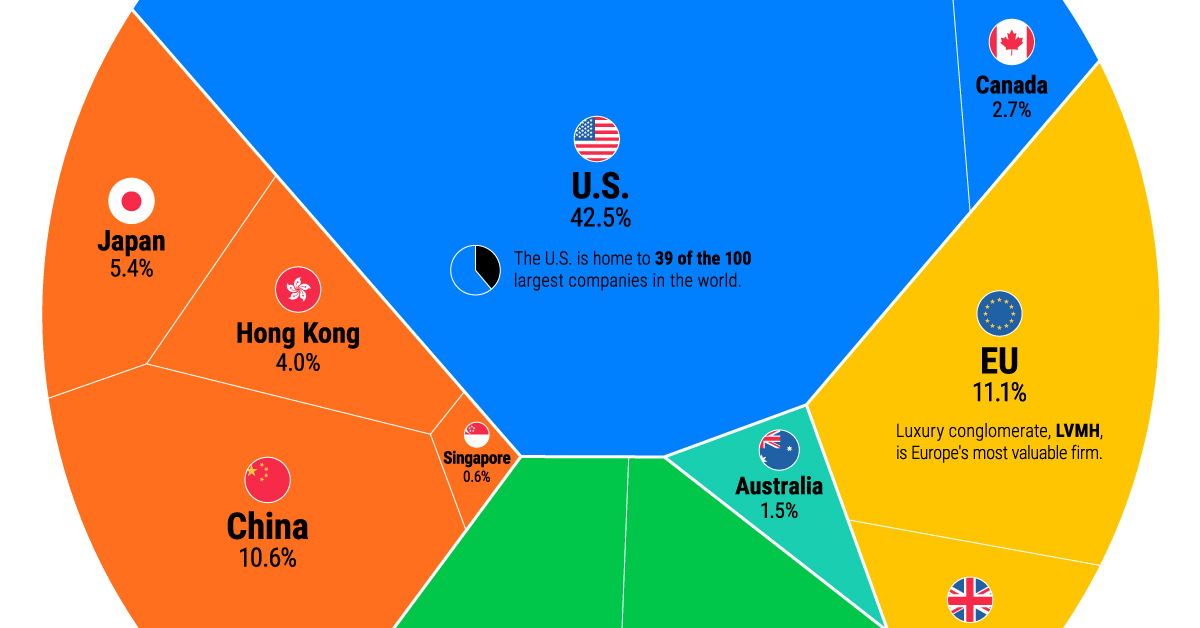
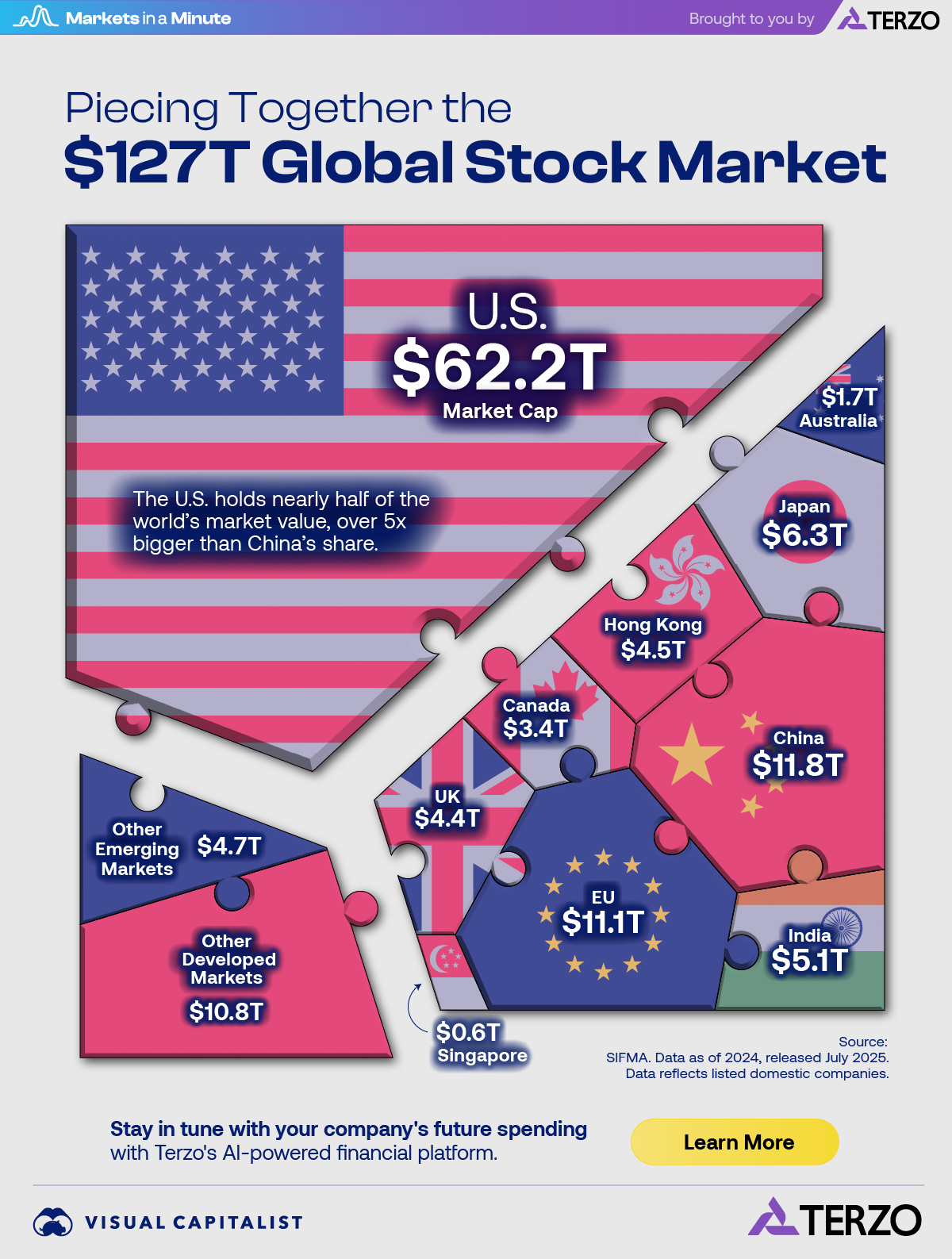
While the exact figure is a moving target, the total global stock market capitalization typically hovers in the range of $90 trillion to $120 trillion USD. This figure can fluctuate dramatically year-to-year and even month-to-month based on market performance. For context, the entire global GDP (Gross Domestic Product) is usually around $100 trillion. This means that the total value of publicly traded companies is roughly equivalent to, or even exceeds, the world’s annual economic output. To put this into perspective, consider what $100 trillion represents: it’s more than the entire U.S. national debt multiplied by three, and it’s a number so vast that it’s challenging for the human mind to fully comprehend. This immense wealth is not just abstract; it represents ownership stakes in factories, technologies, brands, services, and human capital that drive the world economy. It underscores the incredible power and influence wielded by corporations and the capital markets that fund them.
Historical Growth and Future Projections
The growth of global equity markets has been nothing short of spectacular over the past century, particularly since the latter half of the 20th century. Driven by globalization, technological innovation, the rise of emerging markets, and increasing access to financial markets, the total market worth has expanded exponentially. While there have been significant downturns—such as the dot-com bubble burst, the 2008 financial crisis, and the initial shock of the COVID-19 pandemic—the long-term trend has been upward. Historically, equities have proven to be powerful wealth generators, outpacing inflation and other asset classes over extended periods. Future projections suggest continued growth, albeit with inevitable volatility. Factors like the ongoing digital transformation, the green energy transition, demographic shifts, and the continued integration of developing economies into the global financial system are expected to fuel further expansion. However, these projections are always tempered by potential risks, including geopolitical instability, climate change impacts, and future pandemics, which could introduce significant headwinds.
Factors Influencing Stock Market Valuation
The stock market’s valuation is not arbitrary; it’s a complex reflection of countless internal and external forces. Understanding these influences is key to comprehending why the “worth” changes so frequently and often dramatically.
Economic Indicators
Macroeconomic indicators are foundational drivers of stock market performance. Gross Domestic Product (GDP) growth signals a robust economy, which typically translates to higher corporate earnings and investor confidence. Conversely, slowing GDP can signal recessions and market declines. Inflation rates are critical: moderate inflation can be healthy, but high, uncontrolled inflation erodes purchasing power and corporate profits, often leading to interest rate hikes by central banks. These interest rates are profoundly influential; lower rates make borrowing cheaper for companies (stimulating investment and growth) and make bonds less attractive (pushing investors towards equities), while higher rates do the opposite, increasing borrowing costs and making safer assets more appealing. Employment figures and consumer spending data indicate economic strength and consumer confidence, directly impacting company revenues. Positive data typically fuels market optimism, while negative data can trigger sell-offs, illustrating the market’s constant sensitivity to the broader economic landscape.
Corporate Earnings and Profitability
At the micro level, the health of individual companies is paramount. Ultimately, a company’s stock price, and therefore its contribution to the overall market worth, is heavily driven by its earnings and profitability. Companies that consistently report strong earnings, exhibit robust revenue growth, and demonstrate healthy profit margins tend to see their stock prices rise. Investors are constantly scrutinizing quarterly and annual earnings reports, looking for signs of financial health, efficiency, and future growth potential. Conversely, companies that miss earnings estimates, issue bleak forecasts, or face declining profitability often experience significant stock price declines. The aggregate performance of thousands of companies’ earnings reports forms the bedrock of the stock market’s overall valuation. A period of widespread corporate profitability often correlates with a bull market, while widespread struggles can herald a bear market.
Investor Sentiment and Market Psychology
Beyond hard economic data and corporate financials, the collective psychology of investors plays an enormous role. Market sentiment, driven by fear and greed, can often override fundamental analysis in the short term. Optimism can lead to buying frenzies, pushing valuations beyond what fundamentals might suggest (creating bubbles), while pessimism can trigger panic selling, leading to sharp declines even for fundamentally sound companies. News headlines, social media trends, expert opinions, and even anecdotal evidence can sway investor mood. Concepts like “animal spirits” (Keynes) describe this irrational exuberance or despondency. Understanding investor sentiment is not about predicting the unpredictable, but about recognizing its power to amplify or diminish the impact of fundamental news, causing market movements that can sometimes seem detached from underlying economic realities.
Geopolitical Events and Global Stability
The interconnectedness of the global economy means that geopolitical events can have profound and immediate effects on stock market worth. Wars, trade disputes, political instability in major economies, terrorist attacks, and even global pandemics (as seen with COVID-19) can introduce immense uncertainty, disrupt supply chains, impact corporate earnings, and dramatically shift investor confidence. For instance, an oil price shock due to conflict in the Middle East can spike inflation and input costs globally, affecting profits across industries. A trade war between major economic powers can impose tariffs, reduce international trade volumes, and harm export-oriented companies. In such scenarios, markets tend to react with increased volatility, as investors seek to price in new risks and adjust their portfolios accordingly. Global stability is a crucial, though often taken for granted, prerequisite for sustained market growth.
Beyond the Number: What Market Worth Signifies
While the sheer number representing the stock market’s worth is impressive, its true significance lies in what it represents and the vital roles it plays in the global economy. It’s more than just a figure; it’s a complex indicator of economic health, wealth creation, and capital allocation.
A Barometer of Economic Health
The total market capitalization of stocks serves as a crucial, albeit imperfect, barometer of economic health. A growing stock market often signals investor confidence in future economic growth, robust corporate earnings, and a stable financial environment. It indicates that capital is being effectively deployed, companies are expanding, and innovation is being rewarded. Conversely, a significant and sustained decline in market worth often foreshadows or accompanies economic contractions, recessions, or periods of heightened uncertainty. While the stock market is not the economy itself, its forward-looking nature means it often anticipates economic shifts, acting as a leading indicator. Its movements are closely watched by central banks, governments, and businesses alike, providing insights into the collective optimism or pessimism regarding the economic future.
Wealth Creation and Distribution
The stock market is a primary engine of wealth creation for individuals, institutions, and nations. As companies grow and their market value increases, so does the wealth of their shareholders. This includes not only direct investors but also millions of people whose retirement savings (through pension funds and 401ks), mutual funds, and other investments are tied to the market’s performance. The compounding effect of stock market returns over decades has lifted countless individuals and families into greater financial security. However, it also highlights issues of wealth distribution. While many participate indirectly, direct ownership of significant equity stakes is often concentrated among a smaller segment of the population, leading to debates about economic inequality and the accessibility of wealth-generating opportunities. The market’s overall worth, therefore, reflects both the immense potential for prosperity and the ongoing challenges of equitable access.
Capital Allocation for Innovation and Growth
Beyond wealth creation, the stock market plays a critical role in capital allocation. Public markets allow companies to raise substantial capital from a broad base of investors, which is then used to fund research and development, expand operations, acquire other businesses, and invest in new technologies. This efficient channeling of capital from savers to productive enterprises is fundamental to economic growth and innovation. Without the stock market, companies would have far fewer avenues to secure the large sums needed for transformative projects, potentially stifling job creation, technological advancement, and overall economic dynamism. The market effectively acts as a mechanism to identify and reward successful businesses, guiding capital towards ventures deemed most promising by the collective judgment of investors.
Risks and Opportunities for Investors
For individual and institutional investors, the stock market’s immense worth presents both significant opportunities and inherent risks. The opportunity lies in the potential for substantial long-term returns, allowing wealth to grow faster than inflation and other traditional savings vehicles. Through diversification across different companies, sectors, and geographies, investors can mitigate some risks while participating in global economic expansion. However, the market’s constant fluctuations mean that investments are never guaranteed. Economic downturns, company-specific failures, and unexpected global events can lead to significant losses. Understanding the market’s worth, its drivers, and its historical performance is crucial for making informed investment decisions, balancing risk tolerance with long-term financial goals, and recognizing that while the overall trend may be upward, individual journeys are often volatile.
Navigating the Market: Implications for Investors
Understanding the total worth of the stock market and its myriad influences is not merely an academic exercise; it has profound practical implications for anyone looking to invest. A discerning approach, grounded in fundamental principles, is essential for navigating this dynamic landscape.
Diversification and Long-Term Perspective
Given the market’s constant fluctuations and the inherent risks of individual company performance, diversification is perhaps the most critical strategy for investors. Spreading investments across different companies, industries, asset classes (stocks, bonds, real estate), and even geographies helps to mitigate risk. If one sector or company underperforms, others may compensate. Equally important is adopting a long-term perspective. While short-term market movements can be dramatic and emotionally taxing, historical data consistently shows that equities tend to deliver positive returns over extended periods (10+ years). Attempting to time the market—buying low and selling high perfectly—is notoriously difficult, even for professionals. A disciplined approach of investing regularly, regardless of short-term market noise, and holding investments for the long haul, allows investors to benefit from the power of compounding and ride out temporary downturns.
Understanding Valuation Metrics
While the overall market worth is a grand total, savvy investors delve into valuation metrics for individual companies and broader market indices. Metrics like the Price-to-Earnings (P/E) ratio, Price-to-Book (P/B) ratio, and Dividend Yield help assess whether a stock or the overall market is overvalued, undervalued, or fairly priced relative to its earnings, assets, or dividends. For the entire market, metrics like the Market Cap-to-GDP ratio (often referred to as the “Buffett Indicator”) can offer a high-level sense of whether the stock market is broadly expensive or cheap compared to the underlying economy. While no single metric is definitive, a holistic understanding of these tools can provide valuable insights, helping investors make more informed decisions about when and where to allocate capital, avoiding overly speculative ventures, and identifying potential opportunities.
The Role of Passive vs. Active Investing
Investors can approach the market through either passive or active strategies. Passive investing involves tracking a broad market index (like the S&P 500 or a global index) through low-cost exchange-traded funds (ETFs) or mutual funds. This strategy assumes that beating the market consistently is challenging, and it aims to capture the market’s overall return. Active investing, conversely, involves professional fund managers or individual investors actively selecting stocks or managing portfolios with the goal of outperforming the market. While active management can yield higher returns if successful, it also comes with higher fees and the risk of underperformance. The choice between passive and active depends on an investor’s goals, risk tolerance, time commitment, and belief in their ability (or a manager’s ability) to consistently beat market benchmarks. Both approaches ultimately contribute to and are influenced by the total market worth.
Accessing the Market: Tools and Strategies
Accessing the stock market has never been easier, thanks to advancements in financial technology. Online brokerages offer user-friendly platforms for buying and selling stocks, ETFs, and mutual funds. Robo-advisors provide automated, algorithm-driven investment management, making it accessible even for novice investors with smaller sums. Understanding different investment strategies—from growth investing (focusing on companies with high growth potential) to value investing (finding undervalued companies) to income investing (seeking dividend-paying stocks)—can help tailor an approach to individual financial goals. Regardless of the chosen strategy or tool, a fundamental understanding of how the stock market functions, what drives its immense worth, and the long-term potential it offers is crucial for anyone looking to build wealth and secure their financial future. The “worth” is not just a number; it’s a gateway to economic participation and prosperity.
aViewFromTheCave is a participant in the Amazon Services LLC Associates Program, an affiliate advertising program designed to provide a means for sites to earn advertising fees by advertising and linking to Amazon.com. Amazon, the Amazon logo, AmazonSupply, and the AmazonSupply logo are trademarks of Amazon.com, Inc. or its affiliates. As an Amazon Associate we earn affiliate commissions from qualifying purchases.