
When Nintendo launched the Switch in 2017, it promised a bridge between high-fidelity home gaming and the convenience of mobile play. While triple-A titles like The Legend of Zelda proved the hardware’s power, it was the indie revolution that truly showcased the platform’s versatility. Among these titles, few have utilized the Switch’s unique technical architecture as creatively as What the Golf?. Developed by Triband, this “golf game for people who hate golf” is far more than a collection of jokes; it is a sophisticated study in iterative software design, physics-based coding, and optimized user experience (UX).

Reimagining the Sports Genre through Iterative Software Design
At its core, What the Golf? is an exercise in subverting software expectations. In a traditional sports simulator, the technical goal is consistency—ensuring that a specific input always results in a predictable physical outcome. Triband took the opposite approach, building a codebase that prioritizes surprise over stability.
Subverting Expectations with Physics-Based Mechanics
The “Tech” behind What the Golf? relies heavily on a robust physics engine—likely built using Unity—that allows for the manipulation of mass, gravity, and velocity on the fly. In one level, the software treats the “ball” as a standard sphere with high friction. In the next, the player might be controlling a house, a toaster, or even the protagonist’s own body.
From a programming perspective, this requires a highly modular entity-component system. Instead of hard-coding the properties of a golf ball, the developers created a flexible “playable object” framework. This allows the game to swap out 3D models and physical attributes instantly without breaking the game loop. The technical achievement here isn’t just the humor; it’s the stability of a system that can handle wildly different physics profiles within the same execution thread.
The “Anti-Golf” Philosophy: Coding for Chaos
Most golf games focus on the “swing meter” or “wind direction” variables. What the Golf? replaces these with a “chaos variable.” Each stage acts as a mini-software prototype. To keep the game running smoothly on the Nintendo Switch’s limited RAM, the developers had to ensure that the transition between these disparate mechanics was seamless. The software doesn’t reload the entire engine for every level; instead, it utilizes efficient asset-loading techniques to swap out environmental triggers. This “micro-level” design ensures that the CPU overhead remains low, providing a fluid 60-FPS experience that feels responsive and polished.
The Synergy Between Indie Software and Hybrid Hardware
The porting of What the Golf? to the Nintendo Switch was not a simple copy-paste operation. It represents a deep integration between software design and the specific hardware capabilities of the Tegra X1 chipset.
Optimizing Performance for the Tegra X1 Chipset
The Nintendo Switch utilizes an NVIDIA Tegra X1 processor, which, while capable, requires careful optimization compared to high-end PCs. For What the Golf?, the technical challenge lay in maintaining the clean, minimalist aesthetic while managing a high number of physics objects on screen during the more frantic levels.
The developers employed clever “Level of Detail” (LOD) management and simplified shaders to ensure the game looks crisp in both 1080p docked mode and 720p handheld mode. By focusing on stylized, low-poly geometry, they freed up the GPU to handle the complex collisions and ragdoll physics that define the gameplay. This is a prime example of “smart tech”—choosing an art style that serves the software’s mechanical requirements rather than fighting against the hardware’s limitations.
Leveraging the Switch’s Unique Input Methods
One of the standout features of the Switch version is its use of the console’s unique inputs. Unlike the PC version, which relies on a mouse, or the mobile version, which is strictly touch-based, the Switch version integrates:
- Gyro Controls: Utilizing the accelerometers within the Joy-Cons to allow for precise aiming in specific mini-games.
- HD Rumble: The haptic feedback system is programmed to provide different tactile responses depending on the object being “hit.” Hitting a heavy couch feels different through the controllers than hitting a light egg.
- Touchscreen Support: In handheld mode, the game retains the intuitive “pull-and-release” mechanics of its mobile roots, showcasing the Switch’s ability to act as a high-end tablet.
From a technical standpoint, mapping these diverse inputs into a unified control scheme requires a sophisticated input-handling layer in the software architecture, ensuring that the game feels “native” regardless of how the player chooses to interact with the device.

User Experience and the Portability Factor
Technology in gaming isn’t just about graphics; it’s about the User Experience (UX). What the Golf? on the Switch is a masterclass in designing for the “on-the-go” lifestyle that modern gadgets facilitate.
Designing for Short Play Sessions and “On-the-Go” Tech
The Switch’s greatest strength is its ability to be suspended and resumed instantly. What the Golf? complements this hardware feature with a software design focused on “bite-sized” content. Most levels can be completed in under 60 seconds.
Technically, this requires a very fast save-state system. The game tracks progress across hundreds of small variables (which levels are cleared, which “crowns” have been earned, and secret paths discovered). By optimizing the data structure of these save files, the developers ensured that the game experiences zero lag when auto-saving, allowing the player to put the console to sleep at any moment without fear of data corruption or lost progress.
The Role of the eShop in Indie Distribution
The digital infrastructure of the Nintendo eShop has changed how software is consumed. For a game like What the Golf?, the technical challenge includes managing frequent updates and “Daily Challenges.” The software is designed to ping a central server to download new level parameters every 24 hours. This live-service element is integrated into the UI in a way that feels organic, showcasing how modern indie tech bridges the gap between a static offline game and a dynamic online platform.
Future Trends: What This Means for Independent Game Development
The success of What the Golf? on a technical level provides a roadmap for future indie developers looking to maximize the potential of hybrid gadgets and versatile software engines.
The Rise of “Surrealist Tech” in Gaming
We are seeing a trend where “Tech” is being used not to simulate reality, but to simulate the absurd. This requires a different approach to QA (Quality Assurance) testing. In a standard game, a character clipping through a wall is a bug. In What the Golf?, it might be a feature.
The technical complexity here lies in “controlled instability.” Developers must write code that allows for extreme physics interactions without causing the software to crash. This involves setting “hard boundaries” within the physics engine that prevent objects from exiting the playable space, even when they are being launched at impossible velocities. This “surrealist tech” is becoming a staple of the indie scene, pushing engines like Unity and Unreal to their creative limits.
Cross-Platform Longevity and Software Lifecycle
As we look at the lifecycle of digital software, What the Golf? proves that iterative updates can keep a game relevant for years. Since its launch, the game has received numerous free “content packs,” such as the Among Us inspired levels and the “Silly World” updates.
Technically, this is achieved through a “modular DLC” architecture. Instead of rewriting the base game, new levels are added as external asset bundles that the core engine can load dynamically. This keeps the initial download size small while allowing the game to grow in complexity over time. For the consumer, this represents a high-value tech investment; for the developer, it represents a sustainable way to maintain a software product in a crowded digital marketplace.
Conclusion: A Benchmark for Switch Software
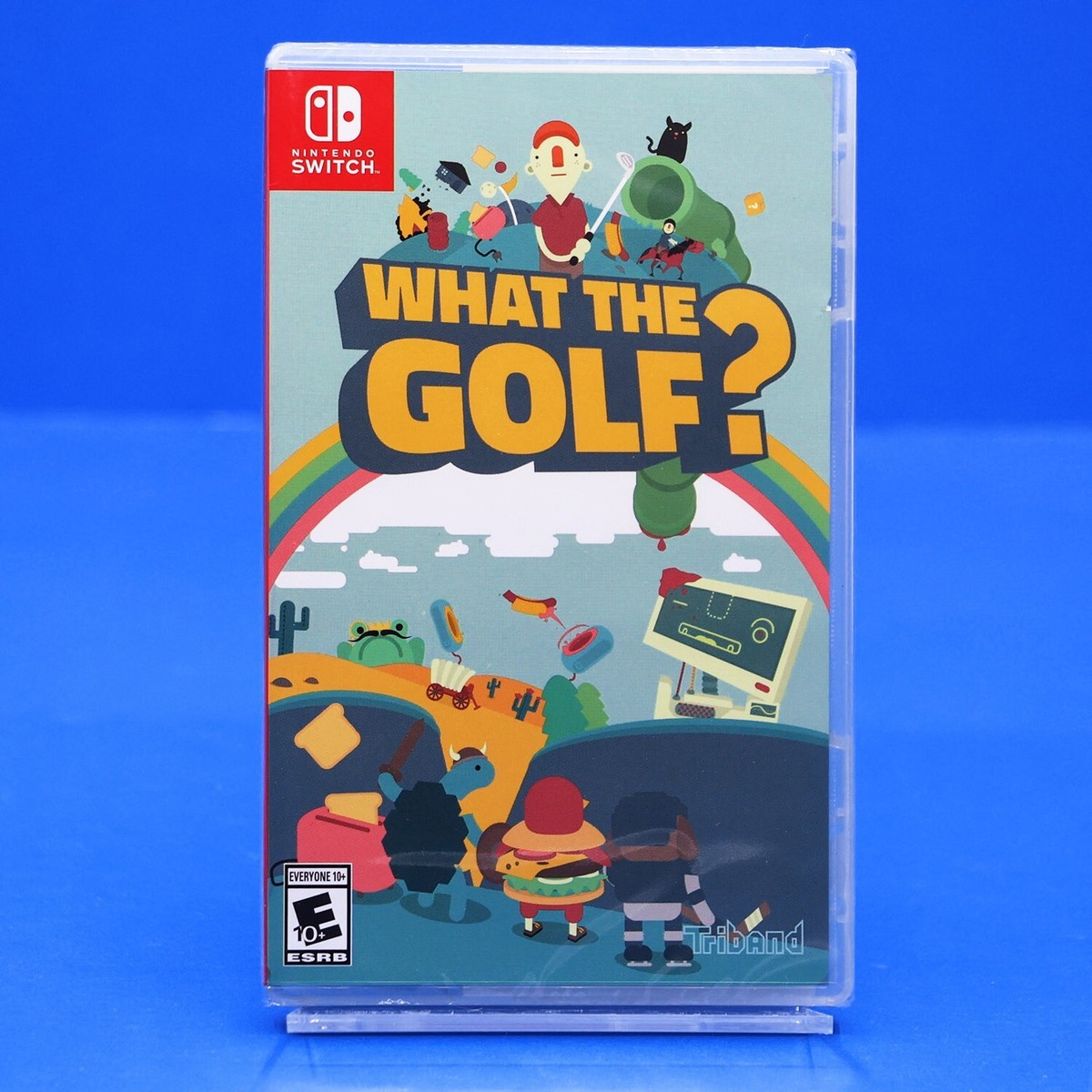
What the Golf? is a deceptive piece of software. Underneath its crude humor and simple aesthetics lies a highly optimized, technically proficient engine that understands exactly how to utilize the Nintendo Switch hardware. By mastering physics-based coding, optimizing for the Tegra X1, and designing a UX that prioritizes portability, Triband has created a technical benchmark for what an indie game can achieve.
As the lines between mobile, console, and PC gaming continue to blur, titles like What the Golf? will be remembered not just for their jokes, but for their contribution to a more flexible, creative, and technically diverse gaming landscape. It is a reminder that in the world of technology, sometimes the most sophisticated thing you can do is make something that works perfectly, even when it’s pretending to be broken.
aViewFromTheCave is a participant in the Amazon Services LLC Associates Program, an affiliate advertising program designed to provide a means for sites to earn advertising fees by advertising and linking to Amazon.com. Amazon, the Amazon logo, AmazonSupply, and the AmazonSupply logo are trademarks of Amazon.com, Inc. or its affiliates. As an Amazon Associate we earn affiliate commissions from qualifying purchases.