
Understanding the Dow Jones Industrial Average (DJIA)
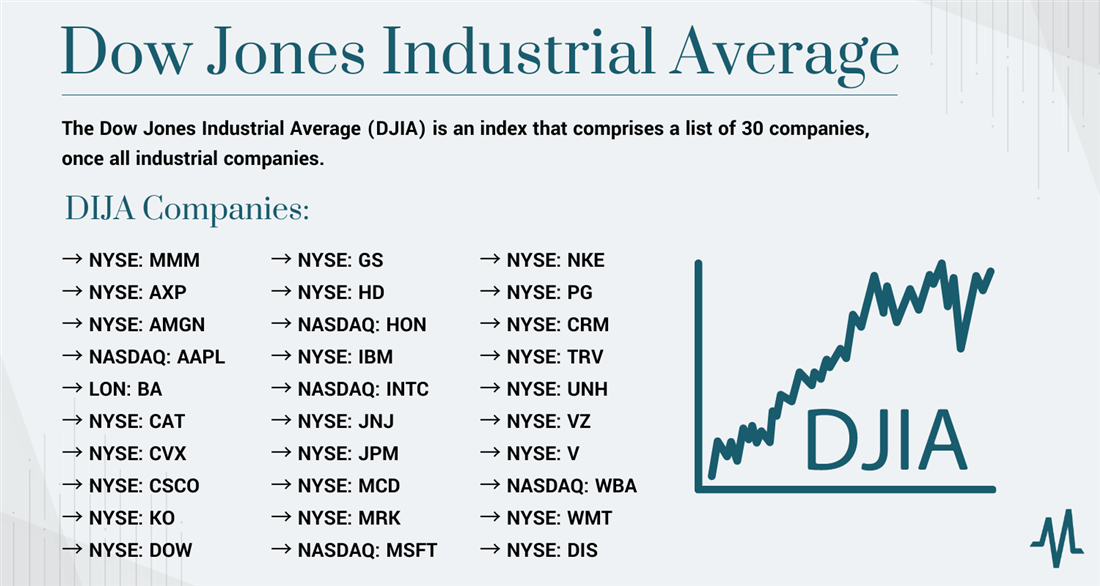
The Dow Jones Industrial Average (DJIA), often simply referred to as “the Dow,” stands as one of the most venerable and widely cited stock market indices globally. Conceived in 1896 by Charles Dow, editor of The Wall Street Journal and co-founder of Dow Jones & Company, its initial purpose was to serve as a simplified barometer for the health of the nascent American industrial economy. Comprising just 12 predominantly industrial stocks at its inception, the index has evolved dramatically over more than a century, reflecting the profound shifts in the nation’s economic landscape. Today, the DJIA tracks 30 prominent U.S. companies across diverse sectors, making it a proxy for the broader American stock market and an indicator of investor sentiment.

Unlike most modern indices, such as the S&P 500, which are weighted by market capitalization (meaning larger companies have a greater impact), the DJIA is a price-weighted average. This unique methodology means that stocks with higher share prices exert a greater influence on the index’s movements, regardless of their total market value. A one-dollar change in a high-priced stock will have a more significant impact on the Dow’s value than a one-dollar change in a lower-priced stock, even if the lower-priced stock represents a much larger company overall. This characteristic is a critical distinction and often a point of discussion among financial analysts, as it can sometimes distort the true economic impact of individual component performance. Despite this methodological nuance, the Dow’s long history and prominent media coverage ensure its continued relevance as a readily accessible snapshot of blue-chip corporate performance.
The Dynamic Roster of Dow Components
The selection of companies that comprise the Dow Jones Industrial Average is not governed by a rigid, rules-based methodology like some other indices. Instead, the composition of the DJIA is determined by the Averages Committee at S&P Dow Jones Indices, a body that exercises significant discretion. This committee aims to ensure that the index remains a relevant and representative gauge of the U.S. economy, selecting companies that are leaders in their respective industries and have a history of sustainable growth and broad investor interest.
Selection Criteria for Inclusion
While the committee does not publish an exhaustive list of criteria, general principles guide their choices. Typically, a company considered for inclusion must be a large, reputable U.S.-based corporation with an excellent reputation, demonstrated growth, and a significant market capitalization. It should be publicly traded on either the New York Stock Exchange (NYSE) or Nasdaq. The committee also seeks to maintain adequate sector representation within the 30 components, ensuring the Dow reflects the modern economic structure rather than being overly concentrated in a single industry. The focus is on selecting “blue-chip” companies that are broadly representative of the U.S. economy and are considered stable, well-established entities.
The “Industrial” Misnomer
Despite its name, the “Industrial” component of the Dow Jones Industrial Average is largely a historical artifact. While the index originally focused on heavy manufacturing and industrial firms, the U.S. economy has diversified dramatically over the past century. Today, the Dow’s components span a wide array of sectors, including technology, healthcare, financial services, consumer goods, retail, and telecommunications. This broad sectoral representation ensures that the index provides a more comprehensive reflection of the contemporary American economy, which is increasingly driven by innovation, services, and global trade, rather than solely by traditional manufacturing. The committee regularly reviews the composition, making adjustments to align the index with evolving economic realities.
Adjustments and Changes
The components of the Dow are not static; they change periodically to maintain the index’s relevance and reflective quality. Changes typically occur when a company’s business relevance diminishes, when it undergoes significant corporate actions like mergers or acquisitions, or to improve the overall sector representation of the index. While less frequent than changes in broader market-cap weighted indices, these adjustments are crucial. For instance, companies that were once economic giants might be replaced by emerging leaders in new sectors, ensuring the Dow continues to mirror the leading edge of American enterprise. These changes underscore the committee’s commitment to keeping the Dow a vibrant and accurate barometer of economic activity, even if the “industrial” part of its name no longer strictly applies.
Key Characteristics of Dow Components
The 30 companies that comprise the Dow Jones Industrial Average are not merely a random assortment of large corporations. Each component typically shares a set of distinguishing characteristics that underpin its inclusion in this elite index, reflecting a commitment to stability, leadership, and long-term shareholder value.
Blue-Chip Status
At the core of a Dow component is its undeniable “blue-chip” status. This term signifies a company that is large, financially sound, and well-established, with a long history of reliable performance. These are often household names, recognized globally for their products, services, and corporate integrity. Blue-chip companies typically possess strong balance sheets, consistent earnings, and a proven ability to navigate various economic cycles. Their inclusion in the Dow reinforces their standing as titans of industry, capable of weathering market volatility and delivering sustained value to shareholders. This characteristic makes Dow stocks attractive to investors seeking stability and quality within their portfolios.
Market Leadership and Influence
Companies in the Dow are invariably leaders within their respective industries. They are pioneers, innovators, or dominant forces whose operational performance and strategic decisions often set benchmarks for their sectors. From technology giants driving digital transformation to healthcare innovators shaping global health, and financial powerhouses underpinning the global economy, these firms exert significant influence not just within their markets but on the broader economic landscape. Their sheer scale and market penetration mean that their financial results and outlook can often be indicative of broader trends within the U.S. economy, lending further credence to the Dow as an economic indicator.

Dividend History and Shareholder Returns
Many Dow components are mature, highly profitable companies that prioritize returning capital to shareholders, often through consistent and growing dividends. While not a strict requirement, a strong track record of dividend payments is a common trait among these established firms. This focus on shareholder returns, alongside stock price appreciation, contributes to the overall attractiveness of Dow stocks for income-focused investors and those seeking long-term capital preservation. The stability and predictability of these companies often translate into reliable income streams, further solidifying their blue-chip appeal.
Global Reach and Diversification
In an increasingly interconnected world, many Dow components are multinational corporations with significant global operations and revenue streams. Their products and services reach consumers and businesses across continents, providing them with a diversified revenue base that can buffer against localized economic downturns. This global reach means that the performance of the Dow can, to some extent, offer insights into the health of the global economy, even as it primarily measures U.S. companies. The diverse geographic exposure of these individual firms adds another layer of resilience and influence to the overall index.
Navigating the Current Dow Landscape
The composition of the Dow Jones Industrial Average provides a fascinating lens through which to view the contemporary American economy. While the list of 30 companies is subject to periodic change, the types of businesses represented consistently illustrate the key drivers of U.S. economic activity. Understanding this landscape goes beyond merely listing names; it involves recognizing the strategic intent behind the selections.
Sectoral Representation
Today’s Dow is a vibrant mosaic of sectors, deliberately chosen to reflect the modern U.S. economy. Prominent technology giants, such as Apple and Microsoft, underscore the dominance of innovation and digital transformation. Healthcare innovators like UnitedHealth Group and Johnson & Johnson highlight the significant and growing contribution of the health sector. Financial powerhouses, including JPMorgan Chase and Goldman Sachs, represent the robust and complex financial services industry. Consumer-oriented companies, spanning both discretionary (e.g., Home Depot, Nike) and staples (e.g., Coca-Cola, Walmart), illustrate the strength of American consumer spending. Industrials like Caterpillar and Boeing remain, reminding us of the foundational role of manufacturing and infrastructure. This deliberate sectoral diversity ensures the index remains a relevant mirror of where economic value is generated in the U.S.
Impact of Economic Shifts
The Averages Committee diligently monitors the economic landscape, and the evolution of the Dow’s components over time powerfully illustrates significant historical shifts. The rise of the service economy, the tech boom, the increasing importance of healthcare, and the globalization of business have all been reflected in changes to the index. Companies that once dominated but became less relevant have been replaced by new leaders shaping the future. For example, legacy industrial firms have given way to software innovators and e-commerce giants. This adaptive quality ensures that the Dow remains a forward-looking, albeit historically rooted, indicator. Its current composition speaks volumes about the interplay between established enterprises and the dynamic forces of economic innovation and consumer demand, offering a valuable perspective for investors analyzing market trends.
Investing in the Dow: Gaining Exposure
For investors seeking exposure to the Dow Jones Industrial Average, there are several pathways, each with its own advantages and considerations. While the idea of owning shares in these 30 influential companies is appealing, direct ownership is often not the most practical or efficient approach for most individual investors.
Direct Stock Ownership
Technically, an investor could purchase shares of all 30 individual stocks that comprise the DJIA. However, this strategy comes with significant drawbacks. The sheer capital required to buy even a single share of each company can be substantial, especially given the high share prices of some Dow components. Furthermore, maintaining this portfolio would require constant rebalancing as the index components change, and managing 30 separate holdings incurs multiple transaction costs and administrative burdens. While direct ownership offers granular control, it often sacrifices the broad diversification benefits achievable with other investment vehicles, especially considering the Dow is only 30 stocks, not the entire market.
Exchange-Traded Funds (ETFs) and Index Funds
By far the most common and practical method for individual investors to gain exposure to the Dow is through Exchange-Traded Funds (ETFs) or index mutual funds that track the DJIA. These funds pool money from many investors to purchase the underlying stocks in the exact proportions required to mirror the index’s performance.
One of the most popular options is the SPDR Dow Jones Industrial Average ETF Trust (DIA), often referred to as “Diamonds.” This ETF holds shares of all 30 Dow components and aims to replicate the price and yield performance of the DJIA. Investors can buy and sell shares of DIA throughout the trading day, just like regular stocks, enjoying benefits such as:
- Diversification: Instantaneously gaining exposure to all 30 blue-chip companies without needing to purchase them individually.
- Lower Costs: ETFs typically have very low expense ratios, meaning a small percentage of assets goes towards management fees, making them cost-effective investment vehicles.
- Automatic Rebalancing: The fund managers automatically handle any changes to the Dow’s composition and rebalance the portfolio, saving individual investors time and effort.
- Dividend Reinvestment: Most funds offer options for automatic reinvestment of dividends, compounding returns over time.
Understanding the Limitations as an Investment Indicator
While accessible and useful, investors should be aware of the Dow’s specific methodological limitations when using it as an investment proxy. Its price-weighted nature means that stocks with higher per-share prices have a disproportionate impact on the index’s movement, regardless of their market capitalization. This can sometimes lead to situations where a smaller company with a high share price influences the Dow more than a larger company with a lower share price. Moreover, with only 30 stocks, the Dow is not as broad a representation of the entire U.S. stock market as indices like the S&P 500 (500 companies) or the Russell 2000 (small-cap companies). While it remains a valuable and easily understood benchmark for the health of America’s largest industrial and service companies, investors should complement their understanding with broader market indices for a more comprehensive view of investment opportunities.
aViewFromTheCave is a participant in the Amazon Services LLC Associates Program, an affiliate advertising program designed to provide a means for sites to earn advertising fees by advertising and linking to Amazon.com. Amazon, the Amazon logo, AmazonSupply, and the AmazonSupply logo are trademarks of Amazon.com, Inc. or its affiliates. As an Amazon Associate we earn affiliate commissions from qualifying purchases.