
Investing in the stock market can seem daunting, but for many, S&P 500 index funds offer a straightforward, effective, and historically robust path to wealth accumulation. These funds provide a way to own a tiny slice of America’s 500 largest publicly traded companies, offering broad diversification and long-term growth potential without the complexities of picking individual stocks. Yet, even within this seemingly simple category, choices abound. Understanding what makes an S&P 500 index fund “best” involves delving into their mechanics, critically evaluating key characteristics, and identifying the leading options available to investors. This guide aims to demystify these popular investment vehicles, equipping you with the knowledge to make informed decisions for your financial future.
Understanding S&P 500 Index Funds
Before dissecting the “best” options, it’s crucial to grasp the fundamental concepts behind S&P 500 index funds. Their popularity stems from their simplicity and efficacy, embodying a core tenet of passive investing.
What is the S&P 500?
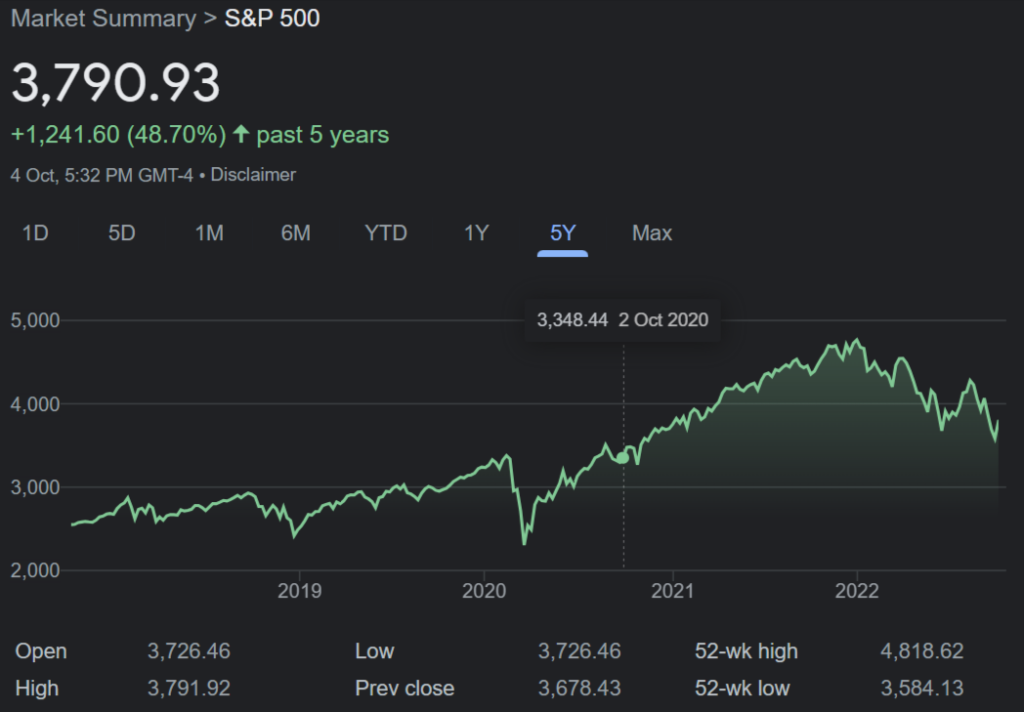
The S&P 500, or the Standard & Poor’s 500, is a stock market index that represents the performance of 500 of the largest publicly traded companies in the United States. These companies are selected by a committee at S&P Dow Jones Indices based on criteria such as market size, liquidity, and sector representation, making the S&P 500 a widely accepted barometer of the U.S. stock market’s health and a strong indicator of the broader economy. When you invest in an S&P 500 index fund, you are essentially investing in these 500 companies proportionally to their market capitalization within the index. This includes household names across diverse sectors, from technology giants and healthcare leaders to financial institutions and consumer staples.
How Do Index Funds Work?
An index fund is a type of mutual fund or exchange-traded fund (ETF) that aims to replicate the performance of a specific market index, such as the S&P 500. Unlike actively managed funds, which rely on fund managers to pick stocks they believe will outperform the market, index funds are passively managed. Their objective is not to beat the index but to match its performance by holding the same securities in the same proportions. This passive approach significantly reduces management fees and trading costs, which are typically passed on to investors in the form of lower expense ratios. By simply tracking the market, index funds allow investors to capture the overall growth of the economy over the long term, benefiting from the collective success of hundreds of established companies.
The Benefits of Investing in S&P 500 Index Funds
The appeal of S&P 500 index funds is multifaceted, offering a compelling proposition for both novice and experienced investors:
- Diversification: By holding 500 different companies, these funds inherently offer broad diversification across various industries. This significantly reduces the risk associated with investing in individual stocks; the poor performance of one or a few companies has a minimal impact on the overall fund.
- Low Cost: Due to their passive management style, S&P 500 index funds boast notoriously low expense ratios compared to actively managed funds. These low fees mean more of your investment capital works for you, directly contributing to higher net returns over time.
- Long-Term Growth: Historically, the S&P 500 has delivered impressive average annual returns over extended periods, typically around 10-12% before inflation. While past performance is no guarantee of future results, investing in a broad market index allows investors to tap into the long-term growth trend of the U.S. economy.
- Simplicity and Accessibility: Investing in an S&P 500 index fund is straightforward. You don’t need to research individual companies or time the market. They are widely available through various brokerage platforms, making them accessible to investors with different capital amounts.
Key Factors to Consider When Choosing an S&P 500 Index Fund
While all S&P 500 index funds aim to track the same underlying index, they are not all created equal. Several critical factors differentiate one fund from another and can significantly impact your long-term returns.
Expense Ratios – The Silent Killer of Returns
The expense ratio is perhaps the most important factor to consider. This annual fee, expressed as a percentage, is deducted from your investment to cover the fund’s operating expenses. Even a seemingly small difference in expense ratios can accumulate into substantial amounts over decades. For instance, a fund with a 0.03% expense ratio is significantly better than one with 0.09%, let alone 0.50% or higher. Since index funds generally track the same index, their gross returns will be nearly identical; thus, the fund with the lowest expense ratio will almost always deliver the highest net return to the investor. Always prioritize funds with expense ratios that are as close to zero as possible.
Tracking Error – How Closely Does it Mimic the Index?
Tracking error measures how accurately a fund’s performance mirrors its benchmark index. While all S&P 500 index funds aim for perfect replication, minor deviations can occur due to factors like trading costs, dividend reinvestment timing, and sampling techniques used by the fund manager (especially for very large indexes). A lower tracking error indicates a more faithful representation of the S&P 500’s performance, which is exactly what an index investor desires. Reputable funds from major providers generally have minimal tracking errors, but it’s a good metric to briefly review.
Fund Structure – ETFs vs. Mutual Funds
S&P 500 index funds are primarily offered in two structures:
- Exchange-Traded Funds (ETFs): ETFs trade like individual stocks on an exchange throughout the day. You buy and sell them at market prices, which can fluctuate. They often have lower minimum investment requirements (just the price of one share) and can be more tax-efficient due to their structure regarding capital gains distributions.
- Mutual Funds: Mutual funds are bought and sold directly through the fund company (or a brokerage) at the end of the trading day, based on their Net Asset Value (NAV). They typically require a higher minimum initial investment (e.g., $3,000) but can be easier for automated investments like dollar-cost averaging, as you can invest specific dollar amounts rather than a fixed number of shares.
Both options effectively track the S&P 500, so the “best” structure depends on your investment style, minimum investment capital, and how you prefer to trade. Many providers offer both an ETF and a mutual fund version that tracks the same index with similar expense ratios.
Provider Reputation and Fund Size
While less critical for passive index funds, the reputation of the fund provider (e.g., Vanguard, iShares, Fidelity) can offer peace of mind regarding administrative quality, customer service, and the longevity of the fund. Larger funds often benefit from economies of scale, which can contribute to lower expense ratios and better liquidity for ETFs. Stick to well-established providers with a long track record in the index fund space.
Top S&P 500 Index Funds: A Closer Look
Based on the criteria above, several funds consistently rank among the best S&P 500 index funds available to investors. These funds are characterized by their extremely low expense ratios, robust tracking, and the backing of reputable financial institutions.
Vanguard S&P 500 ETF (VOO) / Vanguard 500 Index Fund Admiral Shares (VFIAX)
Vanguard is synonymous with low-cost index investing, and their S&P 500 offerings are prime examples.
- VOO (ETF): This ETF provides exposure to the S&P 500 with an incredibly low expense ratio, typically around 0.03%. It’s highly liquid and a favorite among investors who prefer the flexibility of ETFs.
- VFIAX (Mutual Fund): For those who prefer mutual funds and can meet the $3,000 minimum initial investment, VFIAX offers the exact same underlying exposure and expense ratio as VOO. It’s an excellent choice for automated, recurring investments.
Vanguard’s commitment to investor-first principles makes these options exceptionally popular and reliably high-performing.
iShares Core S&P 500 ETF (IVV)
BlackRock’s iShares is another titan in the ETF space, and IVV is their flagship S&P 500 offering.
- IVV (ETF): With an expense ratio identical to VOO (around 0.03%), IVV is a direct competitor and an equally excellent choice. It offers robust liquidity and is often used by institutional and individual investors alike. The choice between VOO and IVV often comes down to personal preference or the specific brokerage platform an investor uses.
SPDR S&P 500 ETF Trust (SPY)
SPY is perhaps the most well-known and oldest S&P 500 ETF, launched in 1993.
- SPY (ETF): While SPY boasts unmatched liquidity and trading volume, making it a favorite for day traders and options investors, its expense ratio (typically around 0.09%) is slightly higher than VOO and IVV. For long-term buy-and-hold investors, this higher fee, while still low, makes VOO or IVV generally more attractive for pure S&P 500 exposure.
Fidelity 500 Index Fund (FXAIX)
Fidelity offers a strong suite of index funds, often competing fiercely on fees.
- FXAIX (Mutual Fund): This mutual fund tracks the S&P 500 and typically has an extremely competitive expense ratio, often around 0.015%. Fidelity is known for its “zero-expense-ratio” funds, and while FXAIX isn’t zero, it’s among the lowest in the industry for an S&P 500 fund. It’s a fantastic option for Fidelity brokerage account holders, often with no minimum initial investment.
Charles Schwab S&P 500 Index Fund (SWPPX) / Schwab S&P 500 Index ETF (SWDAX)
Charles Schwab also provides highly competitive S&P 500 index funds.
- SWPPX (Mutual Fund): With an expense ratio typically around 0.02%, SWPPX offers a very low-cost way to invest in the S&P 500. It’s a great choice for Schwab brokerage clients, often with a low initial investment.
- SWDAX (ETF): The ETF equivalent from Schwab also offers a low expense ratio and broad S&P 500 exposure.
Investing Strategies and Common Pitfalls
While selecting a great S&P 500 index fund is a crucial first step, integrating it effectively into your overall financial plan requires understanding fundamental investing strategies and avoiding common missteps.
Dollar-Cost Averaging into S&P 500 Funds
Dollar-cost averaging (DCA) is a powerful strategy, especially when investing in volatile assets like stocks. It involves investing a fixed amount of money at regular intervals (e.g., $200 every month), regardless of market fluctuations. When prices are high, your fixed amount buys fewer shares; when prices are low, it buys more. Over time, this strategy averages out your purchase price, reducing the risk of making a large investment at an inopportune market peak. For S&P 500 funds, DCA is particularly effective due to their long-term upward trend.
Rebalancing Your Portfolio
While S&P 500 funds provide excellent diversification within U.S. large-cap equities, they should ideally be part of a broader, diversified portfolio that might include international stocks, bonds, and other asset classes. Periodically, your portfolio’s asset allocation will drift from your target due to differing asset class performance. Rebalancing involves selling small portions of overperforming assets and buying underperforming ones to restore your desired allocation. For example, if your S&P 500 fund grows significantly, you might trim some shares to reallocate to bonds or international funds, maintaining your overall risk profile.
Avoiding Market Timing
One of the most common and costly mistakes investors make is trying to predict the market’s short-term movements. Attempting to buy low and sell high consistently is notoriously difficult, even for professional investors. Studies repeatedly show that investors who try to time the market often underperform those who simply stay invested. With S&P 500 index funds, the most effective strategy is to invest consistently and stay invested for the long term, riding out market downturns and benefiting from the power of compounding.
The Importance of a Long-Term Horizon
S&P 500 index funds are designed for long-term growth. While they can experience significant short-term volatility, their historical performance demonstrates a strong upward trajectory over decades. For this reason, it’s crucial to approach these investments with a long-term mindset, ideally five years or more. This allows your investments enough time to recover from downturns and fully benefit from compounding returns. Impatient investors who panic during market corrections often lock in losses, missing out on subsequent recoveries.
Making the Right Choice for Your Financial Goals
Choosing the “best” S&P 500 index fund isn’t just about picking the one with the lowest expense ratio; it’s about finding the right fit for your individual financial situation and goals.
Assessing Your Investment Goals and Risk Tolerance
Before investing, take time to define your financial goals (e.g., retirement, down payment for a house, education) and your personal risk tolerance. While S&P 500 funds are considered relatively safe compared to individual stocks, they are still equity investments and subject to market fluctuations. If you have a very short time horizon or an extremely low risk tolerance, a pure S&P 500 allocation might be too aggressive. For most long-term investors, however, S&P 500 funds form a robust foundation.
The Role of S&P 500 Funds in a Diversified Portfolio
While excellent, S&P 500 index funds should typically serve as a core component, rather than the entirety, of a well-diversified portfolio. A truly diversified portfolio might also include exposure to international equities (developed and emerging markets), bonds (for stability and income), and potentially other asset classes. The S&P 500 provides exposure to U.S. large-cap companies, but it doesn’t cover all bases. Using an S&P 500 fund as a foundational building block, alongside other complementary investments, can create a more resilient and globally diversified portfolio.
Consulting a Financial Advisor
For complex financial situations, significant investment sums, or if you simply feel overwhelmed, consulting a qualified financial advisor can be invaluable. An advisor can help you assess your goals, determine your risk tolerance, create a comprehensive financial plan, and recommend specific S&P 500 funds (among other investments) that align with your individual circumstances. They can also assist with tax-efficient investment strategies and estate planning, providing personalized guidance beyond general recommendations.
Conclusion
S&P 500 index funds represent one of the most effective and accessible avenues for long-term wealth creation. By offering broad diversification, remarkably low costs, and exposure to the growth of America’s largest companies, they are a cornerstone of intelligent investing. The “best” S&P 500 index funds are those from reputable providers like Vanguard, iShares, Fidelity, and Schwab, all characterized by their ultra-low expense ratios and faithful tracking of the index.
Ultimately, the choice comes down to your preferred fund structure (ETF vs. mutual fund) and which fund best integrates with your existing brokerage accounts, all while minimizing fees. By understanding their benefits, considering key factors, and adopting a disciplined, long-term approach, you can harness the power of the S&P 500 to work towards achieving your financial aspirations. Remember, consistency and patience are as crucial as the fund you select in building lasting wealth.
aViewFromTheCave is a participant in the Amazon Services LLC Associates Program, an affiliate advertising program designed to provide a means for sites to earn advertising fees by advertising and linking to Amazon.com. Amazon, the Amazon logo, AmazonSupply, and the AmazonSupply logo are trademarks of Amazon.com, Inc. or its affiliates. As an Amazon Associate we earn affiliate commissions from qualifying purchases.