
The S&P 500 is arguably the most referenced and influential stock market index in the world. It’s a benchmark that investors, economists, and the media regularly cite to gauge the health of the U.S. stock market and, by extension, the broader American economy. Given its prominence, a fundamental question often arises for those new to investing or seeking a deeper understanding: exactly how many stocks are in the S&P 500?
The straightforward answer, implied by its name, is 500. However, like many things in finance, the simplicity of the number belies a complex and dynamic reality. While the index aims to track 500 of the largest U.S. publicly traded companies, the precise count can sometimes fluctuate slightly around that number due to mergers, acquisitions, bankruptcies, or other corporate actions that occur between quarterly rebalances. More importantly, the S&P 500 is much more than just a list of 500 companies; it’s a sophisticated market-capitalization-weighted index that offers a robust snapshot of the American corporate landscape and a powerful tool for long-term wealth creation. Understanding its composition, selection criteria, and how it functions is crucial for anyone looking to invest wisely or interpret market trends effectively.

The S&P 500: More Than Just a Number
The S&P 500, officially known as the Standard & Poor’s 500, is far from a static collection of stocks. It represents a living, breathing cross-section of the U.S. economy, meticulously maintained to reflect the ongoing evolution of American enterprise. Its significance extends beyond merely tracking stock prices; it serves as a global barometer for investor sentiment and economic vitality.
What is the S&P 500?
At its core, the S&P 500 is a stock market index maintained by S&P Dow Jones Indices. It comprises 500 large-cap U.S. equities selected by a committee, designed to be a leading indicator of U.S. equities and a proxy for the total market. What sets it apart from simpler indices, such as the Dow Jones Industrial Average (which includes only 30 stocks), is its methodology. The S&P 500 is a market-capitalization-weighted index. This means that companies with larger market capitalizations (stock price multiplied by the number of outstanding shares) have a greater impact on the index’s performance than companies with smaller market caps. For instance, Apple or Microsoft, with their multi-trillion-dollar valuations, influence the index’s movement far more significantly than a company with a market cap of “only” tens of billions. This weighting ensures that the index accurately reflects the overall market value of its constituent companies and provides a more realistic measure of the performance of the largest segment of the U.S. stock market.
Why 500 (or So)?
The target of 500 companies is not arbitrary; it’s a carefully chosen number that balances representativeness with manageability. The S&P Dow Jones Indices committee that oversees the S&P 500 has specific criteria for selecting companies, ensuring they are truly large-cap U.S. entities that are liquid and economically significant. These criteria include:
- U.S. Company: The company must be a U.S. company with its primary listing on a U.S. exchange.
- Market Cap: There is a minimum unadjusted market capitalization requirement, which adjusts over time (typically in the multi-billion dollar range).
- Liquidity: The company must have sufficient liquidity, measured by share turnover and trading volume, to ensure its stock can be easily bought and sold without significantly impacting its price.
- Public Float: A substantial portion of the company’s shares must be available for public trading (not held by insiders or restricted stock).
- Profitability: Companies must have positive reported earnings in the most recent quarter and positive aggregate earnings over the past four consecutive quarters.
- Sector Representation: The committee also considers sector balance to ensure the index reflects the overall sector composition of the broader U.S. economy.
The committee meets regularly to review the index’s composition. While the goal is 500 companies, minor fluctuations can occur. For example, a merger between two S&P 500 companies might temporarily reduce the count by one until a replacement is chosen. Conversely, a stock split might increase the number of shares but not the number of companies. The committee’s ongoing role is to ensure the index remains relevant and reflective of the leading U.S. companies, not just to maintain a precise count of 500.
Understanding the Index’s Composition
The S&P 500’s power lies not just in the number of companies it tracks, but in the intelligent way those companies are selected, weighted, and maintained. It’s a dynamic financial instrument, continually adapting to the shifting sands of the corporate world and economic cycles.
The Dynamic Nature of the S&P 500
The S&P 500 is not a set-it-and-forget-it list. Its components are constantly evaluated, leading to additions, deletions, and adjustments to reflect corporate activity and market performance. This dynamism is crucial for maintaining the index’s relevance and accuracy as a market benchmark.
- Additions and Deletions: Companies are added when they meet the committee’s criteria and there’s a need to replace a company that has been removed. Reasons for removal can include:
- Acquisition or Merger: A company is bought out by another, often by an existing S&P 500 component, or delisted.
- Bankruptcy: The company goes bankrupt and its stock is delisted.
- Failure to Meet Criteria: A company’s market cap shrinks below the minimum, its liquidity decreases, or it fails the profitability criteria over a sustained period.
- Spin-offs: A company spins off a subsidiary into a new independent entity, which may or may not be immediately eligible for the index.
The committee aims to announce changes well in advance to minimize market disruption, but these events highlight that the “500” is a target, not a rigid ceiling or floor.
- Rebalancing: While additions and deletions occur on an event-driven basis, the S&P 500 also undergoes quarterly rebalancing. During these periods, the committee reviews the index components to ensure they continue to meet the eligibility requirements and adjusts the weighting of each company based on its updated market capitalization and free float (shares available for public trading). This regular adjustment prevents the index from becoming stale and ensures it accurately represents the current market landscape.
Sector Diversification within the S&P 500
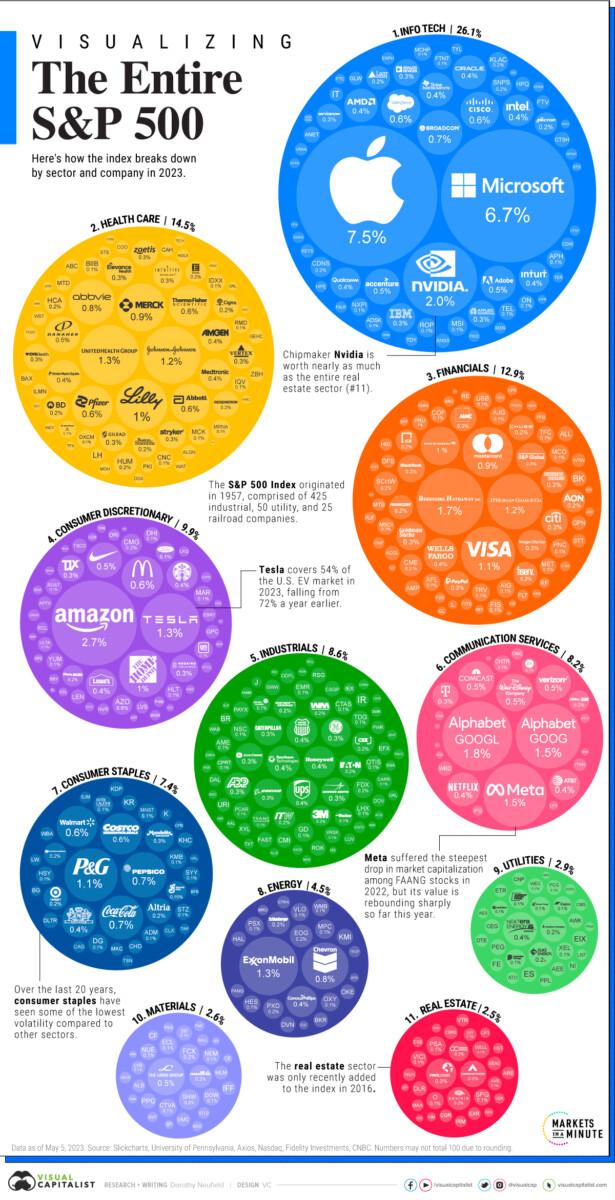
One of the often-underestimated aspects of the S&P 500 is its inherent diversification across various sectors of the U.S. economy. While individual stocks can be highly volatile, the index as a whole provides exposure to a broad array of industries, which helps to mitigate risk. The S&P 500 is typically divided into 11 Global Industry Classification Standard (GICS) sectors:
- Information Technology: (e.g., Apple, Microsoft, NVIDIA)
- Health Care: (e.g., Johnson & Johnson, UnitedHealth Group, Eli Lilly)
- Financials: (e.g., Berkshire Hathaway, JPMorgan Chase, Visa)
- Consumer Discretionary: (e.g., Amazon, Tesla, Home Depot)
- Communication Services: (e.g., Alphabet, Meta Platforms, Verizon)
- Industrials: (e.g., Boeing, General Electric, Caterpillar)
- Consumer Staples: (e.g., Procter & Gamble, Coca-Cola, Walmart)
- Energy: (e.g., ExxonMobil, Chevron)
- Utilities: (e.g., NextEra Energy, Duke Energy)
- Real Estate: (e.g., Prologis, American Tower)
- Materials: (e.g., Linde, Sherwin-Williams)
This broad sector exposure means that even if one sector faces headwinds, other sectors may perform well, potentially offsetting some of the losses. This intrinsic diversification is a significant reason why the S&P 500 is considered a cornerstone for many long-term investment portfolios.
Why the S&P 500 Matters to Investors
For individual and institutional investors alike, the S&P 500 holds immense significance. It’s more than just a tracking mechanism; it’s a powerful tool for understanding market performance, setting investment goals, and building diversified portfolios.
A Bellwether for the U.S. Economy
The S&P 500 is widely regarded as the best single gauge of large-cap U.S. equities and a primary indicator of the health of the U.S. economy. Because it includes 500 of the largest publicly traded companies, it collectively represents a vast portion of the nation’s economic output, employment, and consumer spending. Its movements often reflect broader economic trends, such as GDP growth, corporate earnings, interest rate expectations, and consumer confidence. When the S&P 500 rises, it often signals optimism about future economic conditions and corporate profitability; conversely, a decline can indicate concerns about an economic slowdown or recession. This makes it an indispensable reference point for anyone seeking to understand or predict economic shifts.
Benchmarking Performance
One of the S&P 500’s most common uses is as a benchmark. Professional fund managers are constantly compared against the S&P 500 to evaluate their performance. If a fund manager consistently underperforms the S&P 500 after fees, investors might question the value they are adding. For individual investors, comparing their own portfolio’s returns to the S&P 500 provides a simple yet effective way to assess how well their investments are performing relative to the broader market. It helps answer questions like, “Am I beating the market, or am I just riding its coattails?” or “Is my investment strategy truly generating alpha (returns above the benchmark)?” Without such a widely recognized and representative benchmark, evaluating investment success would be a far more subjective and challenging task.
The Appeal of Index Investing
For many individual investors, the S&P 500 offers an incredibly efficient and effective way to participate in the growth of the U.S. stock market. Rather than trying to pick individual winning stocks – a notoriously difficult endeavor – investors can simply invest in the entire index.
- ETFs and Mutual Funds: This is most commonly done through S&P 500 Exchange Traded Funds (ETFs) or index mutual funds. These funds essentially purchase all 500 (or a representative sample of) the stocks in the S&P 500 in the same proportion as the index, allowing investors to gain instant diversification across hundreds of companies and dozens of sectors with a single investment.
- Diversification Benefits: By investing in an S&P 500 index fund, investors automatically benefit from the broad diversification of the index, reducing the specific risk associated with any single company. If one company in the S&P 500 performs poorly, its impact on the overall index (and thus on the investor’s portfolio) is diluted by the performance of the other 499 companies. This built-in diversification is a cornerstone of prudent long-term investing.
- Low Costs: S&P 500 index funds and ETFs typically have very low expense ratios compared to actively managed funds. This is because they passively track an index rather than paying a team of analysts to research and select individual stocks, leading to significant cost savings for investors over the long run.
Investing in the S&P 500: Practical Considerations
Understanding the mechanics of the S&P 500 is one thing; translating that understanding into actionable investment strategies is another. For most individual investors, the goal is to capture the market’s return efficiently and cost-effectively.
How to Invest in the S&P 500
Directly buying all 500 stocks in the S&P 500 would be impractical for the vast majority of investors due to the capital required, transaction costs, and the ongoing effort to rebalance the portfolio. Fortunately, there are much simpler and more accessible methods:
- S&P 500 Index ETFs (Exchange Traded Funds): These are popular investment vehicles that trade like individual stocks on an exchange. They hold the stocks of the S&P 500 in proportion to their market capitalization, tracking the index’s performance very closely. Examples include SPDR S&P 500 ETF Trust (SPY), iShares Core S&P 500 ETF (IVV), and Vanguard S&P 500 ETF (VOO). They offer excellent liquidity, diversification, and very low expense ratios.
- S&P 500 Index Mutual Funds: Similar to ETFs, these funds pool money from many investors to buy the stocks in the S&P 500. While they don’t trade on an exchange throughout the day (their price is set once daily after market close), they offer the same benefits of diversification and low cost, often with convenient automatic investment options. Examples include Vanguard 500 Index Fund Admiral Shares (VFIAX) and Fidelity 500 Index Fund (FXAIX).
Both ETFs and index mutual funds are excellent choices for long-term investors looking for broad market exposure with minimal effort and cost.
Risks and Rewards
While investing in the S&P 500 offers substantial benefits, it’s not without risk.
- Market Risk: The primary risk is market risk, also known as systemic risk. If the overall stock market declines due to economic downturns, geopolitical events, or other broad factors, the S&P 500 will also decline. There is no guarantee of returns, and capital can be lost.
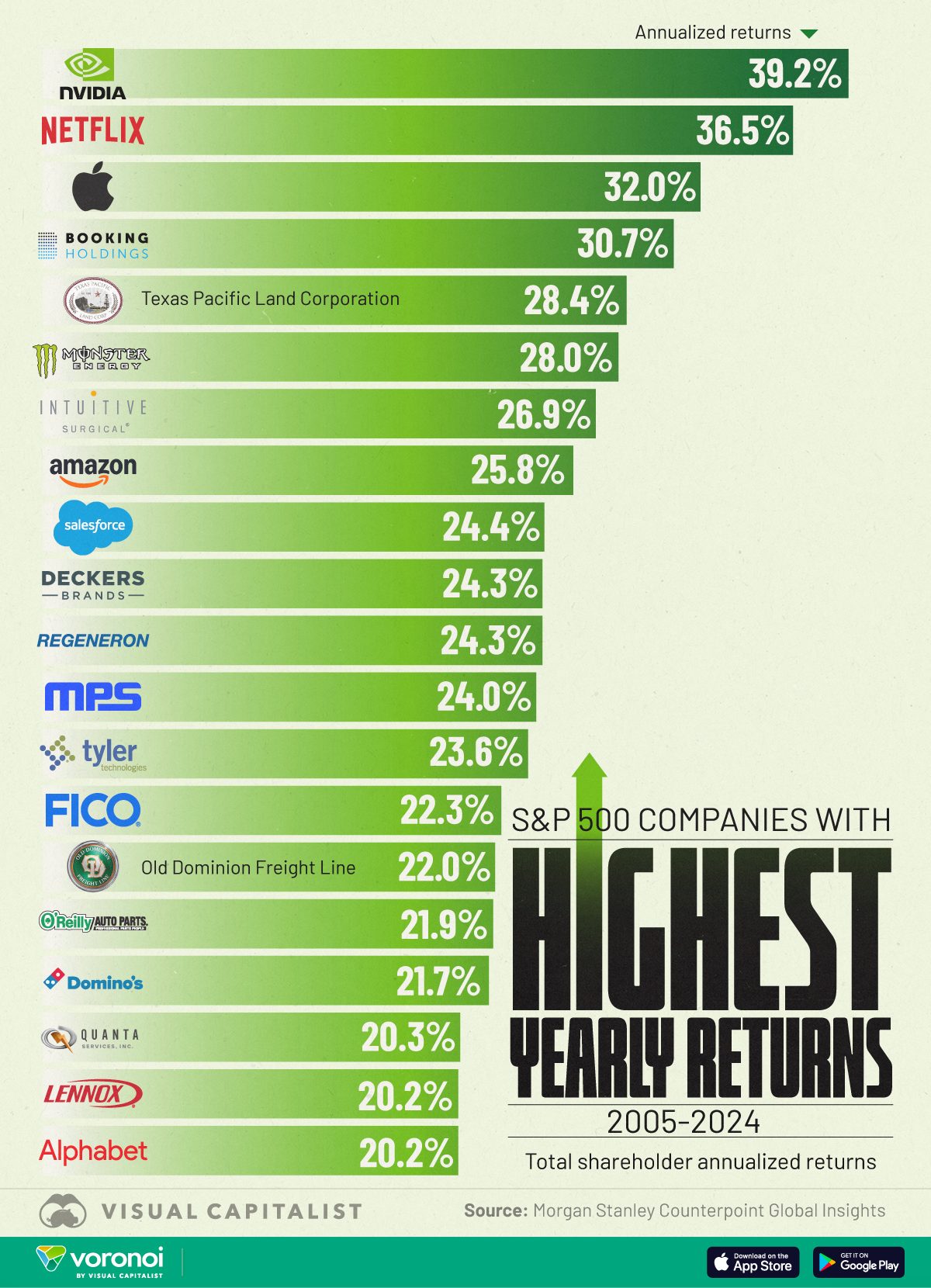
- Long-Term Growth Potential: Historically, however, the S&P 500 has demonstrated remarkable resilience and a strong upward trend over the long term. Despite numerous bear markets and corrections, the index has consistently recovered and reached new highs, driven by innovation, corporate profitability, and economic growth. Over decades, its average annual returns have been in the double digits, making it a powerful engine for compounding wealth. This long-term growth potential, coupled with its diversification, is why the S&P 500 is often recommended as a core holding for retirement portfolios and other long-term investment goals.
Beyond the 500: Other Key Market Indices
While the S&P 500 is paramount, it’s useful to understand that other indices exist, each providing a different lens through which to view the market.
- The Dow Jones Industrial Average (DJIA): Comprising 30 large, well-established “blue-chip” companies, the Dow is price-weighted, meaning stocks with higher share prices have a greater impact. While historically significant, its limited number of components and weighting methodology make it less representative of the broader market than the S&P 500.
- The Nasdaq Composite: This index includes virtually all stocks listed on the Nasdaq stock exchange, heavily weighted towards technology and growth companies. It’s a key indicator for the tech sector and smaller, innovative companies.
- The Russell 2000: This index tracks 2,000 small-cap U.S. companies and is a popular benchmark for assessing the performance of smaller domestic businesses.
Each of these indices serves a distinct purpose, offering different perspectives on market segments. However, for a comprehensive view of the large-cap U.S. stock market and a robust benchmark for general equity performance, the S&P 500 remains the gold standard.
In conclusion, while the S&P 500 nominally contains 500 stocks, its true essence lies in its dynamic, market-capitalization-weighted methodology, rigorous selection criteria, and broad diversification. It’s not just a number, but a living representation of the U.S. economy’s leading enterprises and an indispensable tool for investors seeking efficient, diversified, and low-cost exposure to the growth of the American stock market. For those looking to build long-term wealth, understanding and utilizing the S&P 500 is often a foundational step towards financial success.
aViewFromTheCave is a participant in the Amazon Services LLC Associates Program, an affiliate advertising program designed to provide a means for sites to earn advertising fees by advertising and linking to Amazon.com. Amazon, the Amazon logo, AmazonSupply, and the AmazonSupply logo are trademarks of Amazon.com, Inc. or its affiliates. As an Amazon Associate we earn affiliate commissions from qualifying purchases.