
In an increasingly digitized financial landscape, platforms like Robinhood have democratized access to the stock market, drawing in a new generation of investors with their commission-free trading and user-friendly interfaces. However, with this ease of access comes crucial questions about eligibility, particularly concerning age. For aspiring young investors eager to dive into the world of stocks and options, understanding the specific age requirements for using Robinhood, and indeed any brokerage platform, is the foundational first step. This article delves into the age restrictions, the reasons behind them, and the alternative pathways available for those not yet eligible to open their own direct investment accounts.
Understanding Robinhood’s Age Requirement for Direct Account Holders
The question of “how old do you have to be to use Robinhood” has a straightforward answer, yet it’s rooted in a complex framework of legal and financial regulations designed to protect both the individual and the integrity of the financial system.
The Legal Minimum: 18 Years Old
To open a Robinhood brokerage account in the United States, an individual must be at least 18 years old. This age requirement is not unique to Robinhood; it is a standard across virtually all regulated financial institutions and brokerage firms operating within the U.S. financial market. The rationale behind this age limit is firmly established in legal precedent and regulatory directives. In most U.S. states, 18 is the age of majority, meaning an individual is legally considered an adult with the capacity to enter into binding contracts, including financial agreements. Opening a brokerage account, buying and selling securities, and managing investments all entail significant contractual obligations and financial risks that a minor is generally deemed incapable of fully understanding or legally consenting to.
This legal capacity is paramount. Financial transactions, especially those involving investments, carry inherent risks, and regulators strive to ensure that participants are mature enough to comprehend these risks and bear the legal responsibility for their financial decisions. Without the legal capacity to enter into contracts, any agreement made by a minor could potentially be voided, creating significant legal and operational complexities for brokerage firms. Therefore, the 18-year-old minimum is a critical safeguard, ensuring that investors are legally empowered to manage their own financial affairs.
Why This Limit Exists
The 18-year-old age restriction for direct brokerage accounts serves several vital purposes, extending beyond mere legal capacity to encompass broader principles of financial protection and regulatory compliance.
Firstly, it acts as a protective measure for minors. Minors are considered a vulnerable population in legal and financial contexts. Allowing them to directly manage complex investment accounts without adult oversight could expose them to significant financial harm, given their potential lack of experience, understanding of market volatility, or ability to absorb losses. The financial markets can be unforgiving, and decisions made without full comprehension can have long-lasting consequences. The age limit protects younger individuals from making potentially detrimental financial choices before they are adequately prepared.
Secondly, the limit ensures regulatory compliance for financial institutions. Brokerage firms like Robinhood operate under stringent regulations set forth by bodies such as the Securities and Exchange Commission (SEC) and the Financial Industry Regulatory Authority (FINRA). These regulations often stipulate requirements for investor suitability, risk disclosure, and know-your-customer (KYC) protocols, all of which are simplified and standardized when dealing with adult clients. Adhering to an 18+ age limit simplifies compliance with these complex regulatory frameworks, reducing the burden on firms to assess the legal capacity and understanding of each potential minor client.
Lastly, it underscores the importance of financial literacy and maturity. While not explicitly a regulatory mandate, the age limit implicitly encourages individuals to spend their formative years developing a foundational understanding of personal finance, budgeting, and investment principles before taking on the direct responsibility of managing a brokerage account. It acknowledges that effective investing requires more than just access to a platform; it demands knowledge, discipline, and a mature approach to risk.
The Verification Process
When an aspiring investor signs up for a Robinhood account, they are required to undergo a rigorous identity verification process, commonly known as “Know Your Customer” (KYC). This process is mandated by federal law (e.g., the Patriot Act) and is crucial for preventing fraud, money laundering, and terrorist financing. During this process, applicants will need to provide:
- Full legal name
- Residential address
- Date of birth
- Social Security Number (SSN) or Taxpayer Identification Number (TIN) for U.S. citizens
- Government-issued identification (e.g., driver’s license, state ID)
Robinhood uses this information to verify the applicant’s identity, confirm their U.S. residency, and, critically, confirm their age. If an applicant’s date of birth indicates they are under 18, their application will be rejected. This automated and often immediate verification ensures that the age requirement is strictly enforced, preventing minors from circumventing the regulations designed for their protection and for the security of the financial system.
Navigating Investing Options for Minors: Beyond Direct Robinhood Access
While direct access to Robinhood is restricted to adults, the desire to begin investing at a young age is both commendable and strategically sound. Fortunately, the financial world offers legitimate and regulated pathways for minors to participate in the market, primarily through custodial accounts.
Custodial Accounts: A Parent’s Gateway to Youth Investing
For parents or legal guardians looking to introduce minors to the world of investing, custodial accounts are the primary and most effective solution. These accounts are specifically designed to hold assets for the benefit of a minor until they reach the age of majority (typically 18 or 21, depending on the state). The two most common types are:
- Uniform Gifts to Minors Act (UGMA) accounts: These typically allow for the transfer of a wider range of assets, including cash, securities, and insurance policies.
- Uniform Transfers to Minors Act (UTMA) accounts: These are similar but often allow for an even broader range of assets, including real estate and intellectual property.
How They Work: A custodial account is opened by an adult (the “custodian,” usually a parent or guardian) who manages the investments on behalf of the minor (the “beneficiary”). While the custodian makes all the investment decisions, the assets legally belong to the minor. This means that any income, dividends, or capital gains generated by the investments are considered the minor’s income for tax purposes, often leading to potential tax advantages due to a minor’s typically lower income bracket (though the “Kiddie Tax” rules may apply to higher amounts).
Upon reaching the age of majority, the custodianship automatically ends, and control of the assets is transferred directly to the now-adult beneficiary. This provides a structured way for young individuals to inherit a portfolio of investments, often having benefited from years of compounding growth, giving them a significant financial head start.
Why Robinhood Doesn’t Offer Custodial Accounts (and Alternatives)
Despite the clear demand, Robinhood currently does not offer custodial accounts. This is a strategic decision that many fintech companies make. Establishing and maintaining custodial accounts involves additional regulatory complexities, administrative burdens, and specialized customer service requirements compared to standard individual brokerage accounts. The compliance landscape for accounts managed by an adult on behalf of a minor, with specific rules about withdrawals, transfers, and the eventual transition of control, can be quite intricate. For platforms like Robinhood, which prioritize streamlining the investment process and maintaining a lean operational model, focusing solely on individual adult accounts simplifies their product offering and regulatory obligations.
However, the absence of custodial accounts at Robinhood doesn’t mean parents are without options. Several established and reputable brokerage firms do offer robust custodial account services, often with diverse investment options and educational resources. Leading alternatives include:
- Fidelity: Offers UGMA/UTMA accounts with a wide range of investment choices, including stocks, ETFs, mutual funds, and bonds. They also provide excellent educational content for both parents and young investors.
- Charles Schwab: Similar to Fidelity, Schwab provides comprehensive custodial account options with extensive investment research and a strong focus on client education.
- Vanguard: Known for its low-cost index funds and ETFs, Vanguard offers custodial accounts that are ideal for long-term, passive investing strategies for minors.
- Acorns Early: This is a more specialized option specifically designed for children. Parents can open an UTMA account through Acorns Early, allowing them to invest for their child’s future, often with a focus on diversified portfolios managed automatically.
When choosing an alternative, parents should consider factors such as fees, available investment products, educational resources, and the ease of managing the account, ensuring it aligns with their financial goals for the minor.
Other Indirect Ways for Minors to Engage with Finance
Beyond formal custodial accounts, there are other valuable ways for minors to engage with financial principles and prepare for future investing:
- Joint Savings Accounts with Parents: While not an investment account, a joint savings account can teach a minor about saving, budgeting, and the power of earning interest. It provides a practical, low-risk introduction to banking and money management.
- Financial Literacy Education: Encouraging reading books on personal finance, playing investment simulation games, or even discussing household budgeting can instill critical financial habits and knowledge long before direct market participation. Many online resources and apps are specifically designed to teach financial literacy to children and teenagers.
- Investing in Themselves: Perhaps the most valuable “investment” a minor can make is in their own education, skills, and personal development. Acquiring new skills, pursuing hobbies that could lead to income, or excelling academically can significantly enhance their future earning potential, which is a foundational aspect of financial well-being.
The Benefits and Responsibilities of Early Investing (Once Eligible)
While waiting to turn 18, it’s beneficial for prospective investors to understand the immense advantages of starting early, along with the crucial responsibilities that come with it.
The Power of Compounding: Starting Young
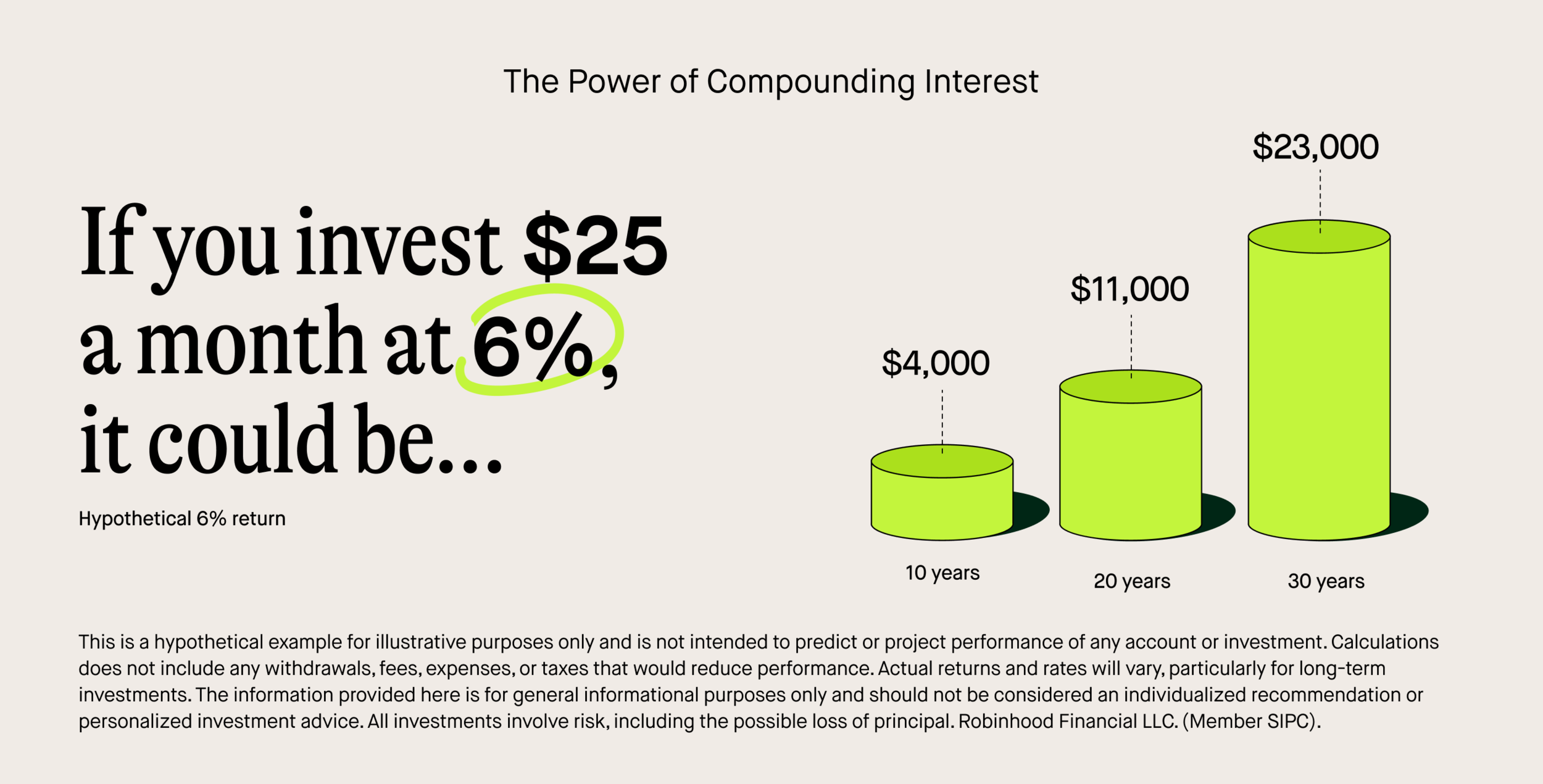
The single greatest advantage of beginning to invest early is harnessing the power of compounding. Compound interest, often called “interest on interest,” means that your initial investment earns returns, and then those returns themselves start earning returns. Over extended periods, this snowball effect can lead to exponential growth.
Consider two individuals: Investor A starts investing $100 per month at age 18 and stops at age 28 (10 years), while Investor B starts investing $100 per month at age 28 and continues until age 65 (37 years). Assuming an average annual return of 7%, Investor A, who invested for fewer years but started earlier, will likely have significantly more money at age 65 than Investor B. This is because Investor A’s early investments had decades longer to compound. The early years of investing, even with small amounts, are disproportionately impactful due to the long runway for growth. This compelling mathematical reality underscores why gaining access to platforms like Robinhood as soon as one is eligible is highly advantageous.
Learning Financial Literacy Through Practice
Early direct investing offers an unparalleled experiential learning opportunity. While theoretical knowledge is essential, practical application solidifies understanding. By managing their own Robinhood account (once 18), young investors can:
- Gain practical experience: Navigating market fluctuations, understanding asset allocation, and learning about different investment vehicles (stocks, ETFs, options, cryptocurrency).
- Develop risk tolerance: Learning firsthand how to manage emotions during market downturns and upturns, thereby understanding their personal comfort level with risk.
- Formulate long-term strategies: Moving beyond short-term speculation to build a diversified portfolio aligned with their long-term financial goals.
This hands-on experience transforms abstract concepts into tangible lessons, building a robust foundation for lifelong financial independence.
Tax Implications for Young Investors
Understanding the tax implications of investing is a critical responsibility. Once an individual turns 18 and opens their own investment account, they are responsible for reporting their investment income to the IRS. This includes:
- Capital Gains: Profits from selling an investment for more than its purchase price. These can be short-term (held for less than a year, taxed at ordinary income rates) or long-term (held for a year or more, taxed at lower, preferential rates).
- Dividends: Payments from companies to their shareholders. These can be qualified (taxed at long-term capital gains rates) or non-qualified (taxed at ordinary income rates).
- Interest Income: Earned from certain fixed-income investments.
It’s important for new investors to keep meticulous records of their trades and consult with a tax professional, especially as their portfolio grows. The U.S. tax code can be complex, and understanding how investment income affects one’s tax liability is a key part of financial maturity. While Robinhood provides tax documents (like Form 1099-B), investors are ultimately responsible for accurate reporting.
What to Do While You Wait: Preparing for Your Robinhood Journey
For those eagerly awaiting their 18th birthday, the interim period is not a time for passive waiting but an invaluable opportunity for active preparation. Building a solid foundation of knowledge and good habits will significantly enhance success once direct investing becomes an option.
Deepening Your Financial Education
The journey to becoming a savvy investor begins with comprehensive education. Leverage the time before turning 18 to immerse yourself in financial literacy:
- Read extensively: Explore books on investing, personal finance, and economic history. Classics like “The Intelligent Investor” by Benjamin Graham or “A Random Walk Down Wall Street” by Burton Malkiel provide timeless wisdom.
- Utilize online resources: Websites like Investopedia, NerdWallet, and the SEC’s investor.gov offer free, reliable information on everything from basic financial terms to complex investment strategies. Many brokerages also offer educational articles and webinars.
- Listen to podcasts and watch documentaries: Engage with financial content in diverse formats that suit your learning style.
- Understand investment basics: Learn the differences between stocks, bonds, mutual funds, and exchange-traded funds (ETFs). Grasp concepts like diversification, risk tolerance, and dollar-cost averaging.
- Learn about risk management: Understand that all investments carry risk and learn strategies to mitigate it, such as diversification and investing within your means.
Building a Foundation: Saving and Budgeting
Before you invest, you need money to invest, and you need to know how to manage it. Developing strong saving and budgeting habits early will serve you throughout your life:
- Create a budget: Track your income and expenses to understand where your money goes. This helps identify areas where you can save more.
- Set financial goals: Whether it’s saving for a car, college, or an emergency fund, specific goals provide motivation for saving.
- Establish an emergency fund: Before putting significant money into the market, build a buffer of 3-6 months’ worth of living expenses in a liquid savings account. This prevents having to sell investments at a loss if unexpected expenses arise.
- Practice delayed gratification: The ability to save money now for a larger future benefit is a hallmark of successful financial planning.
Exploring Practice Platforms and Paper Trading
To get hands-on experience without risking real capital, explore paper trading or simulated trading platforms. Many brokerages (e.g., TD Ameritrade’s thinkorswim platform, Fidelity, Schwab) offer virtual trading environments that mimic real market conditions. Dedicated apps and websites also provide these services.
Paper trading allows you to:
- Test investment strategies: Experiment with buying and selling various assets to see how they perform under different market conditions.
- Get comfortable with order types: Learn about market orders, limit orders, stop-loss orders, and how to execute them.
- Familiarize yourself with platform interfaces: Understand how to read charts, research companies, and manage a virtual portfolio.
This risk-free environment is an excellent way to bridge the gap between theoretical knowledge and practical application, building confidence and experience before you commit your actual money.
The Broader Landscape: Beyond Robinhood’s Age Limit
The discussion around Robinhood’s age limit is part of a larger conversation about financial inclusion, youth engagement in the markets, and responsible investing practices in the digital age.
The Drive for Financial Inclusion and Youth Engagement
There’s a growing recognition of the importance of financial literacy and early market participation. Fintech platforms, including Robinhood, have played a significant role in making investing more accessible and less intimidating for younger generations. This drive towards financial inclusion aims to equip more individuals with the tools and knowledge to build wealth and achieve financial independence. The interest from younger demographics in platforms like Robinhood reflects a proactive desire to take control of their financial futures, a positive trend that institutions and educators are increasingly seeking to support through appropriate channels.

Responsible Investing Practices
Regardless of age, responsible investing is paramount. For young investors, in particular, it’s crucial to cultivate sound habits from the outset:
- Avoid “get-rich-quick” schemes: The allure of quick profits can be strong, especially with viral trends or meme stocks. However, sustainable wealth building is a long-term endeavor based on sound principles, not speculation.
- Do your due diligence: Understand what you are investing in. Research companies, read financial reports, and don’t blindly follow tips or social media trends.
- Invest within your means: Never invest money you cannot afford to lose, especially if it’s earmarked for essential needs.
- Diversify your portfolio: Spread your investments across different assets and sectors to mitigate risk. “Don’t put all your eggs in one basket.”
- Prioritize long-term goals: While day trading can be exciting, focusing on long-term growth through consistent contributions and a diversified portfolio is generally a more reliable path to wealth.
Conclusion
To directly use Robinhood, an individual must be at least 18 years old, a requirement mandated by legal and regulatory frameworks designed to ensure financial responsibility and protection. While this age limit may be frustrating for younger aspirants, it underscores the serious nature of managing investments. For those under 18, custodial accounts offer a robust and legally compliant pathway to begin investing with adult oversight, providing a valuable head start through the power of compounding.
Ultimately, the period leading up to eligibility for a direct brokerage account should be viewed as an invaluable preparatory phase. By deepening financial education, cultivating strong saving habits, and utilizing paper trading platforms, aspiring young investors can build a solid foundation of knowledge and practical experience. When the time comes to open that Robinhood account, they will be equipped not just with access, but with the wisdom and discipline to embark on a responsible and potentially prosperous investing journey.
aViewFromTheCave is a participant in the Amazon Services LLC Associates Program, an affiliate advertising program designed to provide a means for sites to earn advertising fees by advertising and linking to Amazon.com. Amazon, the Amazon logo, AmazonSupply, and the AmazonSupply logo are trademarks of Amazon.com, Inc. or its affiliates. As an Amazon Associate we earn affiliate commissions from qualifying purchases.