
The landscape of personal finance has undergone a profound transformation over the last decade, with technology serving as the primary catalyst. At the forefront of this shift is Robinhood, a pioneering financial services company that burst onto the scene with a disruptive promise: to democratize finance for everyone. By offering commission-free trading and an intuitive mobile-first platform, Robinhood has lowered the barrier to entry for millions of new investors, making the stock market more accessible than ever before. This guide delves into the specifics of how to effectively invest using Robinhood, covering everything from setting up your account to developing sound investment strategies, all within the crucial context of responsible financial management.
Understanding Robinhood: A Gateway to Accessible Investing
Before diving into the mechanics of investing, it’s essential to grasp what Robinhood is and how its unique value proposition has reshaped the investment world. Its philosophy centers on making investing simple and affordable, attracting a new generation of traders and long-term investors alike.
What is Robinhood?
Robinhood Markets, Inc. is a U.S. financial services company headquartered in Menlo Park, California. Founded in 2013 by Baiju Bhatt and Vladimir Tenev, it launched its platform in 2015 with the revolutionary concept of commission-free stock, ETF, and options trades. This move was a direct challenge to traditional brokerage firms that charged per-trade fees, which historically deterred small investors. Beyond its core trading features, Robinhood has expanded its offerings to include cryptocurrency trading, fractional share investing, and cash management solutions, positioning itself as a comprehensive platform for individual investors.
The Philosophy Behind Robinhood
Robinhood’s core mission is “to democratize finance for all.” This mission translates into a platform designed to be user-friendly, removing complex jargon and clunky interfaces often associated with traditional brokerages. By making investing feel less intimidating and more approachable, Robinhood aims to empower individuals who might have previously felt excluded from financial markets. The idea is that everyone, regardless of their starting capital or prior experience, should have the opportunity to participate in and benefit from the financial system. This focus on accessibility is a defining characteristic that permeates every aspect of its service.
Key Features that Attract Investors
Several standout features contribute to Robinhood’s widespread appeal:
- Commission-Free Trading: This is arguably Robinhood’s most significant innovation. Eliminating commissions on stock, ETF, and options trades means investors can buy and sell securities without incurring direct costs on each transaction, making small, frequent trades more viable and cost-effective for beginners.
- Fractional Shares: Robinhood allows users to buy fractions of shares, meaning you don’t need to afford a full share of a high-priced stock like Amazon or Google to invest in it. You can invest as little as $1 into a company, making diversification accessible even with a limited budget.
- Intuitive User Interface: The Robinhood app is renowned for its clean, minimalist design and ease of navigation. It provides real-time market data, customizable watchlists, and simple order placement, making the investment process straightforward for newcomers.
- Robinhood Gold: For a monthly fee, Robinhood Gold offers premium features such as instant deposits, professional research from Morningstar, and access to margin investing.
- Robinhood Crypto: The platform allows users to buy and sell cryptocurrencies like Bitcoin, Ethereum, and Dogecoin alongside traditional securities, providing a unified investment experience.
Getting Started with Robinhood: Your First Steps
Embarking on your investment journey with Robinhood is a relatively straightforward process designed for simplicity. From setting up your account to funding it and making your first trade, the platform guides you through each step.
Account Creation and Verification
The first step is to download the Robinhood app from your smartphone’s app store or visit their website. The sign-up process typically involves providing basic personal information such as your name, address, date of birth, and Social Security number. As a regulated financial institution, Robinhood is required to verify your identity to comply with “Know Your Customer” (KYC) regulations and anti-money laundering (AML) laws. This usually involves submitting a photo of a government-issued ID. Approval can take anywhere from a few minutes to a few business days. You must be at least 18 years old, have a valid Social Security number, and have a legal U.S. residential address to open an account.
Funding Your Robinhood Account
Once your account is approved, the next crucial step is to deposit funds so you can begin investing. Robinhood primarily facilitates this through linking your bank account. You’ll typically connect your bank account using your bank’s login credentials or by manually entering your account and routing numbers. Robinhood offers various deposit options:
- Standard Deposits: These are free and typically take 3-5 business days for funds to become available for investing.
- Instant Deposits: For new accounts, instant deposits are usually limited to $1,000. Once your account matures and your deposit history is established, this limit may increase. Robinhood Gold subscribers receive higher instant deposit limits, often up to $50,000, allowing them to invest immediately while standard deposits clear.
- Recurring Investments: You can set up automated recurring transfers from your bank account to Robinhood, a great way to practice dollar-cost averaging and build your portfolio consistently over time.
Navigating the User Interface
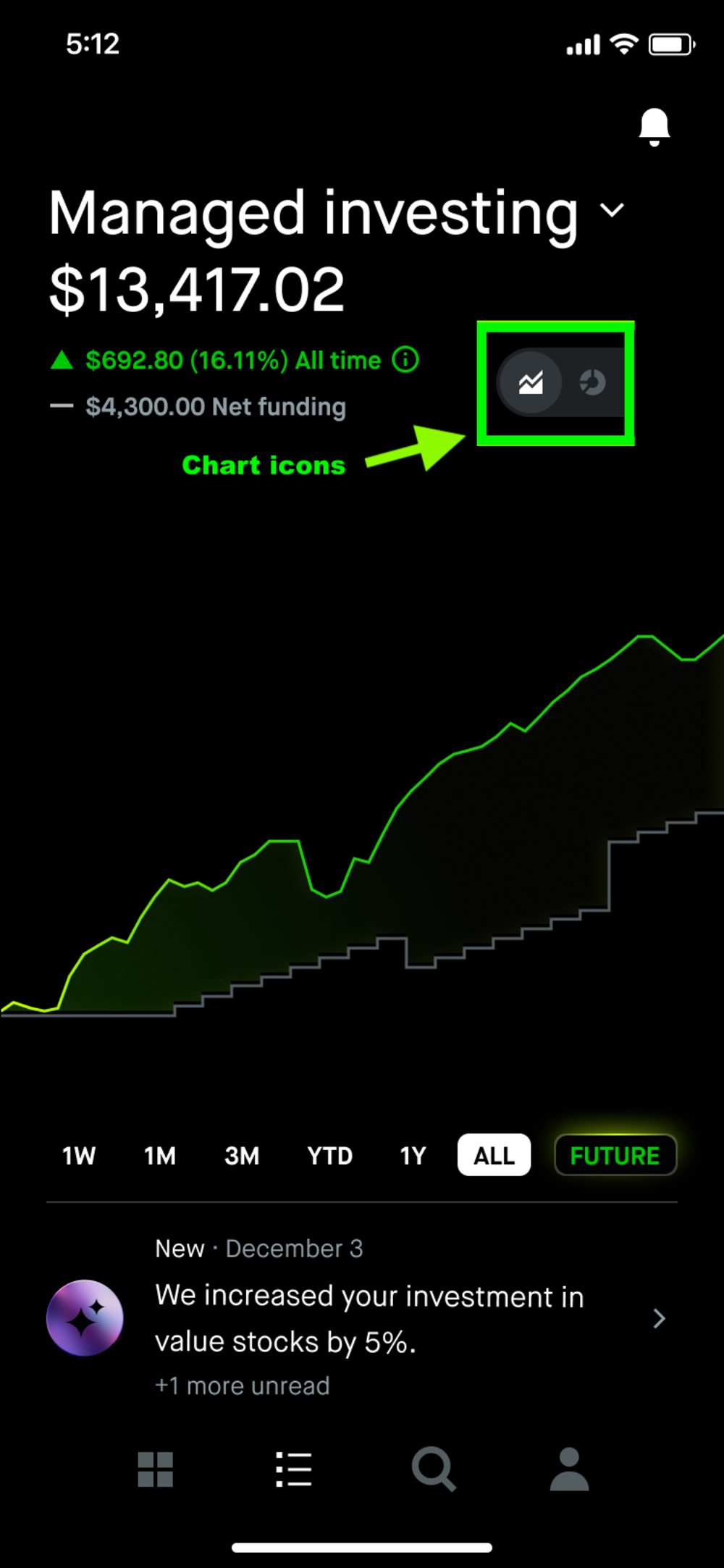
Robinhood’s app is celebrated for its intuitive design. Upon logging in, you’ll land on your personalized home screen, displaying your portfolio’s performance, current holdings, and a watchlist of stocks you’re tracking. Key navigation elements include:
- Magnifying Glass Icon: Used for searching for specific stocks, ETFs, or cryptocurrencies.
- Account Icon: Accesses your account settings, statements, transfers, and investing history.
- Cash Tab: Manages your uninvested cash, shows buying power, and facilitates deposits/withdrawals.
- Newsfeed: Provides relevant financial news and updates related to your holdings and watchlist.
Understanding these basic navigation tools will allow you to efficiently explore investment opportunities, monitor your portfolio, and execute trades.
Exploring Investment Options on Robinhood
Robinhood offers a diverse range of investment products, catering to various risk appetites and investment goals. From traditional equities to volatile cryptocurrencies, understanding what’s available is key to building a well-rounded portfolio.
Stocks and ETFs
The bread and butter of Robinhood’s offerings are stocks and exchange-traded funds (ETFs).
- Stocks: Represent ownership stakes in publicly traded companies. On Robinhood, you can buy shares of thousands of U.S.-listed companies, from tech giants to emerging businesses. The ability to buy fractional shares is particularly empowering, allowing investors to purchase small pieces of expensive stocks like Tesla or Apple with as little as $1.
- ETFs: These are diversified baskets of securities, similar to mutual funds, but they trade on stock exchanges like individual stocks. ETFs can track various assets, including market indexes (e.g., S&P 500 ETFs), specific industries, commodities, or bonds. They offer instant diversification, often with lower expense ratios than actively managed mutual funds, making them excellent choices for beginners.
Options Trading
Robinhood also provides access to options trading for eligible accounts. Options contracts give the holder the right, but not the obligation, to buy or sell an underlying asset at a specified price before a certain date.
- Calls: Give the right to buy. Investors buy calls if they expect the stock price to rise.
- Puts: Give the right to sell. Investors buy puts if they expect the stock price to fall.
Options are complex financial instruments that carry significant risk and are not suitable for all investors. Robinhood requires users to apply and be approved for options trading, often based on their financial experience and risk profile, underscoring the need for careful consideration and education before engaging.
Cryptocurrency Investing
Robinhood Crypto allows users to trade a selection of popular cryptocurrencies, including Bitcoin (BTC), Ethereum (ETH), Dogecoin (DOGE), Litecoin (LTC), and more. This integration means investors can manage their traditional stock portfolio and crypto holdings within a single platform.
- Direct Access: Robinhood Crypto simplifies crypto investing by eliminating the need for separate crypto wallets or exchanges.
- Market Volatility: It’s crucial to remember that cryptocurrencies are highly volatile and speculative assets. While they offer potential for significant gains, they also carry a high risk of loss. Investors should approach crypto with caution and only invest what they can afford to lose.
- No Wallet Access (Historically): Traditionally, Robinhood Crypto operated more like an exchange-traded product where you bought and sold crypto but didn’t directly own the underlying coins in a wallet you controlled. However, Robinhood has been rolling out a crypto wallet feature, enabling users to send and receive supported cryptocurrencies, which is a significant development for true ownership.
Other Potential Offerings
Robinhood has historically explored and offered other financial products:
- Robinhood Gold: As mentioned, this premium service offers margin investing (borrowing money to invest), larger instant deposits, and professional research. Margin investing amplifies both gains and losses and should be used with extreme caution.
- Cash Management: Robinhood previously offered a cash management feature that allowed users to earn interest on uninvested cash, similar to a high-yield savings account, complete with a debit card. While specific offerings may evolve, Robinhood continues to explore ways to manage cash efficiently for its users.
Developing Your Robinhood Investment Strategy
Investing without a strategy is akin to sailing without a compass. While Robinhood makes investing easy, building a resilient portfolio requires thoughtful planning, understanding your financial goals, and managing risk effectively.
Setting Financial Goals
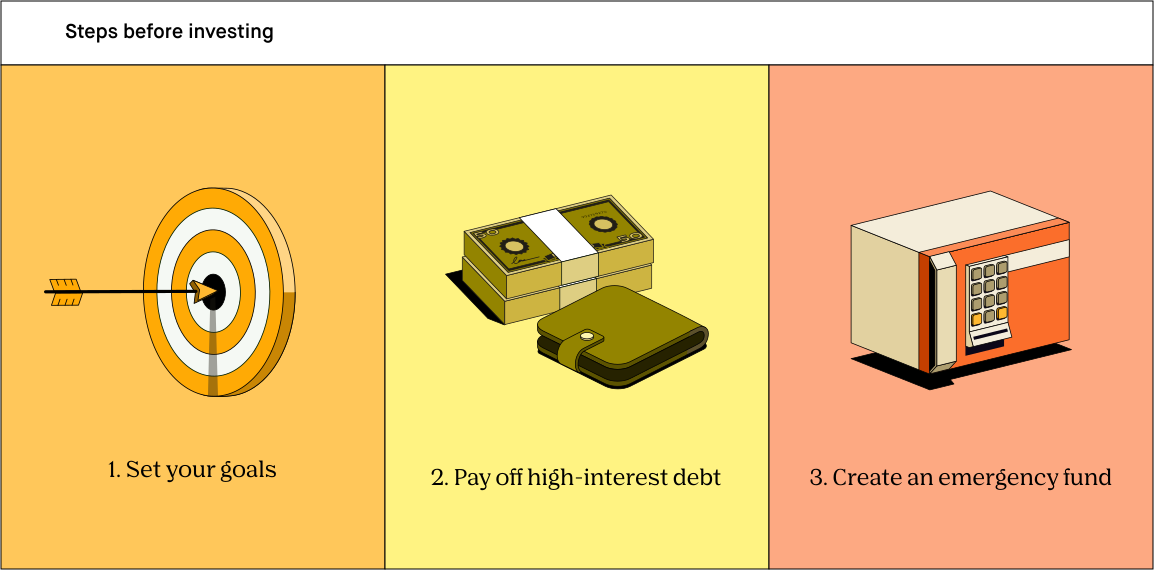
Before making any investment, define what you want your money to achieve. Are you saving for a down payment on a house, retirement, a child’s education, or simply growing your wealth over the long term?
- Short-Term Goals (1-3 years): For goals like a vacation or an emergency fund, less volatile investments or high-yield savings accounts might be more appropriate.
- Mid-Term Goals (3-10 years): This might include a down payment or career change. A balanced portfolio with a mix of stocks and bonds could be suitable.
- Long-Term Goals (10+ years): Retirement or significant wealth accumulation often benefits most from aggressive, growth-oriented investments like stocks, as the longer time horizon allows for recovery from market downturns.
Clearly defined goals will inform your asset allocation and risk tolerance.
Understanding Risk Tolerance
Your risk tolerance is your capacity and willingness to take on financial risk. It’s influenced by factors like your age, income stability, financial obligations, and emotional response to market fluctuations.
- Conservative: Prioritizes capital preservation, willing to accept lower returns for less volatility.
- Moderate: Seeks a balance between growth and risk, comfortable with some market swings.
- Aggressive: Willing to take on higher risk for potentially higher returns, comfortable with significant market volatility.
Knowing your risk tolerance is crucial for selecting appropriate investments. A young investor with stable income and a long time horizon might adopt a more aggressive strategy, while someone nearing retirement might opt for a more conservative approach.
Diversification and Portfolio Management
Diversification is the cornerstone of risk management. It involves spreading your investments across various asset classes, industries, and geographies to reduce the impact of poor performance from any single investment.
- Asset Classes: Don’t put all your money into stocks. Consider ETFs that hold bonds, real estate (REITs), or commodities.
- Industries: Invest across different sectors (e.g., technology, healthcare, consumer goods) to avoid overexposure to a single industry.
- Company Size: A mix of large-cap, mid-cap, and small-cap stocks can offer different growth profiles.
- Fractional Shares: Robinhood’s fractional shares feature makes diversification highly accessible, allowing you to build a diverse portfolio even with limited capital. Regularly review and rebalance your portfolio to ensure it aligns with your original asset allocation targets.
Researching Investments
While Robinhood simplifies trading, it doesn’t replace the need for thorough research.
- Robinhood’s Built-in Tools: The platform provides company profiles, basic financial data, analyst ratings (for Gold subscribers), and news articles.
- External Resources: Supplement this with independent research from financial news outlets, reputable investment websites, and company investor relations pages. Understand a company’s business model, competitive landscape, financial health, and growth prospects before investing. Don’t invest in what you don’t understand.
Long-Term vs. Short-Term Approaches
Your investment horizon dictates your strategy.
- Long-Term (Buy and Hold): This strategy involves holding investments for many years, aiming to benefit from compounding returns and weathering short-term market fluctuations. It generally requires less active management and patience.
- Short-Term (Active Trading): This involves more frequent buying and selling, attempting to profit from short-term price movements. While potentially lucrative, it’s significantly riskier, more time-consuming, and often results in higher taxes and potential losses for most individual investors. For beginners, a long-term, diversified strategy is generally recommended.
Risks, Rewards, and Responsible Investing on Robinhood
While Robinhood has democratized access to financial markets, it’s imperative to approach investing with a balanced understanding of both its potential benefits and inherent risks. Responsible investing requires education, discipline, and a clear perspective on market realities.
The Upsides: Accessibility and Cost Savings
The primary advantages of investing with Robinhood are undeniable.
- Unprecedented Accessibility: For many, Robinhood represents their first foray into the stock market. Its low entry barrier, simple interface, and fractional shares make it possible for individuals with limited capital to begin building wealth.
- Cost Efficiency: Commission-free trading significantly reduces the cost of investing, especially for those making smaller or more frequent trades. This means more of your money goes towards investments rather than fees, enhancing potential returns over time.
- Educational Resources: Robinhood offers various articles and guides to help users learn about investing fundamentals, company analysis, and market concepts, contributing to financial literacy.
The Downsides: Volatility and Behavioral Biases
Despite its advantages, Robinhood is not without its challenges and risks, particularly for new investors.
- Market Volatility: All investments carry market risk. Stock prices can fluctuate dramatically due to economic conditions, company-specific news, or broader market sentiment. There’s no guarantee of returns, and you can lose money.
- Behavioral Biases and Gamification: The app’s user-friendly, almost game-like interface, complete with confetti animations and push notifications, has been criticized for potentially encouraging speculative or impulsive trading behavior. This can lead investors, especially those new to the market, to chase volatile stocks or make emotionally driven decisions, ignoring fundamental analysis or long-term strategies.
- Options and Crypto Risks: As discussed, options trading involves significant leverage and can lead to rapid, substantial losses. Cryptocurrencies are exceptionally volatile and speculative, and their regulatory environment is still evolving, adding layers of risk.
Regulatory Considerations and Investor Protection
Robinhood Financial LLC is a member of the Financial Industry Regulatory Authority (FINRA) and the Securities Investor Protection Corporation (SIPC).
- SIPC Protection: This means your securities and cash are protected up to $500,000 (including $250,000 for cash claims) in the event the brokerage firm fails. However, SIPC protection does not protect against losses due to market fluctuations or poor investment choices.
- Regulation: Robinhood, like other brokerages, is subject to oversight by the U.S. Securities and Exchange Commission (SEC) and FINRA, ensuring compliance with financial regulations and investor safeguards. This provides a layer of security regarding the firm’s operations, but it does not mitigate the inherent risks of investing itself.
Beyond Robinhood: When to Consider Other Platforms
While Robinhood is an excellent starting point, it may not be the optimal platform for every type of investor or every investment goal.
- Advanced Tools and Research: Experienced investors or those with complex strategies might find Robinhood’s research tools and charting capabilities less robust compared to platforms like Charles Schwab, Fidelity, or TD Ameritrade (now Schwab). These traditional brokers often offer deeper analytical tools, a wider range of investment products (e.g., mutual funds, international stocks), and more extensive educational content.
- Retirement Accounts: While Robinhood offers IRAs, other platforms might provide a more extensive suite of retirement planning tools, advisors, and a broader selection of retirement-specific investment vehicles.
- Day Trading: For professional day traders, specialized platforms with ultra-low latency execution, direct market access, and advanced order types might be more suitable, though day trading is highly risky for most individuals.
Ultimately, investing in Robinhood means leveraging a powerful, accessible tool to engage with financial markets. Success hinges not just on using the platform, but on cultivating financial literacy, understanding personal risk, setting clear goals, and adhering to sound investment principles. Begin cautiously, prioritize education, diversify your portfolio, and always remember that investing is a marathon, not a sprint.
aViewFromTheCave is a participant in the Amazon Services LLC Associates Program, an affiliate advertising program designed to provide a means for sites to earn advertising fees by advertising and linking to Amazon.com. Amazon, the Amazon logo, AmazonSupply, and the AmazonSupply logo are trademarks of Amazon.com, Inc. or its affiliates. As an Amazon Associate we earn affiliate commissions from qualifying purchases.