
In the dynamic world of fintech, few companies have captivated public attention and disrupted traditional finance quite like Robinhood. Since its inception, the commission-free trading platform has been synonymous with the democratization of investing, attracting millions with its accessible interface and innovative approach. For investors, market analysts, and anyone tracking the pulse of the financial industry, understanding Robinhood’s user base is far more than a simple headcount; it’s a critical indicator of its market penetration, financial health, and future growth trajectory. The question, “how many users does Robinhood have?” delves deep into the core of its business model, revealing insights into its ability to attract and retain capital, compete in a crowded market, and ultimately, generate revenue. This article will dissect Robinhood’s user metrics, exploring their significance within the broader financial landscape and what they mean for the company’s journey in personal finance and investing.
The Significance of User Count in the Fintech Landscape
In the realm of personal finance and investing, user numbers serve as a fundamental barometer for a platform’s success and influence. For a fintech company like Robinhood, built on a model of mass adoption and low-cost access, the sheer volume of users directly correlates with its operational scale, potential for revenue generation, and its valuation in the eyes of investors. It’s not just a vanity metric; it’s a direct reflection of market share and the effectiveness of its financial tools.
Beyond Vanity Metrics: Why User Numbers Matter
While large user numbers can certainly boost a company’s profile and attractiveness, for financial platforms, they translate directly into tangible business value. A larger user base often means a higher volume of assets under custody (AUC) or assets under management (AUM), which is a key driver for revenue through interest on uninvested cash, payment for order flow (PFOF), and premium subscription services. Each new user represents a potential long-term relationship, an incremental increase in transaction volume, and a broader reach for new financial products and services. Moreover, a robust user base can create network effects, enhancing the platform’s liquidity and making it more appealing for institutional partners and market makers, which further cements its competitive advantage in the investing space. For Robinhood, a company that has championed commission-free trading, the ability to scale its user base is paramount to achieving profitability and sustaining its disruptive model.
Robinhood’s Disruptive Entry and Rapid Growth
Robinhood burst onto the financial scene in 2013 with a revolutionary proposition: commission-free stock trading. At a time when traditional brokerages charged hefty fees per trade, Robinhood’s model instantly resonated with a new generation of investors, particularly millennials and Gen Z, who were eager to participate in the stock market but deterred by high costs and complex interfaces. This disruptive approach quickly garnered significant traction. The promise of zero commissions, coupled with a user-friendly mobile app, lowered the barrier to entry for millions, democratizing access to financial markets. This strategy fueled an initial period of explosive growth, transforming Robinhood from a niche startup into a mainstream financial tool. Its user acquisition strategy was not just about attracting investors; it was about onboarding an entirely new segment of the population into the world of personal finance, many of whom had never considered investing before.
Tracing Robinhood’s User Growth Trajectory
Robinhood’s journey in user acquisition has been nothing short of a roller coaster, marked by periods of unprecedented expansion followed by significant adjustments. Understanding this trajectory requires examining the key milestones and external factors that have shaped its market presence.
Early Wins and the Democratization of Investing
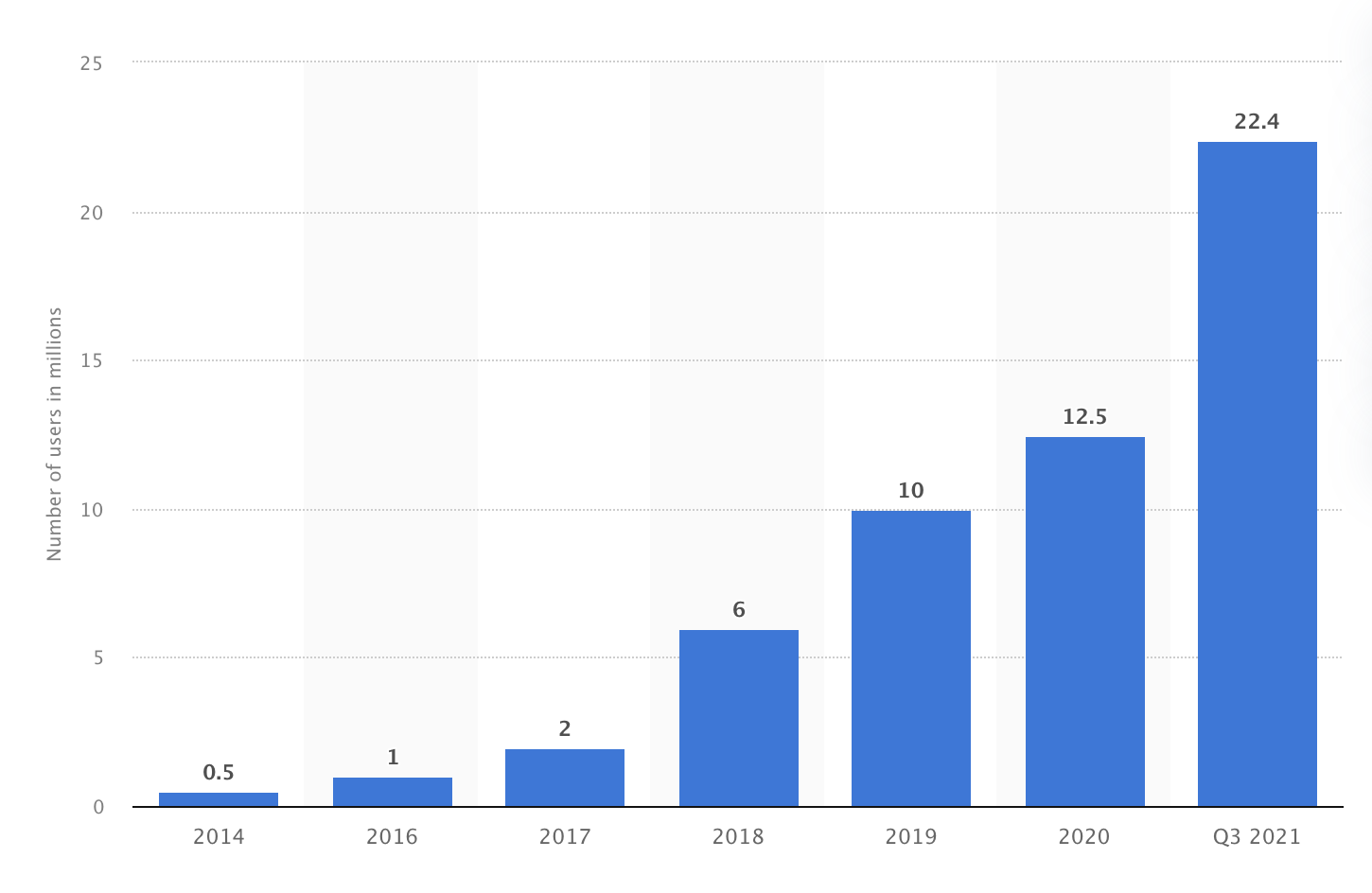
From its launch, Robinhood successfully tapped into an underserved market: young, tech-savvy individuals looking for an accessible entry point into investing. Its early growth was propelled by viral marketing, word-of-mouth, and the sheer novelty of commission-free trading. By 2018, it had surpassed 5 million users, a testament to its successful mission of democratizing finance. The platform simplified complex financial instruments, making options trading and cryptocurrency investing understandable and available at the tap of a screen. This era solidified Robinhood’s reputation as a trailblazer, fundamentally altering how a significant segment of the population engaged with their personal finances and the stock market. The early user base was a blend of first-time investors, seasoned traders seeking cost savings, and those drawn by the platform’s sleek design and gamified experience.
Navigating the Peaks and Valleys: Influencing Factors
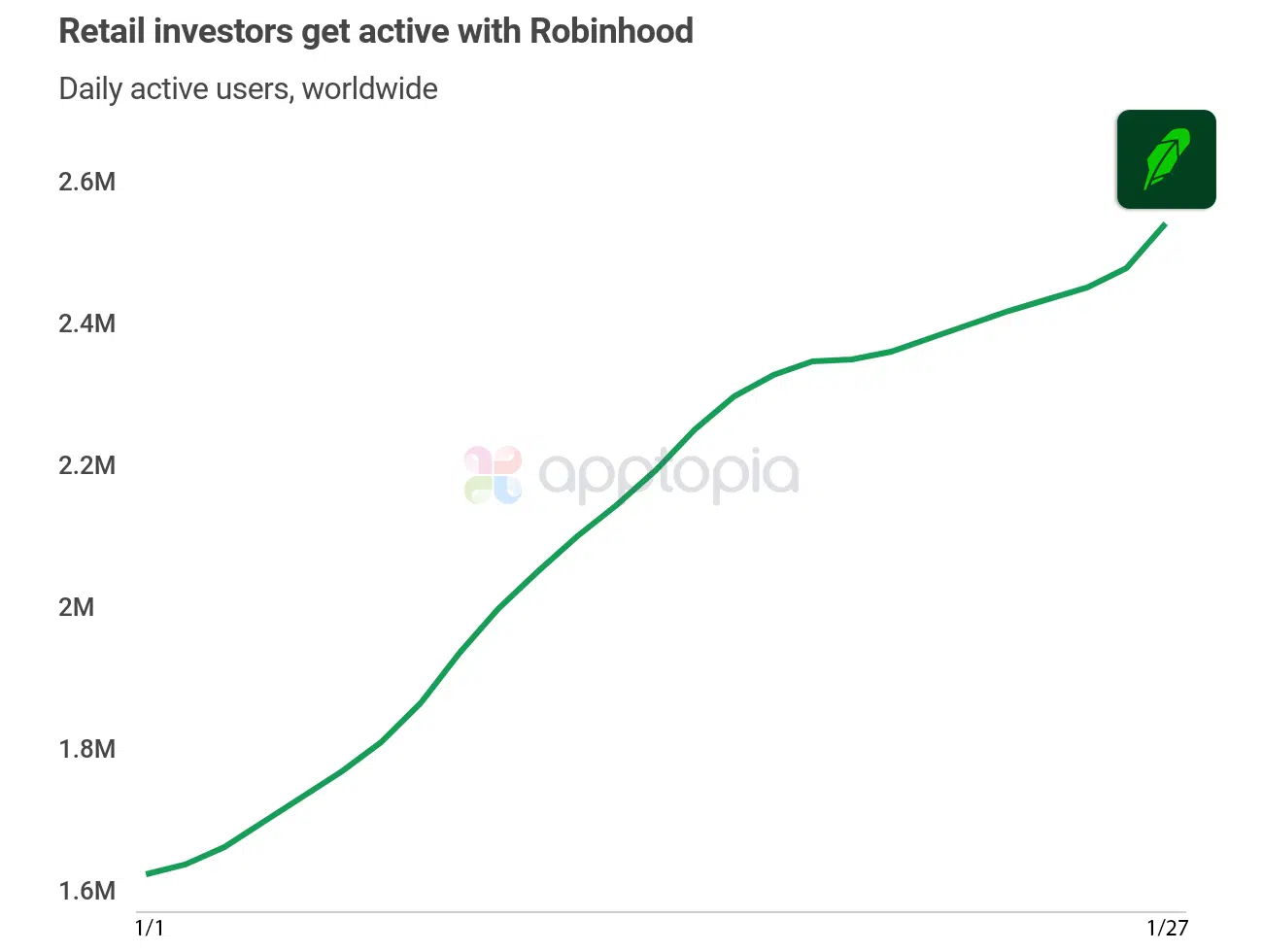
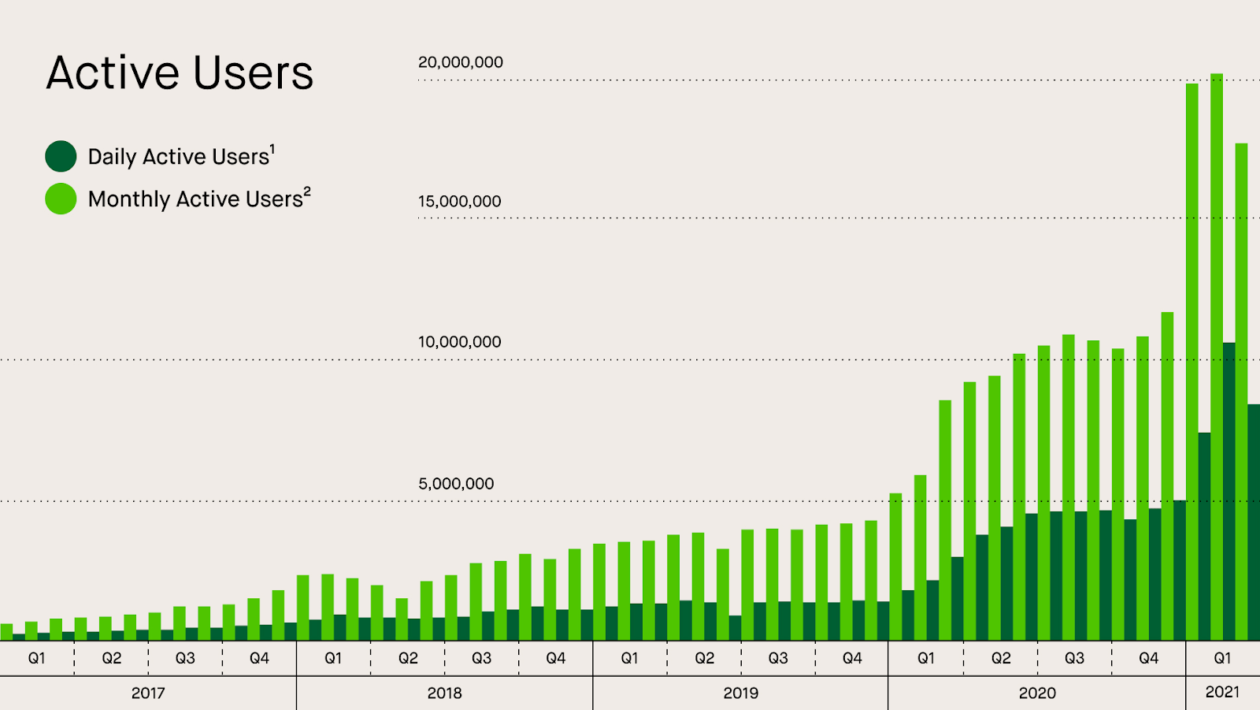
Robinhood’s user growth has not been linear; it has experienced dramatic surges and subsequent contractions, largely influenced by external market forces and internal strategic decisions. The most significant boom occurred during the COVID-19 pandemic, specifically in 2020 and early 2021. With lockdowns, stimulus checks, and an abundance of free time, millions of new retail investors flocked to platforms like Robinhood. The surge in meme stock trading, notably GameStop (GME) and AMC Entertainment (AMC), also played a pivotal role, bringing unprecedented attention and user sign-ups to the platform. During this period, Robinhood’s monthly active users (MAU) peaked at over 21 million.
However, this explosive growth was followed by a downturn. Market volatility, rising interest rates, and the fading of pandemic-era trading frenzies led to a cooling off. The controversy surrounding trade restrictions during the GameStop saga also impacted user trust and sentiment. Furthermore, increased competition from established brokers that eventually adopted commission-free trading, coupled with negative media scrutiny, contributed to a decline in net new accounts and, in some cases, a loss of active users. The cyclical nature of market enthusiasm and economic conditions proved to be a powerful external force dictating user engagement and retention.
Post-Pandemic Shifts and Market Dynamics
Following its peak, Robinhood’s user base, particularly its monthly active users, saw a noticeable decline. By the end of 2022 and into 2023, MAUs stabilized at a lower, but still substantial, level, typically hovering around 10-12 million. This stabilization reflects a shift from speculative, high-frequency trading back to more traditional investing patterns as market conditions normalize. The company has focused on retaining its core users and attracting more long-term investors rather than solely relying on viral growth. This shift necessitated an evolution in its offerings, emphasizing reliable financial tools and educational resources over solely promoting speculative assets. The dynamics of post-pandemic markets, characterized by inflation, interest rate hikes, and geopolitical uncertainties, have prompted investors to adopt a more cautious approach, directly influencing engagement levels on platforms like Robinhood.
Robinhood’s Current User Base and Engagement
Understanding Robinhood’s current market footprint requires a granular look at its user metrics, differentiating between various engagement levels and assessing the financial value derived from each user.
Active Users vs. Funded Accounts: A Deeper Dive
When discussing Robinhood’s user base, it’s crucial to distinguish between different metrics. “Funded Accounts” refers to the total number of unique customers who have opened an account and deposited funds into it. This number generally represents the platform’s overall reach and cumulative customer acquisition over time. “Monthly Active Users” (MAUs), on the other hand, provides a measure of engagement, representing the number of unique users who interact with the platform (e.g., log in, execute a trade) at least once during a given month.
As of its latest public reports (typically Q4 2023 and Q1 2024), Robinhood’s funded accounts have remained relatively stable, often reported in the range of 23-24 million. This indicates a strong cumulative customer base. However, MAUs have shown more fluctuation, stabilizing around 10-11 million. This divergence highlights that while many individuals have opened accounts, a significant portion may not be actively trading or engaging with the platform on a monthly basis. The challenge for Robinhood lies in converting funded accounts into consistently active users, which directly impacts transaction volume and PFOF revenue. This also reflects a maturing user base; after the initial speculative frenzy, many casual traders might have reduced their activity, leaving behind a core of more dedicated or long-term investors.
Revenue Per User: The Path to Profitability
For a financial technology company, the number of users is only one part of the equation; the “Revenue Per User” (RPU) or “Average Revenue Per User” (ARPU) is equally, if not more, critical for profitability. Robinhood generates revenue primarily through payment for order flow (PFOF), interest on customer cash balances, and premium subscription services like Robinhood Gold. Therefore, a higher volume of transactions, larger cash balances, and increased Gold subscriptions directly contribute to RPU.
As the user base stabilized post-pandemic, Robinhood has increasingly focused on improving RPU. This involves strategies like encouraging higher deposit balances, promoting its Robinhood Gold subscription (which offers higher interest on uninvested cash, larger instant deposits, and access to advanced market data), and expanding into new revenue streams such as retirement accounts (IRAs) and 24/5 trading. The financial health of Robinhood isn’t just about how many users it has, but how much value it can generate from each user’s financial activity, ensuring the long-term viability of its commission-free model.
Geographic Distribution and Target Demographics
Robinhood’s user base is predominantly concentrated in the United States, which is its primary operational market. While the company has explored international expansion, its core focus and the vast majority of its users reside within the U.S. Demographically, Robinhood has been remarkably successful in attracting a younger cohort. A significant portion of its users are millennials and Gen Z, many of whom are first-time investors. This demographic often brings different investing habits—they are generally more comfortable with digital platforms, receptive to cryptocurrency, and sometimes more prone to engaging with social media-driven market trends. Robinhood’s success lies in understanding and catering to these preferences, offering an intuitive mobile experience that resonates with this tech-native generation. This demographic insight is vital for tailoring future financial tools and educational content, ensuring continued relevance and growth within the personal finance segment.
The Financial Implications of Robinhood’s User Data
The size and activity of Robinhood’s user base directly translate into profound financial implications, influencing its market valuation, competitive standing, and the scrutiny it faces from regulators. These numbers are not mere statistics; they are drivers of investor confidence and indicators of market strength.
Investor Confidence and Valuation
For a publicly traded company like Robinhood (HOOD), user metrics are central to investor confidence and its stock market valuation. A growing base of funded accounts and consistently high monthly active users signal a healthy, expanding business that is successfully attracting and retaining capital. Conversely, declining user numbers or stagnating engagement can trigger investor concerns about future revenue growth and market relevance. Wall Street closely watches these figures, as they are key proxies for the company’s ability to monetize its platform and expand its assets under custody (AUC). A larger, more engaged user base typically translates into higher trading volumes, increased PFOF revenue, and greater interest income from cash balances, all of which positively impact the company’s earnings and, consequently, its share price. When Robinhood successfully reports growth in key user metrics, it often sees a positive reaction in its stock performance, reflecting renewed investor confidence in its business model and growth strategy within the investing sector.
Competitive Landscape and Market Share
Robinhood operates in an intensely competitive landscape. Its success in attracting users has prompted traditional brokerages like Charles Schwab, Fidelity, and E*TRADE to also adopt commission-free trading, effectively eroding Robinhood’s initial unique selling proposition. In this environment, user count becomes a vital measure of market share. While Robinhood may have fewer total customer accounts than some legacy brokers, its significant user base among younger demographics indicates a strong foothold in a crucial growth segment of the personal finance market. The ability to maintain and grow its user numbers against well-established competitors is a testament to its brand appeal and the effectiveness of its platform. Furthermore, the number of users dictates its leverage in negotiations with market makers and partners, as a larger pool of retail orders is more attractive to facilitate, thereby indirectly influencing its PFOF rates and profitability.
Regulatory Scrutiny and User Protection
The rapid growth of Robinhood’s user base, particularly during periods of market volatility and speculative trading, has drawn significant regulatory scrutiny. The sheer volume of new, often inexperienced, investors on the platform raised questions about investor protection, responsible trading practices, and the potential for market manipulation. Regulators, including the SEC and FINRA, have examined Robinhood’s onboarding processes, its payment for order flow practices, its handling of outages, and its communication with users regarding volatile assets like options and cryptocurrencies. The large number of users means that any regulatory misstep or technical glitch can affect millions, amplifying the potential impact and increasing the stakes for the company. Robinhood’s continued growth and innovation must be balanced with robust compliance frameworks and a steadfast commitment to user education and protection, ensuring that its financial tools are used responsibly by its extensive user base.
The Future of Robinhood’s User Growth in an Evolving Market
Robinhood’s journey is far from over. As financial markets continue to evolve and investor sentiment shifts, its ability to grow and retain its user base will depend on its strategic adaptability and commitment to innovation.
Diversifying Offerings to Attract and Retain Users
To reignite growth and enhance user retention, Robinhood has been actively diversifying its product offerings beyond just commission-free stock and crypto trading. The introduction of retirement accounts (IRAs), 24/5 trading, and expanded access to mutual funds aims to attract a broader spectrum of investors, including those looking for long-term wealth building rather than just short-term trading. By catering to more comprehensive personal finance needs, such as savings, retirement planning, and even credit products, Robinhood seeks to transform itself from a trading app into a holistic financial ecosystem. This strategy is crucial for increasing the average revenue per user (ARPU) and establishing deeper, more enduring relationships with its customers, moving beyond the volatility of day trading.
Adapting to Economic Headwinds and Investor Sentiment
The current economic climate, marked by inflation, higher interest rates, and geopolitical tensions, presents both challenges and opportunities for Robinhood. Economic headwinds can dampen retail investor enthusiasm, leading to lower trading volumes and smaller account balances. However, they also create demand for financial tools that help users navigate these challenges, such as high-yield savings accounts or diversified investment portfolios. Robinhood’s future user growth will depend on its agility in adapting its products and messaging to align with evolving investor sentiment and economic realities. This means emphasizing stability, long-term investing, and smart money management rather than purely speculative ventures, thereby appealing to a more cautious and financially conscious demographic.
The Long-Term Vision: From App to Ecosystem
Robinhood’s long-term vision is clear: to evolve from a popular trading app into a comprehensive financial ecosystem. This involves not only expanding its investment offerings but potentially venturing into banking services, lending, and advanced financial planning tools. The ultimate goal is to become the primary financial hub for its users, capturing a larger share of their financial lives. Achieving this vision will necessitate continued investment in technology, robust customer support, and strategic partnerships. By fostering trust, providing value across a wider range of financial services, and continuously innovating, Robinhood aims to ensure that its user count continues to be a powerful testament to its enduring influence in the world of personal finance and investing. The journey of how many users Robinhood has, and will have, is intrinsically linked to its ability to meet the dynamic needs of modern investors.
aViewFromTheCave is a participant in the Amazon Services LLC Associates Program, an affiliate advertising program designed to provide a means for sites to earn advertising fees by advertising and linking to Amazon.com. Amazon, the Amazon logo, AmazonSupply, and the AmazonSupply logo are trademarks of Amazon.com, Inc. or its affiliates. As an Amazon Associate we earn affiliate commissions from qualifying purchases.