
The question “who invented the Tesla car” delves into a complex narrative of vision, technological ambition, and collaborative innovation, rather than pointing to a singular eureka moment or a solitary genius. While often associated with Elon Musk, the genesis of Tesla Motors, and by extension, the Tesla car, involved a collective effort of several key individuals whose contributions were critical to its formation and subsequent technological breakthroughs. Understanding this origin story is essential to appreciating the depth of engineering and the audacious spirit that underpins one of the most transformative companies of the 21st century. Tesla didn’t just invent an electric car; it reinvented the very idea of what a car could be, driven by a relentless pursuit of technological advancement and a sustainable future.

The Genesis of an Automotive Revolution: Beyond a Single Inventor
The journey of Tesla Motors began not in the spotlight of Silicon Valley’s media darling, but in the quiet resolve of engineers passionate about electric vehicles. The company’s foundation was laid by individuals who recognized the immense potential of EV technology long before it was widely accepted or even considered viable by mainstream automotive manufacturers. Their initial vision was not just to build an electric car, but to create an electric car that was compelling, high-performance, and desirable, thereby challenging the prevailing skepticism about electric mobility.
The Early Visionaries: Martin Eberhard and Marc Tarpenning
The true founders of Tesla Motors were Martin Eberhard and Marc Tarpenning. They officially incorporated the company in July 2003. Their motivation stemmed from a shared belief that fossil fuels were an unsustainable energy source and that the internal combustion engine was an outdated technology ripe for disruption. Eberhard, an engineer with a background in computer hardware and startup success, was particularly interested in the performance aspects of electric vehicles, envisioning a high-performance sports car that happened to be electric. Tarpenning, with expertise in software and business development, complemented Eberhard’s technical prowess, focusing on the practicalities of bringing such a revolutionary product to market. They named the company after Nikola Tesla, the brilliant electrical engineer whose work on alternating current (AC) motor technology was foundational to modern electrical systems. Their initial goal was to prove that electric cars could be better, quicker, and more fun to drive than gasoline cars, starting with a niche, high-end product that would fund the development of more affordable models.
The Incubation of Tesla Motors: Founding Principles and Initial Goals
From its inception, Tesla Motors was conceived with a clear technological mandate: to accelerate the world’s transition to sustainable energy. This mission was embedded in its DNA, guiding every engineering decision and product strategy. The company’s initial focus was on overcoming the perceived limitations of electric vehicles, particularly range anxiety and performance shortcomings. Eberhard and Tarpenning understood that for EVs to gain traction, they needed to be aspirational, not merely utilitarian. Their first project, the Tesla Roadster, was designed to be a testament to this principle – a luxury sports car capable of outperforming many gasoline-powered counterparts, yet running entirely on electricity. This required significant innovation in battery technology, power electronics, and vehicle integration, laying the groundwork for many of Tesla’s subsequent technological achievements. They were seeking to demonstrate the viability of advanced lithium-ion battery technology for automotive applications, a relatively unexplored frontier at the time.
Elon Musk’s Crucial Intervention and Strategic Direction
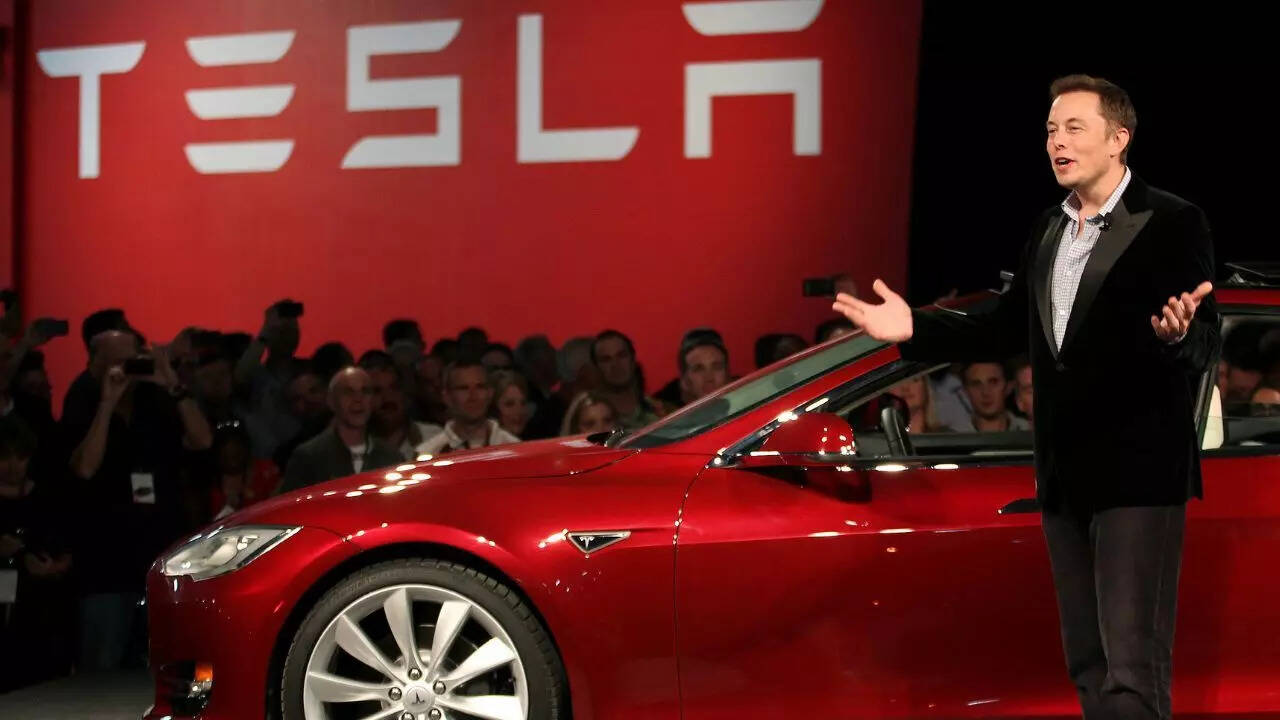
While Eberhard and Tarpenning laid the groundwork, Elon Musk became a pivotal figure in Tesla’s trajectory, investing significantly in the company in February 2004 as part of the Series A funding round. He joined the board of directors as chairman and, leveraging his experience from PayPal and SpaceX, brought a combination of ambitious vision, engineering insight, and crucial financial backing. Musk’s influence grew, and he eventually assumed the roles of CEO and Product Architect in 2008. His arrival marked a significant acceleration of Tesla’s ambitions. He pushed the company towards bolder technological goals, faster product development cycles, and a more aggressive strategy for scaling production. Musk’s “Master Plan” outlined a multi-stage approach: starting with a high-priced, low-volume car (Roadster) to fund a medium-priced, medium-volume car (Model S/X), which would then fund a low-priced, high-volume car (Model 3/Y). This strategic roadmap, combined with his relentless pursuit of engineering excellence and his ability to attract top talent, fundamentally shaped Tesla into the global technology powerhouse it is today. While not the inventor of the Tesla car in the traditional sense, Musk was undeniably the driving force that transformed its foundational technology into a global phenomenon.
Tesla’s Technological DNA: Pioneering Electric Vehicle Innovation
Tesla’s success is not merely about making electric cars; it’s about fundamentally rethinking automotive engineering through a technology-first lens. The company has consistently pushed the boundaries of what’s possible in vehicle design, propulsion, and user experience, treating the car less as a mechanical device and more as a sophisticated, networked computer on wheels.
The Electric Powertrain: Battery Technology and Range Breakthroughs
At the heart of every Tesla is its advanced electric powertrain, which represents a pinnacle of battery and motor technology. Tesla pioneered the use of thousands of small, commodity lithium-ion battery cells (initially 18650, later 2170, and now 4680 formats) configured into large, precisely managed battery packs. This approach allowed for high energy density and cost efficiency, directly addressing the limitations of earlier, larger-format EV batteries. The company developed sophisticated Battery Management Systems (BMS) that meticulously monitor and control each cell, optimizing performance, longevity, and safety. Combined with highly efficient electric motors (both induction and permanent magnet synchronous reluctance types), Tesla vehicles achieved unprecedented range and performance for mass-produced EVs. Innovations like integrated battery packs that contribute to structural rigidity (a concept further advanced with the 4680 cell and structural battery pack design) demonstrate Tesla’s commitment to pushing the envelope in vehicle architecture, moving beyond simply replacing an engine with a motor and a gas tank with a battery.
Software as the Core: Over-the-Air Updates and Autonomy Development
Perhaps Tesla’s most profound technological innovation is its embrace of software as a central, defining feature of the vehicle. Unlike traditional automakers, Tesla treats its cars as networked devices capable of receiving significant Over-The-Air (OTA) updates, much like a smartphone. These updates can introduce new features, improve existing functionalities, enhance performance, and even fix issues remotely, long after the car has left the factory. This software-centric approach allows for continuous improvement and personalization, creating a dynamic user experience that evolves over time.
Crucially, this software foundation is also the bedrock for Tesla’s ambitious autonomous driving efforts. Tesla’s Autopilot and Full Self-Driving (FSD) beta systems rely on a sophisticated array of cameras, ultrasonic sensors, and powerful on-board computing, all orchestrated by advanced neural networks. The company’s unique data collection strategy, leveraging real-world driving data from its global fleet, allows for rapid iteration and improvement of its AI models. This commitment to AI and machine learning for autonomy positions Tesla at the forefront of a paradigm shift in transportation technology, moving towards a future where cars are increasingly capable of navigating themselves.
Manufacturing Innovation: Giga-factories and Production Scalability

Tesla’s technological innovation extends beyond the vehicle itself into its manufacturing processes. Recognizing that scaling production was key to achieving its mission, Tesla embarked on building “Giga-factories” – massive, highly integrated manufacturing facilities designed to produce vehicles at an unprecedented scale and efficiency. These factories incorporate advanced robotics, sophisticated automation, and a vertically integrated supply chain, aiming to optimize every step of the production process. Concepts like the “alien dreadnought” (a fully automated production line) and large-scale die-casting (Giga Press) for vehicle body components exemplify Tesla’s willingness to challenge traditional automotive manufacturing norms. The goal is not just to build cars, but to build the machines that build cars, constantly refining the production system to drive down costs and increase output, thereby making sustainable technology more accessible.
The Evolution of Tesla’s Product Line: From Roadster to Cybertruck
Tesla’s product roadmap, meticulously outlined by Elon Musk, has been a strategic progression aimed at democratizing electric vehicle technology. Each model built upon the technological lessons and financial success of its predecessor, gradually moving from niche luxury to mainstream accessibility.
The Roadster: Proving Electric Performance
The original Tesla Roadster, launched in 2008, was a audacious declaration to the automotive world. Based on the Lotus Elise chassis but heavily modified with Tesla’s proprietary electric powertrain, it was a high-performance sports car capable of 0-60 mph in under 4 seconds and a range of over 200 miles on a single charge. Its existence shattered the prevailing stereotype of electric cars as slow, clunky, golf-cart-like vehicles. The Roadster demonstrated that EVs could be exhilarating, stylish, and technologically superior, laying the emotional and technological groundwork for broader adoption. It proved that lithium-ion batteries could power serious performance vehicles, despite the significant cost and manufacturing challenges involved at the time.
Model S and X: Redefining Luxury EVs
Following the Roadster’s success, Tesla moved to the next phase of its master plan with the Model S (launched 2012) and Model X (launched 2015). The Model S, a full-size luxury sedan, was a game-changer. It combined stunning performance, significant range (exceeding 250 miles initially, now over 400 miles for some variants), practical space, and a revolutionary minimalist interior dominated by a large touchscreen. It set new benchmarks for safety and became the first electric car to genuinely compete with and outperform traditional luxury sedans from BMW, Mercedes-Benz, and Audi. The Model X, an SUV variant with unique “falcon wing” doors, further expanded Tesla’s appeal, showcasing the versatility of its electric platform and advanced features like biological weapon defense mode. These vehicles proved that electric cars could be both luxurious and technologically advanced, significantly broadening the market for EVs.
Model 3 and Y: Mainstream Adoption and Market Expansion
The true turning point for Tesla’s mission of mass adoption came with the Model 3 (launched 2017) and Model Y (launched 2020). Designed to be more affordable, high-volume vehicles, they represented Tesla’s push into the mainstream market. The Model 3, a compact executive sedan, quickly became one of the best-selling EVs globally, and often one of the best-selling cars overall in various markets. Its simplified interior, emphasis on software, and impressive performance for its price point made it incredibly popular. The Model Y, an SUV variant based on the Model 3 platform, capitalized on the growing demand for crossovers. These models were instrumental in demonstrating that electric vehicles could be practical, cost-effective (considering fuel and maintenance savings), and desirable for a broad demographic, effectively accelerating the global shift towards electric mobility.
Future Frontiers: Semi, Cybertruck, and Robotics
Tesla’s product roadmap continues to evolve, pushing into new segments and technologies. The Tesla Semi, an all-electric Class 8 truck, aims to electrify commercial logistics, promising lower operating costs and emissions. The Cybertruck, a radical, stainless-steel-clad electric pickup truck, challenges conventional automotive design and manufacturing, targeting a highly profitable and popular segment in the North American market. Beyond vehicles, Tesla’s exploration into humanoid robotics with “Optimus” signifies a long-term vision that extends far beyond cars, leveraging its expertise in AI, battery technology, and advanced manufacturing to develop general-purpose robots capable of performing tasks in factories, homes, and beyond. This diversified approach highlights Tesla’s identity as a multi-faceted technology company, not just an automaker.
Impact and Legacy: Redefining the Automotive Landscape
Tesla’s impact on the automotive industry and the broader technological landscape cannot be overstated. From its humble beginnings to its current status as a global leader, Tesla has not only created innovative products but has also fundamentally shifted consumer perceptions and spurred an entire industry to embrace electrification and advanced technology.
Accelerating the Global Transition to Sustainable Energy
Tesla’s most significant legacy is its role in accelerating the global transition to sustainable energy. By proving the viability, desirability, and performance of electric vehicles, Tesla single-handedly forced traditional automakers to pivot their strategies towards electrification. Before Tesla, major car manufacturers were largely complacent or skeptical about EVs. Post-Tesla, virtually every major automaker has announced aggressive plans to electrify their fleets, investing billions in EV research, development, and manufacturing. Tesla’s success created a domino effect, leading to increased investment in charging infrastructure, battery technology, and renewable energy sources globally. The company’s mission to drive sustainable energy adoption is visibly manifesting in a rapidly changing global automotive landscape.
Challenging Traditional Automakers and Inspiring Innovation
Tesla’s disruptive approach has challenged traditional automakers in numerous ways. Its direct-to-consumer sales model, OTA software updates, and focus on integrated software and AI capabilities have pushed legacy companies to rethink their entire business models. Tesla’s relentless pursuit of technological innovation, from its advanced battery packs to its sophisticated autonomous driving systems, has raised the bar for what consumers expect from a modern vehicle. This competitive pressure has spurred a wave of innovation across the industry, leading to more advanced EVs, better charging networks, and a general acceleration of technological development in the automotive sector. The “Tesla effect” is evident in the rapid evolution of infotainment systems, driver-assistance features, and electric powertrain performance from competitors worldwide.
The Future of Mobility: Tesla’s Enduring Influence
Looking ahead, Tesla’s influence extends to shaping the very future of mobility. Its pioneering work in autonomous driving, combined with its vision for networked vehicles and energy solutions, points towards a future where transportation is safer, more efficient, and fully integrated with renewable energy systems. The company’s ventures into energy storage (Powerwall, Megapack) and solar energy further solidify its commitment to a holistic sustainable ecosystem. While the question “who invented the Tesla car” has a multi-faceted answer involving several brilliant individuals, the enduring legacy of Tesla will be defined not just by its initial invention, but by its continuous technological innovation and its transformative impact on how the world moves and consumes energy. It’s a testament to the power of a clear vision, relentless engineering, and a willingness to challenge the status quo in pursuit of a better, more technologically advanced future.
aViewFromTheCave is a participant in the Amazon Services LLC Associates Program, an affiliate advertising program designed to provide a means for sites to earn advertising fees by advertising and linking to Amazon.com. Amazon, the Amazon logo, AmazonSupply, and the AmazonSupply logo are trademarks of Amazon.com, Inc. or its affiliates. As an Amazon Associate we earn affiliate commissions from qualifying purchases.