
The question “how many cars has Tesla sold?” is far more than a simple numerical inquiry; it serves as a critical barometer for the company’s financial health, market penetration, operational efficiency, and future prospects. In the world of business finance, vehicle delivery numbers from an automotive giant like Tesla are scrutinized by investors, analysts, and competitors alike, offering tangible insights into revenue generation, profitability, and stock valuation. For a company that has redefined an industry and often operates at the intersection of technology and manufacturing, understanding its sales trajectory is fundamental to grasping its economic footprint and its evolving role in the global financial landscape. This article delves into the financial implications behind Tesla’s vehicle delivery figures, exploring how these numbers shape its valuation, impact its strategic decisions, and reflect its enduring influence on the investment community.
Tesla’s Production and Delivery Milestones: A Financial Narrative
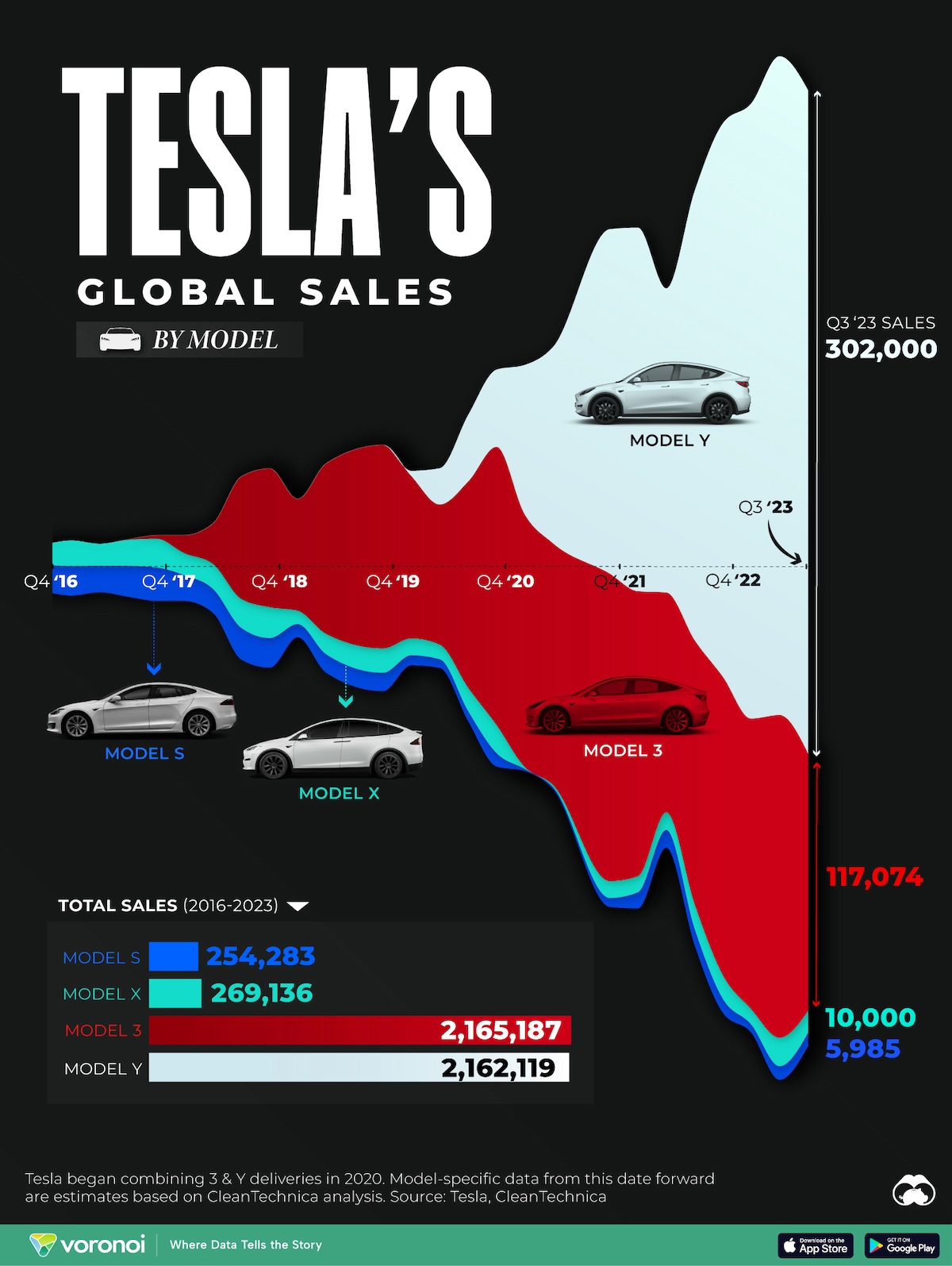
Tesla’s journey from a niche electric vehicle manufacturer to a global automotive powerhouse is indelibly marked by its production and delivery milestones. Each quarter’s figures tell a story of growth, challenges, and strategic shifts, profoundly influencing the company’s financial narrative and investor sentiment.
Early Growth and Overcoming Production Hurdles
In its nascent years, Tesla’s sales figures, though modest by traditional automotive standards, were significant indicators of its potential. The Roadster demonstrated proof-of-concept, followed by the Model S and Model X, which established Tesla’s premium brand positioning. During this period, delivery numbers were closely watched as evidence of Tesla’s ability to scale production beyond custom-built vehicles. Production “hell” for the Model 3, for instance, highlighted the immense capital expenditure and operational challenges inherent in scaling manufacturing. Overcoming these hurdles, as reflected in subsequent delivery increases, was critical for demonstrating financial viability and reassuring investors that Tesla could transition from a high-tech startup to a mass-market producer. These early sales figures, though small in absolute terms, were pivotal in attracting the necessary capital to fuel future expansion and development.
Scaling for the Mass Market: Model 3 and Y
The introduction of the Model 3 and later the Model Y marked a pivotal shift in Tesla’s financial strategy: targeting the mass market. The success of these models, evidenced by their burgeoning delivery numbers, was instrumental in transforming Tesla from a luxury brand into a volume manufacturer. Quarterly sales reports during this phase were not just about growth but about the company’s ability to meet ambitious production targets, reduce manufacturing costs through economies of scale, and significantly expand its global customer base. The ability to produce and deliver hundreds of thousands of these more affordable vehicles directly translated into exponential revenue growth, improved gross margins (after initial ramping challenges), and a path towards sustained profitability. These high-volume sales solidified Tesla’s position as a serious contender in the automotive industry, not just a disruptor.
Breaking Records and Global Expansion
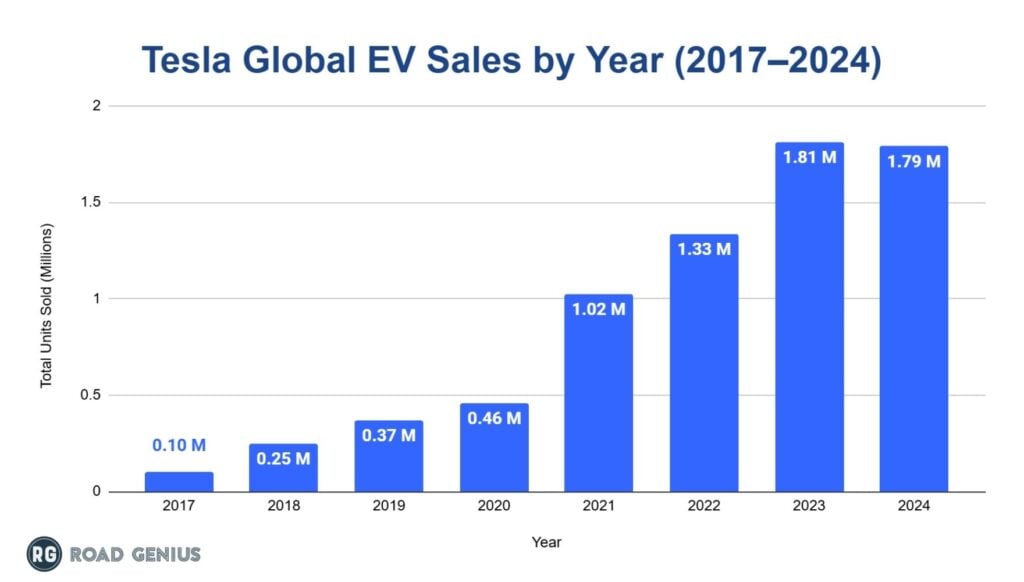
In recent years, Tesla has consistently broken its own delivery records, often exceeding analyst expectations. This sustained growth is a testament to its successful global expansion, particularly with Gigafactories in Shanghai, Berlin, and Texas complementing its original Fremont plant. Each new facility and each successive sales record contribute directly to Tesla’s top-line revenue and reinforce its market leadership in electric vehicles. Global sales figures provide insights into regional market acceptance, logistical efficiencies, and the company’s ability to navigate complex international supply chains and regulatory environments. For financial analysts, these record-breaking figures validate Tesla’s long-term growth story and its potential to capture a substantial share of the accelerating global shift towards electric mobility.
The Financial Significance of Delivery Numbers
For any publicly traded company, sales figures are a fundamental metric, but for Tesla, vehicle delivery numbers carry an extraordinary weight, deeply influencing its financial performance, investor perception, and strategic direction.
Revenue Generation and Profitability
The most direct financial impact of vehicle sales is, naturally, revenue generation. Each car delivered contributes to Tesla’s top line, and the cumulative total determines its quarterly and annual sales revenue. Beyond just volume, the mix of models sold (e.g., higher-margin Model S/X versus Model 3/Y), regional pricing strategies, and the efficiency of production all influence the profitability derived from these sales. Analysts meticulously track average selling prices (ASPs) alongside delivery figures to estimate gross margins and operating income. Consistent growth in deliveries coupled with stable or improving ASPs and cost efficiencies are direct drivers of increased profitability, which is essential for funding future research and development, factory expansions, and debt repayment. Without strong delivery numbers, Tesla’s ability to generate sufficient cash flow to sustain its ambitious plans would be severely hampered.
Investor Confidence and Stock Performance
Tesla’s stock market valuation, often a subject of intense debate, is inextricably linked to its delivery numbers. Investors view these figures as a primary indicator of demand for Tesla products and the company’s execution capabilities. Strong delivery reports typically lead to positive market reactions, boosting share prices and reinforcing investor confidence in Tesla’s growth trajectory. Conversely, missed delivery targets can trigger sell-offs, as they raise concerns about production bottlenecks, softening demand, or competitive pressures. For many growth investors, Tesla’s valuation isn is predicated on its future sales potential; therefore, actual delivery performance acts as a critical validation (or invalidation) of these lofty expectations. Quarterly delivery calls are among the most anticipated events for Tesla shareholders, directly impacting their portfolios.
Market Share and Competitive Landscape
The sheer volume of cars Tesla sells directly impacts its market share within the rapidly expanding electric vehicle segment. Dominant sales figures translate into significant market leadership, which has strategic financial advantages. A larger market share can lead to greater brand recognition, stronger pricing power, and better leverage with suppliers. Financial analysts use Tesla’s delivery numbers to assess its competitive standing against both traditional automakers investing heavily in EVs and emerging EV startups. Sustained high sales volumes indicate Tesla’s ability to fend off competition, innovate effectively, and maintain its technological edge. Monitoring these figures provides crucial insights into the evolving competitive landscape and Tesla’s long-term viability as a market leader.
Analyzing Quarterly and Annual Performance Trends
Understanding Tesla’s sales performance requires more than just looking at headline numbers; it necessitates a detailed analysis of trends, underlying factors, and forward-looking projections.
Decoding Delivery Reports
Tesla’s quarterly delivery reports are granular datasets for financial analysis. Beyond the total number of vehicles produced and delivered, analysts dissect figures such as production versus delivery variance (indicating inventory levels), breakdown by model (revealing product demand shifts), and geographical distribution (highlighting market strengths and weaknesses). Investors also look at lease versus outright purchase numbers, as these can have different implications for revenue recognition and cash flow. Discrepancies between production and delivery can signal logistical challenges, while changes in model mix can impact average revenue per unit and overall profitability. A thorough decoding of these reports provides a nuanced understanding of the company’s operational execution and market dynamics.
Impact of Global Economic Factors and Supply Chains
Tesla’s sales performance is not immune to broader economic forces and supply chain disruptions. Global recessions, interest rate hikes impacting consumer purchasing power, and geopolitical tensions can all depress demand. Crucially, the automotive industry, and particularly the EV sector, has been heavily impacted by semiconductor shortages and raw material price volatility. These supply chain constraints directly affect Tesla’s ability to produce and deliver vehicles, irrespective of underlying demand. Financial analysts must factor these external variables into their models when forecasting Tesla’s sales and assessing the financial implications of missed targets or slower growth. The ability to navigate these challenges, as evidenced by consistent delivery growth, reinforces financial resilience.
Forecasting Future Sales and Financial Health
Based on historical trends, current economic conditions, and announced expansion plans (e.g., new factory ramps, new model launches like the Cybertruck), financial analysts develop intricate models to forecast Tesla’s future sales. These forecasts are critical for estimating future revenue, earnings per share (EPS), and ultimately, the intrinsic value of the company’s stock. Factors considered include production capacity, market demand, competition, pricing strategies, and potential regulatory changes. The accuracy of these forecasts is paramount for investment decisions, making Tesla’s stated production targets and guidance on delivery expectations highly influential for the market. Consistent outperformance of forecasts can lead to significant upward revisions in valuation.
Beyond Vehicle Sales: Diversifying Revenue Streams
While vehicle deliveries are the primary financial driver for Tesla, the company’s long-term financial health is also supported by, and increasingly dependent on, its ability to diversify revenue streams. These adjacent businesses, while often linked to vehicle sales, represent distinct financial opportunities.
Energy Storage and Solar Business Contribution
Tesla’s energy division, encompassing Powerwall battery storage systems, Megapacks for utility-scale energy storage, and solar panels, represents a growing but distinct revenue stream. While not directly tied to car sales, the underlying battery technology and manufacturing expertise are shared. Financial reports detail the revenue and profitability generated by this segment, which can help stabilize overall company financials during periods of automotive market volatility. Growth in this area indicates Tesla’s potential to become a broader sustainable energy company, diversifying its financial risk and opening new avenues for shareholder value.
Software and Services: A Future Profit Driver
As Tesla vehicles become more technologically advanced, revenue from software and services is poised to become a significant financial contributor. This includes Full Self-Driving (FSD) subscriptions, premium connectivity, and potential future in-car app marketplaces. Unlike hardware sales, software revenue often carries significantly higher gross margins, making it an attractive area for future profitability. The embedded nature of Tesla’s software in its vehicles means that every car sold today creates a potential recurring revenue stream for years to come. Investors keenly watch for growth in this segment as it represents a high-margin, scalable business model that can profoundly impact Tesla’s long-term financial performance and valuation multiples.
Conclusion: What Tesla’s Sales Figures Tell Us About Its Financial Future
The recurring question of “how many cars has Tesla sold?” transcends a simple count; it forms the bedrock of financial analysis for one of the world’s most innovative and scrutinized companies. Each delivery figure is a data point in a complex financial narrative, reflecting not only the demand for electric vehicles but also Tesla’s operational prowess, its capacity for innovation, and its strategic positioning in a rapidly evolving global economy. For investors, these numbers are direct indicators of revenue, profitability, market share, and investor confidence. For the company itself, they validate past investments in manufacturing and technology, while also dictating future capital allocation and strategic direction. As Tesla continues to expand its production capacity, refine its product offerings, and diversify its revenue streams, its vehicle delivery numbers will remain the paramount financial metric, offering critical insights into its sustained growth, its competitive resilience, and its enduring influence on the financial markets.
aViewFromTheCave is a participant in the Amazon Services LLC Associates Program, an affiliate advertising program designed to provide a means for sites to earn advertising fees by advertising and linking to Amazon.com. Amazon, the Amazon logo, AmazonSupply, and the AmazonSupply logo are trademarks of Amazon.com, Inc. or its affiliates. As an Amazon Associate we earn affiliate commissions from qualifying purchases.