
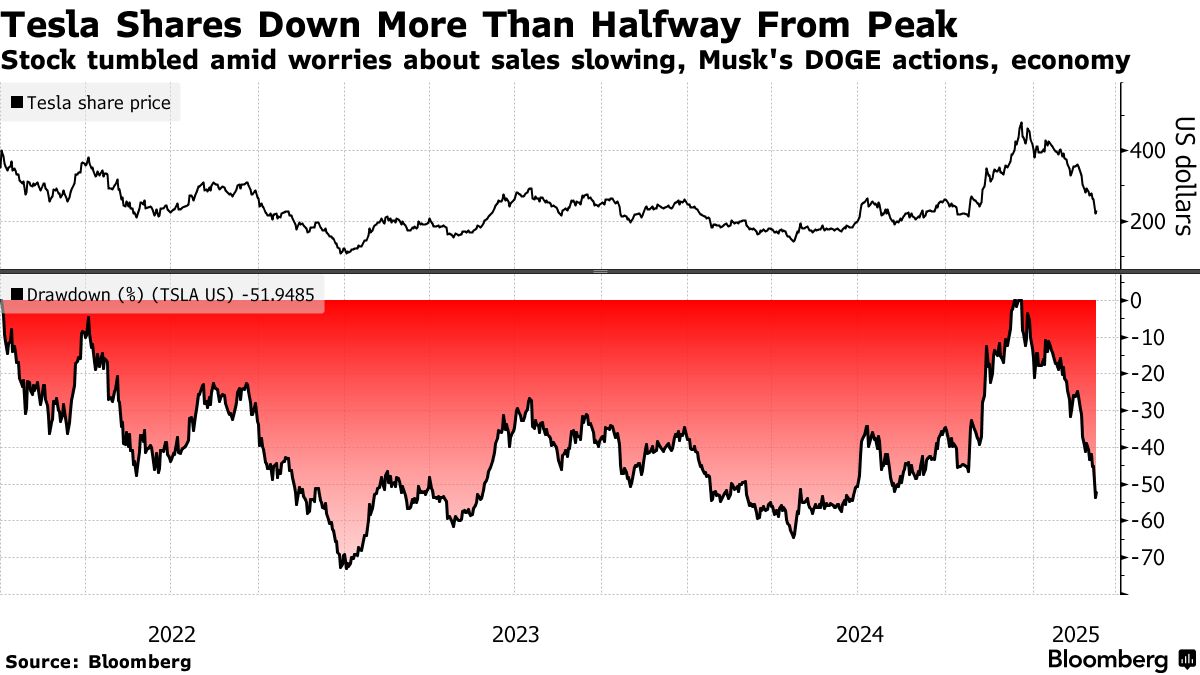
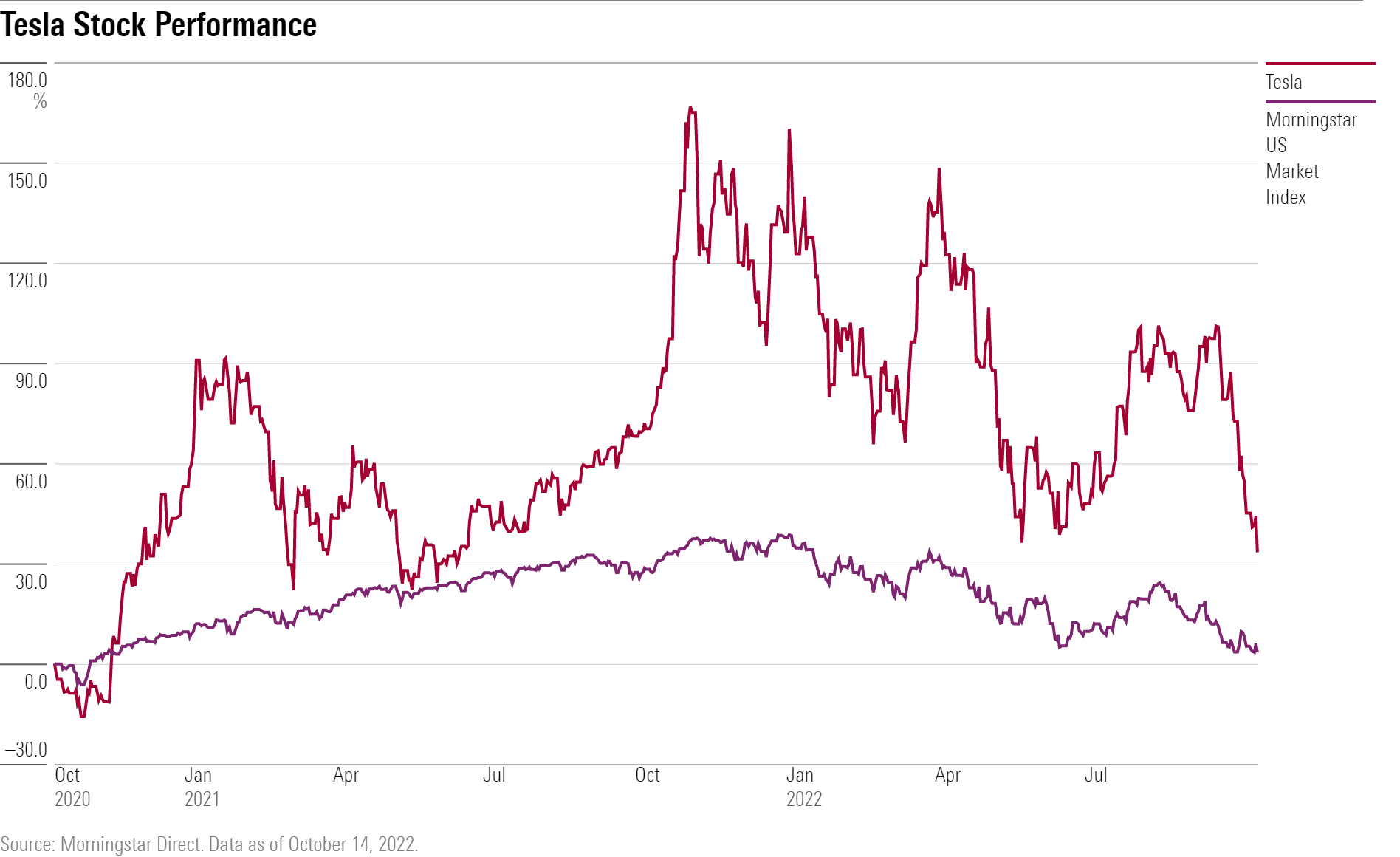
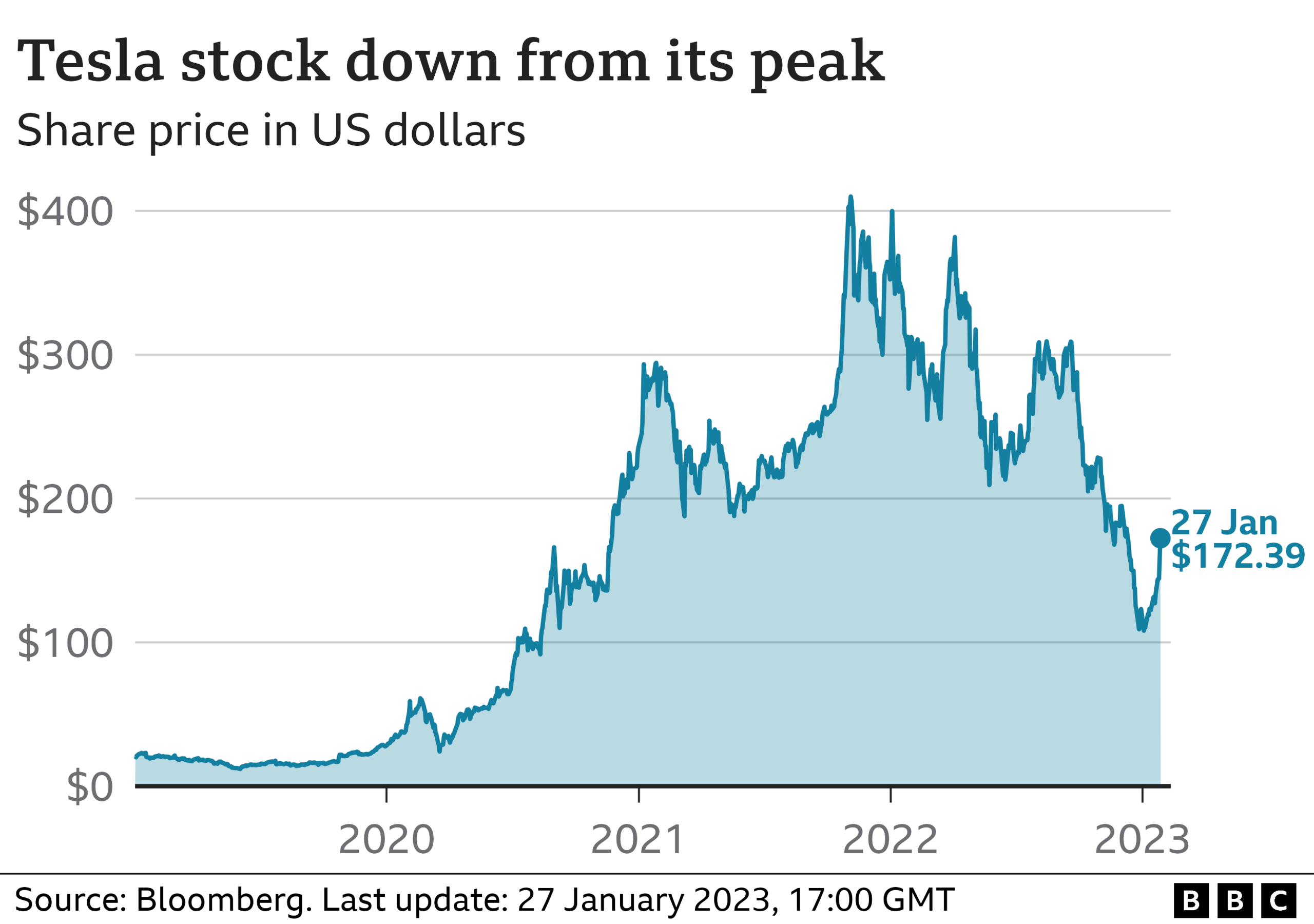
Tesla, once the darling of growth investors and a symbol of disruptive innovation, has experienced significant volatility in its stock price, particularly in recent periods. After an unprecedented bull run that saw its market capitalization soar to stratospheric levels, the electric vehicle (EV) pioneer’s stock has faced considerable headwinds, prompting investors to question the underlying causes of its decline. This article delves into the complex financial and market-driven factors contributing to Tesla’s stock performance, dissecting the economic climate, competitive pressures, operational challenges, and shifts in investor sentiment that have collectively weighed on its valuation. Understanding these multifaceted elements is crucial for anyone looking to comprehend the dynamics of a high-growth, high-valuation stock in a rapidly evolving industry.
Navigating a Challenging Economic Landscape
The broader macroeconomic environment plays a pivotal role in dictating investor appetite, particularly for growth stocks like Tesla, which are often sensitive to shifts in monetary policy and economic forecasts. The recent period has been characterized by significant global economic turbulence that has had a direct impact on corporate valuations and consumer spending.
Rising Interest Rates and Inflationary Pressures
Central banks globally, led by the U.S. Federal Reserve, have aggressively raised interest rates in an effort to combat persistent inflation. Higher interest rates increase the cost of capital for businesses, making it more expensive to borrow for expansion and reducing the present value of future earnings – a critical factor for companies with high growth expectations like Tesla. For consumers, rising rates translate to higher financing costs for large purchases, including cars, potentially dampening demand for new vehicles, even premium EVs. Inflation, while showing signs of easing, has also eroded purchasing power, pushing consumers to be more cautious with discretionary spending. Furthermore, inflationary pressures continue to impact Tesla’s input costs, from raw materials for batteries to labor, potentially squeezing profit margins despite efficiency efforts.
Broader Market Sentiment and Risk Aversion
The era of historically low interest rates fostered an environment where investors were more willing to take on risk, pouring capital into high-growth, often unprofitable, technology companies. As rates have risen and economic uncertainty has grown, there’s been a significant shift towards risk aversion. Investors are increasingly favoring companies with stable earnings, strong balance sheets, and proven profitability – often referred to as “value stocks.” This broader market rotation away from growth stocks has disproportionately affected companies with premium valuations based on future potential, of which Tesla is a prime example. The tech sector, in general, has seen a substantial sell-off, and Tesla, despite its manufacturing prowess, is often categorized within this tech-heavy growth segment. Concerns about a potential recession further amplify this risk-off sentiment, leading to a more cautious approach to equity investments.
Intensifying Competition and Shifting Market Dynamics
Tesla’s early lead in the EV market allowed it to enjoy a near-monopoly on innovation and desirability for a considerable period. However, the competitive landscape has dramatically evolved, with both legacy automakers and new entrants making significant strides, directly impacting Tesla’s market share and pricing power.
Emergence of Traditional Automakers
For years, traditional automotive giants were slow to pivot to electric vehicles, allowing Tesla to capture significant market share. That era is definitively over. Companies like Ford, General Motors, Volkswagen, Hyundai, and Mercedes-Benz have committed tens of billions of dollars to EV research, development, and production. They are now rolling out compelling electric models across various segments, from luxury sedans to popular pickup trucks and SUVs. These legacy players bring immense manufacturing scale, established supply chains, vast dealership networks, and decades of experience in mass production and quality control. Their increasing EV offerings provide consumers with more choice, directly challenging Tesla’s once-unchallenged dominance and putting downward pressure on prices.
Rise of Chinese EV Manufacturers
The Chinese market is the largest and most dynamic EV market globally, and it has seen the explosive growth of domestic manufacturers. Companies like BYD, Nio, XPeng, and Li Auto are not only innovating rapidly but also producing high-quality, competitively priced EVs that are capturing significant market share in China and increasingly looking to expand internationally. BYD, in particular, has surpassed Tesla in terms of overall EV sales (including hybrids) and is a formidable competitor in battery technology and vertical integration. The fierce competition in China has led to price wars, forcing Tesla to implement significant price cuts to maintain sales volumes in this crucial market, which inevitably impacts its global profit margins.
Pricing Strategy and Demand Elasticity
Tesla’s strategy of aggressive price cuts across its model lineup, while aimed at boosting demand and competing with rivals, has introduced complexity for investors. While increased volume is a positive, the impact on average selling prices (ASPs) and gross margins has been a key concern. Repeated price cuts can signal weakening demand or intensifying competition, leading investors to question the company’s long-term profitability trajectory. Furthermore, it can create uncertainty for potential buyers, some of whom may delay purchases anticipating further price reductions, thus impacting demand elasticity. The delicate balance between volume growth and margin preservation is a continuous challenge for Tesla, and its recent pricing actions have contributed to investor uneasiness regarding its financial health.
Production Challenges and Operational Headwinds
Even for a company known for its engineering prowess and manufacturing ambition, scaling production and managing complex global supply chains presents significant operational hurdles that can impact financial performance and investor confidence.
Supply Chain Volatility
Despite improvements since the peak of the pandemic, global supply chains remain susceptible to disruptions. Tesla, like all automakers, relies on a vast network of suppliers for components ranging from semiconductors to various raw materials. Geopolitical tensions, localized lockdowns, and natural disasters can still cause bottlenecks, affecting production output and increasing costs. While Tesla has shown remarkable adaptability in navigating these challenges, any significant disruption can lead to production shortfalls, delivery delays, and increased expenses, directly impacting quarterly earnings and investor sentiment.
Production Ramps and Factory Utilization
Tesla has invested heavily in new Gigafactories in Berlin, Germany, and Austin, Texas, to expand its global production capacity. However, ramping up production at new facilities is a complex and capital-intensive undertaking, often characterized by initial inefficiencies, learning curves, and lower utilization rates. Achieving full production capacity and optimal efficiency at these new sites takes time and significant capital expenditure. During this ramp-up phase, these factories can act as a drag on overall profit margins. Investors keenly watch for updates on production rates and profitability from these new facilities, as their successful scaling is critical for Tesla’s future growth and profitability.
Recall Issues and Regulatory Scrutiny
Like any major automaker, Tesla is subject to regulatory oversight and the inevitable challenges of product quality and safety. Recalls, whether due to software glitches or hardware issues, while common in the auto industry, can impact consumer confidence and incur significant costs for investigation, repair, and potential fines. Recent regulatory scrutiny, particularly concerning its Autopilot and Full Self-Driving (FSD) beta programs, adds another layer of operational risk. These investigations can lead to mandatory software updates, hardware changes, or restrictions on feature deployment, all of which can affect brand reputation, development timelines, and ultimately, financial performance.
Valuation Concerns and Investor Sentiment
Tesla’s stock has historically commanded a premium valuation based on its perceived technological lead, growth potential, and charismatic leadership. However, as the competitive landscape shifts and economic realities set in, this premium is under increasing scrutiny.
Premium Valuation Under Scrutiny
For years, Tesla traded at a significantly higher price-to-earnings (P/E) ratio and other valuation multiples compared to traditional automakers. This premium was justified by its rapid growth, superior margins (at times), and the perception that it was more of a tech company than a car manufacturer. However, as growth rates moderate, competition intensifies, and margins face pressure, investors are increasingly questioning whether such a lofty valuation is still warranted. Traditional valuation metrics, when applied more strictly, suggest that Tesla’s stock may still be overvalued relative to its current earnings and anticipated growth trajectory, especially when compared to its now-more-competitive peers. This re-evaluation of its fundamental worth contributes significantly to downward pressure on the stock.
Elon Musk’s Influence and Distractions
Elon Musk’s visionary leadership has been instrumental in Tesla’s success, but his increasingly public and controversial activities, particularly his acquisition and management of Twitter (now X), have raised concerns among some investors. The sale of billions of dollars worth of Tesla stock to fund the Twitter acquisition, combined with his sometimes divisive public statements, has been perceived by some as a distraction from his primary role at Tesla. Concerns about his divided attention, potential for further stock sales, and the impact of his personal brand on Tesla’s corporate image have created an additional layer of uncertainty for investors, weighing on sentiment.
Shifting Analyst Ratings and Price Targets
Wall Street analysts play a significant role in guiding investor sentiment. As the factors discussed above have materialized, many analysts have reassessed their financial models and forecasts for Tesla. This has led to a noticeable trend of analyst downgrades, reductions in price targets, and a more cautious outlook on the company’s near-term prospects. While analyst ratings are not infallible, a broad shift towards a more bearish consensus can influence institutional investors and further contribute to selling pressure on the stock. Their revised expectations often reflect a more tempered view of Tesla’s future growth rates and profitability in an increasingly competitive and economically challenging environment.
Future Outlook and Potential Rebound Factors
Despite the recent headwinds, Tesla remains a formidable force in the automotive and energy sectors. Its long-term trajectory will depend on its ability to execute on strategic initiatives and demonstrate sustained financial performance in the face of evolving market conditions.
Innovation Pipeline and New Products
Tesla’s reputation as an innovator remains a key asset. The successful launch and mass production of anticipated new products, such as the Cybertruck and the Tesla Semi, could inject fresh excitement and open up new revenue streams. Continued advancements in its Full Self-Driving (FSD) technology, if it can achieve regulatory approval and widespread adoption, would represent a significant technological and financial differentiator. Furthermore, breakthroughs in battery technology, manufacturing processes, and AI applications could reinforce its competitive edge and justify a premium valuation once more.
Cost Reductions and Efficiency Gains
As Tesla’s Gigafactories mature and reach full utilization, and as it continues to refine its manufacturing processes, there is significant potential for further cost reductions and efficiency gains. Improvements in battery production, vertical integration of supply chains, and advanced robotics can help offset pricing pressures and improve gross margins. The ability to produce vehicles more cheaply and efficiently, even amidst price competition, will be crucial for sustained profitability and could be a catalyst for a stock rebound.
Expanding Charging Infrastructure and Ecosystem
Tesla’s Supercharger network is a significant competitive advantage, offering a seamless and reliable charging experience that rivals struggle to match. Continued expansion of this network, along with its energy storage solutions (Powerwall, Megapack) and growing service capabilities, strengthens its ecosystem and increases customer loyalty. As more automakers adopt Tesla’s North American Charging Standard (NACS), this network could become an even more valuable asset, potentially opening up new revenue streams from charging services and further solidifying its market position.
Conclusion
The fall in Tesla’s stock price is not attributable to a single factor but rather a complex interplay of macroeconomic forces, an increasingly competitive market, operational challenges inherent in scaling a global enterprise, and a re-evaluation of its premium valuation by investors. The shift in monetary policy, the robust entry of traditional and Chinese automakers into the EV space, and the ongoing scrutiny of its financial metrics have all contributed to a more challenging environment for Tesla. While the company still possesses significant strengths in innovation, brand, and infrastructure, its future stock performance will largely hinge on its ability to navigate these financial headwinds, execute its ambitious product roadmap efficiently, maintain its profitability amidst fierce competition, and effectively manage investor expectations. For investors, understanding these multifaceted financial dynamics is key to assessing Tesla’s true long-term investment potential.
aViewFromTheCave is a participant in the Amazon Services LLC Associates Program, an affiliate advertising program designed to provide a means for sites to earn advertising fees by advertising and linking to Amazon.com. Amazon, the Amazon logo, AmazonSupply, and the AmazonSupply logo are trademarks of Amazon.com, Inc. or its affiliates. As an Amazon Associate we earn affiliate commissions from qualifying purchases.